










Your Complete Craft Business Startup Checklist & Planning Guide
Finding Your Niche and Defining Your Creative Vision
Here’s the thing about starting a craft business: it actually begins way before you list your first product or set up your first market table. It starts with getting honest with yourself about what you make, who you’re making it for, and why your work deserves a spot in an already crowded creative marketplace. Without that clear vision to guide you, even the most talented makers can end up scattered across too many product categories, struggling to build a brand anyone remembers or a customer base that keeps coming back. Your niche is everything — it’s the foundation you build the whole thing on.
Before you commit to a direction, actually spend some real time poking around the handmade marketplace. Browse Etsy, hit up local craft fairs, scroll through Instagram and Pinterest, and pay attention to what feels oversaturated versus what feels like there’s a genuine gap. You’re looking for that sweet spot — the overlap between what you love making, what you’re genuinely good at, and what people are actively searching for and willing to pay real money for. Build your business in that overlap and you’re already ahead of most people just starting out.
Once you’ve landed on your niche, write yourself a simple creative vision statement. Who are you as a maker? Who’s your ideal customer? What feeling or purpose does your work deliver? It doesn’t need to be polished or public-facing yet — think of it more like a personal north star you can come back to whenever you’re unsure about a new product idea, a collab offer, or which direction to take your marketing. Having that anchor keeps your brand cohesive and stops you from chasing every shiny opportunity that comes along.
Setting Up the Business Basics: Legal, Financial, and Administrative Foundations
A lot of creative entrepreneurs skip straight past this part because they’re too excited to start making and selling — and then it comes back to bite them later. Getting your business set up properly from the start protects your personal assets, gives you credibility with wholesale buyers and retail platforms, and keeps you on the right side of the law. It’s not the glamorous part, but taking it seriously early on is honestly what separates people who are running a real business from people who are just really into a hobby.
Start with your business structure. Most solo craft makers kick things off as sole proprietors — it’s the simplest option with minimal paperwork, though it doesn’t separate your personal and business liability. As you grow, forming an LLC is worth considering since it gives you liability protection and can come with tax advantages. The specific requirements vary a lot depending on your state or country, so do your research. Once you’ve settled on a structure, register your business name, get any local licenses you need, and if you’re in the US, apply for an EIN through the IRS. Even without employees, you’ll need it to open a business bank account.
Getting your finances organized is just as important. Open a dedicated business checking account and keep it completely separate from your personal money — mixing the two is a headache you really don’t want come tax time. Set up a simple bookkeeping system right away, whether that’s a spreadsheet or something like QuickBooks or Wave. Track every expense: materials, packaging, shipping supplies, market fees, software subscriptions, all of it, because those are deductible business costs. Set aside a portion of every sale for taxes, and it’s worth sitting down with an accountant who knows small creative businesses at least once a year to make sure you’re doing everything correctly and not leaving deductions on the table.

Pricing Your Work for Profit and Sustainability
Pricing is probably the most emotionally loaded challenge you’ll face as a craft business owner. So many makers chronically underprice their work — usually out of fear that customers won’t pay fair prices, or because they’re uncomfortable fully valuing their own time and skill. The result is a business that stays busy but never actually becomes profitable, and a maker who’s exhausted and financially frustrated. Learning to price your work properly isn’t just a business skill. It’s genuinely an act of self-respect, and it’s non-negotiable if you want to build something that lasts.
Use a formula as your starting point instead of guessing or copying competitors without any context. A solid baseline for handmade goods goes like this: multiply your materials cost by 3, add your hourly labor rate multiplied by the time it takes to make the item, then add a percentage for overhead like packaging, market fees, and studio costs. That gives you a wholesale price. For retail, multiply that by 2 to 2.5. Most makers see that number and immediately want to dial it back. Try to resist that impulse. If the numbers feel shockingly high, the issue is usually that your target market needs a rethink — not your prices.
Come back to your pricing at least every six months, since material costs shift and your skills keep improving. Here’s something counterintuitive: as you get faster and more efficient, you might be tempted to lower your prices. Don’t. Maintain them and let the improved margins be your reward for getting better at your craft. Also make sure you’re accounting for platform fees in your pricing from day one. Etsy fees, PayPal processing, credit card fees at markets — these can easily eat up 10 to 15 percent of a sale, and if they’re not baked into your prices already, you’re quietly losing money on every transaction. A profitable craft business runs on clear-eyed numbers, not wishful thinking.
Building Your Brand Identity and Online Presence
Your brand is so much more than a logo or a color palette. It’s the total impression you leave on everyone who encounters your work — whether they find you on Instagram, stumble onto your Etsy shop, or pick up one of your pieces at a market. A strong, cohesive brand builds trust, signals that you’re a professional, and creates the kind of emotional connection that turns someone’s first purchase into a habit and then into them telling all their friends about you. Time spent on brand development early on pays off across every single area of your marketing for years.
Start with your visual identity. Pick two or three brand colors that actually reflect the mood of your work and feel true to who you are. Choose a font or two that’s readable, attractive, and fits your aesthetic. Design a simple logo — or hire someone on Fiverr or 99designs if that’s not your wheelhouse. Then apply those visual elements consistently everywhere: your shop banner, your product photos, your packaging, business cards, social media profiles, your website. Consistency is what builds brand recognition, and brand recognition is what makes people remember you instead of the next person selling something similar.
Your online presence should be strategic rather than scattered — the goal isn’t to be everywhere, it’s to be somewhere that actually matters. Start with whichever selling platform makes the most sense for your product category, whether that’s Etsy, Shopify, a local market site, or your own domain. Then pick one or two social media platforms where your ideal customers actually hang out and show up there consistently and authentically. Pinterest is especially powerful for craft businesses thanks to its evergreen, searchable nature. Instagram and TikTok tend to work well if your making process is visually interesting or fun to watch. Go deep on fewer platforms rather than spreading yourself thin across many, and always be guiding your social followers toward your email list — because that’s the one audience you actually own, no matter what any algorithm decides to do.
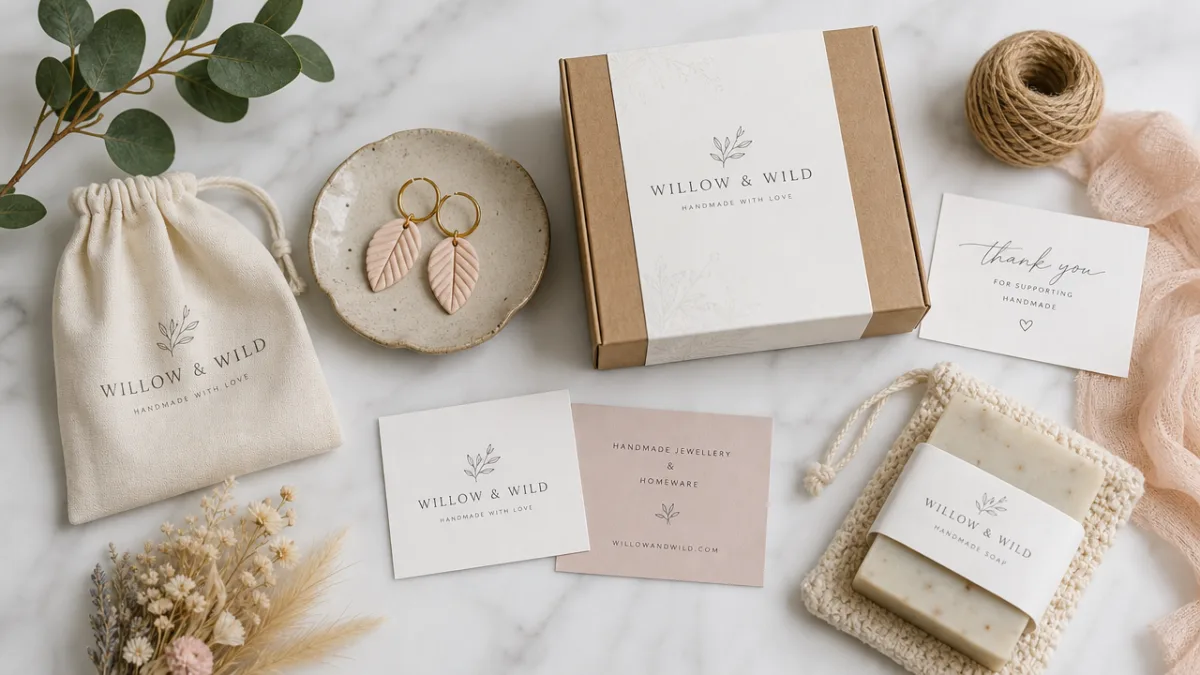
Photography and Product Presentation: Selling With Images
When you’re selling online, your product photography has to do the job that a physical store does with lighting, displays, and the experience of actually handling something. When a potential customer can’t pick up your item, feel the texture, or gauge its size in real life, your photos have to communicate all of that for them. Weak photography will tank your sales no matter how gorgeous your products actually are — and strong photography can make even simple items feel like something you absolutely need. This is genuinely worth putting real time and energy into.
You don’t need expensive gear to take great product photos. A modern smartphone is more than capable of producing shop-quality images once you understand the basics of lighting and composition. Natural light is your best friend — shoot near a large window during the brightest part of the day, and prop a white foam board on the opposite side of your product to bounce light into the shadows. Keep your background simple: white, neutral linen, or a lifestyle surface like wood or marble all work beautifully and keep the focus where it belongs. Shoot from multiple angles, including close-ups that show texture and detail, and include at least one lifestyle image that shows the product in use or in a styled scene that feels like your brand.
Think beyond individual product shots too — consider how your shop or social feed looks as a whole. On Instagram especially, your grid is essentially a portfolio, and visual consistency across posts creates brand recognition and a professional first impression. Build a simple shot list for each product: a clean white background shot, a couple of lifestyle shots, a close-up detail, and something that shows scale. Batch your photography sessions so you’re shooting multiple products on the same day in the same light, which naturally gives your whole catalog a consistent look without needing much post-production editing.
Sales Channels, Marketing Strategy, and Growing Your Customer Base
People find and shop for products in a lot of different ways, so your craft business needs multiple ways for them to find you. If you’re relying on a single sales channel, you’re one algorithm change or platform policy update away from a serious revenue problem. Building a diversified sales strategy from the beginning — one that mixes online and in-person selling with a growing organic audience — creates resilience. Your different income streams end up supporting each other instead of leaving you vulnerable.
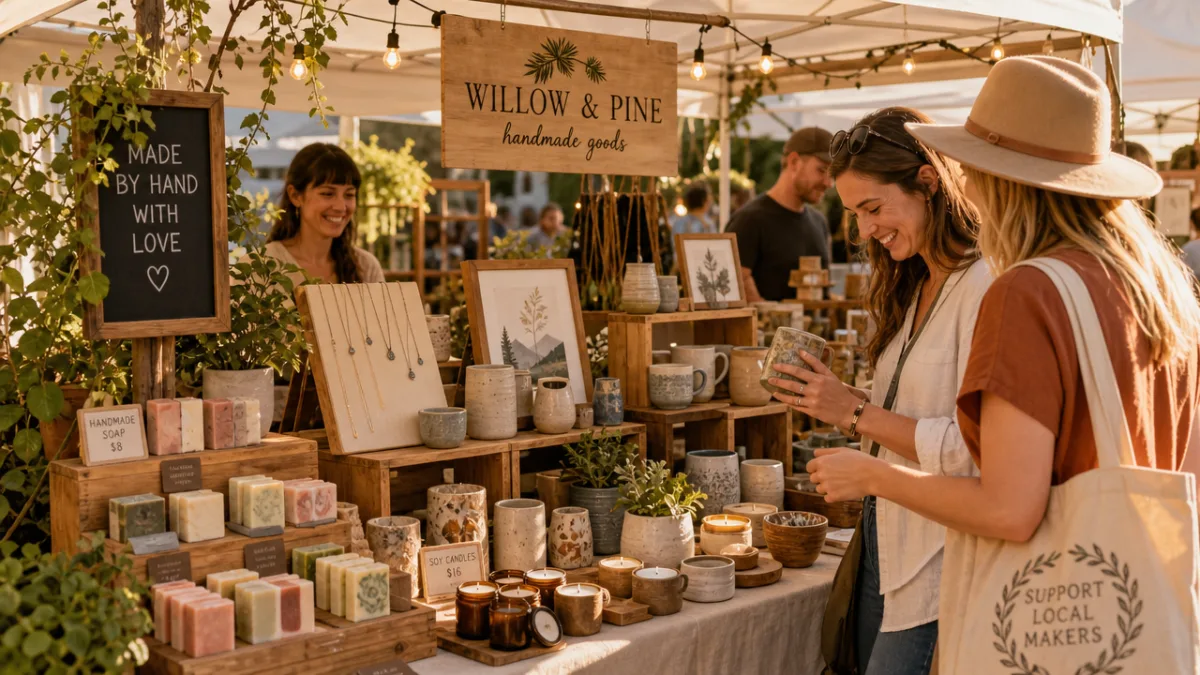
In-person selling through craft fairs, farmers markets, pop-up events, and holiday markets is still one of the most powerful ways to build a loyal local following, get real-time feedback on new products, and create the kind of brand experience that no online interaction can quite replicate. Before you apply to events, research them thoroughly — look at booth fees, typical attendance, the kind of shoppers who show up, and whether the overall vibe actually fits your brand. Start with smaller, lower-cost local events to practice your display setup and get comfortable talking to customers, before investing in bigger, more competitive juried shows. And always collect email addresses at in-person events through a signup sheet or a quick digital form — these are warm, genuinely interested leads you can keep marketing to long after the event is over.
Email marketing consistently outperforms social media when it comes to actually driving sales, and building your list should be a priority from your very first week. Offer something small and compelling to get people to sign up — a discount code, a free pattern or tutorial, early access to new releases. Then send regular newsletters that mix genuinely useful content (behind-the-scenes peeks, the stories behind your products, making tips your audience would actually enjoy) with promotional content about new arrivals, restocks, and upcoming events. A warm, engaged email list of a few hundred people who genuinely love your work will consistently outsell tens of thousands of passive social media followers — and unlike your Instagram following, it’s yours no matter what any platform decides to do next.
- Register your business and open a dedicated business bank account before your first sale
- Calculate your prices using a formula that covers materials, labor, overhead, and platform fees
- Build a consistent visual brand identity and apply it across every customer touchpoint
- Invest in quality product photography using natural light and simple, clean styling
- List your products on at least one primary selling platform with keyword-optimized titles and descriptions
- Choose one or two social media platforms and commit to consistent, authentic content
- Start building your email list from day one using an incentive to encourage sign-ups
- Research and apply to local craft fairs and markets that align with your brand and target customer
- Track all income and expenses monthly and set aside money for quarterly taxes
- Review your pricing, product mix, and marketing strategy every six months and adjust accordingly
Launching and growing a craft business is one of the most rewarding things you can do creatively and entrepreneurially — but it rewards people who bring both passion and practicality to the table in equal measure. The checklist above isn’t meant to overwhelm you. It’s meant to give you a clear, step-by-step path through the startup phase so you can save your mental energy for the parts you actually love: creating things and connecting with your customers. Every successful craft business owner started exactly where you are right now — with a skill, a dream, and the nerve to get started. Use this guide as your roadmap, come back to it as your business grows and changes, and remember that moving forward matters a whole lot more than doing it perfectly.








What do you think?
It is nice to know your opinion. Leave a comment.