










Mini Cats Free Crochet Projects: Your Complete Guide to Tiny Feline Creations
Introduction to Mini Cat Crochet: Why Tiny is Trending
Crochet has always had a soft spot for miniature things, but honestly, nothing has taken off quite like mini cat projects. These little feline figures — most of them small enough to sit in your palm — bring together the timeless craft of crochet and the very relatable love people have for cats. Whether you’ve been crocheting for years and want something fresh to try, or you’re brand new and looking for a fun entry point into amigurumi-style making, mini cat patterns hit a sweet spot: just challenging enough to be satisfying, but not so complicated that they stop being fun. And the best part? You can find a huge range of free patterns online, for every skill level.
Mini crochet cats have genuinely blown up on social media, especially Pinterest, where you’ll find thousands of makers showing off their finished projects and sparking the urge in everyone who scrolls past to grab a hook and some yarn. Part of the appeal is obviously how cute they are — but there’s also something really practical about them. You can finish one in a single sitting, which makes them perfect for crafters who are busy but still want that feeling of actually completing something handmade. They’re also incredibly versatile: gift them, turn them into keychains or bag charms, or just line them up on a shelf where they can be adorable indefinitely.
There’s a learning dimension to mini cat projects that often surprises people, too. Working in small rounds teaches you about tension, stitch consistency, and how three-dimensional shapes come together — all in a pretty low-pressure setting. Because you’re using so little yarn, any mistakes are cheap to fix and easy to spot. As you work through different free patterns, you’ll find yourself picking up techniques that naturally carry over into bigger, more ambitious projects. A mini cat isn’t just a cute finished object — it’s actually a really solid stepping stone toward becoming a more confident crocheter overall.
Essential Tools and Materials for Mini Cat Crochet
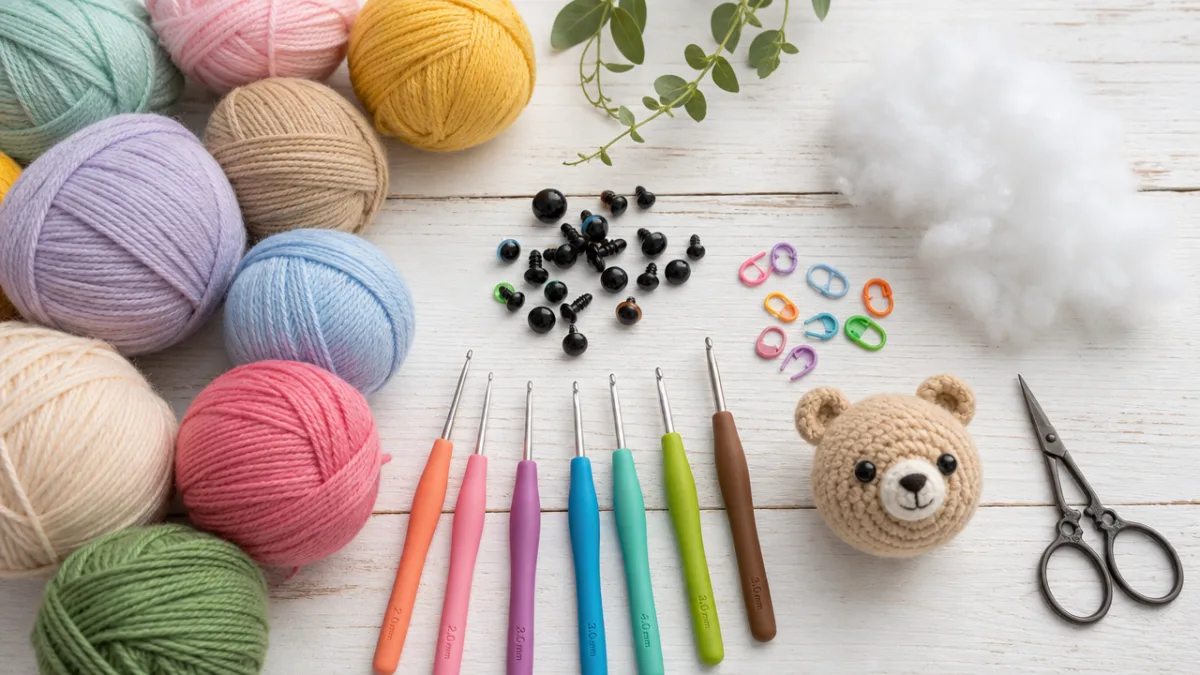
Before you cast on for your first mini cat, it’s worth taking a few minutes to pull the right tools and materials together — it genuinely makes the whole experience smoother and more enjoyable. The crochet hook is your most important tool, and for miniature work, size really does matter. Most mini cat patterns call for something in the 2.0mm to 3.5mm range, depending on the yarn you’re using. Go too large and you’ll end up with a loose, gappy fabric that lets the stuffing peek through; go too small and you’ll be fighting your own hook the entire time.
Yarn choice matters just as much. Sport weight, DK weight, and fingering weight yarns are the most popular options for small amigurumi-style projects because they produce a tighter, more structured fabric that holds its shape and keeps the stuffing tucked neatly inside. Cotton yarn is a favorite in the mini cat community — it’s durable, has a nice bit of stiffness to it, and gives you really clean stitch definition. Acrylic is another great option, especially if you’re just starting out, since it’s affordable, widely available, and comes in basically every color you could ever want for your cats.
On top of yarn and hooks, there are a handful of other supplies you’ll want to have within arm’s reach before you start. Here’s what to gather:
- Polyester fiberfill stuffing to give your cat a firm, rounded, three-dimensional shape
- Safety eyes in the 4mm to 6mm range, which are just right for miniature figures
- A yarn needle or tapestry needle for seaming pieces together and tidying up your ends
- Stitch markers to keep track of your rounds — especially helpful when you’re working in continuous rounds
- Small scissors that let you make clean, precise cuts right up close to your work
- Pins or clips to hold pieces in place while you sew them together
- Black embroidery floss for stitching noses, mouths, and any other small facial details
Having everything organized and ready before you sit down to crochet turns what could be a frustrating experience into a genuinely pleasant one. A lot of experienced crafters swear by keeping a dedicated small project bag or box just for mini amigurumi work — everything in one place, so your actual crafting time goes toward making things rather than hunting for scissors. Even for small projects, quality tools are worth it; you’ll notice the difference in how consistent and polished your finished mini cats look.
Top Free Mini Cat Crochet Patterns for Beginners
There are so many free mini cat patterns out there that figuring out where to start can feel a little overwhelming. If you’re a true beginner, the best move is to look for a simple round-body cat pattern that leans on single crochet stitches worked in continuous rounds. These patterns usually have you crocheting a small oval or sphere for the body, a couple of tiny triangular ears, four little legs, a tail, and a head. You stuff everything lightly, sew the pieces together, add safety eyes and an embroidered nose, and suddenly you have this ridiculously adorable tiny cat staring back at you.
One of the most beloved patterns in the mini cat crochet world is the classic amigurumi kitten, which usually comes out somewhere between 3 and 5 centimeters tall. You’ll find these patterns all over Ravelry, Pinterest, and individual craft blogs, and many of them come with step-by-step photo tutorials that walk you through every stage. Plenty of designers have also put their tutorials on YouTube, which is a lifesaver if you’re a visual learner who needs to see a stitch being made before it clicks. That level of accessibility is a big part of why mini cat crochet has grown so much — the barrier to entry is genuinely low.
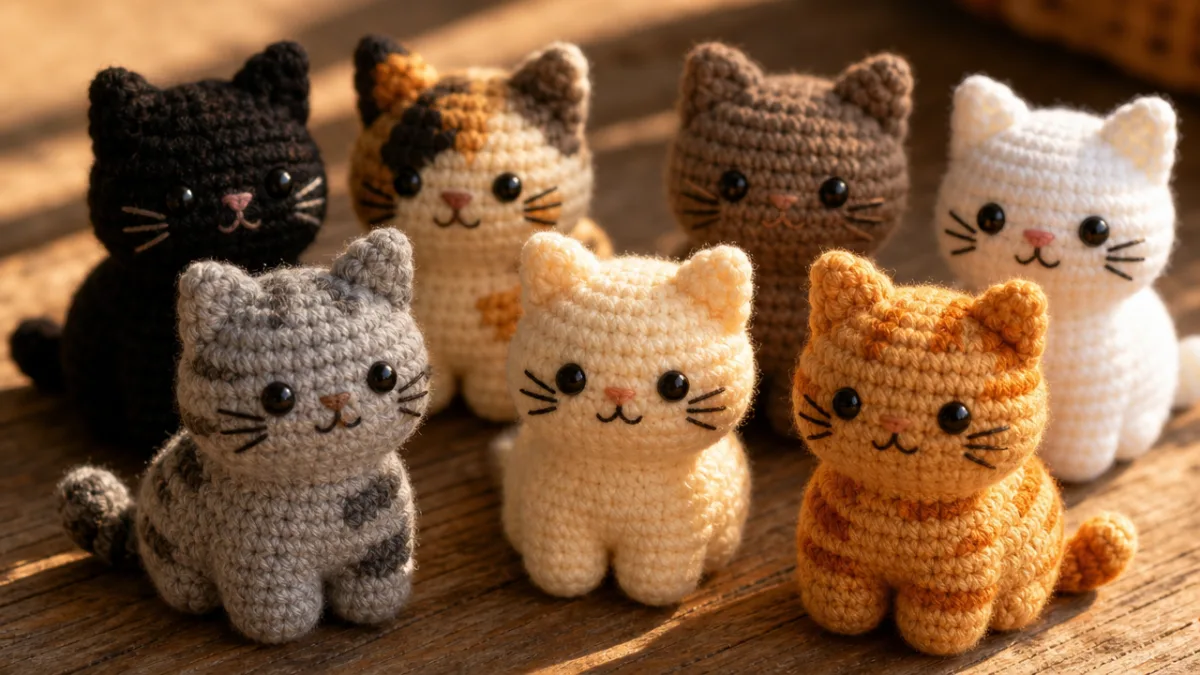
Once you’ve got a few basic cats under your belt and your confidence is building, there are slightly more involved beginner-friendly patterns worth exploring. Sitting cats with defined paws, kittens curled up in a sleeping pose, or designs with those big cartoon-style heads are all great next steps. These patterns introduce skills like shaping specific body parts with increases and decreases, attaching limbs at just the right angle for a natural-looking pose, and using color changes to suggest stripes, patches, or two-toned coats. Each new pattern teaches you something and gives you another little cat to add to your growing collection — honestly a pretty great deal.
Intermediate and Advanced Mini Cat Crochet Techniques
Once you’ve got the basics down, things get really interesting. Intermediate crafters can start digging into patterns with more complex shaping — things like short rows to get realistic ear curves, bobble or popcorn stitches to add that little bit of textural fluffiness, or jointed limbs that can actually be repositioned into different poses. These techniques take a mini cat from “cute little craft project” to “genuinely impressive handmade miniature that people stop and look at twice.”
Color work is another area where you can really push your mini cat projects into new territory. Tapestry crochet — where you carry multiple yarn colors across a row simultaneously to build patterns — lets you crochet tabby stripes, calico patches, or tuxedo markings directly into the body of the cat, rather than adding them afterward with embroidery. Working tapestry crochet at such a small scale is legitimately challenging, but the payoff in terms of realism and visual impact is striking. Plenty of advanced free patterns incorporate this technique and come with color charts to guide you through it.
At the far end of the skill spectrum, there’s a whole niche of crafters working with very fine thread and tiny steel hooks to make micro-scale cats — sometimes only 1 to 2 centimeters in total. This is a passionate little corner of the crochet world, and it demands great eyesight, steady hands, and a lot of patience. Free patterns for these ultra-tiny creations are out there, though they’re harder to track down than standard amigurumi-scale patterns. The results, though, are extraordinary — cats small enough to perch on a fingertip, with individual stitches and carefully shaped features you can still make out if you look closely enough.
Many advanced crafters eventually make the leap from following patterns to writing their own, and that’s where things get really creative. Original amigurumi design comes down to understanding the math: knowing that increasing by six stitches per round produces a sphere, and that where you place your increase rounds determines whether a shape ends up round or elongated. With that knowledge, you can engineer whatever body proportions you want. Lots of experienced mini cat makers share their original patterns online for free, which is a big part of why the community’s pattern library keeps growing and getting richer.
Creative Ideas for Using Your Finished Mini Cats
One of the genuinely fun parts of finishing a mini cat is figuring out what to do with it. The options are almost endless. One of the most popular routes is turning them into functional Accessories — bag charms and keychains specifically. All it takes is a split ring and a short length of chain or cord attached to the top of your finished cat, and suddenly it’s a charming little handmade accessory hanging off a backpack, handbag, luggage tag, or set of keys.
Mini crocheted cats also make some of the most thoughtful gifts you can give to a cat person in your life. There’s something about a handmade gift that store-bought things just can’t match — it carries the time and care you put into making it, and people genuinely feel that. You can take it a step further by customizing the yarn colors and markings to match the recipient’s actual cat, and adding a small tag with the cat’s name or a personal message. For a birthday, a holiday, or just a “thinking of you” gesture, a personalized mini crocheted cat is the kind of gift that sticks with someone.
If you’re more drawn to the decorative side of things, a collection of mini cats arranged on a shelf or windowsill makes for a really charming little display — the kind that catches people’s eye and sparks conversations. Some crafters go all in on themed collections: holiday cats in tiny knitted scarves and hats, a rainbow progression made with gradient yarns, or a family of cats sized to represent the actual pets in the household. These curated groupings become something genuinely personal and special, and they only get better as the collection grows.
Building a Community Around Mini Cat Crochet
Crochet has always been a social craft at heart, and the mini cat corner of the crochet world is one of the friendliest communities you’ll find anywhere online. Groups on Facebook, Reddit, Instagram, and Pinterest bring together thousands of makers who share their finished projects, help each other troubleshoot tricky pattern sections, cheer on each other’s progress, and swap recommendations for favorite free patterns. Getting involved in even one of these communities can make a real difference — both practically, in terms of support, and socially, in terms of making the whole thing more fun and motivating.
Craft-alongs — known as CALs in crochet circles — are organized group projects where everyone works through the same pattern at the same time, sharing progress at regular check-ins. Mini cat CALs are popular events that bring a real burst of energy and excitement to online communities, and they often pull in crafters who might never have attempted a mini cat project on their own. These events tend to center around free patterns, which keeps them open to anyone regardless of budget. The collective momentum of a CAL — everyone working toward the same thing, posting updates, encouraging each other — creates a kind of shared creative experience that’s hard to replicate any other way.
For crafters who want to take things in a more entrepreneurial direction, the skills and patterns that develop through free projects can genuinely become the foundation of a small business. Many makers who start out with free patterns eventually design their own originals and sell them as downloadable PDFs on Etsy, Ravelry, or their own sites. Others sell finished mini cats at craft fairs, pop-up markets, or through online shops. Because the material cost is so low, even modest pricing can make mini cat projects commercially worthwhile. What starts as a personal hobby can quietly evolve into something more — a small creative business built around making things people genuinely love to have.
Sharing your mini cat journey online adds yet another layer to the experience. Whether you start a dedicated account, keep a blog, or just post progress photos in community groups, documenting your projects creates a record of your growth — from your very first wobbly attempt to the confident, polished creations you’ll be making down the road. It also adds to the collective pool of inspiration and information that benefits every other maker in the community. That photo you post of your finished mini cat might be exactly the thing that convinces someone else to pick up a hook for the first time and discover just how much they love this craft.








What do you think?
It is nice to know your opinion. Leave a comment.