










Mid Century Lanterns: The Timeless Cafe Aesthetic for Small Spaces
The Enduring Appeal of Mid Century Design
Mid century modern design has proven itself to be one of the most resilient and beloved aesthetic movements in the history of interior decoration. Emerging from the post-World War II optimism of the 1940s through the 1960s, this design language spoke to a generation hungry for clean lines, functional beauty, and a forward-looking sensibility that rejected the ornate excesses of earlier eras. Today, decades removed from its origins, the style continues to captivate homeowners, cafe owners, and interior designers alike, offering a visual vocabulary that feels simultaneously nostalgic and refreshingly contemporary.
What makes mid century modern so enduring is its foundational philosophy: that good design should be accessible, functional, and aesthetically pleasing without unnecessary embellishment. This principle translates beautifully into lighting design, where the form of a fixture must justify itself through both its visual presence and its practical performance. A well-designed mid century lantern achieves that rare balance, providing warm, directional illumination while serving as a sculptural object worthy of admiration even when unlit. The interplay of materials — typically brass, matte black metal, frosted glass, or natural wood accents — creates a tactile richness that more minimalist modern styles often lack.
The resurgence of interest in mid century lighting has been particularly notable in the cafe and hospitality industry, where owners understand that ambiance is as important as the menu itself. A small lantern hung at the right height above a marble bistro table, or mounted beside a chalkboard menu wall, does more than illuminate — it communicates a carefully curated point of view. It tells guests that thoughtfulness has been applied to every corner of the space, that the experience they are about to have has been designed with intention and warmth. This is the quiet power of well-chosen lighting, and mid century lanterns deliver it with remarkable consistency.
Understanding the Small Lantern Format
Within the broad category of mid century lighting, the small lantern occupies a particularly versatile and beloved niche. Unlike pendant lamps or floor-standing torchieres, the small lantern format — typically ranging from six to fourteen inches in height — offers a compactness that makes it extraordinarily adaptable across a wide range of spatial contexts. Whether mounted on an exterior wall beside a cafe entrance, clustered in groups of three above a kitchen island, or placed as a singular accent on a shelf or side table, the small lantern earns its keep through sheer flexibility and proportion.
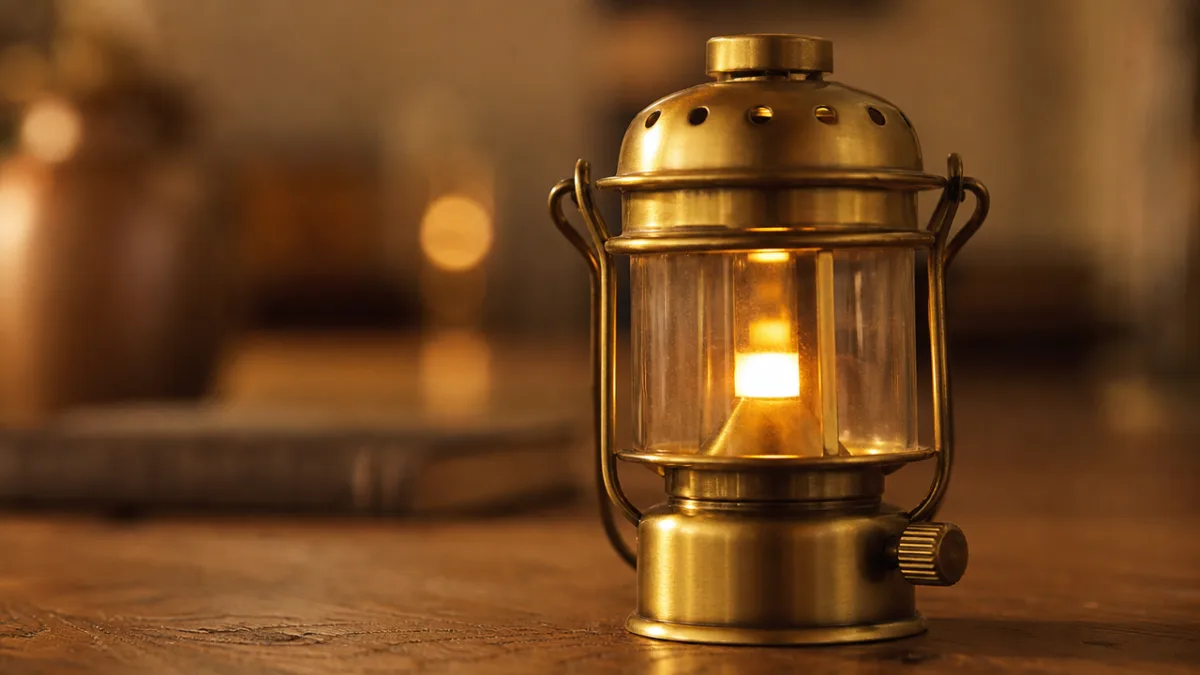
The defining characteristics of a small mid century lantern typically include a geometric frame, often constructed from iron, brass, or aluminum, that cradles a glass or acrylic enclosure around the light source. The geometry tends toward simple polygons — hexagons, octagons, rectangles — that echo the architectural precision valued by mid century designers. These shapes are not arbitrary; they reflect an engagement with modernist geometry that was deeply influenced by the Bauhaus movement and later by the organic modernism championed by designers like George Nelson and Isamu Noguchi. The result is a fixture that feels designed rather than merely manufactured.
Scale is perhaps the most critical consideration when selecting a small lantern for any space. In cafe environments especially, where the goal is to create intimacy without claustrophobia, a fixture that is too large becomes domineering, while one that is too small reads as an afterthought. The sweet spot — that perfect scale where the lantern feels purposeful and properly weighted within the composition of the room — is what skilled interior designers spend considerable time calibrating. Small mid century lanterns, precisely because they have been proportioned with care by their designers, tend to hit that sweet spot reliably, making them a favorite tool in the professional designer’s kit.
The Cafe Context: Creating Atmosphere Through Lighting
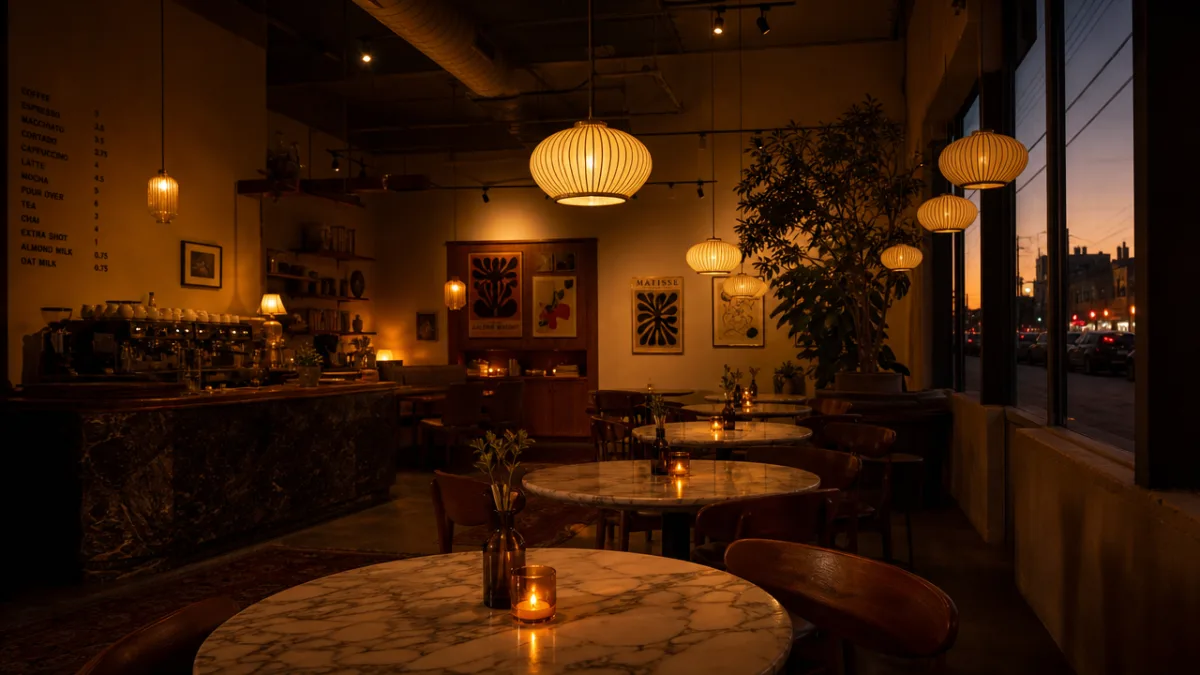
Cafes occupy a unique psychological space in modern urban life. They are simultaneously public and intimate, social and solitary, transient and habitual. People meet in them for first dates and last goodbyes, for productive work sessions and idle afternoon hours. This extraordinary range of emotional registers places enormous demands on the design of a cafe interior, and lighting sits at the very center of those demands. The difference between a cafe that feels like a place you want to linger and one that sends you heading for the door after a single espresso often comes down to the quality, warmth, and character of the light.
Mid century lanterns are particularly well suited to the cafe context for several overlapping reasons. First, their warm metal finishes — antique brass, oil-rubbed bronze, matte black — absorb and reflect light in ways that create visual depth and texture on surrounding walls and surfaces. This effect, sometimes called “borrowed glow,” gives a room dimensionality that flat overhead lighting cannot achieve. Second, the enclosed glass panels of a traditional lantern design diffuse the light source, eliminating harsh glare while maintaining enough brightness for comfortable reading or conversation. Third, the small scale of cafe-appropriate lanterns allows them to be deployed at human height — mounted at shoulder or eye level — bringing the light source into close, intimate proximity with the people it serves.
The practical considerations of cafe lighting extend beyond aesthetics into operational realities. Cafes operate across dramatically different lighting conditions, from the bright morning rush when natural light floods the space, to the dim evening hours when artificial light must carry the full atmospheric load. A well-chosen mid century lantern performs reliably across this range, transitioning from decorative accent in daylight to primary mood-setter after dark. Many small lantern designs also accommodate LED bulb replacements with warm color temperatures in the 2700K to 3000K range, which faithfully replicate the golden incandescent glow that is so fundamental to the mid century aesthetic while offering the energy efficiency that modern cafe operations require.
Interior designers working with cafe clients frequently recommend developing what they call a “layered lighting plan,” in which different fixture types work together at different heights and intensities to create a dynamic, adaptable environment. Within such a plan, small mid century lanterns often serve as the “ambient accent” layer — not the primary source of task lighting, but the crucial element that ties the room together visually and emotionally. Positioned along corridor walls, above bar seating, or framing doorways and windows, they act as visual anchors that give the eye comfortable places to rest while preventing the flatness that results from relying on a single lighting source.
Material Choices and Finish Options
The material composition of a mid century lantern is not merely a matter of aesthetics — it directly affects the quality and character of the light it produces, the way it ages over time, and its appropriateness for different environmental conditions. Understanding the properties of common materials helps buyers make informed decisions that they will be satisfied with for years rather than months. The most commonly encountered materials in quality mid century small lanterns include steel, wrought iron, solid brass, die-cast aluminum, and combinations of metal with natural materials such as wood or rattan.
Brass remains the most prestigious and historically authentic material for mid century lantern construction. Solid brass develops a natural patina over time that deepens its visual richness, giving older fixtures a warmth and character that new pieces simply cannot replicate. Unlacquered brass will darken and develop variations in tone that many enthusiasts find deeply appealing, while lacquered brass maintains its original finish indefinitely with minimal maintenance. Matte black steel and iron offer a more contemporary interpretation of the mid century vocabulary, pairing beautifully with white walls, concrete surfaces, and the light wood tones — teak, walnut, birch — that are synonymous with Scandinavian-influenced mid century interiors.
Glass selection is an equally important consideration. Clear glass maximizes light output but reveals the bulb, making the choice of bulb a visible design decision — a consideration that actually works in favor of the aesthetic when Edison-style filament bulbs are used, their warm glowing filaments becoming a decorative element in their own right. Seeded or bubbled glass adds texture and a slight diffusion that creates a softer, more romantic quality of light, while frosted or etched glass eliminates visible hotspots and produces an evenly distributed glow that photographs beautifully in the moody, warm-toned style that dominates contemporary cafe and interior photography on social platforms.
- Antique brass: Warm golden tones with natural aging characteristics; ideal for vintage-leaning interiors and traditional cafe settings with dark wood furniture and exposed brick.
- Matte black iron: Graphic and versatile; pairs with nearly any interior palette and photographs with high contrast drama that suits contemporary brand aesthetics.
- Brushed nickel: Cooler and more understated than brass; bridges mid century and contemporary design vocabularies for spaces that blend both sensibilities.
- Oil-rubbed bronze: Dark and richly textured; lends depth and gravitas to smaller spaces without visually overwhelming them the way larger fixtures might.
- Powder-coated steel: Available in a wide range of colors, allowing for personalized expression; durable and weather-resistant for exterior cafe applications.
Installation Considerations for Small Spaces
One of the most common mistakes made when incorporating any lantern-style fixture into a small space is underestimating the importance of mounting height. In cafe environments especially, where circulation patterns, furniture heights, and sightlines are carefully choreographed to manage guest flow and maximize seating capacity, the height at which a wall-mounted lantern is installed can mean the difference between a fixture that integrates seamlessly into the spatial composition and one that feels awkward, obtrusive, or functionally problematic. As a general guideline, wall-mounted lanterns in pedestrian areas should be positioned with their lowest point no less than seven feet from the finished floor level, ensuring comfortable clearance for tall guests while keeping the light source at a visually engaging rather than ceiling-hugging height.
Electrical planning is another critical consideration that is frequently addressed too late in the design process. Hardwired wall sconces — the most common mounting configuration for small mid century lanterns in cafe settings — require electrical rough-in work that must be coordinated with the construction schedule, not retrofitted after walls are finished and painted. Working with an electrician early in the design process to establish the location of each fixture, the routing of conduit or in-wall wiring, and the switching configuration (individual switches, zone switches, dimmer circuits) prevents the costly and disruptive rework that results from afterthought electrical planning. Dimmer switches are particularly valuable for cafe lanterns, allowing staff to adjust ambient light intensity across the arc of the operating day.
For spaces where hardwiring is not feasible — rental properties, temporary pop-up cafe installations, or historically sensitive buildings where wall penetration is restricted — plug-in versions of small mid century lanterns offer a practical alternative. Many manufacturers now produce plug-in wall sconces that closely replicate the appearance of hardwired fixtures, with cords designed to be routed discreetly along moldings or wall edges and concealed behind furniture where possible. Battery-operated and rechargeable LED lantern versions have also improved significantly in quality and brightness, making them viable for accent applications where the primary goal is atmosphere rather than task illumination.
- Determine your switching and dimming requirements before finalizing fixture selection to ensure electrical compatibility.
- Mark mounting heights on walls using painter’s tape before committing, viewing from multiple positions including seated and standing.
- Consider the relationship between lantern placement and natural light sources — windows, skylights — to understand how the fixture will perform at different times of day.
- Test bulb temperature and brightness using clip-on temporary fixtures before final installation to verify the intended atmosphere is achievable.
- Consult with an electrician about load calculations if installing multiple fixtures on a single circuit, particularly if using vintage or specialty bulbs with higher wattage.
Sourcing and Selecting the Right Fixture
The market for mid century lanterns spans an enormous range of quality, authenticity, and price, from mass-produced imports available through large online retailers to hand-crafted originals produced by small artisan studios and the genuinely rare vintage pieces that occasionally surface through antique dealers, estate sales, and specialized lighting auctions. Navigating this market intelligently requires understanding what you are actually paying for at different price points, and being honest with yourself about the priorities that matter most for your specific application.
At the entry level, reproductions produced in large quantities offer accessible price points and reasonable aesthetic fidelity to the mid century look. These fixtures typically use lighter gauge metal, cast zinc or aluminum alloy components rather than solid brass, and glass panels of varying quality. For budget-conscious cafe startups or for applications where fixtures will be subject to high traffic and the inevitable bumps and scratches of commercial use, these options can represent genuinely good value — particularly when the design is strong and the finish is well executed. The key is to evaluate the quality of the finish, the precision of the joinery, and the weight of the fixture, all of which are reliable proxies for overall construction quality.
Mid-range fixtures from established lighting brands occupy a sweet spot that many interior designers favor for professional projects. These pieces typically feature heavier gauge materials, superior finish quality, UL or ETL certification for commercial installation, and manufacturer warranties that provide peace of mind for cafe owners who cannot afford the disruption of fixture failures during operating hours. Brands with established reputations in the mid century revival market — including several that license original designs from the estates of influential mid century designers — offer both aesthetic credibility and operational reliability that cheaper alternatives cannot match.
For those with the budget and the appetite for genuine vintage pieces, the rewards are considerable. An authentic 1950s or 1960s lantern — perhaps from a demolished mid century office building, hotel, or restaurant — carries with it an irreproducible quality of material and craftsmanship, as well as a historical authenticity that no reproduction can claim. These pieces require careful evaluation before purchase: checking for structural integrity, assessing the condition of existing wiring (which will almost always require replacement by a licensed electrician before use), and verifying that any existing glass panels are intact and original. When these conditions are met, a genuine vintage lantern becomes not merely a light fixture but an artifact — a piece of design history that adds a dimension of meaning to any space fortunate enough to display it.
Styling and Integration: Making the Lantern Work for Your Space
Acquiring a beautiful mid century lantern is only the beginning of the design process; integrating it successfully into an existing or developing interior requires an understanding of how lighting interacts with every other element of a room. Color, texture, furniture scale, ceiling height, wall surface treatment, and the character of surrounding fixtures and decorative objects all influence how a lantern reads in a space and whether it functions as the cohesive element you intend it to be or as a jarring anomaly that calls attention to itself for the wrong reasons. The most successful lighting integrations are those in which the fixture feels simultaneously inevitable and surprising — as though it could not possibly belong anywhere else, yet somehow you had never imagined placing it there before.
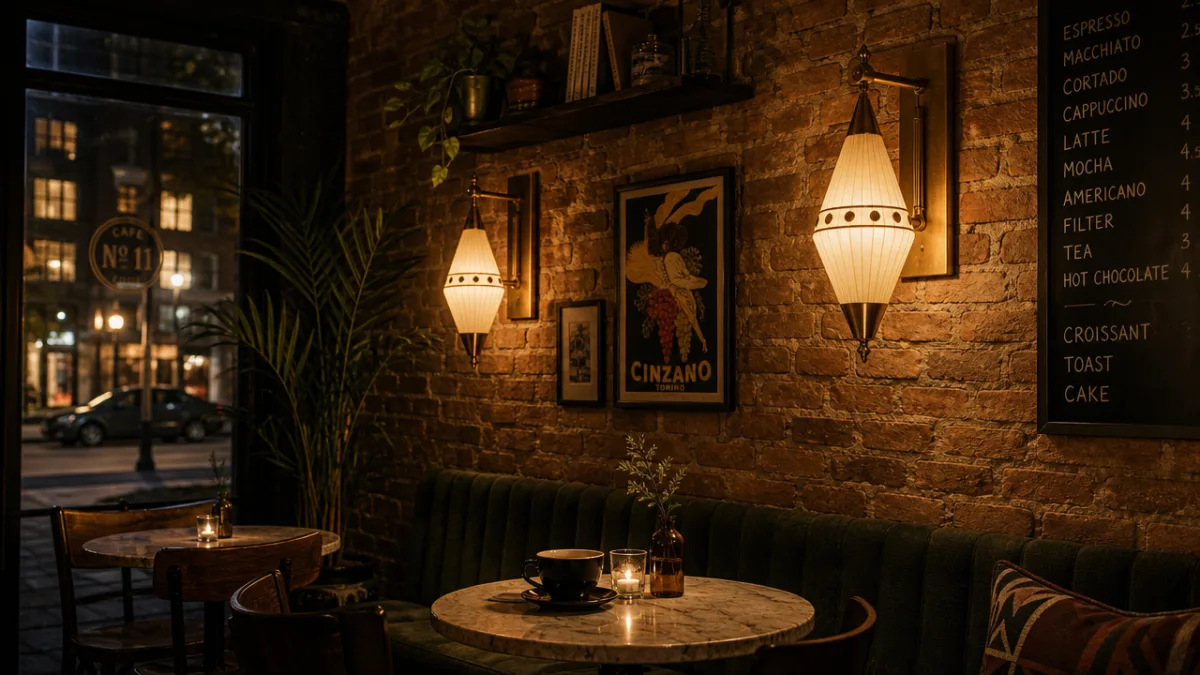
In cafe contexts, mid century small lanterns pair particularly well with a set of complementary materials and textures that have become almost canonical in the contemporary cafe aesthetic: white subway tile, honed marble or concrete surfaces, warm-toned wood in teak or walnut finishes, exposed structural elements such as steel beams or brick, and the layered patina of surfaces that have been deliberately distressed or allowed to age naturally. Within this material palette, a matte black lantern reads as a graphic accent, a brass lantern as a warm focal point, and an oil-rubbed bronze piece as a grounding element that ties warmer and cooler tones together. Understanding these relationships allows designers to use lanterns not just as light sources but as compositional tools within the larger decorative scheme.
Grouping multiple small lanterns together is a technique that rewards experimentation. A trio of small lanterns mounted at staggered heights along a staircase wall, or a grid of four identical fixtures used to define a seating zone within a larger open-plan cafe, creates a visual rhythm that single fixtures cannot achieve. The key to successful grouping is consistency — matching finishes, glass types, and mounting hardware across all fixtures in a group — combined with considered variation in height or spacing that prevents the arrangement from feeling mechanical or corporate. This balance between repetition and variation is, in many ways, a microcosm of the broader mid century design philosophy: order and humanity in productive, beautiful tension.
Finally, consider the role that the bulb itself plays in the overall effect. The mid century revival has coincided with a renaissance in decorative bulb design, and the market now offers an extraordinary range of Edison-style filament bulbs, globe bulbs, tubular bulbs, and specialty shapes in a wide range of color temperatures and lumen outputs. Selecting a bulb that complements the design of the lantern — a visible filament in a clear-glass fixture, a globe bulb in a wider frame, a standard A-shape in a more enclosed housing — completes the design gesture with the same care and intentionality that should inform every other aspect of the selection and installation process. In this way, the small mid century lantern, for all its compactness, becomes a meditation on the larger truth that the best design is always found in the details.








What do you think?
It is nice to know your opinion. Leave a comment.