










Finger Surfboards: The Tiny Wave-Riding World You Never Knew You Needed
What Are Finger Surfboards?
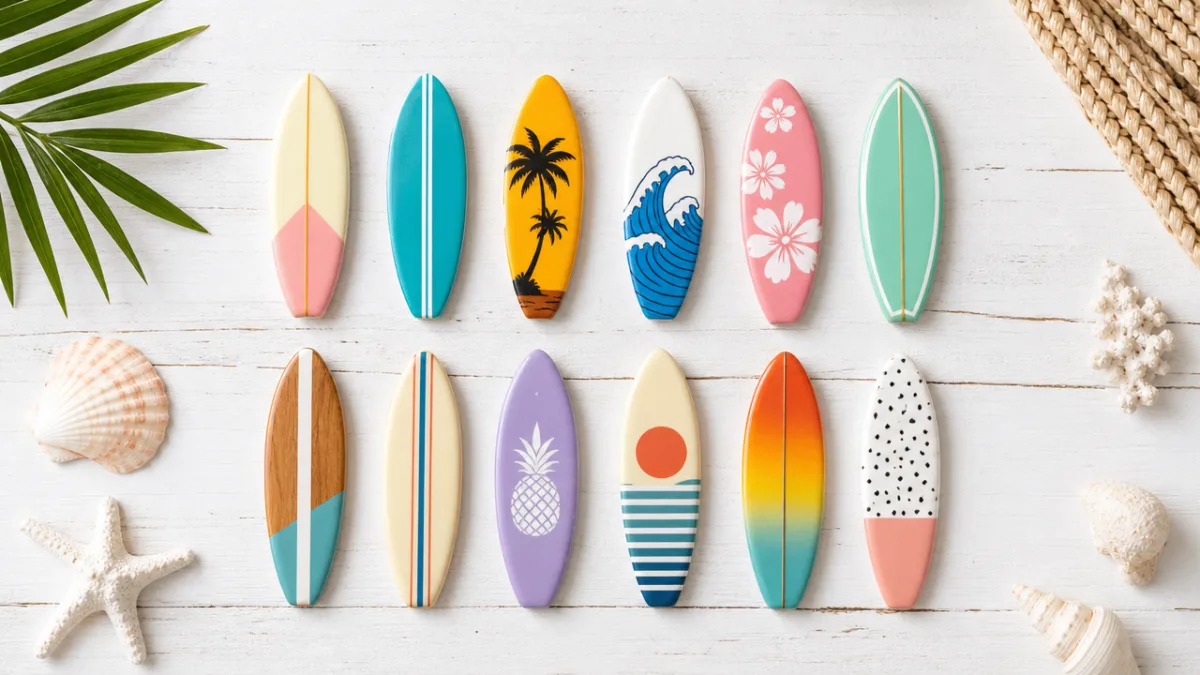
Finger surfboards are basically exactly what they sound like — tiny replicas of real surfboards, small enough to hold in your palm or balance on your fingertips. Think of how fingerboards brought skateboarding to your desk, and you’ve got the right idea. Finger surfboards do the same thing for surf culture, squeezing all that stoke and artistry into something you can hold between two fingers. And these aren’t just rough approximations, either — the good ones have real fin setups, accurate rocker curves, and hand-painted artwork that looks like it came straight off a full-sized board.
What started as a quirky novelty has quietly grown into a real subculture, complete with dedicated craftspeople, serious collectors, and enthusiasts spread across the globe. Professional shapers — the artisans who design and build full-sized surfboards — have brought their skills down to miniature scale, turning out tiny longboards, shortboards, fish shapes, and everything in between. A lot of these mini boards aren’t toys in any dismissive sense of the word; they’re genuine collectibles made with the same care and intention that goes into a board meant to ride actual waves.
What really hooks people is the mix of playfulness and craftsmanship. Aspiring shapers use them to get a feel for board geometry — rocker, concave, nose and tail width — without burning through expensive full-sized materials. Others keep them as desk art, make them as gifts, or just find the whole process of shaping and painting something so small to be genuinely meditative. Whether you’ve surfed your whole life or you’ve never so much as dipped a toe in the ocean, finger surfboards open up a surprisingly deep rabbit hole of creativity and craft.
The History and Origins of Miniature Surfboard Culture
To understand where finger surfboards come from, you have to go back to the surf explosion of the 1950s and 1960s. As surfing spread out from Hawaii to California and eventually all over the world, landlocked fans and ocean-obsessed tourists started looking for ways to bring a little piece of that world home with them. Early miniature boards were mostly handmade souvenirs — local craftsmen in Hawaii would carve them and sell them to visitors who wanted something more meaningful than a magnet or a postcard.
Through the 1970s and 1980s, as skateboarding and fingerboarding started to formalize into real hobbies, the idea of miniaturized board sports picked up momentum. Then Tech Deck fingerboards hit in the 1990s and proved there was a genuine market for this kind of thing, which gave surf culture the nudge it needed. Independent shapers and small craftspeople started producing finger surfboards with increasing levels of detail and realism, and collectors who cared about both artistry and surfing heritage took notice.
Today, the scene is global. Shapers from Australia, Brazil, the United States, Japan, and across Europe are all contributing to a lively online world where people share their work, swap boards, and geek out over the craft together. Instagram and Pinterest in particular have been huge for connecting these communities — a shaper working alone in their garage can now reach collectors on the other side of the planet with a single post. What once lived in Hawaiian souvenir shops has become a legitimate art form with its own history worth knowing.
How Finger Surfboards Are Made
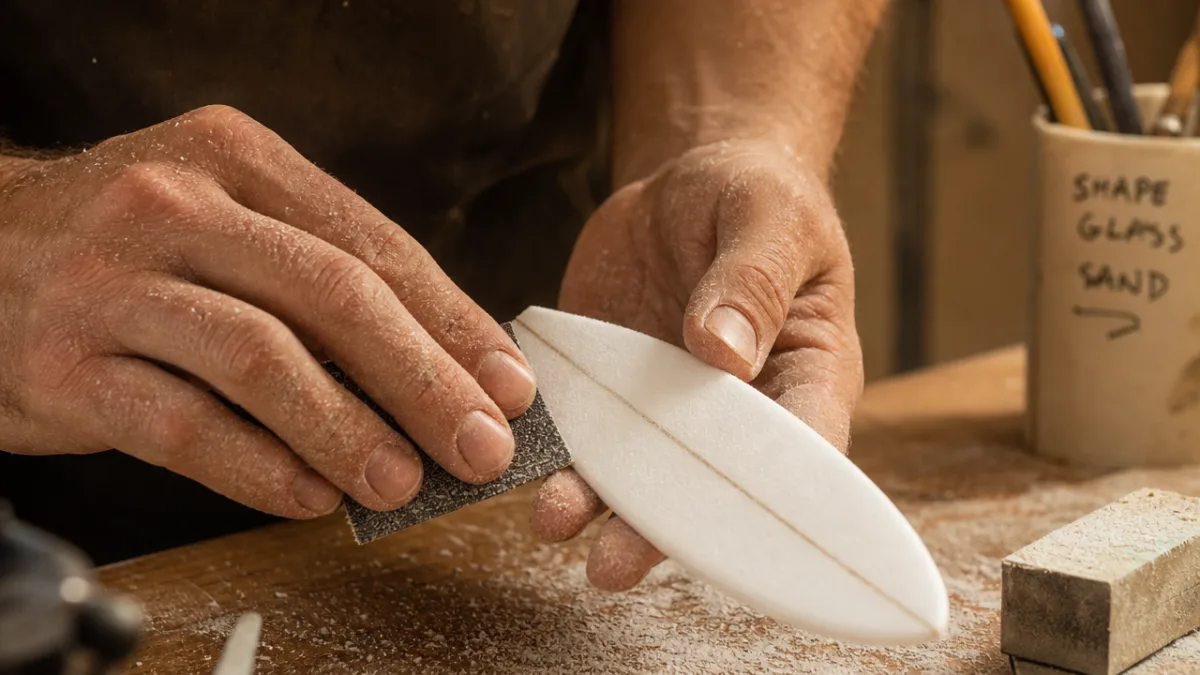
The process of making a finger surfboard tracks pretty closely with how the real thing is built, which is part of what makes it so satisfying. It starts with a foam blank — usually a small block of EPS or polyurethane foam — that the shaper cuts and sands down into the right form. Even at this tiny scale, everything matters: nose width, tail shape, rocker, rail profile. It’s genuinely technical work that requires a steady hand and a good eye, not just something you can wing.
Once the blank is shaped, many makers take it a step further and apply a fiberglass and resin lamination, just like on a real board. Tiny pieces of fiberglass cloth go over the foam and get saturated with epoxy or polyester resin, then sanded smooth once everything cures. It’s fiddly work, but the result is a strong board with a glossy finish that looks and feels like the real thing. Some people skip the fiberglass altogether and go straight to paint or varnish on foam, which is quicker and gives a different look — both approaches are totally valid depending on what you’re going for.
The finishing stage is honestly where things get really fun. Miniature fin boxes get installed, tiny fins — either 3D-printed or hand-carved — go in to complete the setup, and then comes the artwork. Shapers paint intricate graphics, logos, and patterns that pull directly from real surf culture and counter-culture imagery. Some makers go so far as to add foam traction pads and tiny leash plugs, which is maybe a little obsessive, but in the best possible way. The end result is a small object that somehow manages to capture the whole spirit of the craft.
Materials and Tools You Need to Get Started
One of the best things about this hobby is that you don’t need to spend a lot to get going. The main material is foam — small blocks of EPS or polyurethane — which you can find at craft stores, packaging suppliers, or surf shaping supply shops. You really don’t need much of it, either; a block roughly the size of a thick paperback book can give you several boards. EPS is generally recommended for beginners since it’s easier to sand and shape than the denser polyurethane foam.
For tools, a basic starter kit includes a few things that are easy to find and won’t cost you much:
- A sharp craft knife or hobby blade for rough cutting the blank
- Sandpaper in multiple grits (80, 120, and 220 are good starting points)
- A sanding block or small foam pad to maintain even pressure while sanding
- Small files and rasps for detailed carving around the rails and nose
- Epoxy resin and small fiberglass cloth sheets for lamination (optional but recommended)
- Acrylic paints, fine brushes, and clear coat for artwork and finishing
- Miniature fins, which can be sourced from online sellers or 3D-printed at home
Beyond the physical tools, honestly the most valuable thing you have access to is the community. Online forums, YouTube tutorials, and Pinterest boards focused on finger surfboard making are packed with free, generous knowledge. Experienced shapers openly share templates, techniques, and tips that can save you a lot of frustrating trial and error. That openness feels very true to surf culture in general — sharing waves and sharing knowledge are both just part of the ethos. The best advice for newcomers is simple: start with something small and straightforward, expect your first few attempts to be rough, and keep going.
Finger Surfboard Shapes and Styles
One of the most genuinely fun parts of getting into finger surfboards is the enormous range of shapes to explore, make, and collect. Real surfboard design is endlessly varied, and all of that variety translates perfectly into miniature form. Longboards — classic rounded noses, single fin, the whole laid-back 1960s California aesthetic — are perennial favorites, and their larger surface area at miniature scale makes them excellent canvases for detailed artwork. It’s part of why collectors tend to be especially drawn to them.
Shortboards are on the opposite end of the spectrum: pointy, narrow, thruster-finned, built for high-performance modern surfing. Getting their precise geometry right at a small scale is a satisfying technical puzzle. Fish shapes bring a retro vibe with their distinctive swallow tails and wide bodies. And then there are eggs, hybrid funboards, step-ups, and guns — that last one being the long, narrow, serious-looking shape made for enormous waves. Every shape comes loaded with its own personality, heritage, and look.
A lot of collectors end up organizing their boards around specific themes or eras. Some go deep on vintage single-fin shapes from the 1960s and 1970s. Others try to replicate a favorite surfer’s quiver, or recreate boards associated with a legendary break. Regional styles are a whole other dimension — the wide, boxy shapes favored in parts of Australia look quite different from what’s popular in Southern California, and Brazilian shapers have developed their own distinct sensibility. Collecting across these different traditions starts to feel like building a small, three-dimensional map of surf history.
The Community, Culture, and Collecting Scene
The finger surfboard community might be one of the genuinely nicest corners of the internet, and that’s not something you get to say very often. Facebook groups, Reddit threads, Instagram accounts, Pinterest boards — there are welcoming spaces everywhere you look, full of makers and collectors sharing their work, asking for advice, and celebrating what other people are making. If you post your first rough attempt, you’ll get encouragement and useful feedback, not mockery. That tone is consistent enough to feel like it’s actually baked into the culture.
Collecting has gotten pretty serious in some circles. Well-made boards from respected shapers can fetch prices in the same range as premium skateboard decks or other limited-edition collectibles. Some makers have developed such a distinct signature — a particular painting style, a specific construction approach, a recognizable shape philosophy — that their boards are instantly identifiable to anyone in the know and genuinely sought after. Trading between collectors is common, and places like Etsy or dedicated surf shops carry rotating inventories that span everything from affordable beginner-friendly pieces to serious collector’s items.
The community isn’t just digital, either. Surf expos, craft fairs, and even dedicated mini-shaping competitions bring people together in the real world, where you can actually pick up a board and examine it properly in a way no screen can replicate. Some surf museums and galleries have featured finger surfboard exhibitions, which is a meaningful signal that the broader culture is starting to recognize this as a legitimate art form, not just a quirky sideline. The scene keeps growing as new people discover surf culture and the deep satisfaction of making things with their hands at the same time.
Why Finger Surfboards Are More Than Just a Toy
It’s easy to glance at a finger surfboard and write it off as a novelty, but that’s really selling it short. At their best, these tiny objects compress the entire philosophy of surfboard design into something you can hold between two fingers. The best ones are made with the same intentionality as a full-sized board — every curve is there for a reason, every design choice says something about the maker’s relationship to the ocean and to the craft. Small doesn’t mean trivial.
For surfers who are dealing with an injury, living far from the coast, or simply aging out of the physical demands the sport requires, finger surfboards offer a real and meaningful way to stay connected to something they love. Shaping a miniature board engages the same creative and technical thinking that goes into designing real boards, which keeps those skills and that mindset alive. A lot of older surfers have found real satisfaction in translating decades of water experience into tiny shapes — boards that carry the weight of everything they’ve learned, even if they’ll never touch actual surf. That dimension of the hobby is quietly profound in a way that’s hard to fully articulate.
And for people who are new to working with their hands, finger surfboards are a genuinely great entry point. Taking raw materials — foam, resin, paint — and working them into a finished object you’re actually proud of is one of the most satisfying things a person can do. Finger surfboards get you there at a low cost and with a learning curve that’s steep enough to be interesting but not so steep that it’s discouraging. For anyone who’s ever felt drawn to the ocean, or who’s just stopped to admire the elegant lines of a well-shaped surfboard, these tiny boards are an open invitation to go a little deeper into a world where art, sport, and craft all come together.








What do you think?
It is nice to know your opinion. Leave a comment.