










Felt Flip Phones: The Charming Craft Trend Bringing Nostalgia to Life
The Rise of Felt Flip Phones in the Craft Community
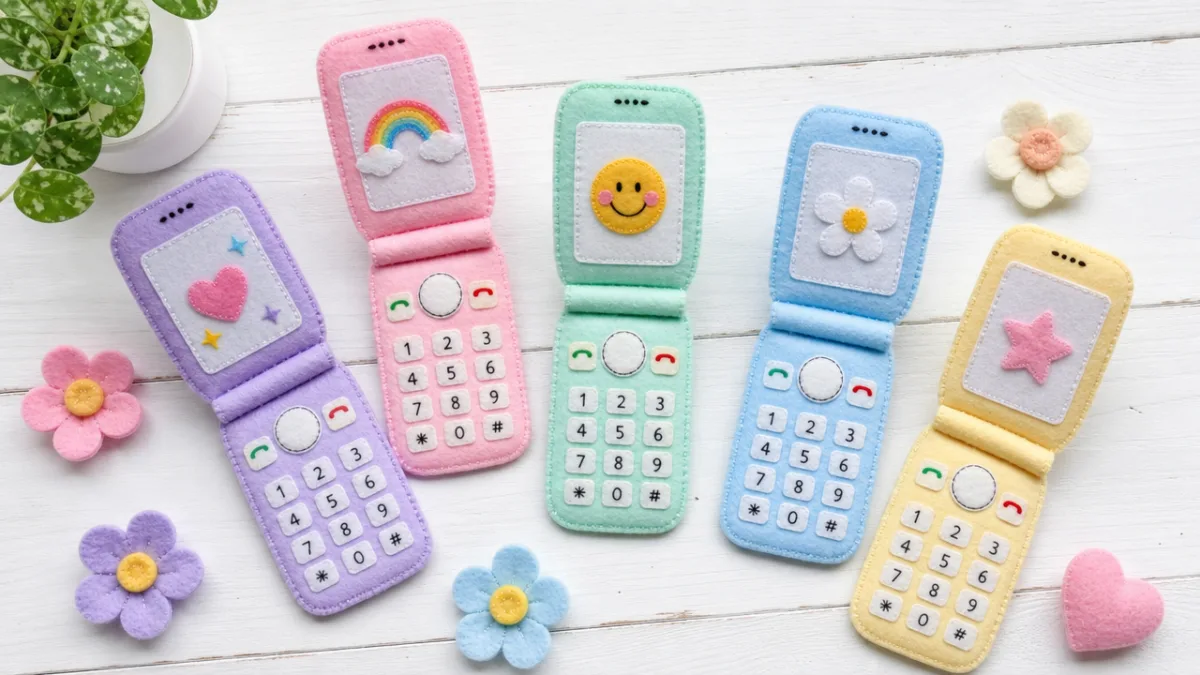
In a world dominated by sleek touchscreens and razor-thin smartphones, a delightfully unexpected crafting trend has emerged that is capturing hearts across Pinterest, Instagram, and craft fairs everywhere: felt flip phones. These miniature, handmade replicas of the beloved clamshell phones of the late 1990s and early 2000s are stitched together from soft sheets of felt fabric, often decorated with embroidered buttons, tiny felt screens, and even working “hinges” made from cleverly folded material. They are simultaneously nostalgic and whimsical, making them irresistible to crafters of all skill levels.
The trend gained significant momentum on Pinterest, where boards dedicated to soft toy crafts and fiber arts began filling up with vibrant, colorful examples of these tiny felt clamshells. Crafters started sharing their creations ranging from faithful reproductions of iconic models like the Motorola Razr and Nokia 3310 to entirely fantastical versions in rainbow hues with glittery embellishments and tiny embroidered emoji faces on the screens. The variety and creativity on display transformed what could have been a niche novelty into a full-blown movement within the DIY community.
What makes felt flip phones particularly appealing is their accessibility. Unlike knitting or crochet, which require mastering loops and tension, felt work is forgiving and straightforward enough for beginners to tackle confidently. Felt does not fray when cut, holds its shape reasonably well, and bonds easily with fabric glue in addition to being sewable. This low barrier to entry means that parents crafting with children, seasoned fiber artists, and complete novices can all participate in the trend and produce results they are genuinely proud to display or gift.
A Walk Down Memory Lane: Why Flip Phones Hold Such Cultural Power
To understand why felt flip phones resonate so powerfully, it helps to appreciate just how much cultural weight the original flip phone carries. When Motorola introduced the StarTAC in 1996, the satisfying snap of a clamshell phone closing became one of the defining sounds of an era. Throughout the late 1990s and into the mid-2000s, flip phones were status symbols, fashion accessories, and cinematic props all rolled into one. Characters in action movies flipped them open with cool authority, teenagers decorated them with rhinestone stickers, and parents felt cutting-edge simply owning one.
The flip phone era coincided with a pivotal period in modern culture: the transition from analog to digital life, the explosion of text messaging, and the early days of mobile internet. For millennials and older members of Generation Z, these devices are intimately linked with formative memories — first crushes communicated in careful T9 texts, ring tones downloaded painstakingly over slow connections, and the simple tactile pleasure of snapping a phone shut to end a conversation rather than awkwardly pressing a flat glass surface. That emotional resonance is precisely what crafters are tapping into when they stitch a tiny felt replica.
There is also a broader cultural conversation happening around nostalgia as a creative and emotional resource. In an era of constant digital overwhelm and rapid technological change, many people find comfort in revisiting the aesthetics and objects of a simpler-feeling past. Felt flip phones participate in this conversation playfully and without pretension. They do not demand that modern technology be abandoned; they simply invite us to hold a soft, tactile reminder of another time and smile. That combination of emotional depth and lighthearted whimsy is a powerful creative formula.
Materials and Tools: Everything You Need to Get Started
One of the great joys of the felt flip phone craft is how modest the supply list is. You do not need a sewing machine, expensive yarn, or specialized tools. The core materials are readily available at any craft store or online retailer, and many crafters find that they already have most of what they need tucked away in their existing supplies. Starting a new felt project carries none of the financial anxiety that can accompany more equipment-heavy crafts like quilting or weaving, which is another reason this trend has spread so quickly among hobbyists on a budget.
The essential materials for a basic felt flip phone project include the following items. Craft felt sheets in your chosen colors form the body of the phone — stiff felt holds its shape better than the ultra-soft variety, so look for wool-blend or stiffened craft felt if you can. Embroidery floss in black, white, and accent colors allows you to stitch on button details, a keypad grid, and screen graphics. A small amount of polyester fiberfill stuffing gives the finished phone a satisfying plump weight. Fabric glue or a hot glue gun is useful for securing layers that would be awkward to sew, and a sharp pair of fabric scissors is non-negotiable for clean edges.
- Stiff craft felt sheets in multiple colors (black, gray, silver, and bright accent colors are popular choices)
- Embroidery floss and a sharp embroidery needle for detail stitching
- Polyester fiberfill or thin foam padding for structure and weight
- Fabric glue or a low-temperature hot glue gun
- Sharp fabric scissors or a craft knife with cutting mat for precise shapes
- Printable templates or graph paper for designing your phone layout to scale
- Optional: seed beads, sequins, rhinestones, or iron-on patches for embellishment
Beyond materials, a handful of optional tools can elevate your results significantly. A self-healing cutting mat and rotary cutter make straight lines much cleaner than scissors alone. Fine-tipped permanent markers in metallic colors can simulate screen text and antenna details without requiring embroidery skill. If you plan to make multiple phones as gifts or for sale, a craft punch or die-cutting machine can speed up the process of cutting identical button shapes dramatically. As you grow more confident in the craft, you will naturally develop a toolkit that suits your personal working style and the level of detail you enjoy achieving.
Step-by-Step: How to Make Your First Felt Flip Phone
Creating your first felt flip phone is a project most crafters can complete in a single sitting of two to three hours, making it a perfect weekend afternoon activity or a crafting night project with friends. The process breaks down into several distinct phases: designing and cutting your pieces, assembling the two halves of the clamshell, adding surface details, and joining the halves with a flexible hinge. Working methodically through each phase produces a far more polished result than rushing through the steps, so give yourself permission to take your time and enjoy the process.
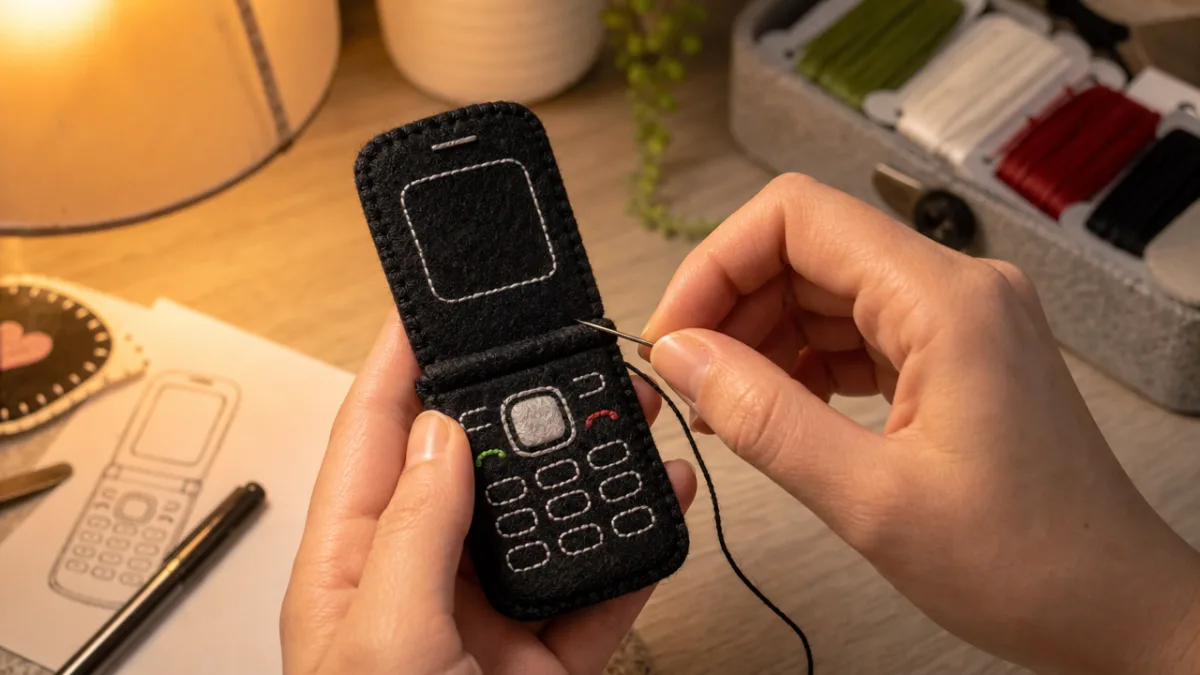
Begin by deciding on your phone’s dimensions and overall design. A good starting size for a first attempt is approximately 9 centimeters tall by 5 centimeters wide for each half of the clamshell, which produces a finished phone roughly the size of a large Christmas ornament — satisfyingly substantial without being unwieldy. Sketch your design on graph paper, noting where the screen, camera, keypad, and any logo details will sit. Cut two identical rectangles for the outer faces of each half, then two slightly smaller rectangles for the inner faces. Rounded corners are easy to achieve freehand with scissors and give the phone a more professional look.
Assemble each half by sandwiching a thin layer of fiberfill between the outer and inner felt layers, then stitching around the perimeter using a simple blanket stitch in a coordinating or contrasting color. Before closing each half completely, embroider or glue on all the surface details: the screen graphic on the upper half, the keypad grid and buttons on the lower half. The hinge is formed by leaving a small unstitched channel on the bottom edge of the upper half and the top edge of the lower half, threading a folded strip of felt through both channels, and securing it with a few firm stitches. When you fold the two halves together for the first time and hear that soft fabric “click” into place, the satisfaction is genuinely delightful.
- Sketch your design to scale on graph paper and cut out paper templates for all pieces.
- Trace and cut all felt pieces, including outer panels, inner lining panels, button shapes, and screen rectangles.
- Embroider or glue surface details onto each inner panel before assembly.
- Layer and stitch each clamshell half using blanket stitch, leaving the hinge edge open.
- Create the hinge strip from a folded length of felt and thread it through both open edges.
- Secure the hinge with several firm stitches on each side and test the folding action.
- Add any final embellishments, including beads, rhinestones, or metallic marker details.
Creative Variations: Taking Your Felt Flip Phone Beyond the Basics
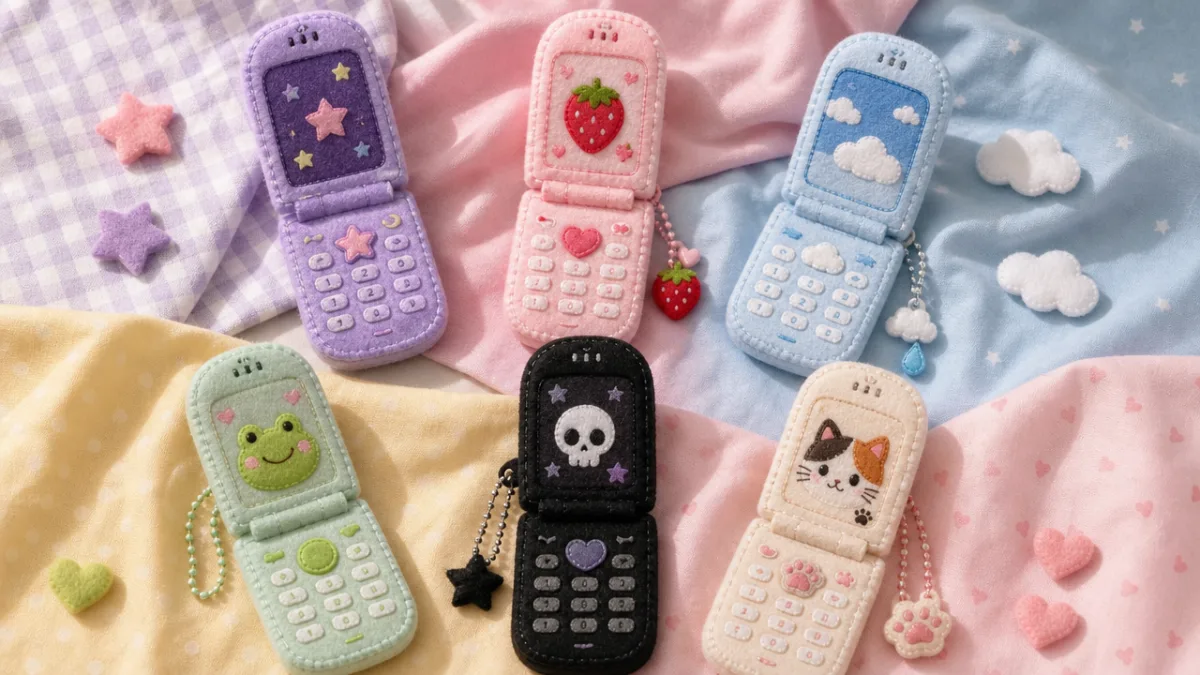
Once you have mastered the basic felt flip phone construction, an entire universe of creative variations opens up before you. The fundamental clamshell structure is really just a starting point — a framework onto which you can project virtually any aesthetic, theme, or personal reference. Crafters on social media have demonstrated this expansive creative potential by producing felt flip phones inspired by everything from retro video game palettes to beloved fictional universes, proving that the format is as flexible as the felt itself.
Thematic variations are among the most popular approaches. A Sailor Moon fan might craft a flip phone in pink and gold with a crescent moon embroidered on the screen and tiny star-shaped button details. A fan of vintage horror aesthetics might produce a phone in deep burgundy and black with a spider web pattern on the screen cover and tiny skull buttons. Video game enthusiasts have created phones styled after iconic controllers and handheld consoles, blurring the line between the flip phone form and their other nostalgic reference points. The only genuine limit is the crafter’s imagination, which in practice means there is no limit at all.
Functional variations are another rich avenue for exploration. Some crafters have transformed the felt flip phone structure into a small coin purse by adding a snap closure inside the hinge and leaving the interior hollow. Others have made them into ornaments with a hanging loop of ribbon, keychains with a metal ring attachment at the top, or flat decorative appliqués meant to be ironed or stitched onto tote bags and denim jackets. Children’s toy versions are often made slightly larger and stuffed more firmly so they hold up to enthusiastic play. Each functional adaptation requires only small modifications to the basic pattern while producing a result with an entirely different purpose and appeal.
Color and texture variations deserve special attention as well. While most felt flip phones aim for some degree of realism with black, gray, and silver color schemes, the trend has embraced maximalist interpretations with equal enthusiasm. Ombré effects created by layering multiple shades of felt, plaid patterns constructed from thin strips of felt in contrasting colors, and even three-dimensional sculptural details like raised bumper ridges or tiny felt antenna nubs all push the craft in exciting new directions. Mixed-media approaches incorporating washi tape, fabric paint, iron-on vinyl, or tiny printed photos for the screen display add layers of personal meaning and visual interest that pure felt alone cannot achieve.
Felt Flip Phones as Gifts, Party Favors, and Creative Business Ventures
Beyond personal crafting satisfaction, felt flip phones have proven to be extraordinarily versatile as gifts and social objects. Their small size means they are inexpensive to make and easy to package attractively — a single phone tucked into a small kraft paper box with tissue paper and twine makes a charming, handmade gift that feels thoughtful without requiring the investment of time and resources that larger handmade gifts demand. For birthdays, holidays, thank-you gestures, or simply because a friend mentioned they once owned a pink Motorola Razr and never got over losing it, a custom felt flip phone lands with genuine warmth and whimsy.
Party favor applications have made felt flip phones particularly popular among event planners and parents organizing themed birthday parties. A Y2K themed party — one of the most enduringly popular birthday themes for millennials hosting their own celebrations — is an absolutely natural home for felt flip phone favors. Guests leave with a handmade keepsake that doubles as a conversation piece and a party memory, which is precisely what a good favor should do. Craft-along activities where party guests make their own felt phones at the party itself have become a popular alternative to traditional games, especially at bachelorette parties and crafting-themed girls’ nights.
For crafters interested in monetizing their skills, felt flip phones represent a genuinely viable small product to sell at craft markets, on Etsy, or through local boutiques that carry handmade goods. Their relatively quick construction time — once a crafter has made several and refined their process, a single phone can be completed in under an hour — combined with their strong visual appeal and clear gift-worthiness makes them commercially attractive. Pricing typically runs between ten and thirty dollars depending on complexity and local market conditions, representing a reasonable return on time invested compared to more labor-intensive fiber art products.
Crafters who do sell their felt flip phones often find that offering customization is the most powerful business strategy available to them. A customer who can specify their favorite color, request a screen that displays their own initials, or ask for a replica of the exact phone model they owned in 2003 is a customer who feels a deep personal connection to the product before it even arrives. This emotional investment translates into enthusiastic reviews, word-of-mouth referrals, and repeat customers who return for additional phones as gifts for friends. In the handmade marketplace, the ability to create something genuinely personal for someone is the ultimate competitive advantage.
Community, Connection, and the Broader Meaning of Nostalgic Crafting
The felt flip phone trend is not just about the phones themselves — it is about the community that has formed around them. Crafters who share their work on Pinterest, TikTok, and Instagram report finding genuine connection in the comments sections of their posts, where strangers bond over shared memories of specific phone models, swap pattern tips, and celebrate each other’s creative interpretations. In an era of social media that is frequently criticized for fostering comparison and anxiety, craft communities like this one tend to operate with a refreshingly generous, encouraging spirit that reminds participants of what online connection can be at its best.
Crafting as a practice has well-documented benefits for mental health and wellbeing. The focused, repetitive nature of hand stitching has been compared by researchers to mindfulness meditation, producing a calm, present-moment awareness that modern life rarely grants us naturally. Making something tangible with your hands in a world of increasingly abstract digital work provides a sense of accomplishment and agency that many people find deeply satisfying. Felt flip phones, with their small scale and quick completion time, offer these benefits in concentrated, accessible form — a mental health tool disguised as a charming little toy.
There is also something meaningful about the specific act of recreating an obsolete technology in soft, tactile materials. It is a kind of cultural processing — taking an object that once felt essential and urgent, an object tied to the anxious rhythms of communication and social belonging, and transforming it into something soft, slow, and purely pleasurable. The felt flip phone cannot receive calls. It cannot send texts. It cannot vibrate with the anxiety of an unread notification. It simply exists, plump and colorful, as a reminder that objects we once rushed through can be held gently and appreciated fully when the pressure of their original purpose is removed.
As the craft continues to evolve, it is likely to expand beyond flip phones into a broader vocabulary of felt technology nostalgia — felt Game Boys, felt iPods, felt pagers, felt answering machines. The impulse driving the trend, that desire to reclaim the past through the slow, caring work of the hands, seems unlikely to exhaust itself anytime soon. If anything, as the pace of technological change continues to accelerate and the objects of our digital lives become ever more ephemeral and intangible, the appeal of making something soft and permanent and lovingly handmade will only grow stronger. The felt flip phone is a small object with a surprisingly large heart, and the community gathered around it reflects exactly that.








What do you think?
It is nice to know your opinion. Leave a comment.