










DIY Handmade Craft Ideas: Building Your Aesthetic Craft Workspace
The Magic of a Thoughtfully Designed Craft Workspace
Having a dedicated spot just for crafting can completely change how you approach your creative practice. When your tools are easy to find, your work surface is clear, and the space around you actually feels good to be in, making things by hand stops being something you squeeze in occasionally and starts feeling like a real ritual. A well-set-up craft space sends a quiet signal to your brain: this is where ideas get to run loose and a little mess is totally fine. And that changes everything about how freely you create.
The way your workspace looks and feels matters a lot more than most people expect when they first set one up. Environmental psychology research backs this up — the visual character of a space genuinely affects your mood, your motivation, and how well you focus. A dim, cluttered, or just kind of blah space creates low-level friction before you’ve even picked up your scissors. A space that feels personal and thoughtfully put together, on the other hand, acts like a standing invitation to come sit down and make something every single day.
What makes the craft workspace conversation so exciting right now is that people are finally merging practicality with beauty. Crafters aren’t stashing their supplies in bins under the bed or hiding their work table in a dark corner anymore. Instead, they’re treating their tools and materials as part of the decor — sorting threads by color, displaying ribbons in glass jars, hanging washi tape across a pegboard like it’s living wallpaper. The workspace itself becomes a handmade thing, a reflection of who the maker is and what they love.
Choosing the Right Foundation: Tables, Lighting, and Layout
It all starts with your work surface. You need a table big enough to actually spread a project out without feeling like you’re working in a shoebox — that part isn’t really negotiable. A lot of crafters love farmhouse-style wooden tables or sturdy IKEA surfaces that can handle glue, paint, and the occasional exacto knife slip without drama. Height matters more than people realize too. A table that makes you hunch will end your crafting session way earlier than you planned, so if you can get an adjustable-height desk or at least pair your table with a chair that fits properly, your body will thank you after a few hours in.
Lighting might actually be the most important thing in a craft setup, and it’s also the thing people most often forget to think about until it’s too late. Natural light is ideal, so if you can get your workspace near a window, do it. North-facing light tends to be softer and more consistent than direct southern sun, which throws harsh shadows across your work. For evenings or darker rooms, a combination of warm ambient overhead light plus a bright, adjustable task lamp positioned so your hands don’t cast shadows is the setup most crafters swear by — and it does a much better job of showing you accurate colors in fabric, thread, or paint than a single overhead bulb ever will.
When you’re thinking about layout, try to think in terms of workflow rather than just looks. Walk through the steps of your most common projects in your head and set up your stations so you flow naturally from one phase to the next without constantly crossing the room. A lot of experienced crafters work with a simple three-zone setup: a cutting zone, a detailed handwork zone, and a drying or assembly zone. Even in a small space, sketching a rough floor plan before you start moving furniture around can save you a serious headache and help you get the most out of every square foot you have.
Organizing Your Supplies: Systems That Are Beautiful and Functional
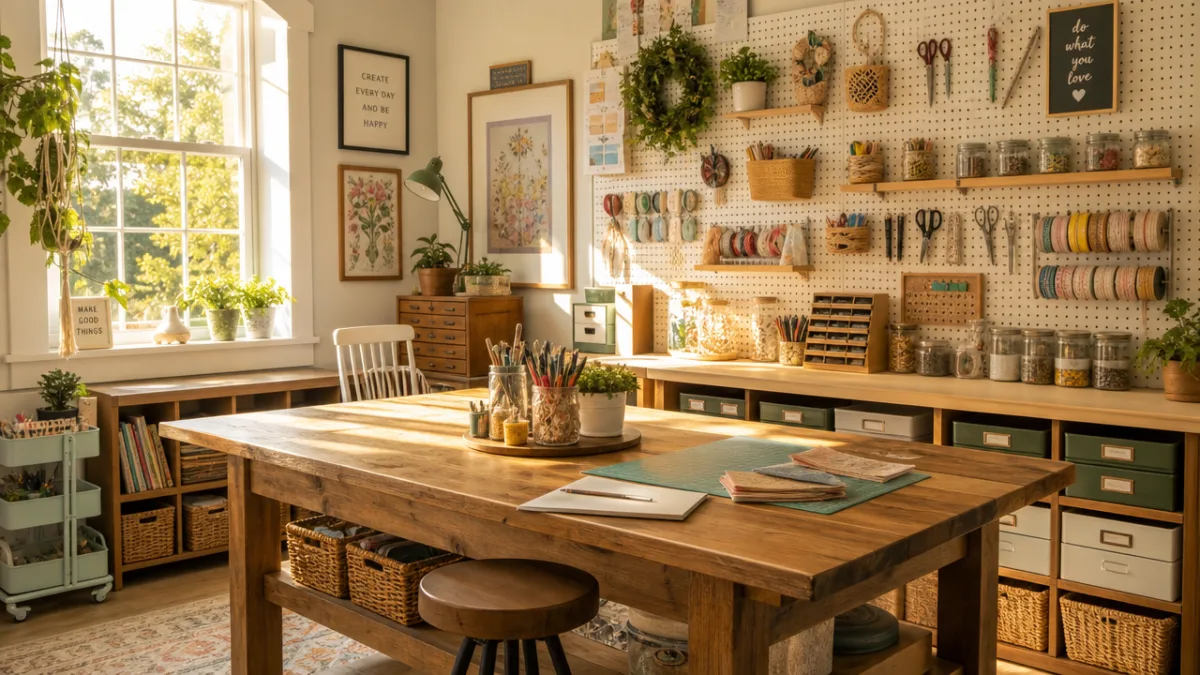
This is where the aesthetic and the practical really come together. The goal with organization is simple: every single item should be visible and reachable within a few seconds. Because if something requires hunting, you will quietly stop using it. Clear acrylic organizers, open glass jars, labeled drawers, and color-sorted displays all hit that sweet spot between looking great and actually working. There’s also a creative bonus — when you can see everything you have at a glance, your materials start suggesting combinations on their own, which is so much more inspiring than digging through opaque bins hoping something good turns up.
Vertical storage is genuinely a craft room’s best friend, especially in smaller spaces. A well-organized pegboard can hold scissors, rulers, ribbon spools, tape rolls, little baskets of embellishments, and hooks for your most-used tools — all within arm’s reach of your main surface. The best part about pegboards is that they’re completely flexible. As your collection grows or your practice shifts, you can rearrange hooks and shelves without any permanent commitment. Paint it a soft, muted tone that works with the rest of your room and it stops being a utility item and starts being an actual design feature.
How you categorize your supplies — by type, by project, or by color — is really a personal call that depends on how your brain works. Color organization looks stunning and works beautifully if you mostly work with fabrics, threads, or papers. Organizing by type, where all your cutting tools live together, all your adhesives share a spot, and embellishments have their own zone, tends to work better for crafters who jump between different media all the time. Many experienced makers end up with a hybrid of both: broad categories organized by type, then sorted by color within each category. It gives you visual appeal and real-world function without having to sacrifice one for the other.
Essential DIY Projects to Start With
If you’re building a craft practice from scratch, the projects you start with set the tone for everything that comes after. Choosing things that are approachable but still deliver genuinely satisfying results fast is the move — it builds the confidence and momentum that keep a creative habit going long-term. Handmade cards, fabric bookmarks, washi tape journals, and simple embroidery hoops are all great starting points. They don’t require a lot of tools, they look lovely when they’re done, and they naturally teach skills that carry over into more ambitious projects as you grow.
A few categories are especially worth exploring as you build your project repertoire. Paper crafts like origami, hand-lettered stationery, and basic bookbinding teach precision cutting and folding without asking for much upfront investment in tools or materials. Textile crafts — hand embroidery, simple loom weaving, no-sew fabric projects — develop your feel for color and texture in a really tactile, satisfying way. Resin and mixed media projects need a bit more safety awareness and a slightly higher initial investment, but the results can be genuinely stunning, and even beginners often end up with pieces that look gallery-worthy.
Something the most prolific crafters tend to have in common is a personal project repertoire — a curated list of go-to makes for different moods, skill levels, and time windows. Some days you have three focused hours and the energy to try something complex and new. Other days you have forty minutes and you just need something meditative and familiar. Having projects lined up for both scenarios means you actually make things consistently, rather than spending your limited creative time standing in your craft room trying to decide what to attempt. Keeping a small notebook of project ideas, material lists, and inspiration images near your workspace makes this incredibly easy to maintain.
Building an Aesthetic That Is Authentically Yours
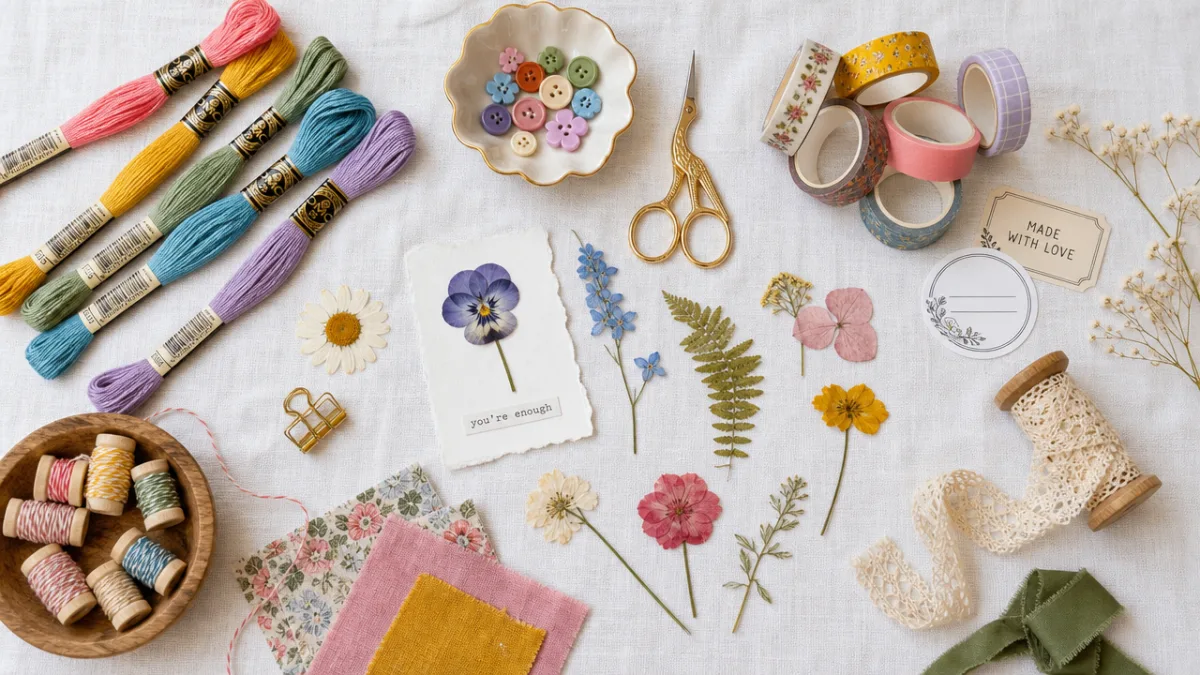
The word “aesthetic” gets thrown around so much in craft and DIY spaces that it can start to feel hollow — like it just means picking a trend to recreate from Pinterest. But your craft workspace aesthetic should be something much more personal and lasting than whatever’s currently going viral. It should be a genuine reflection of the colors, textures, moods, and visual references that actually make you feel alive and creative. Taking time to figure out what you’re really drawn to — not what you think you should be drawn to — is the whole foundation of building a space that keeps inspiring you years down the road.
A really useful exercise is collecting fifty images of spaces, objects, color combinations, or projects that genuinely excite you, without filtering or second-guessing yourself. Lay them all out together and patterns almost always show up on their own. Maybe you keep gravitating toward warm neutrals, natural textures, and dried botanicals rather than the bright, bold palettes everywhere on social media. Maybe you love deep jewel tones and Victorian-style layered clutter over clean minimalism. Neither is more valid than the other — what matters is that the aesthetic you create actually reflects your own tastes, not an aspirational identity you’ve borrowed from someone else’s feed.
Weaving meaningful objects into your workspace is one of the most powerful ways to make it feel genuinely yours. A small piece of pottery you made in a class, a postcard from a museum you love, a dried flower from a special occasion, a framed print by an artist whose work moves you — these things create a sense of personal history and intention that no amount of matching storage containers can replicate. The most beautiful, inspiring craft spaces aren’t pristine showrooms. They’re accumulations of a maker’s life, interests, and memories, layered slowly over time and rearranged as the person themselves keeps growing and changing.
Sustaining Your Creative Practice Over the Long Term
Setting up a beautiful craft workspace is genuinely exciting — but the harder, more important work is keeping a consistent creative practice going once that initial fresh-setup energy fades. The crafters who make things prolifically over years and decades tend to share one approach: they make it as easy as possible to start. That means keeping your workspace ready to use at a moment’s notice rather than requiring a full setup and teardown each time, leaving works-in-progress out where you can see them instead of putting everything away, and treating a twenty-minute creative session as genuinely worthwhile rather than waiting for those perfect uninterrupted stretches of time that rarely seem to actually arrive.
A seasonal refresh of your workspace can do a lot to counteract the gradual inspiration-dulling that even the most well-designed spaces eventually produce. This doesn’t mean spending a lot of money or overhauling everything every few months. It might just mean rotating what’s on your desk surface, adding a small seasonal arrangement of botanicals, swapping out a print on the wall, or doing a thorough clean and reorganize so the whole space feels intentional and fresh again. A lot of crafters find that the tidying and curating process itself is a kind of creative warm-up — it gets them in the right headspace before they’ve even picked up a tool.
Community is something a lot of solo crafters underestimate. Whether it’s a local craft circle, an online group built around a specific medium or aesthetic, or just a friend who also makes things by hand, sharing your practice with other people brings accountability, fresh perspectives, new techniques, and the particular kind of encouragement that only comes from people who truly get it. The handmade and DIY world is a remarkably generous one — experienced makers tend to share what they know freely and cheer each other on with real enthusiasm. Even tapping into that community partially or occasionally can turn a solitary hobby into a rich, sustaining part of your creative life that keeps evolving for as long as you show up for it.
Sourcing Materials Mindfully and Affordably
One of the most common things people worry about when they want to build a craft practice is cost. And it’s a fair concern — but the reality is that approaching material sourcing thoughtfully can keep costs genuinely low while often leading to more interesting finds than buying everything new from a specialty retailer. Thrift stores, estate sales, and destash communities — where crafters sell or give away supplies they no longer need — are incredible sources of fabric, yarn, ribbon, tools, and embellishments at a fraction of retail prices. Shopping these channels also cuts down on waste, which fits naturally with the handmade ethos of valuing materials and extending their life.
Building your supply collection slowly and with intention produces a much more usable and more beautiful workspace than trying to accumulate everything at once. When you buy a material because you have a specific project in mind, or because something genuinely excites you, you end up with a collection that reflects your actual practice rather than some aspirational version of it. The frustrating paradox that many crafters run into — a room full of supplies but feeling like there’s nothing to work with — almost always comes down to accumulation without intention. Buying broadly and ending up with a huge, overwhelming collection of things that don’t quite connect to each other, or to any project you’re actually motivated to make.
Building relationships with independent makers, local art supply shops, and small online retailers is good for your practice in both ethical and practical ways. Independent suppliers often carry unusual, high-quality materials that you’ll never find at a big-box store, and the people running these businesses tend to know their products deeply and genuinely enjoy helping you track down exactly what a project needs. Supporting them also strengthens the broader ecosystem of craft and making — helping to keep the specialized materials, tools, and expertise that serious crafters depend on available and accessible for years to come.








What do you think?
It is nice to know your opinion. Leave a comment.