










“`html
Hoe of All Hobbies: Why Crafting Is the Ultimate Hobby-Hopper’s Paradise
You know the type. Maybe you are the type. You can’t walk past a craft store without your heart doing a little thing. You’ve got a half-finished knitting project shoved in the closet, watercolor paints that came out exactly twice, a Cricut still in the box, and — let’s be honest — at least fourteen different kinds of glue. If any of that sounds like your house, welcome. Pull up a chair. You’re not disorganized or flighty — you’re what the crafting world calls a “hoe of all hobbies,” and honestly? That’s kind of a badge of honor.
The phrase “hoe of all hobbies” has really taken off in crafting communities, especially on Pinterest, where people who refuse to commit to just one creative outlet have found their people. It’s a cheeky spin on “jack of all trades, master of none” — except instead of an insult, it’s a whole vibe. A defiant, glitter-covered vibe. In a world that keeps telling you to pick a lane, the multi-hobby crafter just kind of… doesn’t. They go from embroidery to resin art to bookbinding without feeling the need to explain themselves, and good for them.
That’s what this article is about. Whether you’ve been crafting for years or you just got your first block of polymer clay and are already sneaking glances at beginner woodworking kits, this is for you. We’re going to get into why hobby-hopping is actually great for your brain, how to keep your supplies from completely taking over your home, and how to build a creative life that has room for all of your interests — without the chaos eating you alive.
The Psychology Behind Hobby-Hopping
A lot of people feel guilty when they drop one hobby to start chasing another, like sticking with a craft is some kind of moral obligation. But researchers who study creativity and leisure have been finding more and more that having a variety of hobbies isn’t a character flaw — it’s actually a pretty smart way to keep your brain happy. Different crafts light up different neural pathways, keep you in that active learning mode, and prevent the kind of boredom that sets in when you’re just going through the motions of something you’ve already mastered.
Every time you pick up something new, your brain goes into what researchers call the “acquisition phase” — basically a heightened state of engagement where dopamine is flowing because you’re learning something unfamiliar. That’s why starting a new hobby feels so good. Your brain is genuinely rewarding you for the novelty of it. For hobby-hoppers, that excitement at the beginning isn’t a warning sign that they’re about to bail — it’s just how they naturally engage with creative work. And here’s the thing: the joy of starting something new is a complete experience in itself. It doesn’t have to lead to mastery to count.
There’s also this idea called “creative cross-pollination,” which is basically the observation that skills from one craft quietly improve your work in another. A quilter who starts messing around with watercolor often notices their color instincts getting sharper — and then suddenly their fabric choices are better too. Someone who takes a pottery class develops a new feel for texture and form that shows up in their jewelry. Nothing you learn in your creative life is wasted, even if the hobby itself only lasts three weeks. It all feeds back into the bigger picture of how you make things.
Building Your Hobby Arsenal Without Losing Your Mind
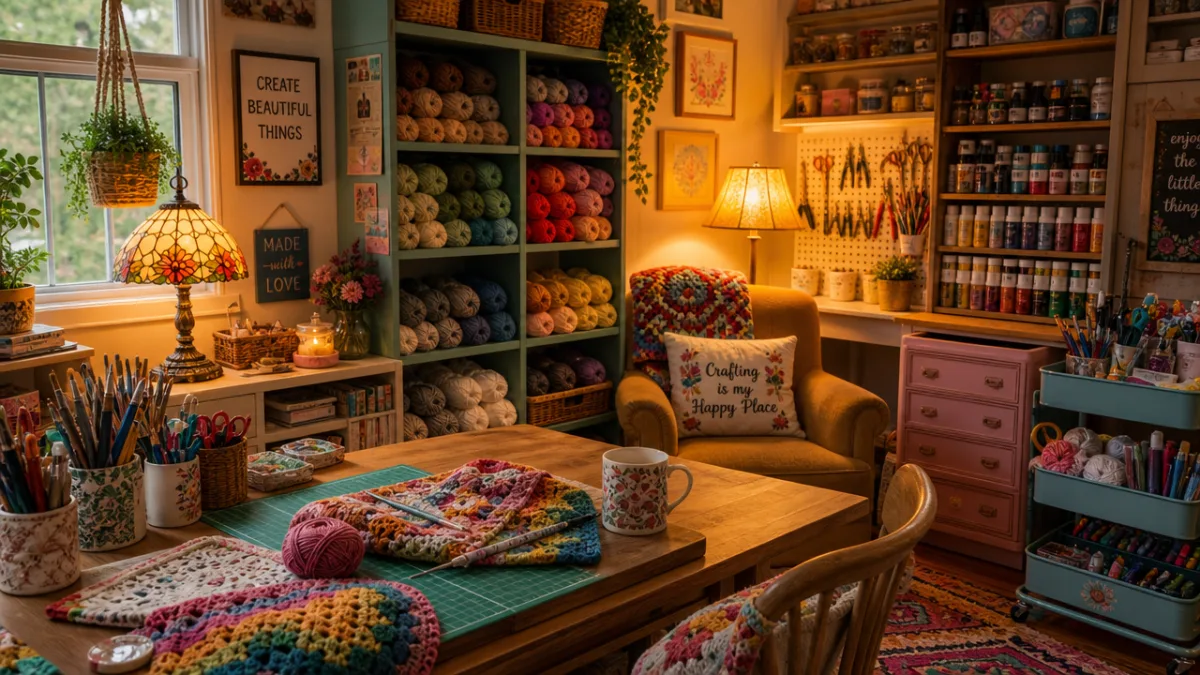
Let’s talk about the elephant in the room — or more accurately, the seventeen bins of supplies stacked in the corner of the room. Craft materials have a way of multiplying when you’re not looking. Drawers fill up. Shelves overflow. Suddenly there’s a whole closet dedicated to things you might get back to someday. When it tips from “inspiring abundance” into “I can’t find anything and I feel bad about all of it,” you’ve hit what a lot of crafters call “stash guilt,” and it’s very real.
The answer isn’t to shrink your interests down to one tidy hobby that fits in a single tote bag. It’s to build systems that actually work for the way you operate. Clear labeled containers, a simple running list of what you have, and something like a “one project out at a time” rule can do a lot of heavy lifting. Many seasoned hobby-hoppers swear by a rotating setup — whatever you’re actively working on gets prime real estate, and everything else gets boxed up and stored until the mood strikes.
It also helps to sort your hobbies into tiers. Some crafts are your ride-or-dies — you come back to them year after year, and they deserve good tools and easy access. Others are more like seasonal visitors that show up every year or two — they can live in a labeled box without shame. And then there’s the experimental stuff: the kit you grabbed at the craft fair because why not, the thing you’re going to try exactly once just to say you did. Give those a small, set budget and absolutely zero pressure to become a whole thing. Thinking about your crafts this way makes it much easier to stay organized without having to commit to being a different kind of person.
The Social World of Multi-Hobby Crafters
One of the genuinely great things about bouncing between hobbies is that you end up belonging to a lot of communities at once. Crafting is social by nature, even when you’re doing it alone at your kitchen table at midnight — it connects you to a whole world of traditions, techniques, online groups, local clubs, and the long human history of people making things with their hands. The more crafts you dabble in, the more of those communities you get to be part of.
Online, it’s never been easier to find your people, no matter how specific your current fixation. Looking for other people who sculpt miniature food out of polymer clay while also crocheting sweaters for their cats? They exist, they’re out there, and they’re delightful. The crafting corners of the internet are some of the most genuinely warm and encouraging spaces you’ll find — lots of tutorial-sharing, enthusiastic comments, and a general understanding that the process is the point, not just the polished final product.
In-person communities offer something a little different. There’s something about sitting in a room with other people who are all making things with their hands — craft nights, yarn swaps, community workshops, maker fairs — that the internet can’t quite replicate. You learn in real time, you share your current enthusiasm with people who actually get it, and you inevitably stumble onto hobbies you never would have found on your own. For the multi-hobby crafter, these spaces are basically a portal to an endless supply of new rabbit holes, and that’s a beautiful thing.
Embracing the “Master of None” Identity
The pressure to specialize is everywhere. From pretty early on, people want to know what your “one thing” is. And as an adult, hobbies often get put through this filter of productivity — could you sell this? Is this building toward something? Could it become a side hustle? For multi-hobby crafters, that whole framework kind of misses the point of what crafting is actually for.
At its core, crafting is about the experience of making, not just the thing you end up with. The rhythm of a crochet hook moving through yarn. The satisfying drag of a linocut tool through rubber. The specific smell of oil paint and linseed. These are sensory experiences that do something for you as a person, completely independent of whether the finished object has any monetary value or social currency. When we insist that hobbies have to lead somewhere, we strip out the most powerful thing about them: they exist in the present moment, just for the sake of doing them.
Claiming the “master of none” identity means making peace with the fact that some of what you make will be technically imperfect, some projects won’t get finished, and some supplies will be used exactly twice before going into a box. And then deciding — clearly, on purpose — that all of that is completely fine. Your wide-ranging curiosity is not a problem to be solved. Every unfinished project is proof that you’re living a life full of things that interest you. Every hobby you tried and moved on from is a door you opened, and whether you walked through it or just peeked inside, both of those are valid things to do with a door.
Hobbies That Play Well Together
If you’re building out your hobby collection — or if it’s already building itself whether you planned it or not — there’s real value in knowing which crafts tend to complement each other. Some hobbies share so much foundational knowledge that picking up one genuinely gives you a head start on the next. Understanding these overlaps can make your creative life feel more like an ecosystem and less like a pile of random interests, even if that pile is impressively large.
Fiber arts are a good example. Knitting, crocheting, weaving, embroidery, sewing — they each have their own tools and techniques, but they all build sensitivity to texture, color, and pattern. A knitter who wanders into embroidery will find their color sense is already pretty solid. Someone who sews will recognize the structural logic in weaving. The same goes for the visual arts — drawing, painting, printmaking, digital illustration — they all pull from the same core skills around composition, value, and color theory. Learn any one of them well and the others get easier.
Here are some natural groupings to consider when building your hobby constellation:
- Fiber and textile arts: knitting, crocheting, weaving, embroidery, needlepoint, macramé, fabric dyeing, and sewing all share a love of texture, color, and pattern.
- Paper crafts: origami, bookbinding, cardmaking, scrapbooking, and paper marbling develop precision, an eye for design, and an appreciation for material quality.
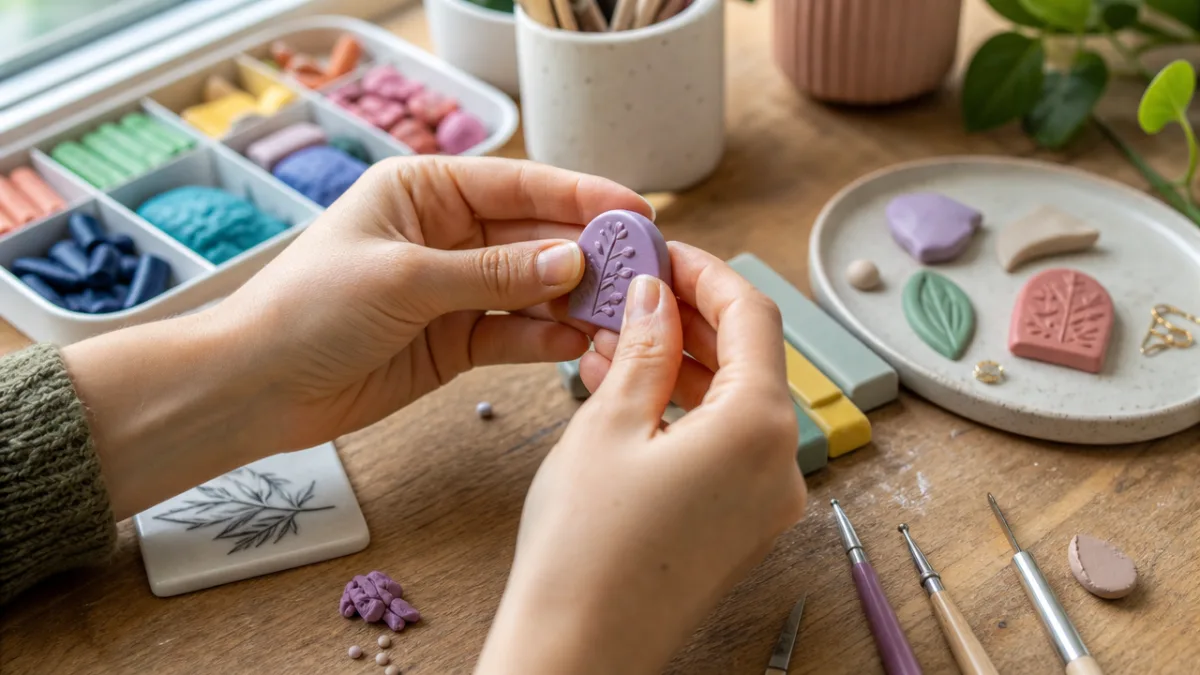
- Sculptural crafts: polymer clay, air-dry clay, pottery, wood carving, and soap making all build three-dimensional thinking and a sensitivity to form and surface.
- Mixed media and resin: resin art, decoupage, collage, and altered books reward an eclectic sensibility and a willingness to combine unexpected materials.
- Drawing and painting: watercolor, gouache, acrylic, oil, ink illustration, and colored pencil all develop the same core visual literacy and benefit from cross-practice.
That said, the most honest thing to say is that you don’t actually need a strategic reason to try something new. If you walk past a macramé kit and something in you goes “oh, yes,” that’s enough of a reason. The groupings above aren’t rules — they’re just a reminder that the skills you pick up are more portable than you might think. Nothing you make, and nothing you learn while making it, disappears.
Creating a Life That Makes Room for All of It
Maybe the most radical thing a multi-hobby crafter can do is stop treating their creative life like something that needs to justify itself — and start treating it as a non-negotiable part of a good life. That takes a different kind of time management than the hustle-culture variety. Not the kind that treats free time as wasted potential, but the kind that recognizes rest, play, and making things as real human needs that deserve actual protected time.
In practice, that might look like setting aside a regular “craft hour” a few times a week — time that belongs to whatever project or material is calling to you that day, no agenda required. It might mean keeping a small basket of current projects somewhere visible so you’re reminded they exist and can pick something up on a whim. It might mean letting yourself spend a Saturday afternoon down a tutorial rabbit hole for a craft you’ve never tried, with zero pressure to buy supplies or actually attempt it. The goal is to stay in active relationship with your creative curiosity, rather than letting it get buried under everything else you have to do.
It also means being kind to yourself during the fallow periods — the stretches when life gets busy, the craft room sits untouched, and the guilt starts quietly building up. Those periods are normal. They happen to every crafter who’s been doing this for any real length of time. They don’t mean you’ve failed, or that your interest wasn’t genuine, or that you should give your supplies to someone more deserving. They’re just seasons. The urge always comes back. And when it does, everything will be right where you left it, waiting.
The Gift You Give Yourself and Others
Being a hoe of all hobbies isn’t just a funny phrase that looks great on a tote bag — though it absolutely does look great on a tote bag. It’s a way of living that puts curiosity above mastery, joy above productivity, and the full range of human experience above the narrower satisfaction of being really, really good at one thing. In a culture obsessed with optimization and specialization, wandering joyfully through the whole garden of creative possibility is genuinely a small act of resistance. A glittery, slightly chaotic act of self-determination.
And the things you make along the way — polished or imperfect, finished or not — carry that energy with them. They were made out of genuine enthusiasm, not obligation. Out of curiosity, not anxiety. People can actually feel that difference when they hold something handmade. When they wear a scarf someone knitted, or look at a painting someone made just because they wanted to try acrylics that month. The joy that went into making it is in the object itself, and no amount of technical perfection can fake that.
So if you needed a permission slip: here it is. Try the thing. Buy the kit. Sign up for the class. Let your interests sprawl. Let your commitments stay flexible. Let your craft room be gloriously, unapologetically overstocked. Be the hoe of all hobbies with your whole chest — because a life spent curiously, creatively, and joyfully figuring out what your hands can do is a life extraordinarily well spent. The only rule is that you’re allowed to love all of it: the finished things, the abandoned things, the things you’re still figuring out, and most of all, the messy, beautiful, wonderful process of making itself.
“`








What do you think?
It is nice to know your opinion. Leave a comment.