










20 Fun Crafts for Teenagers: Creative Projects to Spark Imagination and Build Skills
Why Crafting Matters for Teen Development
Crafting is so much more than just something to do when it’s raining and you’re bored. For teenagers dealing with the very real pressures of school, friendships, and figuring out who they are, creative projects give them a genuinely powerful way to express themselves and shake off stress. There’s something special about making things with your hands — it lights up the parts of the brain tied to problem-solving, patience, and that warm glow of pride when something actually comes together. And those qualities don’t just stay at the craft table.
Research on teen development consistently points to how important creative engagement is during these years. Crafting can pull you into what psychologists call a “flow state” — that sweet spot where you’re so focused on what you’re doing that an hour vanishes without you noticing. Whether someone’s weaving a friendship bracelet or painting a canvas, building something from scratch grows a quiet kind of confidence that good grades alone rarely give you. It teaches you that effort actually leads somewhere, and that messing up is just part of how you get there.
On top of all that, crafting teaches real, practical skills. Measuring, cutting, mixing colors, following a pattern, and figuring out a fix when something goes sideways — these aren’t just craft skills, they’re life skills. Plenty of teens who discover they love making things end up exploring careers in design, fashion, architecture, or the arts. And even the ones who go a completely different direction carry a maker’s mindset with them, which turns out to be genuinely useful no matter what you do.
Paper and Drawing Crafts for Creative Expression
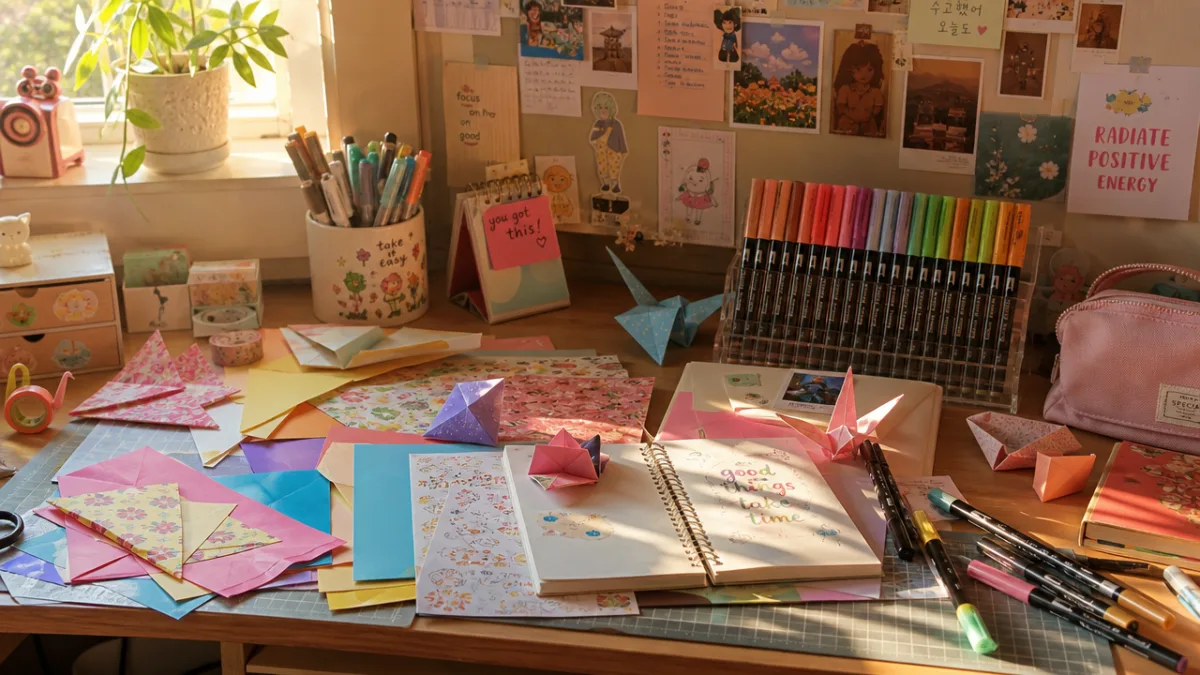
Paper crafts have always been popular with teenagers, and honestly, it’s easy to see why — the supplies are cheap, easy to find, and you can do almost anything with them. Origami is a great example. All you need is a single sheet of paper, and you can fold it into anything from a simple crane to an incredibly complex geometric shape. A lot of teens find origami surprisingly meditative; the careful attention it demands actually helps calm a busy mind. There are thousands of patterns available online at every skill level, so you never really run out of new challenges.
Sketchbook journaling is another paper-based craft worth trying, especially if you like blending different creative urges together. It’s not quite a diary and not quite an art project — it’s both, and it has no rules. Teens fill their pages with ink drawings, watercolor splashes, collaged magazine clippings, stamped patterns, handwritten poems, or whatever feels right. What you end up with is this beautifully messy, textured record of what’s going on in your head. A lot of teens find that spending time in a sketchbook helps them process feelings they can’t quite put into words.
Then there’s hand lettering and calligraphy, which have blown up largely thanks to social media. Beautiful brush-lettered quotes and illustrated typography get a ton of attention online, and the good news is that the basics are actually pretty learnable. Most teenagers can pick up brush lettering with an affordable set of brush pens within a few weeks of practice. From there, the possibilities open up fast — personalized greeting cards, wall art, custom gifts, or even a small side hustle designing lettering for people online.
Textile and Fiber Arts: Sewing, Knitting, and Beyond
Textile crafts have made a huge comeback with younger people lately, driven by a mix of sustainability awareness and the simple satisfaction of working with fabric and fiber. Even basic sewing is a surprisingly powerful skill — once you know the fundamentals, you can alter clothes, rescue favorites that no longer fit quite right, and eventually make things entirely from scratch. Transforming thrift store finds into one-of-a-kind pieces is a very real teen aesthetic, and it maps perfectly onto learning to sew on a beginner machine.
Knitting and crochet might sound like something your grandmother did, but younger generations have genuinely reclaimed them. The rhythmic, repetitive motion of knitting is well-documented for reducing anxiety, and the community around fiber arts — both in local yarn shops and all over the internet — is famously kind and welcoming. Once a teenager learns to crochet, they can make chunky market bags, cozy beanies, intricate lace pieces, and adorable amigurumi stuffed animals, with patterns available at literally every skill level.
Macramé is another one that tends to hook teenagers pretty quickly. The basic knots are easy to pick up from a YouTube tutorial, and within a single afternoon a complete beginner can make a simple wall hanging or plant hanger that looks genuinely impressive. The materials are minimal — a roll of cotton rope, a wooden dowel, and scissors. That’s it. More advanced projects can go as big as intricate wall tapestries, woven table runners, and even large headboards that completely transform a bedroom.
DIY Accessories and Wearable Art
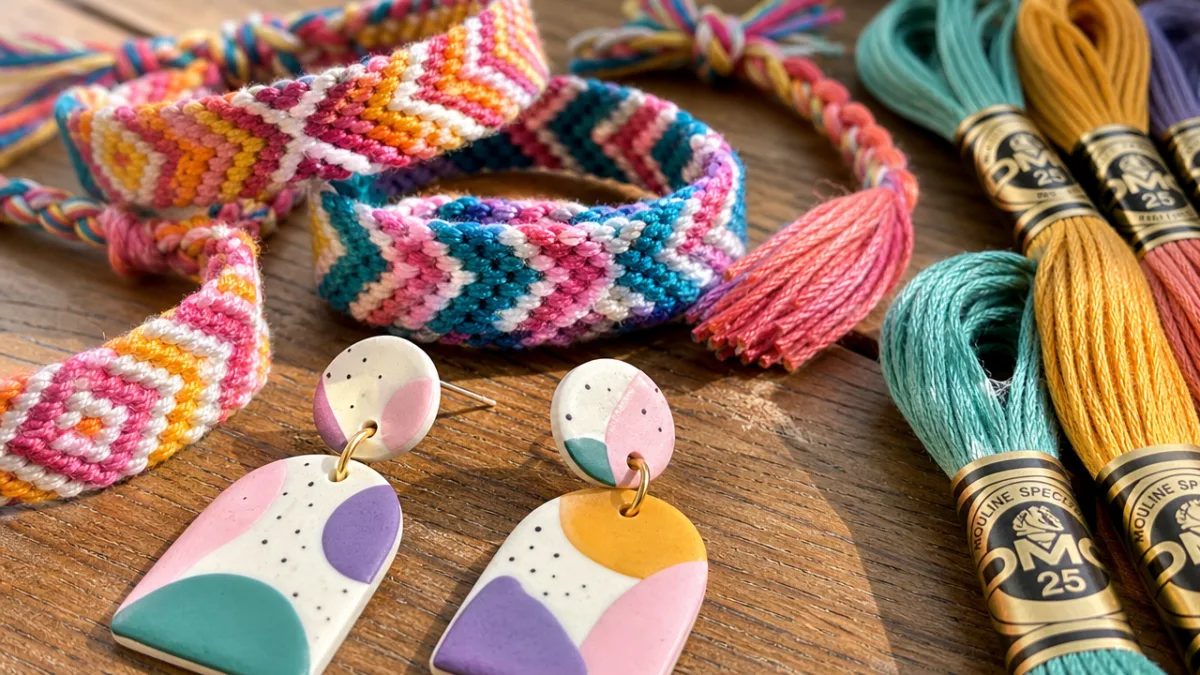
Making wearable things is one of the most exciting crafting categories for teens, and it makes sense — jewelry, hair accessories, embellished jackets, decorated shoes — you make them, and then you actually get to wear them. Polymer clay jewelry has gotten really trendy lately, with teens sculpting everything from tiny fruit-shaped earring studs to elaborate marbled pendants. Polymer clay is affordable, comes in a huge range of colors, and bakes right in a regular home oven, which makes it remarkably accessible.
Friendship bracelets have been around forever, but they keep coming back — and today’s versions go way beyond simple diagonal stripes. Modern designs include intricate chevron patterns, text that spells out names or phrases, and complex Alpha patterns that create tiny pixel-art images. A lot of teens share their patterns and process on social media, and some have built genuine followings just by posting satisfying time-lapse videos of themselves making bracelets.
Hand-embroidered clothing and accessories have also exploded among crafty teenagers. Rather than just ironing on a patch, teens are stitching designs directly onto jackets, jeans, canvas tote bags, and even sneakers — using basic stitches like satin stitch, French knots, and stem stitch to create something that’s completely their own. Embroidery kits designed for clothing customization are easy to find and make a great starting point if you’ve never picked up a needle before.
And then there’s resin art, which might be the craft that produces the most “wait, you made that?” reactions. UV or two-part epoxy resin gets poured into silicone molds to create pendants, keychains, coasters, and decorative trays filled with dried flowers, glitter, photographs, or swirls of pigment. It does require some care — gloves, ventilation, and eye protection — but the results look genuinely professional, which is why resin pieces make such impressive handmade gifts.
Digital and Technology-Assisted Crafts
For teenagers who’ve grown up surrounded by technology, crafting doesn’t have to mean putting down your devices. There’s a whole category of creative projects that live right at the intersection of the digital and physical worlds. Graphic design tools like Canva, Adobe Express, or the free software GIMP let teens create digital artwork, design custom merchandise, and produce illustrated posters that can be printed, displayed, or sold through print-on-demand platforms. Learning design fundamentals this way is also genuinely useful career preparation.
Vinyl cutting machines like the Cricut or Silhouette Cameo have opened up incredible creative territory for teenagers who have access to one — whether through their own purchase or at a school or community makerspace. These machines cut precise shapes from vinyl, paper, fabric, and more based on digital designs you create, letting teens produce professional-looking stickers, iron-on transfers, personalized mug decals, and intricate paper cut artwork. The combination of digital design skills and physical making is one that a lot of teens find incredibly satisfying.
3D printing is probably the most futuristic frontier in teen crafting right now, and it’s increasingly accessible through school makerspaces and public libraries. Once you learn basic 3D modeling in a free program like Tinkercad, you can design and print almost anything — custom figurines, replacement parts for broken things around the house, personalized phone cases, or sculptural art. The skills involved — spatial reasoning, precision, iterative design — happen to be among the most in-demand in today’s job market, which makes this one craft with some serious long-term payoff.
Upcycling and Eco-Conscious Crafting
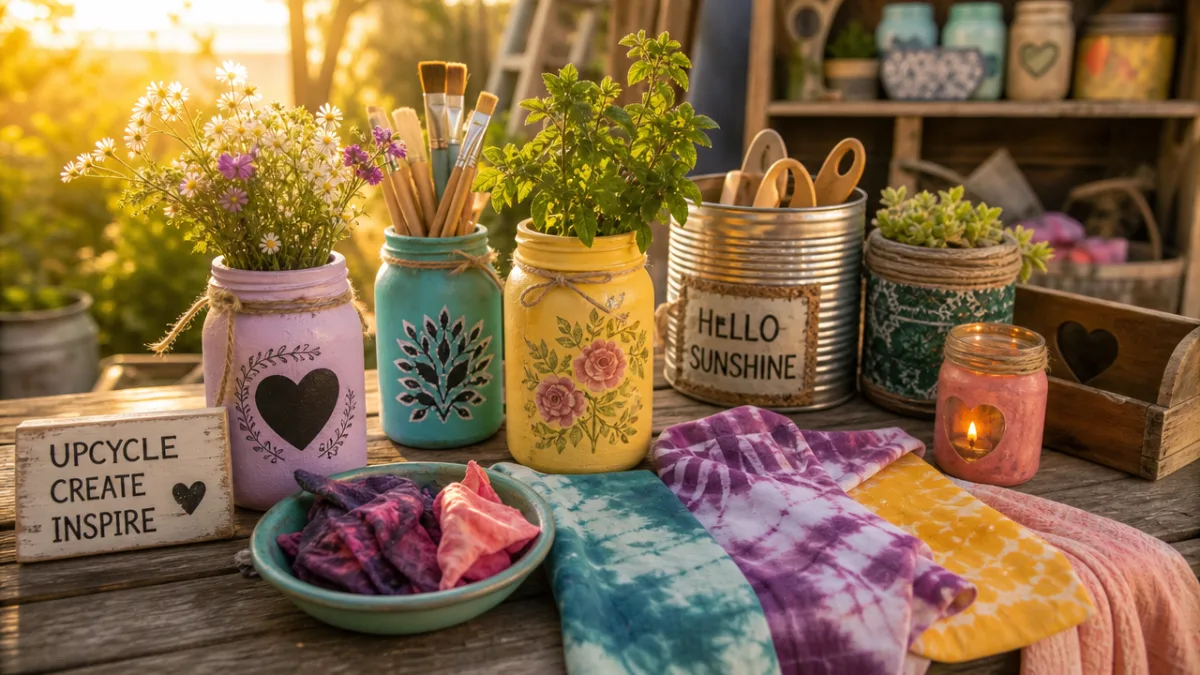
If there’s one crafting trend that really resonates with today’s teenagers, it’s upcycling — taking something discarded or worn out and turning it into something new and actually beautiful. Unlike recycling, which breaks materials down to start over, upcycling asks you to see the creative potential in things exactly as they are. A beat-up denim jacket becomes a patchwork statement piece. Empty wine bottles become painted vases. Old hardcover books become sculptural wall art. The only real limit is your imagination.
Candle making from recycled containers is a particularly popular upcycling project, partly because the results are both pretty and practical. Old teacups, tin cans, glass jars, and even hollowed-out citrus rinds can all become candle vessels when you fill them with melted soy wax, fragrance oil, and a cotton wick. Teens can experiment with layered colors, embedded dried flowers, and custom scent combinations, ending up with something polished enough to sell at a local market or give as a gift. It also sneaks in some basic chemistry, which is a nice bonus.
Natural dyeing — using plants, berries, and kitchen scraps to color fabric — is another eco-friendly craft that connects teenagers to something genuinely ancient while teaching them about chemistry and sustainability at the same time. Avocado pits produce soft pinks, yellow onion skins give rich golds, and black tea creates warm tans on natural fiber fabrics. It takes patience and some trial and error, but the results are one-of-a-kind because no two dye baths ever come out exactly the same. Teens who get into natural dyeing often walk away with a whole new appreciation for how textiles were made before industrial production took over.
Getting Started: Building a Teen Craft Practice
One of the biggest things that holds teenagers back from trying crafts is not knowing where to start. There are so many options that it can feel overwhelming, and nobody wants to spend money on a bunch of supplies for something they might not stick with. The best advice is almost always the simplest: pick one low-cost project that requires minimal materials and can be finished in a single afternoon. Finishing something — even something small — builds the motivation and confidence to try something bigger next time.
Finding a crafting community, whether in person or online, makes a huge difference in staying with it. Lots of towns have local craft groups, yarn shops with regular knitting nights, or community art centers that run teen workshops. Online, platforms like Pinterest, YouTube, Reddit, and crafting communities on Discord are full of tutorials, inspiration, and people who are genuinely happy to help beginners. Sharing your work — even when it’s still in progress — creates accountability and the kind of positive reinforcement that helps you push through the inevitable frustrating moments that come with learning anything new.
It’s also worth saying out loud, to both teenagers and the adults in their lives: crafting time is not wasted time. In a culture that tends to measure teen success almost entirely through academic achievement, making something by hand offers something that test scores can’t — patience, resilience, creative confidence, and real practical skills. It gives you stress relief, community, and a sense of who you are. Whether a teenager spends their weekends knitting, painting, modeling in 3D, or knotting macramé, making things is one of the most fundamentally human things a person can do. It’s always worth doing.
- Start with beginner-friendly projects that can be completed in one sitting to build early confidence and momentum.
- Invest gradually in tools and materials as interest develops rather than buying everything at once.
- Follow crafters on social media for inspiration and tutorial content tailored to your favorite medium.
- Visit thrift stores and dollar stores for inexpensive materials to experiment with before committing to higher-quality supplies.
- Document your projects with photos to track progress and celebrate growth over time.
- Try at least three or four different types of crafting before settling on favorites — you may surprise yourself.
- Consider gifting handmade items to friends and family, which adds purpose and motivation to your creative practice.








What do you think?
It is nice to know your opinion. Leave a comment.