










Ombré Handmade Classic Taper Candles: The Art of Beeswax & Soy Blend Craftsmanship
The Timeless Appeal of Handcrafted Taper Candles
There’s something special — almost ceremonial — about a handcrafted taper candle. Long before mass production took over the home goods market, candle-making was a genuine art form, passed down through generations of skilled makers. And now, with so many people gravitating back toward handmade things, that old craft is finding a whole new audience. Ombré taper candles sit right at the heart of this revival — they bring traditional technique together with a thoroughly modern look that works just as well on a minimalist dining table as it does in a richly layered, bohemian tablescape.
The ombré technique itself taps into something bigger — a cultural shift toward more personal, more artful everyday objects. An ombré candle isn’t just dyed; it’s graduated, moving from one color to the next in a seamless transition that calls to mind a sunset, a watercolor painting, or the way a forest changes tone in fading light. Doing that by hand takes patience, careful temperature control, and a real feel for how wax behaves as it cools. The result is a small functional piece of art — and because each one is made by hand, no two ever come out exactly the same.
Put one of these on a dinner table, a mantelpiece, or a wedding altar, and it does something no store-bought candle can quite pull off. The color draws your eye without taking over the room, and when the flame gets going, it brings the gradient to life — those transitional tones shift and glow as the light moves, turning what might have been a static decoration into something that actually changes the feel of a space as the evening wears on.
Understanding the Beeswax and Soy Wax Blend
The wax is where everything starts, and choosing a beeswax and soy blend isn’t just a marketing angle — it’s a deliberate craft decision that shapes how the candle burns, smells, looks, and holds up over time. Beeswax has been used in candle-making for thousands of years, and for good reason. It has a naturally high melting point, a subtle honey scent, and one of the cleanest burns you can get. Compared to paraffin, it produces very little soot, and some enthusiasts swear that the negative ions it releases when burned can actually help freshen the air.
Soy wax brings a different set of strengths to the table. It comes from hydrogenated soybean oil, which makes it a renewable, plant-based material, and it burns at a lower temperature than beeswax — which means a longer, more even burn. It’s also excellent at holding color, which matters a lot when you’re trying to achieve the kind of subtle, nuanced gradient an ombré candle requires. Pigments need a wax that will take dye evenly and hold it without bleeding or fading, and soy handles that better than many purely natural alternatives.
Together, the two waxes do something neither could quite manage alone. The beeswax gives the finished candle structure and a gentle natural sheen, while the soy keeps the burn slow, economical, and clean. You end up with a candle that stands tall and straight, barely drips, and shows off its color gradient all the way from the first light to the final burn. For both the maker and the person buying it, this blend is a smart meeting point between tradition and practicality.
The Dripless Promise: Science and Craft in Perfect Harmony
If you’ve ever watched a beautiful taper candle drip rivers of wax down the candlestick and onto your tablecloth, you know how quickly that ruins both the mood and the linen. So when a candle genuinely doesn’t drip, that’s not a small thing — it’s a sign that the maker really knows what they’re doing. Getting there requires the right balance of wick size, wax formula, and candle diameter, all working together so the melt pool consumes wax at roughly the same rate it liquefies at the top.
The wick is the trickiest part. Too large, and it generates more heat than the flame can keep up with — wax overflows the sides before it can burn off. Too small, and it tunnels straight down through the center, leaving thick unmelted walls around it and eventually drowning in its own melt pool. Good candle makers spend a lot of time on this — testing different wick sizes against their specific wax blends, going through round after round of test burns until they find the combination that delivers a clean, controlled result every time.
For buyers, a genuinely dripless candle opens up a lot more possibilities. A candle that drips is one you use where mess doesn’t matter much — a birthday cake, maybe, or a casual backyard dinner. A dripless taper is one you can place with complete confidence on a pristine tablecloth, in a glass candlestick in your living room, or right in the middle of a wedding centerpiece. It becomes something you trust, and that reliability changes how willing you are to bring candles into the occasions that actually matter.
The Creative World of Ombré Color and Design
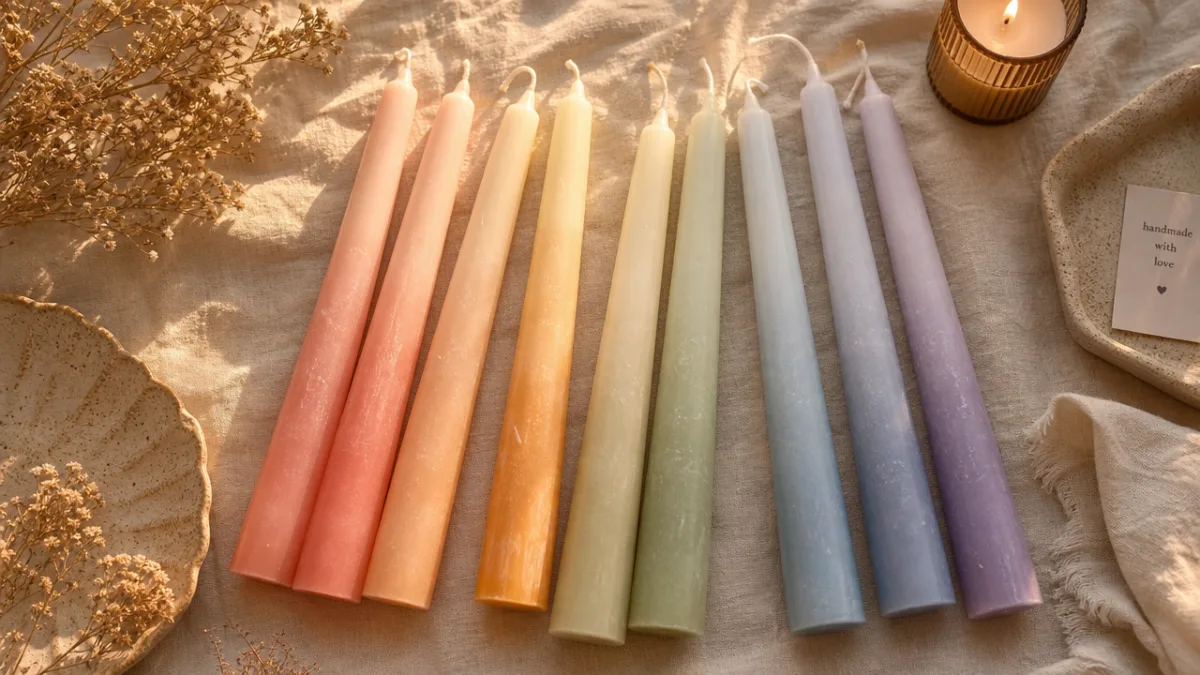
The range of color possibilities for ombré taper candles is genuinely vast, and what a maker chooses to offer says a lot about both their artistic eye and their sense of who they’re making for. Some of the most popular combinations are pulled straight from nature — peach melting into coral like a summer sunrise, deep violet sliding toward indigo like the last light of day, or a walk-through-the-woods green moving from sage to forest. Others track closely with interior design trends, offering palettes like terracotta and cream, slate blue and dusty rose, or warm neutrals drifting from ivory to champagne.
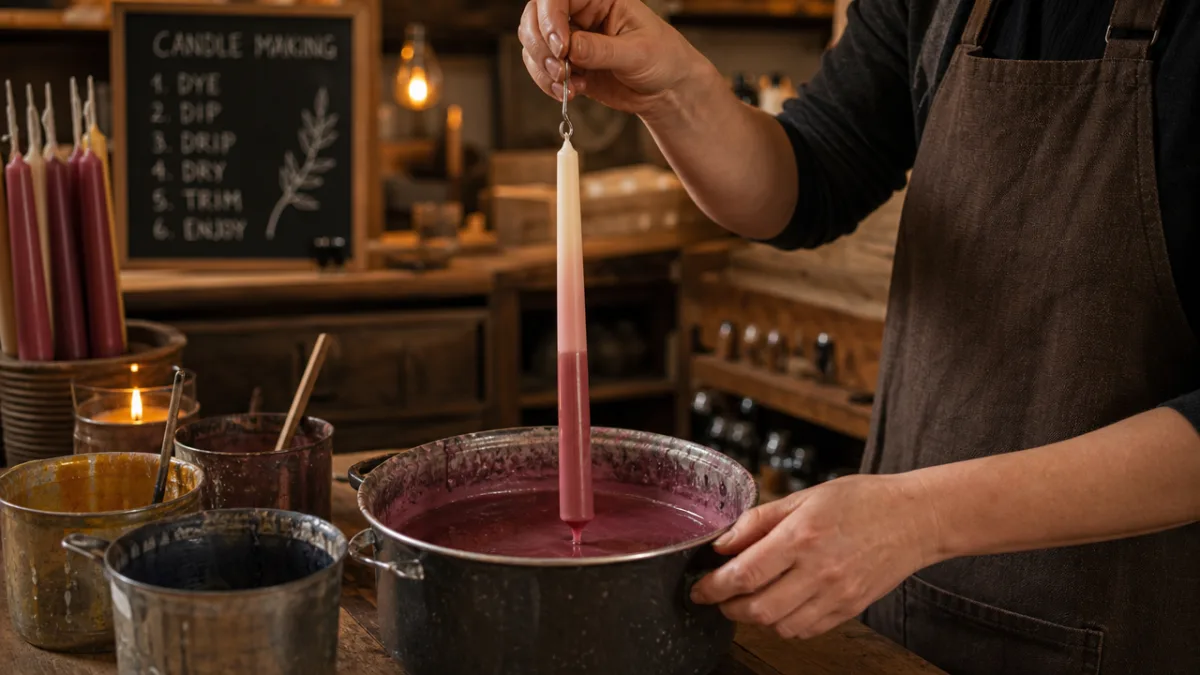
Creating that gradient on a taper candle is genuinely different from, say, dip-dyeing fabric or rolling on a coat of paint. The candle gets dipped repeatedly into wax at slightly different temperatures and dye concentrations, with each layer building depth and pushing toward the final look. The maker has to think about how wax layers contract as they cool, how colors shift when they harden, and how the outer surface responds to each new dip. Getting that transition zone — the point where one color becomes another — to look smooth and intentional rather than muddy or abrupt is exactly the skill that separates a genuinely beautiful ombré candle from one that just almost works.
Beyond the color itself, there’s also a choice of finish and texture to consider. Some makers go for a smooth, almost lacquered surface that catches light and gives the candle a polished, jewel-like feel. Others lean into a slightly textured finish that wears its handmade origins more openly, with the visible evidence of successive dipping layers telling the story of how it was made. Both can be stunning depending on the setting, and both have their fans. At 10 inches, these tapers hit the classic length that fits most candlestick holders and gives you a generous burn time to go with all that visual appeal.
Styling and Using Ombré Taper Candles in Your Home
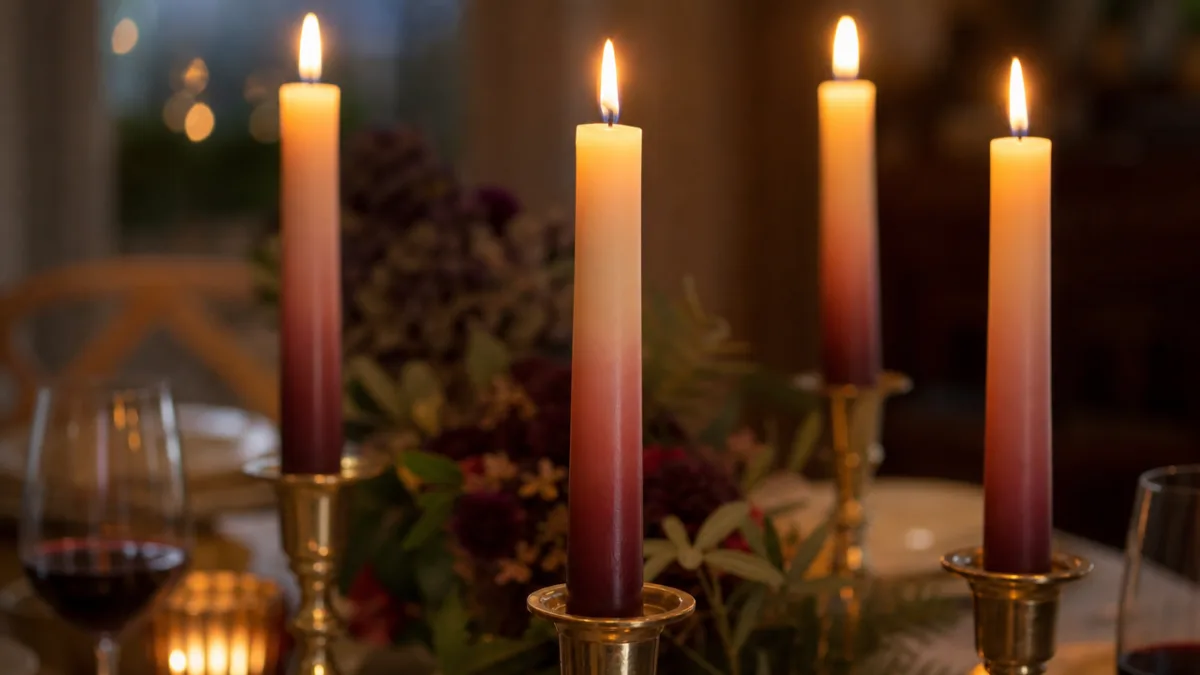
Working ombré taper candles into your home décor is mostly about trusting your instincts and being willing to experiment a little. The most obvious starting point is the dining table, where a cluster of tapers in complementary or contrasting gradients can turn an ordinary weeknight dinner into something that feels genuinely intentional. For a pulled-together look, choose candles whose colors echo what’s already on the table — your linens, your dishes, your flowers. For something with a bit more energy, try deliberate contrast: a warm terracotta-to-cream ombré next to a cool sage-to-white creates a tension that feels lively rather than chaotic.
The mantelpiece is another natural spot for tapers, where their vertical line plays nicely against the long horizontal stretch of the shelf and pulls the eye upward. A grouping of three or five in graduated heights and complementary ombré palettes makes a fireplace surround look genuinely curated. In rooms without a fireplace, a candle vignette on a sideboard or bookshelf can do the same job, anchoring a decorative arrangement and adding that flicker of warmth that no static object can replicate. Candlestick material matters here too — brushed brass suits warm-toned candles beautifully, matte black works well with cool jewel tones, and clear glass steps back and lets the candle’s own colors do all the talking.
Ombré taper candles have also become a go-to in wedding and event styling, and it’s easy to see why — they’re elegant, they’re handmade, and they have real visual presence. A long reception table lined with tapers in a cohesive palette has a romantic, almost gallery-like quality that photographs incredibly well and continues to evolve throughout the evening as the candles burn down. For smaller occasions — a bridal shower, an anniversary dinner, a holiday get-together — a carefully chosen set of ombré tapers can shift the whole atmosphere, sending a quiet signal to guests that someone put real thought into making the space beautiful.
Buying Handmade: The Etsy Marketplace and Supporting Artisan Makers
Platforms like Etsy have genuinely changed the way craft makers and buyers find each other. Instead of going through a retail chain, artisans can sell directly to people who are actively looking for handmade, small-batch goods — people who actually understand what goes into making them and what makes them worth it. Ombré beeswax and soy taper candles are a natural fit for that marketplace. The handmade quality is visible, the function is universal, and they photograph beautifully — which, in an online shop, matters more than almost anything else.
One of the real advantages of buying handmade through Etsy is the level of transparency and direct communication you get. A lot of artisan candle-makers are genuinely happy to talk through their process, explain exactly what goes into their wax blend, and work with you on custom colors, scents, or quantities for a special order. That changes the nature of the purchase — the candle that arrives isn’t just an object, it’s the result of an actual conversation with a person who cares about what they make. Taking the time to read reviews, look through a maker’s other work, and get a sense of their values makes the whole thing feel more considered, and more worthwhile.
There’s also something bigger at play when you choose handmade over mass-produced. Buying from an independent candle-maker — often a one-person operation or a tiny home studio — puts money directly into a small business that reinvests it locally. It also helps keep traditional craft knowledge alive: the skill of hand-dipping taper candles in carefully calibrated wax to achieve a precise color gradient is exactly the kind of patient, nuanced craft that can easily get crowded out by industrial convenience. Every time someone chooses a handmade ombré taper candle, they’re casting a small vote for a world where that kind of skill still matters.
- Material quality: Look for makers who are upfront about their wax blend, wick type, and dye sources — that transparency is a good sign the candle will burn cleanly and safely.
- Burn time: A well-made 10-inch beeswax and soy taper should give you somewhere between 8 and 12 hours of burn time, depending on conditions.
- Color customization: Many Etsy makers are happy to take custom orders, so don’t hesitate to ask about specific color gradients if you have a particular event or palette in mind.
- Care instructions: Always trim the wick to about a quarter inch before each burn — it’s the easiest thing you can do to keep the candle dripless and extend its life.
- Storage: Keep taper candles lying flat in a cool, dry spot away from direct sunlight to prevent warping and stop the colors from fading.
Handmade ombré taper candles live at this lovely intersection of art, science, sustainability, and everyday ritual. Maybe you’re drawn in by the visual beauty of a perfectly executed color gradient, or by the fact that the candle was made by hand from natural materials, or maybe you just want a clean, long-burning flame on your dinner table that you can actually rely on. Whatever brings you to them, these candles offer something richer than their function alone — they’re small celebrations of human skill and creativity, made to light up not just a room, but the moments and gatherings that make a life worth savoring.








What do you think?
It is nice to know your opinion. Leave a comment.