










Champagne Toast: A Complete Guide to the Art of Celebration
The Rich History of the Champagne Toast
The champagne toast is one of the most universally recognized rituals of celebration, stretching back centuries through the corridors of European aristocracy and royal courts. The tradition of raising a glass of sparkling wine to honor a person, occasion, or shared hope is woven into the very fabric of human culture. From coronations to weddings, from New Year’s Eve countdowns to intimate dinner parties, the champagne toast has endured as a symbol of joy, unity, and the marking of meaningful moments in time.
The origins of toasting itself predate champagne by thousands of years. Ancient Greeks and Romans raised their cups to honor the gods and wish good health upon their guests, a practice thought to ward off poison and evil spirits. When champagne emerged from the Champagne region of northeastern France in the seventeenth century, it quickly became the celebratory beverage of choice among European royalty and the nobility. Its association with luxury, effervescence, and the bubbling spirit of festivity made it the natural successor to all other wines in ceremonial contexts.
Dom Pérignon, the Benedictine monk often credited with refining the champagne-making process, reportedly exclaimed upon tasting his creation, “Come quickly, I am tasting the stars.” Whether apocryphal or not, this sentiment perfectly captures why champagne became synonymous with celebration. The dancing bubbles, the golden hue, the crisp and complex flavor — everything about champagne communicates that this is a special moment, one worthy of being lifted up and acknowledged. The champagne toast thus became the vessel through which humanity marks its most treasured milestones.
From Royal Courts to Modern Celebrations
As champagne spread from French royal courts to the wider European aristocracy and eventually the middle classes, the toast evolved from a purely aristocratic ritual into a democratic one. By the nineteenth century, champagne was being served at political celebrations, military victories, theatrical premieres, and sporting triumphs. The opening of a bottle — with its dramatic pop and cascade of foam — became a performative announcement that something extraordinary had occurred or was about to begin. Every occasion felt elevated by the presence of champagne.
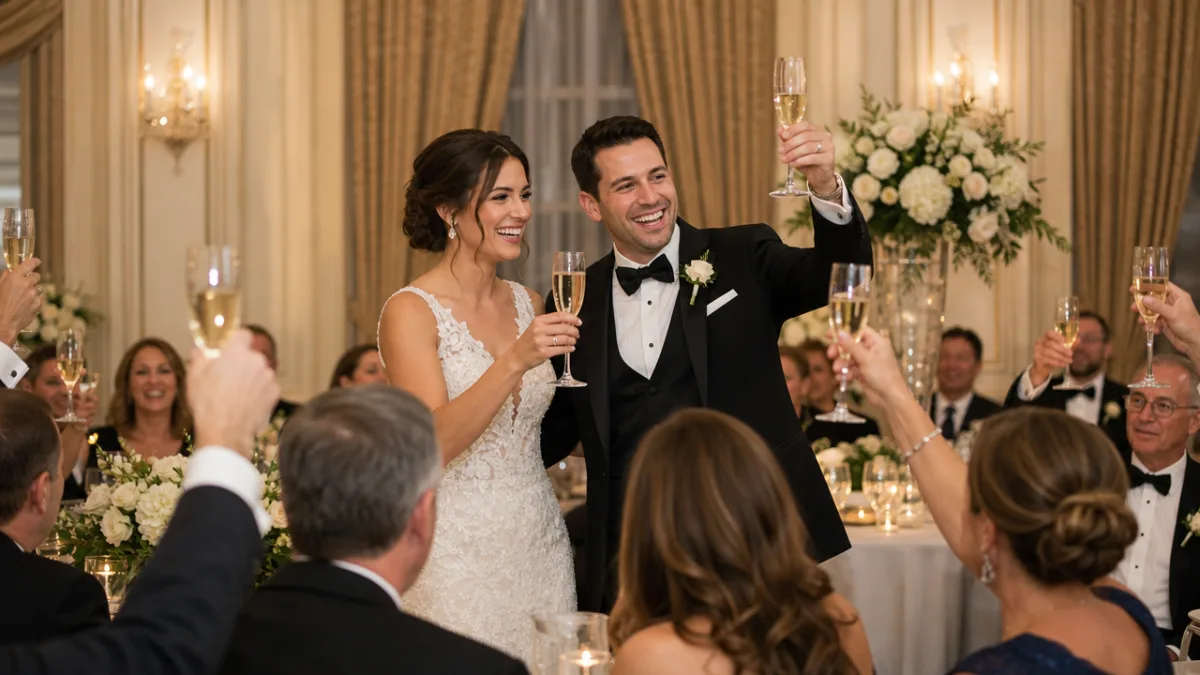
In the twentieth century, champagne toasts became cemented in popular culture through film, literature, and broadcasting. The image of a couple clinking flutes at a wedding reception, or of a racing driver dousing themselves in magnum-sprayed champagne on the podium, entered the global visual vocabulary. These images reinforced the idea that champagne and celebration were inseparable companions. Today, no matter the culture or geography, the gesture of raising a glass of something sparkling remains one of the most immediately understood signs that a celebration is underway.
Choosing the Perfect Champagne for Your Toast
Selecting the right champagne for a toast is an art that rewards a little knowledge and thoughtful consideration. The world of champagne is vast and varied, ranging from bone-dry Brut Nature expressions to lusciously sweet Demi-Sec styles, and from affordable non-vintage bottles to extraordinarily prestigious cuvées that represent decades of winemaking tradition. Understanding the basic categories of champagne helps ensure that the bottle you choose genuinely enhances the occasion rather than simply filling a glass.
For most celebratory toasts, a well-chosen non-vintage Brut champagne from a reputable house will serve beautifully. Non-vintage champagnes are blended from multiple years to achieve a consistent house style, making them reliable and approachable. Major houses such as Moët & Chandon, Veuve Clicquot, Bollinger, and Laurent-Perrier each offer distinctive personality in their non-vintage Brut expressions. Moët offers fresh and fruity elegance; Bollinger brings richness and toasty depth; Veuve Clicquot delivers a full-bodied, yeasty warmth. Exploring these differences is half the pleasure of becoming a champagne enthusiast.
For truly special occasions — milestone anniversaries, significant professional achievements, or landmark birthdays — a vintage or prestige cuvée champagne elevates the moment considerably. Prestige cuvées such as Dom Pérignon, Krug Grande Cuvée, Louis Roederer Cristal, and Pol Roger Sir Winston Churchill represent the pinnacle of each house’s craft. These wines are made only in exceptional harvest years and are aged for far longer than standard releases, resulting in extraordinary depth, complexity, and longevity. Serving such a bottle communicates unmistakably that the moment being toasted is one of the most important in life.
Understanding Champagne Styles and Sweetness Levels
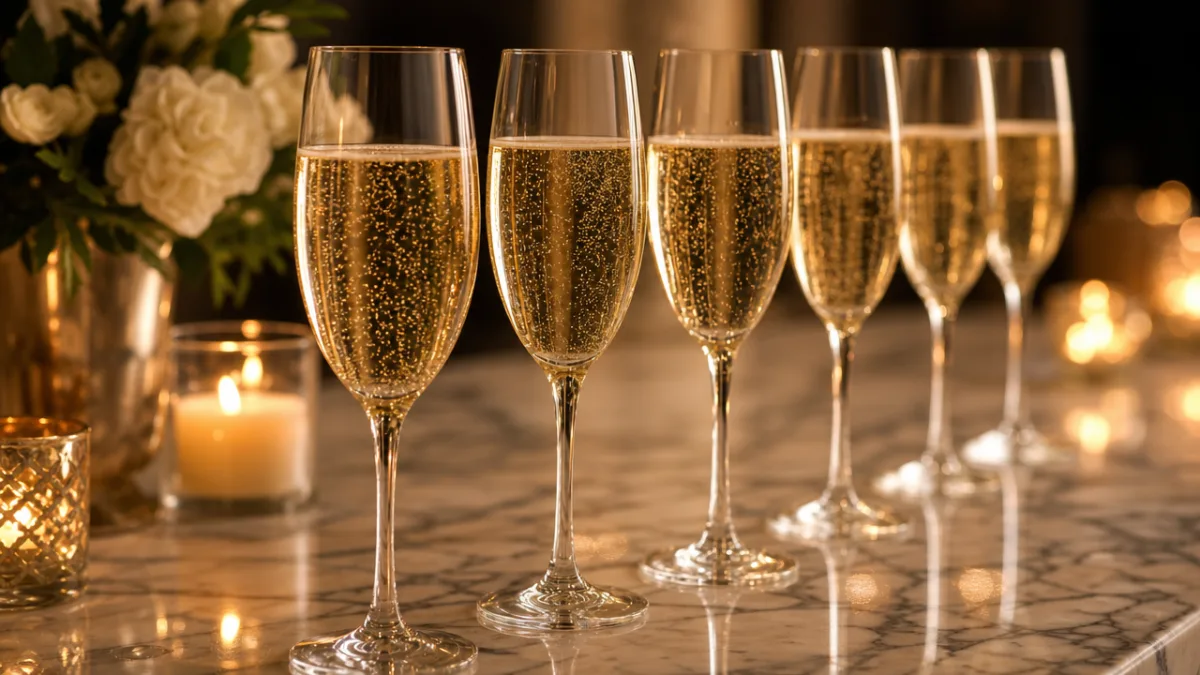
Champagne’s sweetness level is indicated on the label through a classification system that ranges from the driest to the sweetest. Brut Nature and Extra Brut are the driest expressions, with minimal residual sugar, offering a crisp, clean, almost austere character that pairs beautifully with oysters, sushi, or simply as a standalone aperitif toast. Brut, the most commonly encountered style, contains a small amount of residual sugar that rounds the wine without making it sweet, giving it broad appeal for most celebratory contexts.
Moving toward sweeter territory, Extra Dry champagne is paradoxically slightly sweeter than Brut, a historical quirk of nomenclature that often confuses newcomers. Sec and Demi-Sec champagnes are noticeably sweet and pair wonderfully with desserts, fruit-based courses, or with celebratory cakes at weddings and birthday parties. For a dessert champagne toast, a Demi-Sec from a house like Moët or Taittinger can be a genuinely delightful surprise for guests who associate champagne exclusively with dryness. Understanding these distinctions allows hosts to pair their toast champagne thoughtfully with the food being served.
The Art of the Perfect Toast Speech
A champagne toast without a meaningful speech is simply drinking champagne — wonderful in itself, but missing the ceremony that transforms the act into something truly memorable. The toast speech is the verbal companion to the raised glass, the words that give specific meaning to the collective gesture. Whether you are the best man at a wedding, a team leader celebrating a project completion, or a host raising a glass at a dinner party, the principles of a great toast speech are universal and learnable.
The finest toast speeches share several qualities regardless of the occasion. They are specific rather than generic, referencing real moments, genuine characteristics, or shared memories that resonate with both the honoree and the assembled guests. They balance warmth with wit, touching the heart without becoming maudlin, and raising a smile without descending into roast territory. They are appropriately brief — a great toast rarely exceeds three minutes — because champagne glasses are best raised with anticipation rather than exhaustion. And they end with a clear, direct invitation for everyone to raise their glass and drink.
Preparation is the single most important factor in delivering an effective champagne toast. Even people who are naturally gifted public speakers benefit enormously from writing out their toast in advance and rehearsing it multiple times. This allows you to time your remarks, catch any unintentionally awkward phrases, and ensure that the emotional arc of your speech builds naturally to a satisfying conclusion. Knowing your material thoroughly also means you can deliver it with genuine warmth and eye contact rather than reading nervously from a phone or notepad, which immediately diminishes the intimacy and impact of the moment.
Structuring Your Toast for Maximum Impact
A well-structured toast speech follows a simple but effective pattern that keeps the audience engaged and builds toward a resonant conclusion. Begin with a brief, warm opening that establishes your relationship to the honoree or occasion, giving the audience context for why your words carry particular meaning. This might be a short anecdote, a statement of who you are, or a vivid memory that immediately draws listeners in. Starting with a surprising detail or a gently humorous observation is particularly effective at capturing attention.
The middle section of your toast is where you deliver the emotional substance — the qualities you admire, the journey you have witnessed, the shared experience that defines your connection to this moment. Use concrete, specific details rather than abstract compliments. Instead of saying someone is “wonderful,” describe the specific moment when they demonstrated their character under pressure. Specificity creates authenticity, and authenticity is what moves people. This section should feel like a gift of recognition to the honoree, something they will remember long after the evening ends.
Close your toast with a clear, positive, forward-looking statement that ties everything together and invites the assembled guests into a shared sentiment. A great closing line often echoes something from your opening, creating a satisfying sense of completion. Then deliver the call to action with confidence and clarity: “Ladies and gentlemen, please raise your glasses to…” followed by the name or occasion being honored. Pause, make eye contact with the honoree, and drink. The physical gesture of drinking together is the seal on the ceremony, and it deserves its own moment of unhurried attention.
Champagne Toast Etiquette and Traditions
Around the champagne toast have accumulated centuries of etiquette traditions, some rooted in practical considerations and others in pure superstition or theatrical custom. Understanding these conventions helps hosts and guests navigate celebratory occasions with grace and confidence. While etiquette is never about rigid rule-following for its own sake, knowing the traditions allows you to choose consciously which to observe and which to adapt for your particular context and gathering.
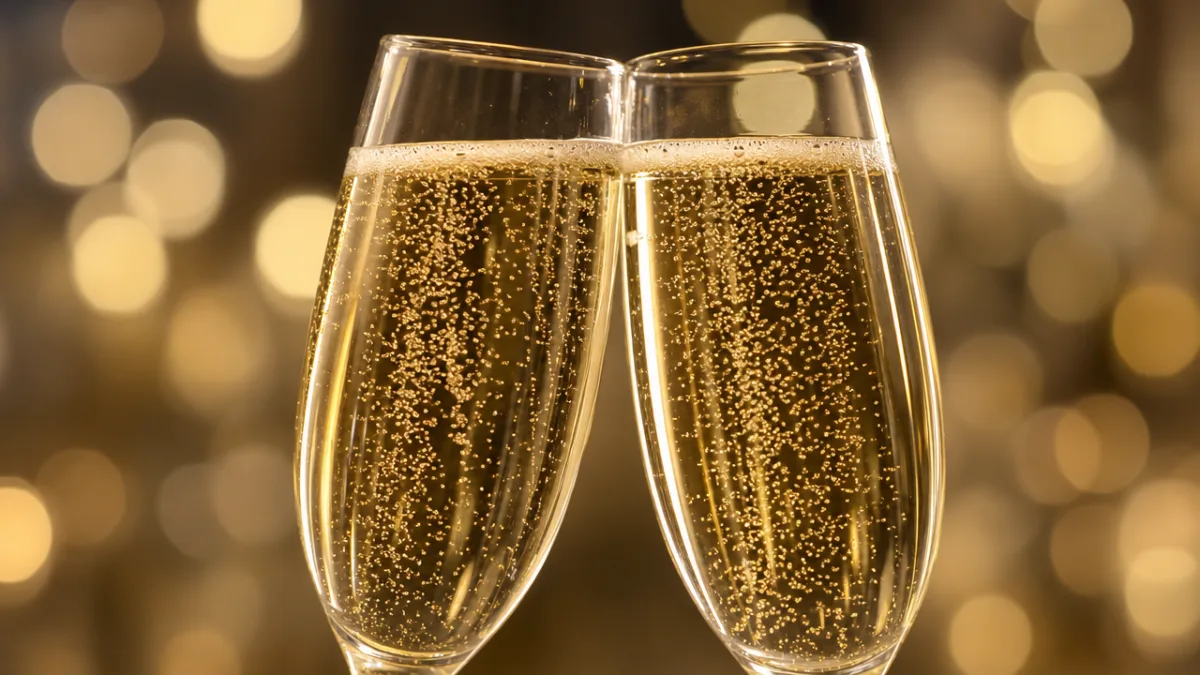
The question of whether to clink glasses is one that prompts genuine debate in etiquette circles. The tradition of clinking is thought to originate in the belief that the sound would drive away evil spirits — an extension of the same thinking that led early drinkers to spill a little of their drink as an offering to the gods. Today, clinking is a gesture of connection and acknowledgment between individuals, a brief moment of eye contact and physical proximity within the broader collective gesture of the toast. In formal settings with very large gatherings, it is entirely acceptable to raise your glass toward the honoree and toward the room rather than attempting to reach every guest.
The matter of what to do if you are not drinking alcohol is one that modern etiquette has thankfully resolved with good sense. It is perfectly proper to participate fully in a champagne toast with a glass of sparkling water, non-alcoholic sparkling wine, or any other beverage. The gesture — raising the glass, making eye contact, acknowledging the moment — is what carries the meaning, not the specific contents of the vessel. A guest who declines to raise any glass at all during a toast, however, creates an awkward moment that suggests disengagement from the shared celebration. Participation, in whatever form it takes, is the true spirit of the toast.
Cultural Variations in Champagne Toasting
While the champagne toast is broadly universal in Western celebrations, different cultures have developed their own distinctive variations, phrases, and customs around the act of raising a glass together. In France, the simple “Santé” — meaning health — is the most common toast, reflecting the ancient tradition of drinking to one another’s wellbeing. In Germany, “Prost” serves the same function, often accompanied by particularly emphatic eye contact, as German tradition holds that failing to make eye contact during a toast brings seven years of bad luck in love. In Russia, the first toast is traditionally a greeting, and the third toast is specifically reserved for women.
Italian celebrations feature the warm “Cin cin” (pronounced “chin chin”), believed to derive from a phonetic rendering of a Chinese toast phrase brought back by merchants along trade routes. Spanish speakers raise their glasses with “Salud,” again invoking health. In Japan, “Kanpai” accompanies not just champagne but any shared drink, and the etiquette around when to pour for others versus oneself is governed by elaborate social norms. Knowing a few of these international toasting phrases can be a delightful way to honor guests from different backgrounds at a cosmopolitan celebration, signaling that their cultural presence is recognized and valued.
Creating Unforgettable Champagne Toast Moments
The most memorable champagne toasts in people’s lives are never purely the result of expensive wine or perfectly crafted speeches, though those things certainly help. What transforms a toast from pleasant formality into genuine memory is the combination of preparation, atmosphere, authentic emotion, and the sense that everyone present is truly, fully present together. Creating this sense of shared presence and meaning is within the reach of any host willing to think thoughtfully about the environment and the experience they are curating.
Timing is perhaps the most underrated element of a successful champagne toast. A toast that interrupts the natural flow of a gathering — arriving too early before guests have settled in, or too late when energy and attention have dissipated — loses half its power before a single word is spoken. Ideally, a toast should arrive at a peak moment: after guests have been welcomed, after appetizers or a first course has settled conversation into warmth, but while the evening still feels full of possibility. Reading the room and choosing the right moment is an art that experienced hosts develop through observation and practice.
The physical staging of a champagne toast also matters more than people typically acknowledge. Ensuring that every guest has a filled glass before the speech begins prevents the awkward shuffle of late-arriving flutes cutting through meaningful words. Gathering guests into a relatively compact space rather than leaving them scattered across a room creates the physical proximity that amplifies emotional connection. Dimming music or ambient noise so that the speaker’s voice can be heard comfortably is another detail that professional event planners know instinctively but amateur hosts sometimes overlook.
Pairing Food with Your Champagne Toast
While the toast itself is the centerpiece of the champagne moment, thoughtful food pairing can extend and deepen the sensory experience of celebrating with champagne. Classic pairings for Brut champagne include oysters, smoked salmon blinis, caviar, soft cheeses such as Brie and Camembert, and delicate canapés built around brioche or pastry. These foods share champagne’s quality of elegant richness without overwhelming its fine bubbles and crisp acidity. Serving these alongside your toast creates a complete sensory experience rather than just a single sip.
For more relaxed or informal champagne toasts — a backyard party, a casual birthday celebration, or a Sunday brunch — the pairing rules relax considerably. Champagne is surprisingly versatile with fried foods, its acidity and effervescence cutting through richness in the same way that it cuts through the solemnity of a formal occasion. Fried chicken, potato chips, tempura, and fish and chips are all celebrated champagne accompaniments among connoisseurs who delight in upending expectations. The combination of populist food with aristocratic wine is itself a kind of celebration of champagne’s democratic evolution through history.
Whatever food you choose to serve alongside your champagne toast, the most important consideration is that every guest feels included, satisfied, and cared for. A host who has thought carefully about dietary restrictions, ensured the champagne is at the perfect serving temperature of around eight to ten degrees Celsius, and arranged for graceful, unhurried service communicates through these details that the people in the room are genuinely valued. In the end, the perfect champagne toast is not about the vintage of the wine or the eloquence of the speech, but about the depth of feeling behind the raised glass and the sincerity of the wish for the health, happiness, and flourishing of those being honored.
- Serve champagne chilled to between 8°C and 10°C for the ideal tasting temperature and bubble preservation.
- Use tall, narrow flute glasses or tulip-shaped glasses to concentrate the aromas and maintain the effervescence longer.
- Open champagne bottles gently by twisting the bottle rather than the cork to avoid excessive foam and spillage.
- Prepare your toast speech well in advance and rehearse it at least three to five times to achieve natural delivery.
- Ensure every guest has a filled glass before the toast begins so the moment is not interrupted by logistics.
- Make sincere eye contact with the honoree when delivering the final dedication and drinking the toast.
- Consider non-alcoholic alternatives for guests who do not drink, ensuring full inclusion in the ceremony.








What do you think?
It is nice to know your opinion. Leave a comment.