










Braided Beeswax Candles: A Complete Guide to Crafting Nature’s Most Beautiful Flame
The Ancient Art of Beeswax Candle Making
Beeswax candles represent one of humanity’s oldest and most enduring craft traditions, dating back thousands of years to ancient Egypt and medieval Europe. Unlike paraffin candles, which are derived from petroleum byproducts, beeswax is an entirely natural substance produced by honeybees to construct their honeycomb. The process of harvesting, purifying, and transforming this golden wax into a luminous candle connects the modern crafter to an unbroken lineage of artisans who understood the unique beauty and function of this remarkable natural material.
What makes beeswax particularly special is its subtle, warm honey fragrance that fills a room as the candle burns, without the need for any added synthetic perfumes. This natural scent is intoxicating in the most gentle sense — earthy, sweet, and deeply calming. When combined with the warm amber glow that beeswax candles emit, the experience of burning one becomes genuinely therapeutic. Many people who suffer from sensitivities to synthetic fragrances find beeswax candles to be the only type they can comfortably enjoy indoors.
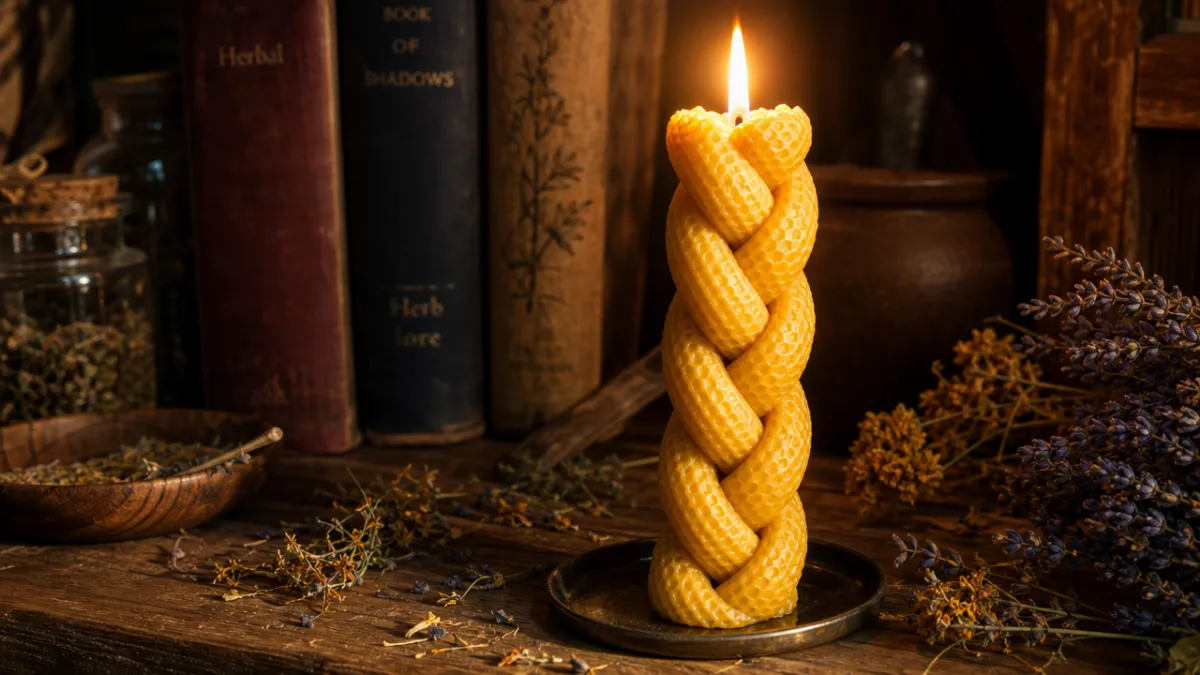
The braided beeswax candle, in particular, elevates this ancient craft into a true art form. By weaving multiple tapers or sheets of wax together into an intricate braid, you create a candle that is not only functional but breathtakingly beautiful as a decorative object. Whether displayed unlit on a mantelpiece or glowing warmly at a dinner table, a well-crafted braided beeswax candle commands attention and admiration, serving as a testament to the skill and patience of its maker.
Understanding Beeswax: Properties, Types, and Sourcing
Before diving into the braiding process, it is essential to understand the material you are working with. Beeswax comes in two primary forms available to crafters: raw and refined. Raw beeswax retains more of its natural color, impurities, and honey scent, presenting in shades ranging from deep brown to golden amber depending on the flowers visited by the bees. Refined beeswax has been filtered and bleached to remove impurities, resulting in a lighter yellow or even white product with a milder scent. For braided candles, most crafters prefer the natural golden variety because its rich color enhances the visual texture of the braid.
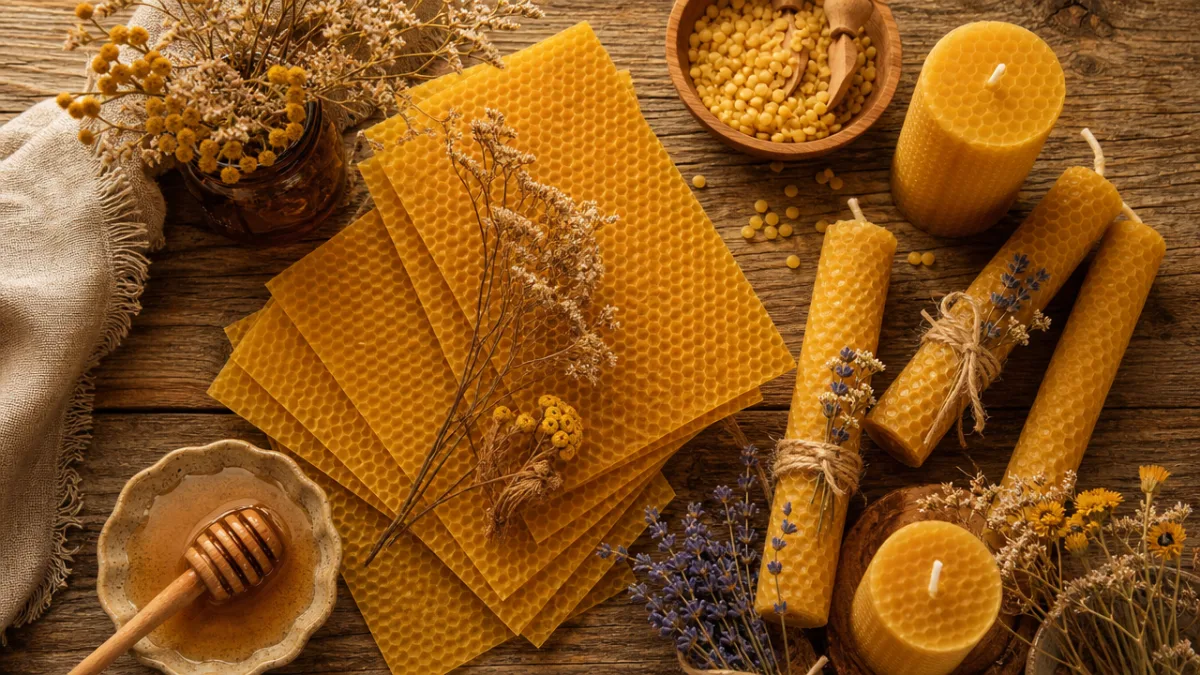
Beeswax is available in several convenient forms for candle makers. Pure beeswax sheets, sometimes called honeycomb sheets due to their embossed hexagonal pattern, are the most popular choice for rolled and braided candles because they require no melting or molding. Beeswax pellets and blocks are better suited for poured candles, though they can be melted and re-formed into sheets if needed. When purchasing beeswax, always look for products that specify 100% pure beeswax, as some lower-quality products are blended with paraffin or other fillers that affect both performance and the natural scent you are paying for.
Sourcing matters deeply when it comes to beeswax. Supporting local beekeepers not only ensures fresher, higher-quality wax but also contributes directly to the health of local bee populations and ecosystems. Many local farmers markets, craft supply stores, and beekeeping associations sell beeswax sheets and blocks at competitive prices. Online retailers also carry excellent products, though it is worth reading reviews carefully and purchasing from sellers who clearly state the purity and origin of their wax. Ethically sourced beeswax is a win for the crafter, the bees, and the environment.
Tools and Materials You Will Need
One of the great joys of making braided beeswax candles is the minimal investment required in tools and equipment. Unlike many other candle-making techniques that require double boilers, thermometers, and metal pouring pitchers, the rolled and braided method using beeswax sheets requires very little specialized equipment. This makes it an ideal craft for beginners, children under adult supervision, and anyone who wants a low-barrier entry into the world of candle making without a significant upfront cost or a complicated setup process.
The core materials you will need include beeswax honeycomb sheets (typically available in standard sizes of approximately 8 by 16 inches), cotton wicks of an appropriate thickness for the diameter of candle you plan to make, and a sharp craft knife or scissors for trimming. A ruler or straight edge is helpful for achieving clean, even cuts when preparing your wax sheets. A hair dryer or heat gun is an invaluable tool for gently warming the wax to make it more pliable, especially in cooler environments where the sheets may be brittle and prone to cracking during the braiding process.
Optional but helpful additions to your workspace include a self-healing cutting mat to protect your work surface, wooden dowels in various diameters for creating uniformly sized rolled tapers before braiding, and a selection of natural dyes if you wish to add color to your candles. Beeswax takes color beautifully, and creating a three-strand braid using sheets dyed in complementary or contrasting colors can produce stunning visual results. Some crafters also like to have a small dish of warm water nearby, as slightly dampened fingers can help smooth seams and edges on the finished candle.
Step-by-Step Guide to Creating Braided Beeswax Candles
Begin by preparing your beeswax sheets. If your workspace is cool, use a hair dryer on a low setting to gently warm each sheet for 15 to 20 seconds until it becomes soft and flexible without melting. Lay the sheet flat on your cutting mat and use your ruler and craft knife to cut it into the dimensions you need. For a classic braided candle, you will need three separate tapers of equal length, so cut three wax sheets into identical rectangles. A common starting size is 8 inches long by 4 inches wide, which will yield a taper of a manageable length for braiding.
To create each individual taper, lay a length of cotton wick along one of the short edges of your wax sheet, leaving a small overhang of about half an inch at the top. Press the wick firmly into the wax, then slowly and tightly roll the sheet away from you, keeping even pressure across the full width to ensure the taper remains cylindrical rather than tapered or irregular. The final edge of the wax sheet should be pressed firmly against the candle body to create a seamless join. Repeat this process to create all three tapers, then allow them to rest at room temperature for a few minutes to firm up slightly before braiding.
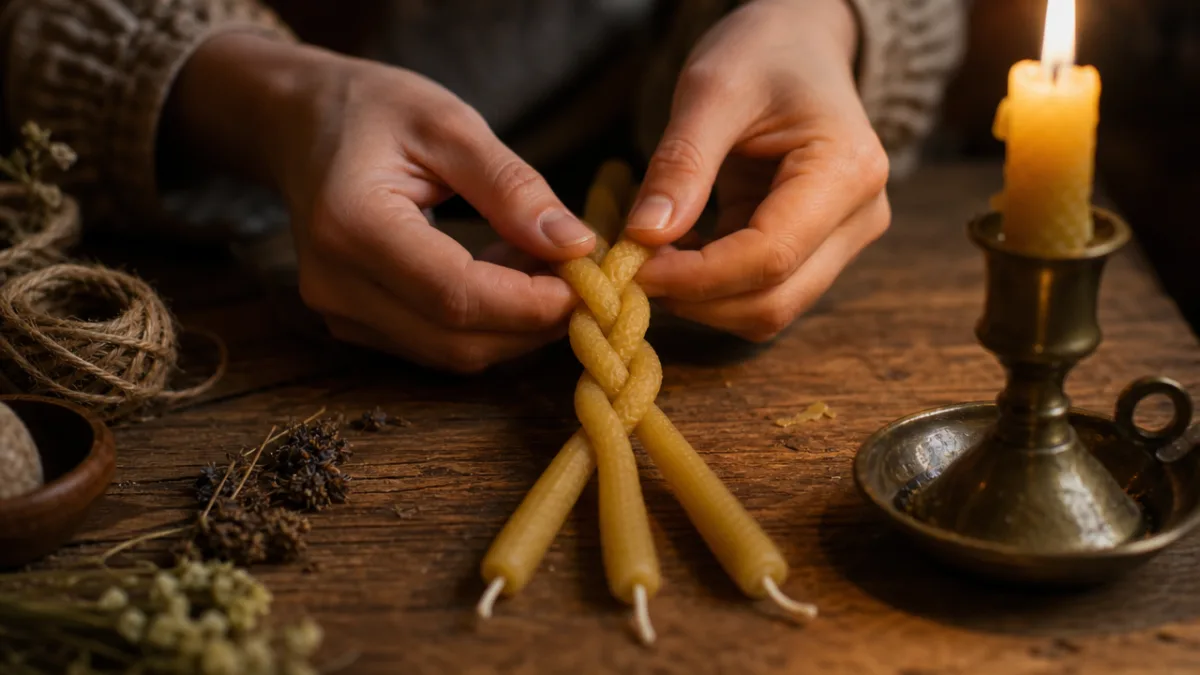
To braid the three tapers together, stand them upright and tie the wicks together at the top in a loose knot, or secure them temporarily with a small piece of tape. Working downward from the top, braid the three tapers exactly as you would braid hair or rope: right over center, then left over center, alternating with gentle but consistent tension. The key is to maintain even pressure throughout so the braid remains tight and uniform. When you reach the bottom, press the ends of the wax together gently to seal them into a flat base that will allow the finished candle to stand upright without a holder. Trim all three wicks to approximately one quarter of an inch.
- Always work in a warm room (above 65°F) or warm your wax sheets with a hair dryer to prevent cracking during rolling and braiding.
- Use cotton wicks sized for the total diameter of your finished braided candle, not just for a single taper, to ensure an even and complete burn.
- Roll each taper as tightly as possible to minimize air pockets, which can cause uneven burning or structural weakness in the finished candle.
- Braid with steady, consistent tension — too loose and the candle will look sloppy; too tight and you risk cracking the wax tapers.
- Seal the base by gently pressing the three ends together on a flat, warm surface to create a stable foundation for the finished candle.
Decorating and Personalizing Your Braided Candles
The braided structure of these candles already makes them inherently beautiful, but there are numerous ways to enhance their visual appeal and make them uniquely your own. One of the most popular techniques is to use beeswax sheets in different colors to create a multicolored braid. Natural beeswax dyes, available from craft suppliers, can be applied to sheets before rolling, or you can purchase pre-dyed beeswax sheets in a wide range of colors. A braid combining deep burgundy, forest green, and natural golden beeswax makes a stunning holiday centerpiece, while soft blush pink, ivory, and sage green create an elegant wedding or spring table decoration.
Dried botanicals offer another beautiful avenue for personalization. Small dried flower petals, sprigs of lavender, or thin slices of dried citrus can be gently pressed into the outer surface of the wax before or after braiding. Because beeswax is naturally tacky, especially when slightly warm, many lightweight botanicals will adhere to the surface without any additional adhesive. The visual effect is extraordinary — the flowers and petals appear embedded in the honeycomb texture of the wax like jewels in a setting, and some botanicals release their own gentle fragrance as the candle burns, complementing the natural honey scent of the beeswax beautifully.
Consider the presentation of your finished candles as carefully as the candles themselves. A braided beeswax candle displayed in a simple glass hurricane vase filled with dried botanicals or decorative sea glass makes a gorgeous gift. Wrapping the candle loosely in natural kraft paper and tying it with twine and a sprig of dried rosemary creates a presentation that feels artisanal and intentional. For those who sell their handmade candles at markets or online, high-quality photography that captures the texture and warm amber tones of the beeswax is essential for communicating the beauty of the finished product to potential buyers.
Burning, Care, and Safety Tips for Beeswax Candles
Beeswax candles burn differently from paraffin or soy candles, and understanding these differences will help you get the best possible experience from your handmade creations. Beeswax has a higher melting point than most other candle waxes, which means it burns more slowly and lasts significantly longer — often two to five times longer than a paraffin candle of the same size. This slower, cooler burn also means that beeswax candles may require a slightly longer initial lighting period to establish a full melt pool, particularly on first use. Be patient and allow the candle to burn for at least 30 to 45 minutes on its first use.
Wick trimming is one of the most important aspects of candle care that many people overlook. Before every use, trim your wick to approximately one quarter of an inch using dedicated wick trimmers or sharp scissors. A wick that is too long will produce a large, flickering flame that generates excessive soot and burns through the candle too quickly. A properly trimmed wick will produce a clean, steady flame that maximizes the candle’s lifespan and minimizes any smoke or residue. For braided candles with three wicks, trim all three evenly to ensure a balanced and symmetrical burn.
Safety should always be the primary concern when burning any candle, but a few specific considerations apply to braided candles. Because of their sculptural structure, braided candles should always be placed in a candle holder or on a fireproof surface capable of catching any wax drips as the candle burns down. Never leave a burning candle unattended, keep candles away from drafts and flammable materials, and extinguish them before leaving a room. Allow the candle to cool completely before moving it, as hot beeswax can cause burns and the structural integrity of the braid may be slightly softened after a burn session. With proper care, your braided beeswax candle will bring warmth and beauty into your home for many hours of enjoyment.
- Trim all three wicks to one quarter inch before every use to ensure a clean, even burn and minimize soot.
- Allow the candle to burn for at least 30 to 45 minutes on first use to establish a full melt pool across the base.
- Place the candle on a fireproof surface or in a holder wide enough to catch wax drips safely.
- Keep the flame away from drafts, which can cause uneven burning and excessive dripping on braided candles.
- Never burn the candle all the way down; extinguish it when approximately half an inch of wax remains to prevent overheating the holder.
The Benefits of Beeswax Over Other Candle Materials
In recent years, consumers have become increasingly conscious of the products they bring into their homes, and candles are no exception. Paraffin wax, which accounts for the vast majority of commercially produced candles, is a byproduct of petroleum refining and releases a range of volatile organic compounds and soot particles when burned. Studies have suggested that prolonged exposure to burning paraffin candles in poorly ventilated spaces may have negative effects on indoor air quality. In contrast, beeswax burns cleanly and completely, producing minimal soot and releasing only natural water vapor and a trace of carbon dioxide — a combustion profile far gentler on indoor air than its synthetic counterparts.
There is also a widely discussed claim that burning beeswax candles releases negative ions that can neutralize airborne pollutants such as dust, mold spores, and allergens, similar to the way ion-generating air purifiers work. While the scientific evidence for this effect from candles specifically remains limited and somewhat anecdotal, many people with allergies or respiratory sensitivities report noticing a genuine improvement in how they feel when switching from paraffin to beeswax candles. Whether the benefit is chemical or simply the result of avoiding the irritants present in synthetic candle smoke, the experience of many users supports the reputation of beeswax as the healthiest candle choice available.
Beyond personal health, choosing beeswax supports broader environmental and ecological values. Beeswax is a fully renewable, biodegradable resource produced as a natural byproduct of honey production. By purchasing beeswax from responsible beekeepers, crafters and consumers alike contribute to the economic viability of beekeeping as a profession, which in turn supports the maintenance of healthy bee colonies. Given the well-documented challenges facing global bee populations from habitat loss, pesticide use, and disease, every purchase of ethically sourced beeswax can be seen as a small but meaningful act of ecological stewardship that connects the pleasure of candle making to a larger purpose.
Sharing the Craft: Braided Beeswax Candles as Gifts and Community Projects
Few handmade gifts communicate as much care and intention as a beautifully crafted braided beeswax candle. Because the materials are relatively affordable and the technique can be learned quickly, these candles are a wonderful gift option for nearly any occasion — from holiday giving and wedding favors to housewarming presents and teacher appreciation tokens. The natural honey fragrance and golden color give them a warmth and elegance that feels genuinely luxurious, while the handmade quality adds a personal touch that no commercially produced candle can replicate. Pair a braided candle with a handwritten note explaining its care and origin for a presentation that will be remembered.
Braided beeswax candle making is also an excellent group activity suitable for a wide range of ages and skill levels. Because no heat source or melting is required when working with beeswax sheets, this craft is safe and accessible for school-aged children working alongside adults. Community centers, craft workshops, scout troops, and women’s circles have all embraced beeswax candle rolling and braiding as a satisfying group project that requires minimal setup and cleanup. The tactile, meditative quality of the work encourages conversation and connection, making the process itself as rewarding as the finished product.
For those looking to turn their passion for braided beeswax candles into a small business, there is genuine market demand for high-quality, naturally made candles. Farmers markets, craft fairs, Etsy shops, and local boutiques all represent viable sales channels for handmade beeswax candles. Differentiating your product through unique color combinations, botanical embellishments, beautiful packaging, and a clear brand story centered on natural, ethical materials can help you carve out a loyal customer base. The braided form, in particular, stands out visually from typical candle offerings and consistently attracts attention at market stalls and in online searches, giving your products a strong natural marketing advantage rooted in genuine craftsmanship and beauty.








What do you think?
It is nice to know your opinion. Leave a comment.