










Popsicle Paintings: A Colorful Guide to Creative Art with Frozen Treat Sticks
Introduction to Popsicle Painting
Popsicle paintings represent one of the most delightful intersections of childhood nostalgia and genuine artistic expression. The concept is beautifully simple: using the iconic silhouette of a frozen treat on a stick as either a subject or a medium for creating vibrant, joyful artwork. Whether you are a seasoned artist looking for a playful new project or a parent searching for a meaningful craft activity, popsicle paintings offer something truly special for every skill level and age group.
The appeal of popsicle-themed art goes far beyond mere novelty. These cheerful compositions instantly evoke warm summer days, backyard adventures, and the uncomplicated joy of a cold treat on a hot afternoon. Artists working in this style often find that the bright, saturated colors and rounded, friendly shapes create work that radiates positivity and warmth. Galleries, nurseries, kitchens, and playrooms all benefit enormously from the presence of well-executed popsicle artwork.
From a pedagogical standpoint, popsicle paintings are an outstanding teaching tool. Children learning about color mixing, shape recognition, and composition find the familiar subject matter immediately engaging and non-intimidating. Teachers and art therapists have long recognized that working with subjects a child loves removes creative inhibition and allows genuine artistic exploration to flourish. The popsicle, with its simple geometric form and association with happiness, is practically perfect for this purpose.
Materials and Supplies You Will Need
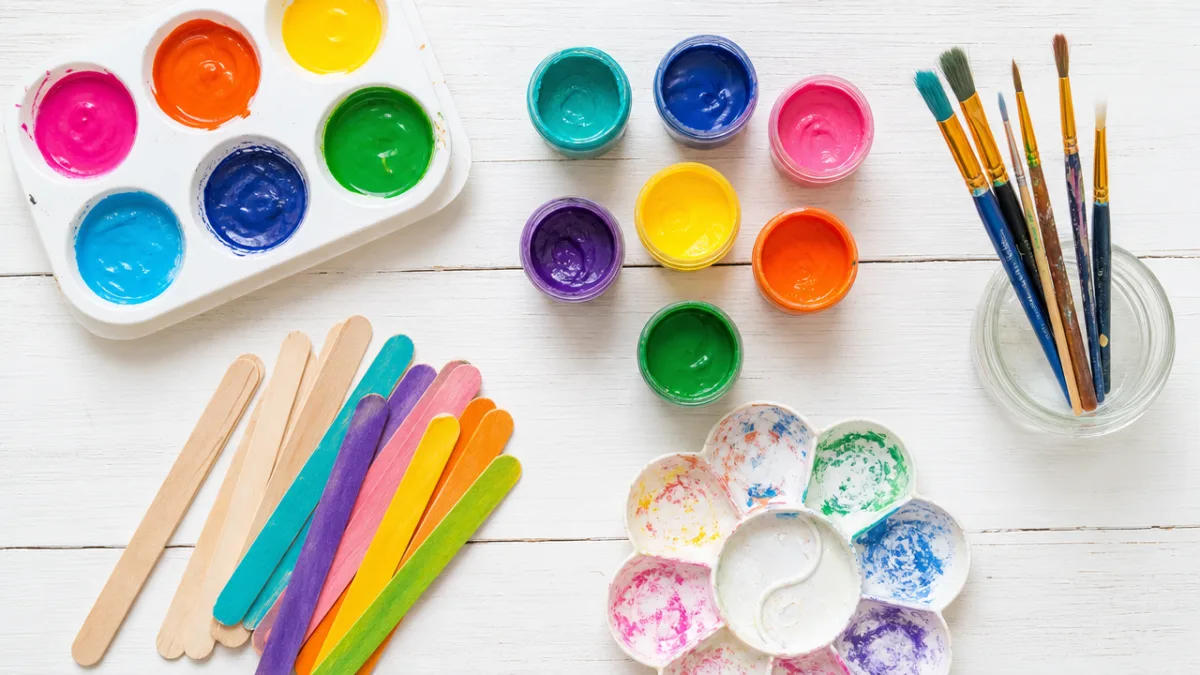
Before diving into your popsicle painting project, gathering the right materials will make the entire experience more enjoyable and your results more satisfying. The good news is that this style of artwork does not require expensive or specialized supplies. Most of what you need is likely already in your home or easily available at any craft or dollar store, making this an accessible project for virtually any budget.
For the painting itself, acrylic paints are the most popular choice because of their vibrant pigmentation, fast drying time, and ease of cleanup with water. However, watercolors produce a dreamy, translucent effect that many artists find equally appealing for popsicle subjects. Gouache, which sits somewhere between the two, offers the opacity of acrylics with a matte finish that photographs beautifully. Whichever medium you choose, selecting bright, clear colors will yield the most satisfying results, since popsicles are inherently associated with vivid, cheerful hues.
Canvas panels, watercolor paper, and even smooth cardboard all work well as surfaces for this project. If you are working with children, consider using heavier paper stocks that can handle wet paint without buckling excessively. Actual popsicle sticks are wonderful for adding tactile, three-dimensional elements to your finished pieces, and they can be glued directly onto the painted surface for a charming mixed-media effect. Round brushes in a variety of sizes, a palette or paper plate for mixing colors, and a jar of clean water round out your essential supply list.
- Acrylic, watercolor, or gouache paints in bright, saturated colors
- Canvas panels, watercolor paper, or heavy cardstock
- Round and flat brushes in multiple sizes
- Real popsicle sticks for mixed-media elements
- Palette or disposable paper plates for color mixing
- Water containers, paper towels, and a protective table covering
- Optional: washi tape for clean edges, masking fluid for watercolor work
Step-by-Step Techniques for Painting Popsicles
Beginning your popsicle painting with a light pencil sketch is highly recommended, especially for newcomers to this style. The classic popsicle shape is essentially a rounded rectangle sitting atop a thin stick, but small variations in proportion can dramatically change the overall feel of the piece. A slightly wider body with very rounded corners reads as cute and childlike, while a taller, more elongated shape feels more graphic and modern. Spend a few minutes experimenting with different proportions on scrap paper before committing to your final composition.
Once your sketch is in place, begin applying your base color using a brush loaded with well-mixed paint. For solid-color popsicles, this means simply filling in the body shape with smooth, even strokes. Many artists achieve a more realistic frozen-treat effect by adding a subtle gradient, blending a slightly lighter value of the same color near the top where light would naturally hit the icy surface. This simple technique adds dimension and makes the painted popsicle look genuinely appetizing rather than flat.
Details and finishing touches are where popsicle paintings truly come alive. Drips running down the sides of the popsicle body are one of the most charming and universally beloved details, suggesting that the treat is perfectly cold and melting just slightly in summer heat. You can paint these as thin, irregular lines of a slightly more translucent version of your base color. Highlights painted as small white or pale-colored strokes across the surface suggest the shiny, smooth texture of a frozen confection. Adding a soft shadow beneath the popsicle and around the base of the stick grounds the image and makes it feel complete.
Working with Patterns and Textures
One of the most exciting creative directions in popsicle painting involves replacing the standard solid color with intricate patterns, watercolor washes, or even tiny illustrated scenes contained within the popsicle’s silhouette. This technique, sometimes called silhouette painting, treats the popsicle shape as a window or frame through which another world is visible. Imagine a popsicle filled with a tiny sunset, a field of flowers, or an abstract explosion of splattered paint. The contrast between the simple, familiar outer shape and the complex interior creates artwork that is visually compelling and deeply personal.
Striped popsicles are another popular variation, evoking the classic rocket-shaped bars sold by ice cream trucks. These can be painted in bold, graphic bands of contrasting colors for a retro poster aesthetic, or in soft, blended gradients for a more contemporary watercolor look. The key to successful stripes is ensuring your color transitions are intentional, whether that means crisp, clean edges achieved with masking tape or soft blends created by painting wet-into-wet. Either approach yields striking results, and experimenting with both will help you discover your preferred style.
Creating a Series or Pattern Repeat
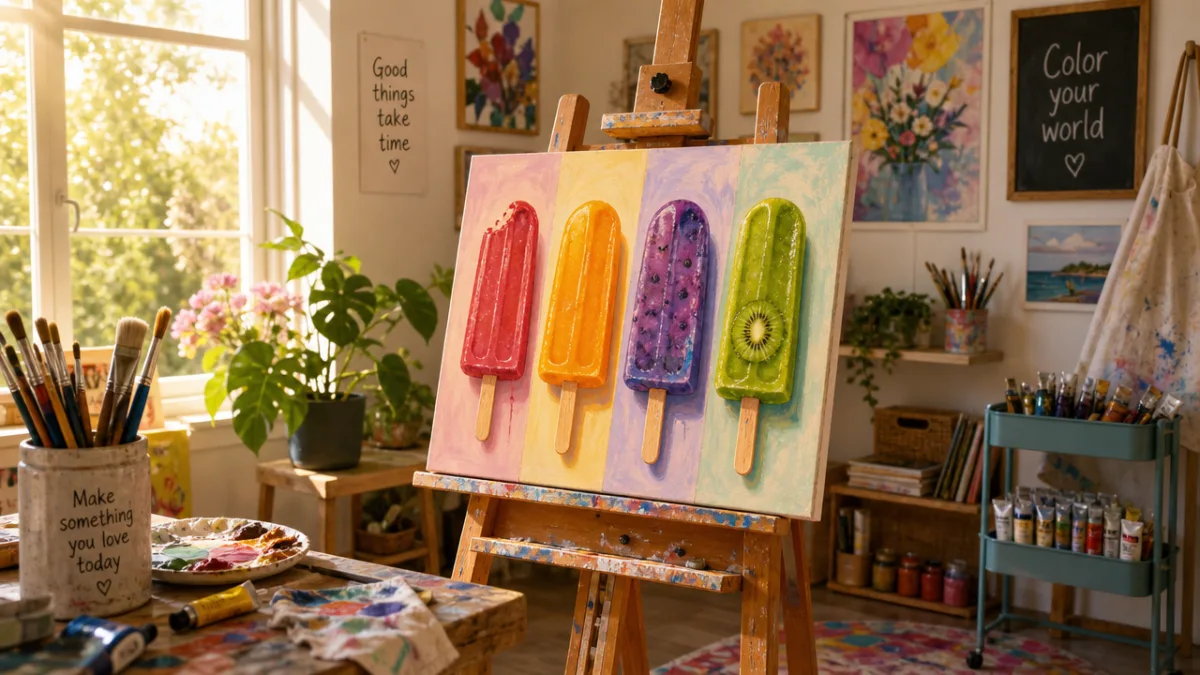
Many artists find that popsicle subjects lend themselves beautifully to series work, where multiple pieces are created with a unifying theme or color palette. A series of five or six popsicle paintings in complementary colors makes a spectacular gallery wall arrangement, particularly in a kitchen, dining room, or child’s bedroom. When planning a series, decide in advance whether your unifying element will be color, pattern, size, or some combination of all three. This planning ensures the finished series looks cohesive and intentional rather than random.
Pattern repeat designs featuring popsicles have become enormously popular for use on fabric, wrapping paper, and digital wallpapers. If your goal is to create a repeating pattern, begin by painting or illustrating individual popsicles in a variety of flavors, colors, and orientations. Mixing angled, upright, and even partially melted popsicle shapes adds visual interest and prevents the pattern from looking too rigid or static. Once you have your individual elements, arranging them in a grid or half-drop repeat creates a professional-looking pattern suitable for many applications.
Color Theory and Palette Selection for Popsicle Art
Understanding basic color theory will significantly elevate your popsicle paintings from pleasant to genuinely beautiful. The most successful popsicle artwork typically falls into one of several color approaches: vibrant complementary pairings, soft analogous harmonies, or bold triadic combinations. Complementary colors, those sitting opposite each other on the color wheel such as orange and blue or pink and green, create the kind of energetic visual tension that makes popsicle art feel exciting and lively. This approach is particularly effective for single-subject paintings where the popsicle itself needs to command attention.
Soft, analogous palettes using colors that sit adjacent on the color wheel, such as peach, coral, and soft orange, create a more soothing, cohesive aesthetic that works beautifully for nursery art or bedroom decor. These harmonious color combinations feel naturally pleasing to the eye and are easier to execute successfully, making them an excellent choice for beginners or for projects intended as gifts. The trick is to vary the value and saturation within your analogous palette to prevent the finished work from looking monotonous or muddy.
Bold, graphic popsicle paintings that prioritize striking color contrast over subtle realism have become a dominant aesthetic in contemporary illustration and surface pattern design. These works often reduce the popsicle to its most essential elements: a flat shape, a strong color, and perhaps a single highlight. Inspired by mid-century graphic design and vintage advertising art, this approach favors decisiveness over delicacy. Limiting your entire palette to three or four highly saturated colors and keeping backgrounds clean and simple will help you achieve this polished, modern look.
Popsicle Painting as a Kids’ Activity and Educational Tool
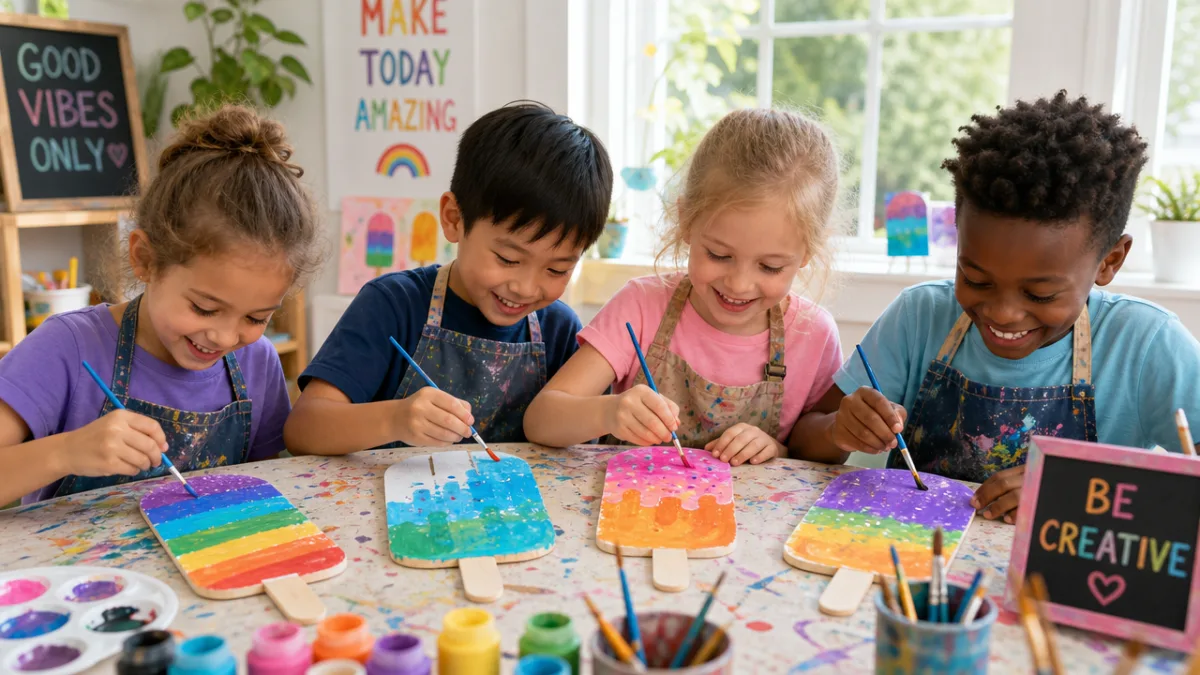
Introducing children to painting through the accessible, joyful subject of popsicles is a wonderful way to build foundational art skills while keeping the experience genuinely fun. Young children are naturally drawn to the subject matter because of its positive associations, which means they approach the activity with enthusiasm rather than anxiety. This emotional readiness is enormously valuable from an educational standpoint, since children learn most effectively when they are relaxed, engaged, and intrinsically motivated. A simple popsicle painting session can introduce concepts including shape, color, symmetry, and spatial awareness without any formal instruction feeling necessary.
For toddlers and preschoolers, consider setting up the activity as a process-focused experience rather than a product-focused one. Provide sponges cut into popsicle shapes for stamping, or use the wide, flat end of an actual popsicle stick as a painting tool to create interesting textured marks. Finger painting with homemade paint in popsicle-inspired colors, then cutting the dried paper into popsicle shapes, combines multiple sensory experiences into a single memorable activity. At this developmental stage, the goal is simply to nurture a positive relationship with art materials and creative expression.
Older children, from roughly ages six through twelve, can engage with more structured popsicle painting projects that teach specific techniques. Walking a child through the process of mixing secondary colors from primaries, then applying those mixed colors to paint a rainbow popsicle, creates a meaningful, memorable lesson in color theory. Teaching simple one-point perspective by showing how to paint a popsicle as if viewed from a slight angle adds geometric thinking to the artistic process. These structured lessons gain enormously from being wrapped in such a playful, child-centered subject, and children are more likely to retain what they learn when the learning feels like play.
- Start with a simple outline drawn in light pencil to build confidence before painting begins
- Practice mixing two primary colors to create a new secondary color for the popsicle body
- Experiment with adding white to any color to understand tints and highlights
- Try painting the same popsicle shape three times in different color palettes to explore mood
- Discuss how artists use drips and imperfections to make artwork feel more alive and authentic
Displaying and Sharing Your Popsicle Paintings
Once your popsicle paintings are complete and thoroughly dry, thoughtful display choices will allow them to shine as the charming, vibrant artworks they are. A cluster of popsicle paintings arranged as a gallery wall creates enormous visual impact, particularly when the individual pieces are coordinated in color or size but not completely identical. Mixing different frame styles, from simple white or natural wood to bold primary-colored frames, can enhance the playful spirit of the artwork without overwhelming it. Unframed canvas panels propped on a shelf or leaning against a wall offer a more casual, contemporary display option that suits many home aesthetics.
Photographing your popsicle paintings for sharing on social platforms requires just a little attention to lighting and composition to produce images that truly represent your work. Natural daylight, either outdoors or near a large window, is almost always the most flattering light for photographing colorful artwork, as it renders hues accurately without the orange cast of indoor incandescent bulbs. A clean, simple background, such as a white wall, a wooden floor, or a piece of neutral fabric, allows the bright colors of the popsicle painting to become the undeniable focal point of the photograph. Avoid using flash, which flattens the image and often creates distracting glare on painted surfaces.
Popsicle paintings also make exceptionally thoughtful and personal gifts for a wide range of occasions. A custom popsicle painting in a child’s favorite colors makes a memorable birthday present, while a set of matching popsicle art pieces could be a wonderful housewarming gift for friends who have recently moved into a new kitchen or playroom. If you develop a consistent style and your work resonates with others, platforms like Etsy, Instagram, and local craft fairs represent accessible marketplaces where popsicle art can find appreciative buyers. Many artists find that the combination of universal appeal and cheerful subject matter makes popsicle paintings among their most reliably popular and quickly sold works.
Finding Inspiration and Developing Your Own Popsicle Painting Style
The world around you is overflowing with inspiration for popsicle painting projects once you begin looking through an artist’s eyes. Pinterest and Instagram are rich repositories of popsicle art in every conceivable style, from hyper-realistic oil paintings that look edible to loose, expressive watercolor sketches that capture the spirit of summer with just a few brushstrokes. Studying the work of illustrators who specialize in food and still-life subjects, such as contemporary artists whose work appears regularly in food magazines and cookbooks, can provide valuable insights into color choices, composition strategies, and the subtle techniques that make painted food look genuinely appetizing.
Your personal popsicle painting style will emerge naturally over time as you accumulate experience and develop preferences. Some artists gravitate toward tight, polished, graphic work with clean lines and minimal detail. Others are drawn to loose, gestural painting that prioritizes emotional energy over precise representation. Neither approach is superior, and the most interesting artistic voices are often those that blend elements of multiple styles into something genuinely personal. Keeping a sketchbook dedicated to popsicle explorations, trying new color combinations, experimenting with different brushes and mark-making tools, and painting the same subject repeatedly with different intentions will accelerate your stylistic development considerably.
Ultimately, popsicle paintings endure as a beloved art form because they connect with something fundamental in the human experience: the desire to capture and extend moments of pure, simple happiness. A cold treat on a hot day is one of life’s most accessible and democratic pleasures, enjoyed across cultures, generations, and economic backgrounds. When an artist paints that experience with genuine care and skill, the resulting work carries real emotional weight and communicates something true about joy, summer, and the enduring sweetness of uncomplicated pleasures. Whether you are creating popsicle paintings for yourself, for your children, or to share with the wider world, you are participating in a tradition of art that celebrates life’s most delicious little moments.








What do you think?
It is nice to know your opinion. Leave a comment.