










Still Light Natural Candle: Your Guide to Grounding Essential Oils and Wellbeing at Home
The Art of the Natural Candle: Why It Matters for Your Home
In a world that moves faster than most of us can keep pace with, the simple act of lighting a candle has taken on renewed significance. Natural candles, crafted without synthetic fragrances or petroleum-based paraffin wax, represent a conscious choice to bring something genuinely wholesome into your living space. The Still Light Natural Candle is born from this philosophy — a commitment to creating an atmosphere that supports mental and physical wellbeing through the careful selection of ingredients, scent, and slow-burn craftsmanship.
The difference between a natural candle and a conventional one goes far beyond marketing language. Paraffin wax, derived from crude oil, releases a cocktail of chemicals when burned, including toluene and benzene — compounds that indoor air quality researchers have flagged as potential irritants. A natural candle made with soy, coconut, or beeswax burns cleaner, produces less soot, and creates a gentler, more diffuse scent throw. For anyone spending long hours at home, this distinction becomes genuinely meaningful rather than merely aspirational.
The Still Light candle, with its 120ml volume and 25-hour burn time, is sized thoughtfully for everyday use. It is not a decorative object destined to sit untouched on a shelf but rather a functional companion to your morning ritual, your evening wind-down, or your afternoon break. The modest size encourages actual use, and the generous burn time means you will come to associate its scent with many different moments of quiet and stillness in your home. Over time, scent memory becomes a powerful anchor, and that is precisely the intention behind this product.
Choosing Quality Ingredients in Natural Candle Making
What elevates a natural candle from a pleasant novelty to a genuinely therapeutic object is the quality of its component parts. The wax base matters enormously — sustainably sourced soy wax burns at a lower temperature, which means the essential oils held within it are volatilised more gently, releasing their aromatic compounds in a way that preserves their complexity. Rushed, high-heat combustion strips away the subtler top notes that make a well-blended scent feel alive and layered rather than flat and one-dimensional.
Cotton wicks, free from metal cores and chemical treatments, are another hallmark of responsible candle making. They curl slightly as they burn, which naturally limits the size of the flame and prevents the wick from drawing up more wax than it can cleanly combust. This self-trimming quality reduces mushrooming — the black carbon deposits that form on poorly designed wicks — and keeps your burn clean and consistent throughout the candle’s life. It is a small detail that makes an outsized difference to both air quality and the overall sensory experience.
Packaging and presentation also speak to a candle maker’s values. The Still Light candle favours minimal, sustainable packaging that does not compete with the product itself for attention. A clean glass vessel, easily repurposed once the candle is spent, reflects an understanding that a product sold for wellbeing should not create unnecessary waste. Every decision, from raw material sourcing to the label design, contributes to a coherent story about what this candle is for and who it is made for.
Understanding Grounding Essential Oils and Their Effects
Grounding, in the language of aromatherapy and wellness practice, refers to the quality of bringing one’s attention and nervous system back to a state of calm, present-moment awareness. Grounding essential oils are typically characterised by deep, earthy, resinous, or woody base notes that interact with the limbic system — the part of the brain most directly connected to emotion, memory, and physiological regulation. When inhaled, these aromatic compounds travel rapidly through the olfactory nerve pathway, triggering responses in the amygdala and hippocampus that can shift mood and stress levels within minutes.
Common grounding essential oils include cedarwood, vetiver, frankincense, sandalwood, patchouli, and labdanum. Each brings its own character to a blend. Cedarwood offers a dry, slightly sweet woodiness that evokes forest environments and has been studied for its potential sedative properties. Vetiver, derived from the root of a grass native to South Asia, carries an intensely earthy, smoky depth that many aromatherapists consider the most powerfully grounding of all single oils. Frankincense, long associated with meditation and spiritual practice across multiple cultures, contributes a balsamic, slightly citrusy warmth that slows the breath and encourages inward focus.
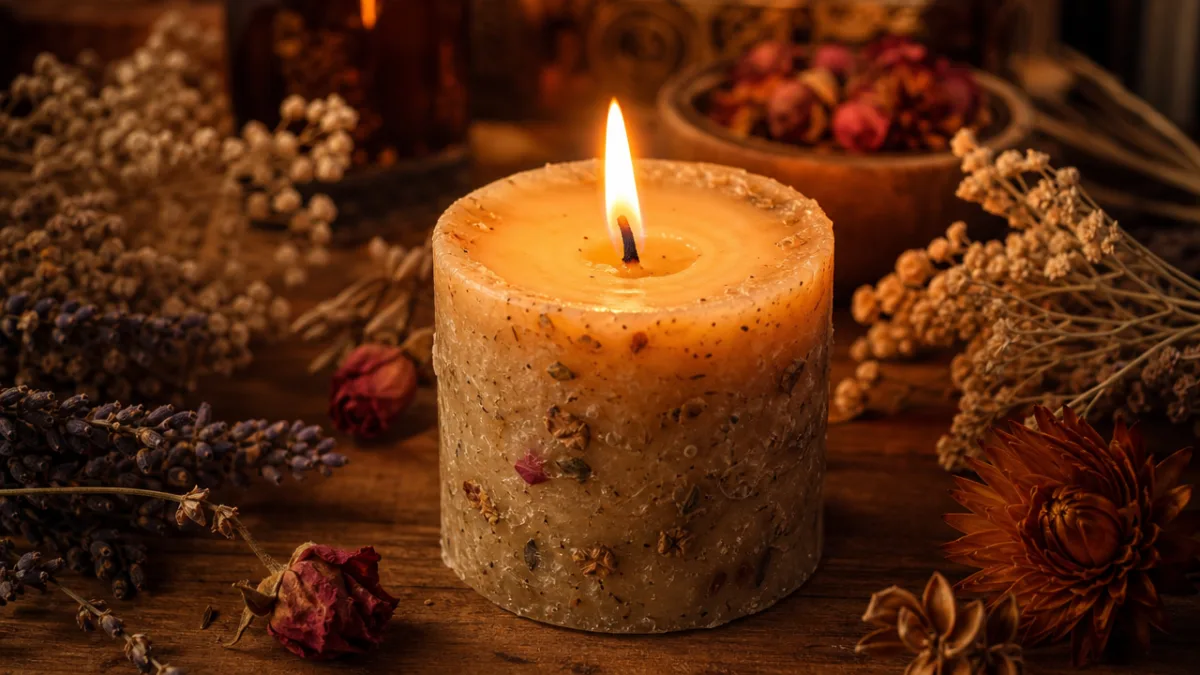
When these oils are blended with skill, the result is something greater than the sum of its parts. A grounding candle is not simply a collection of earthy smells but a carefully composed olfactory experience designed to move through stages as it burns. The top notes you encounter when the candle first ignites give way to the heart of the blend as the wax pool deepens, and the base notes linger longest in the room and on soft furnishings after the flame is extinguished. This temporal dimension makes scent design a genuinely sophisticated discipline, one that the Still Light candle takes seriously.
The Science Behind Aromatherapy and Stress Reduction
The use of plant-derived aromatic compounds to support psychological and physiological wellbeing has a long empirical history, but modern neuroscience has begun to provide a mechanistic framework for understanding why these practices work. Research published in peer-reviewed journals has demonstrated that certain terpenes — the molecular building blocks of essential oil fragrance — can cross the blood-brain barrier and interact directly with neurotransmitter systems. Linalool, found in lavender and many floral oils, has been shown to modulate GABA receptors in ways that parallel the action of mild anxiolytic compounds.
Inhaled essential oils also influence the autonomic nervous system, the branch of our physiology responsible for regulating heart rate, breathing, digestion, and the body’s stress response. Studies using heart rate variability as a measure of autonomic balance have found that exposure to certain aromatic compounds — particularly those in the earthy and woody categories — can shift the balance from sympathetic dominance (the fight-or-flight state) toward parasympathetic activity (the rest-and-digest state). This physiological shift is what people subjectively experience as feeling calmer, more centred, or more present.
It is worth noting that aromatherapy is not a substitute for medical treatment, and the effects of any individual oil will vary depending on personal biochemistry, concentration, duration of exposure, and psychological associations. However, within the context of a daily wellbeing practice, the cumulative effect of consistent, intentional use of grounding scents can be genuinely significant. The Still Light candle is designed to be part of this kind of habitual, mindful practice rather than a one-time sensory treat, and its 25-hour burn time is generous enough to support that sustained engagement.
Creating a Wellbeing Ritual at Home
The concept of wellbeing at home has moved well beyond bubble baths and scented reed diffusers. Increasingly, researchers in environmental psychology and behavioural science are emphasising the importance of intentional sensory environments — spaces that are actively designed to support specific psychological states. The home is no longer simply a backdrop to life but a participant in it, capable of either depleting or restoring our inner resources depending on how we engage with it. Lighting a candle is, in this frame of thinking, an act of environmental design as much as it is an act of relaxation.
A wellbeing ritual does not need to be elaborate to be effective. In fact, simplicity is often its most important quality. The ritual might begin with clearing a small space — a windowsill, a corner of a desk, a bedside table — and placing the candle there with intention. The act of lighting the wick, watching the flame settle, and taking three slow, deliberate breaths as the scent begins to rise is enough to signal to the nervous system that a transition is occurring. You are moving from one mode of being to another, and the candle is your sensory marker for that shift.
Consistency matters more than duration when building a ritual. Five minutes of genuine stillness with a grounding candle, practised daily, will produce more lasting neurological change than an occasional hour-long ceremony. The brain is a pattern-recognition organ, and it will begin to anticipate and respond to the scent before you have even consciously registered it, in the same way that the smell of coffee begins to wake you up before the first sip. Over weeks and months, the Still Light candle becomes woven into your nervous system’s own vocabulary of calm.
Pairing Your Candle with Complementary Practices
The grounding essential oils in the Still Light candle pair naturally with a range of complementary practices that share the same intention of bringing attention back to the body and the present moment. Breathwork is perhaps the most obvious companion, and even the simplest technique — inhaling for a count of four, holding for four, exhaling for six — is significantly deepened by a sensory anchor like a carefully chosen scent. The aromatic compounds you inhale during this practice become neurologically linked to the state of calm you are cultivating, strengthening the association each time you repeat it.
Journaling by candlelight has a quality quite different from journaling under artificial light or in front of a screen. The soft, slightly flickering illumination of a candle creates a contained, intimate atmosphere that many writers and reflective thinkers find uniquely conducive to honesty and depth. There is something about the gentle movement of the flame that keeps the mind just active enough to prevent drift while supporting the kind of gentle introspection that journaling requires. The grounding scent adds another layer, keeping you embodied and present rather than lost in abstraction.
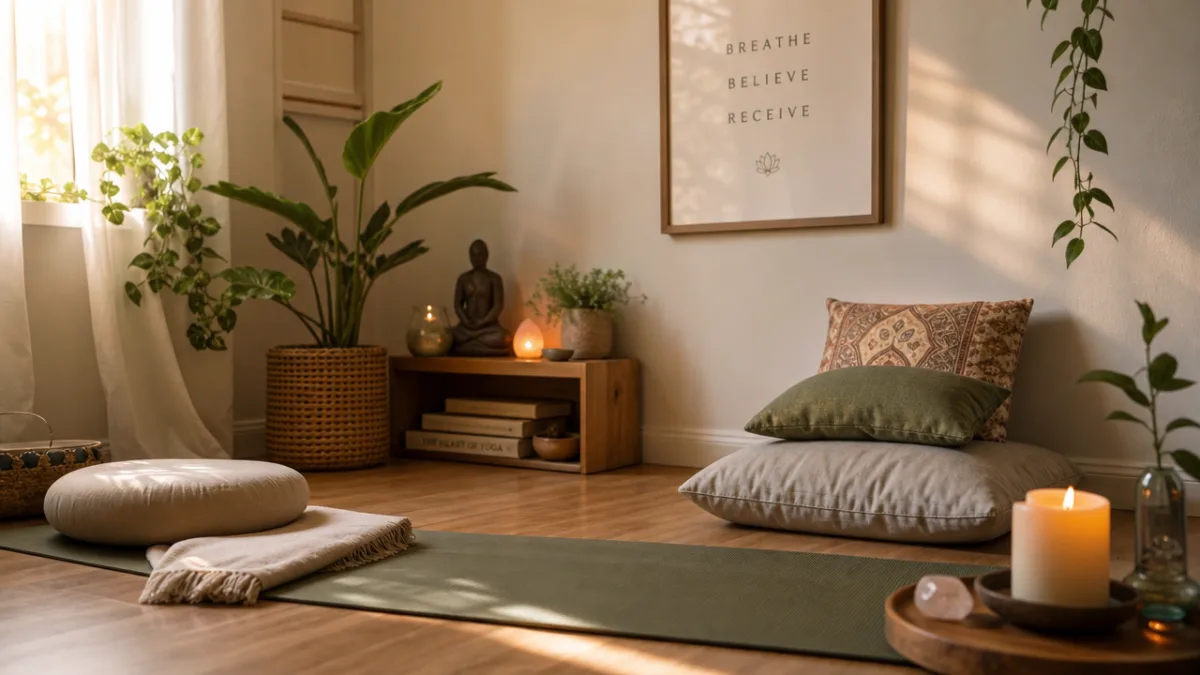
Yoga, stretching, and gentle movement practices also benefit considerably from a thoughtfully scented space. Many yoga traditions incorporate the use of incense or essential oils as part of the preparation of the practice space, recognising that the olfactory system is among the fastest pathways to a shifted state of consciousness. Replacing incense with a natural essential oil candle offers a cleaner, more precisely controlled aromatic experience. The Still Light candle’s moderate scent throw — sufficient to fill a small to medium room without becoming overwhelming — is well matched to the sensitivity required by a movement or meditation practice.
Practical Candle Care for Maximum Burn Quality
A 25-hour burn time is an achievable specification only if the candle is treated with a degree of care and attention. The most important single habit is allowing the wax to achieve a full melt pool on the first burn — that is, allowing the candle to remain lit until the liquid wax reaches all the way to the edges of the vessel. This typically takes between one and three hours depending on the diameter of the candle. Failing to achieve a full melt pool on the first burn creates what chandlers call tunnelling, where the wax burns down the centre in a narrow column, leaving a thick wall of unmelted wax around the edge that will never properly liquify.
Wick trimming is another practice that most candle users neglect to their own detriment. Before each burn, the wick should be trimmed to approximately five to six millimetres. An untrimmed wick grows a carbon mushroom at its tip, which creates a larger, hotter, smokier flame that degrades both the fragrance and the air quality. A simple wick trimmer or even a pair of nail scissors will do the job effectively. Taking a moment to trim the wick before lighting the candle is itself a small act of intention — a pause before the ritual begins.
Candles should never be burned for more than four hours at a stretch, both for safety reasons and for the preservation of fragrance quality. Extended burns cause the essential oils to over-volatilise and can cause the glass vessel to overheat. When you extinguish the flame, use a candle snuffer rather than blowing it out — blowing introduces oxygen in an uncontrolled way that can cause the wick to smoulder and produce smoke, undoing some of the sensory benefit you have just created. Store the candle away from direct sunlight and heat sources, both of which can cause the wax to discolour and the fragrance to degrade more rapidly.
Caring for Your Glass Vessel After the Candle Is Spent
One of the pleasures of a well-made candle in a quality glass vessel is the second life that container can enjoy once the wax is exhausted. Before repurposing the glass, the residual wax must be removed cleanly. The most reliable method is to place the vessel in a warm oven at a low temperature — around 80 degrees Celsius — for fifteen to twenty minutes, which softens the remaining wax sufficiently to pour it out and wipe the interior clean with a paper towel. Alternatively, placing the vessel in the freezer causes the wax to contract and pop free from the glass in a single piece.
Once cleaned, the vessel can serve any number of household purposes. Its small size — 120ml — makes it ideal as a pen holder, a seed-starting pot, a small vase for a single stem, or a container for paper clips, hair ties, and other small items that accumulate on dressing tables and desks. Repurposing glass in this way is a small but genuine act of sustainability, and it keeps the vessel in your environment as a visual reminder of the ritual it once anchored. Some people find that keeping the vessel, even empty, continues to evoke a sense of calm through the very faint scent that lingers in the glass.
The repurposing of candle vessels is also an invitation to think about your relationship with objects more broadly. Wellbeing products at their best are not consumables in the pejorative sense but investments in a sensory environment that evolves and deepens over time. The Still Light candle is designed with this continuity in mind — from its first lighting to the last of its 25 hours, through the cleaning of the vessel and its new life on your shelf, it participates in a domestic story about care, attention, and the value of small beautiful things.
The Broader Context: Natural Candles and Sustainable Living
The natural candle market is part of a much wider shift in consumer consciousness toward products that are honest about their ingredients, transparent about their supply chains, and designed with the full arc of their lifecycle in mind. This shift is driven partly by growing awareness of indoor air quality — studies suggest that indoor air can be significantly more polluted than outdoor air, particularly in well-insulated modern homes — and partly by a broader cultural reckoning with the hidden costs of cheap, synthetic products. The Still Light candle is positioned within this more thoughtful tradition of domestic goods.
Essential oils used in natural candles carry their own ethical dimensions. The global demand for aromatherapy products has placed considerable pressure on certain plant species and the communities that cultivate and harvest them. Responsibly sourced essential oils come with a degree of supply chain transparency that allows the end consumer to be confident that the aromatic compounds they are burning have been produced without ecological destruction or labour exploitation. Sandalwood, for example, has been subject to significant over-harvesting in some regions, making sourcing credentials an important consideration when evaluating any product that contains it.
Beyond ingredient sourcing, the energy and waste profile of candle production matters. Small-batch, artisan candle makers tend to have significantly lower carbon footprints than large industrial producers, both because of their production methods and because of the shorter, more transparent supply chains involved. Supporting small candle makers who prioritise natural ingredients and sustainable practices is, in a modest but meaningful way, a form of participation in a more humane and ecologically considered economy. The Still Light candle, in its quiet, unassuming way, represents this kind of considered making.
Building a Sensory Wardrobe for Your Home
Just as a wardrobe of clothes serves different occasions, moods, and seasons, a small curated collection of natural candles can serve the different emotional needs that arise across the days and weeks of domestic life. A grounding candle like the Still Light is ideally suited to the moments when the nervous system needs stabilising — after a difficult day, during a period of anxiety or uncertainty, or as part of an evening deceleration practice. But other moods call for other scent profiles, and building a sensory vocabulary for your home is a rewarding ongoing project.
Uplifting citrus candles — those featuring bergamot, sweet orange, lemon, or grapefruit — work well for morning routines and creative work sessions where energy and brightness are the desired states. Floral candles, particularly those centred on rose, jasmine, or ylang-ylang, lend themselves to social occasions or evenings of self-nurture. Herbal candles built around rosemary, eucalyptus, or peppermint can sharpen focus during periods of concentrated work. The grounding range sits at the foundation of this sensory wardrobe, providing the baseline of calm from which all other states are more easily reached.
The practice of choosing and using candles intentionally is, at its core, a practice of self-knowledge. It requires paying enough attention to your own inner states to recognise what you need and to reach for the appropriate sensory support with some degree of skill and discernment. In this way, something as simple as a 120ml glass candle becomes a small instrument of self-awareness — a daily reminder that the spaces we inhabit and the sensory choices we make within them are not incidental to our wellbeing but integral to it. The Still Light Natural Candle, properly understood, is not a luxury item but a thoughtful investment in the quality of your most ordinary moments.
- Always perform a full melt pool on first burn to prevent tunnelling and ensure an even, consistent burn throughout the candle’s 25-hour life.
- Trim the wick to 5–6mm before each use to maintain a clean, appropriately sized flame and minimise soot and smoke.
- Limit burns to four hours maximum to protect both the fragrance integrity and the temperature of the glass vessel.
- Use a snuffer to extinguish the flame rather than blowing it out, preserving air quality and preventing wick smoulder.
- Store in a cool, dark place away from direct sunlight and heat to protect the essential oils from premature degradation.
- Repurpose the vessel once the candle is spent by cleaning it with gentle heat or freezing, giving the glass a purposeful second life in your home.








What do you think?
It is nice to know your opinion. Leave a comment.