










Elegant Mushrooms to Embellish Your Garden: A Complete Guide to Decorative Fungi
The Timeless Appeal of Mushrooms in Garden Design
Mushrooms have captivated human imagination for centuries, and their whimsical, organic forms have found a natural home in garden aesthetics around the world. Whether carved from stone, cast in resin, hand-painted in ceramic, or cultivated as living organisms, decorative mushrooms bring a sense of enchantment and mystery to outdoor spaces that few other garden elements can match. Their rounded caps and slender stems evoke fairy tales and forest floors, instantly transforming even the most ordinary garden corner into something that feels magical and alive.
The appeal of mushroom-inspired garden décor lies in its versatility. A single oversized toadstool sculpture placed beside a garden path can serve as a striking focal point, drawing the eye and sparking conversation. Clusters of smaller mushroom ornaments nestled among hostas or ferns create a layered, storybook effect that delights children and adults alike. From minimalist modern designs in muted tones to boldly painted polka-dotted toadstools bursting with color, there is a mushroom aesthetic for every garden personality and every outdoor style.
Beyond pure decoration, mushrooms carry rich symbolic meaning in many cultures. In European folklore they are associated with fairy rings and good luck. In Japanese garden philosophy, fungi represent the beauty of transience and the cycle of life. This depth of cultural resonance means that incorporating mushroom motifs into your garden is not merely a design choice but a gesture toward something larger — a connection with nature, storytelling traditions, and the quiet poetry of the natural world. Few garden accents carry so much meaning in such an unassuming form.
Choosing the Right Decorative Mushroom Style for Your Garden
Before selecting mushroom decorations for your outdoor space, it is worth taking time to assess the overall character of your garden and the atmosphere you want to create. A cottage garden overflowing with roses, lavender, and climbing clematis calls for a different mushroom aesthetic than a sleek contemporary courtyard with geometric planters and ornamental grasses. Understanding your garden’s design language will help you choose pieces that feel intentional and harmonious rather than randomly placed or visually jarring.
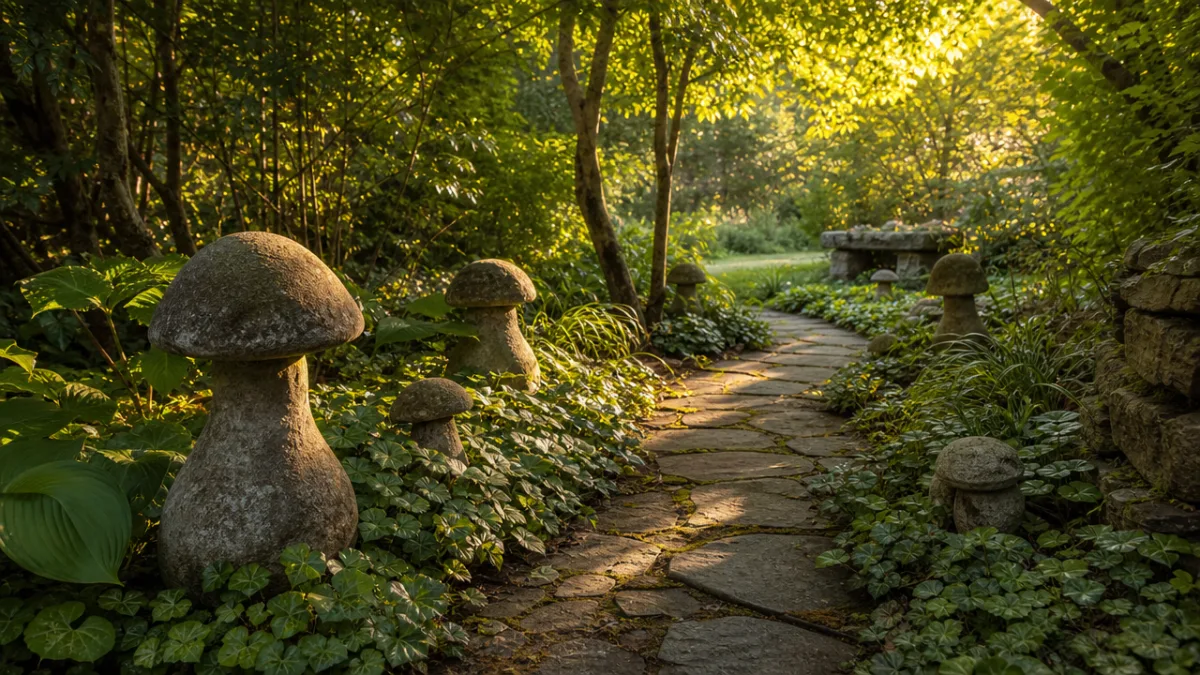
For romantic cottage and woodland garden styles, hand-painted ceramic or terracotta mushrooms with warm, earthy tones work beautifully. Look for pieces with naturalistic textures — subtle ridges on the caps, moss-like finishes on the bases, and colors that echo the browns, taupes, and soft reds found in real woodland fungi. These designs blend seamlessly with lush planting and give the impression that the mushrooms have always belonged in that space, growing quietly alongside the flowers and foliage over many seasons.
Modern and minimalist gardens benefit from a more restrained approach. Concrete or stone mushroom sculptures in monochromatic gray, white, or charcoal bring structural interest without overwhelming a clean aesthetic. Metal mushroom installations — particularly those crafted from weathered steel or powder-coated iron — introduce an industrial elegance that pairs well with architectural planting schemes. For maximalist or eclectic gardens, brightly colored resin or glass mushrooms with bold patterns offer an unapologetic playfulness that turns the garden into an extension of personal artistic expression.
Popular Decorative Mushroom Materials
- Ceramic and Terracotta: Lightweight, available in a wide range of hand-painted finishes, and suitable for mild climates. These pieces bring artisanal warmth to planting beds and container arrangements, though they may need winter storage in frost-prone regions.
- Resin and Fiberglass: Highly durable, weather-resistant, and often strikingly realistic in appearance. Resin mushrooms can mimic stone, wood, or natural fungi with impressive accuracy, and they hold up well to rain, wind, and UV exposure year after year.
- Concrete and Stone: Heavy, long-lasting, and wonderfully textured, concrete mushrooms develop a beautiful patina over time and can even host natural moss growth, which only enhances their charm in damp, shaded garden settings.
- Metal: Available in copper, steel, and iron, metal mushrooms offer unique sculptural possibilities and weather attractively. Copper develops a striking verdigris patina, while corten steel takes on rich orange-brown tones that complement natural surroundings.
- Hand-Carved Wood: Ideal for naturalistic woodland gardens, carved wooden mushrooms age gracefully and can be stained or left natural to weather over time, developing organic character unique to each piece.
Cultivating Real Mushrooms as Living Garden Ornaments
While decorative sculptures and ornaments are the most common way to introduce mushroom aesthetics into a garden, there is something uniquely rewarding about cultivating actual mushrooms as part of your outdoor planting scheme. Several species of edible and ornamental fungi can be grown deliberately in garden settings, adding genuine living texture and visual interest while also contributing to the ecological health of the space. Growing real mushrooms turns a garden into a more complete, self-sustaining ecosystem.
Wine cap mushrooms, also known as Stropharia rugosoannulata, are among the best choices for garden cultivation. They produce large, impressive fruiting bodies with deep burgundy caps that can reach remarkable sizes, making them genuinely ornamental as well as delicious. Wine caps thrive in wood chip mulch and can be encouraged to colonize garden beds over time, returning season after season with minimal effort. Their mycelium network quietly improves soil structure and nutrient cycling throughout the garden, offering benefits far beyond their visual appeal.
Oyster mushrooms can be cultivated on logs positioned artistically throughout a shaded garden area, turning a practical growing setup into a striking visual feature. Inoculated logs placed upright or stacked in a shaded corner will produce flushes of beautiful, fan-shaped mushrooms in pale gray, golden yellow, or dusty pink, depending on the species chosen. This approach creates a living installation that changes and evolves through the growing season, offering a dynamic visual experience that no static sculpture can replicate. Beyond aesthetics, you also gain a sustainable supply of gourmet mushrooms for the kitchen.
Best Mushroom Species for Garden Growing
- Wine Cap (Stropharia rugosoannulata): Large, dramatic, and soil-friendly. Ideal for wood-chip garden beds and pathways, with striking burgundy caps that are both ornamental and edible.
- Oyster Mushroom (Pleurotus ostreatus): Versatile and prolific on hardwood logs. Available in several color varieties and produces beautiful clustered fruiting bodies throughout spring and autumn.
- Shiitake (Lentinula edodes): Elegant golden-brown caps on inoculated oak or beech logs. A slower producer than oysters but long-lived and visually distinguished in a woodland garden setting.
- Lion’s Mane (Hericium erinaceus): Striking white, pom-pom-like fruiting bodies that are genuinely spectacular as a visual feature. Grows on hardwood logs and is highly prized both as food and as a conversation-starting garden curiosity.
Placement Strategies for Maximum Visual Impact
Even the most beautiful mushroom decoration will fail to make an impression if it is placed poorly within the garden. Thoughtful placement is the difference between an ornament that looks like an afterthought and one that feels like it was always meant to be there. The key principle is to work with the natural logic of mushrooms — they grow in relation to other living things, nestled among plants, emerging from soil and mulch, sheltering beneath the canopy of larger vegetation. Decorative pieces should honor this same logic, however loosely interpreted.
Shaded and semi-shaded areas are ideal locations for mushroom ornaments, mirroring the conditions where real fungi naturally thrive. Positioning a cluster of ceramic toadstools beneath a mature hydrangea, beside a mossy rock, or at the base of a garden tree creates a scene that feels genuinely believable and beautifully composed. The shelter offered by surrounding plants also helps protect more delicate pieces from harsh weather, extending their lifespan while enhancing the visual coherence of the planting scheme around them.
Consider varying the scale of your mushroom pieces to create depth and visual interest across different areas of the garden. Place a single large statement piece — perhaps a concrete or resin mushroom sculpture standing forty or fifty centimeters tall — at a key focal point such as a path junction, the center of a planting bed, or beside a garden gate. Then echo this central piece with smaller ornaments dotted through surrounding beds, as if a family of fungi has spread naturally from the original source. This approach creates a narrative thread that draws the eye gently through the garden space.
Key Placement Principles
- Cluster mushroom pieces in odd numbers — groups of three, five, or seven feel more natural and dynamic than pairs or even-numbered arrangements.
- Vary heights within a cluster by placing some pieces on slightly raised ground or propped on partially buried stones, mimicking the varied emergence patterns of real mushroom colonies.
- Position ornaments where they will be discovered rather than immediately obvious — tucked behind a plant stem, visible around a garden corner, or partially hidden by low groundcover for a sense of charming surprise.
- Consider seasonal context: mushroom ornaments look most natural in autumn when real fungi are abundant, but with careful planting around them, they can feel appropriate in any season.
DIY Mushroom Garden Decorations: Creative Projects for Every Skill Level
One of the most rewarding ways to introduce mushroom elegance into your garden is to create your own decorative pieces. Handmade garden ornaments carry a personal quality that no shop-bought item can replicate, and the process of making them is deeply satisfying. Whether you are an experienced crafter or a complete beginner, there are mushroom-making projects suited to your skill level, available materials, and available time. The creative possibilities are genuinely broad, ranging from simple painted stone projects to more ambitious sculpted installations.
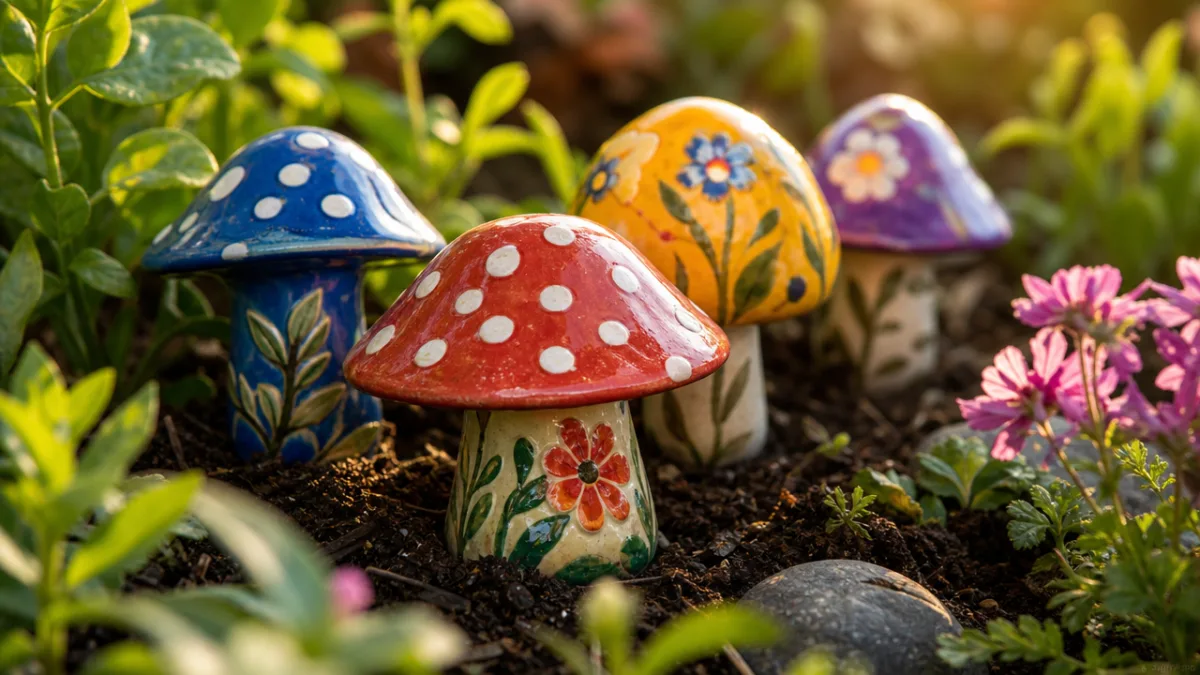
Painted river stones offer perhaps the easiest entry point into DIY mushroom garden art. Smooth, rounded stones of various sizes can be transformed into charming toadstools using outdoor acrylic paint and a steady hand. Paint the upper surface of a dome-shaped stone in a rich red, warm orange, or classic white, add contrasting spots, then use a darker shade to paint the underside detail. Sealed with outdoor varnish, these painted stones are surprisingly durable and can be scattered through planting beds, arranged along path edges, or grouped in clusters for immediate decorative impact with minimal cost or effort.
For those with more time and ambition, hypertufa mushroom sculptures offer a wonderfully durable and artisanal result. Hypertufa is a mixture of Portland cement, perlite, and peat moss or coir that can be shaped by hand and sets to a lightweight, stone-like finish that weathers beautifully outdoors. Mushroom caps can be molded over inverted bowls or balloons, while stems are built up by hand or cast in cardboard tubes. Once cured, hypertufa mushrooms can be textured with wire brushes, painted with natural pigments, or left plain to develop their own moss and lichen patina over time — a result that looks genuinely ancient within just a few seasons.
Beginner-Friendly DIY Project: Terracotta Pot Mushrooms
Stack small terracotta flower pots in diminishing sizes to create charming mushroom stems, then invert a larger saucer or shallow bowl on top to form the cap. Secure the pieces together with waterproof adhesive and seal all surfaces with exterior primer before painting in your chosen palette. This simple project requires no specialist skills or materials and produces surprisingly elegant results. A group of three or five pot mushrooms in graduated sizes, painted in coordinating tones and arranged among low groundcover plants, creates a garden vignette that looks entirely intentional and delightfully original.
Seasonal Care and Maintenance of Mushroom Garden Ornaments
Ensuring that your mushroom garden decorations remain beautiful season after season requires a modest but consistent investment of attention and care. The specific requirements will vary depending on the material of each piece, but there are general principles that apply broadly across most types of garden ornament. Establishing a simple seasonal maintenance routine at the beginning and end of each growing season will keep your mushroom décor looking its best and extend its lifespan considerably, protecting your investment and preserving the visual impact of your garden design.
Spring is the ideal time to inspect ornaments after the rigors of winter. Check ceramic and terracotta pieces carefully for fine cracks that may have developed as water expanded and contracted within the material during freezing temperatures. Small cracks can often be stabilized with exterior-grade adhesive before they become larger fractures. Clean all ornaments gently with a soft brush and mild soapy water to remove algae, bird droppings, and winter grime. Reapply protective sealant to painted pieces according to the product manufacturer’s recommendations, paying particular attention to any areas where the original coating has worn thin or lifted.
Autumn preparation is equally important, particularly in climates where winter frost is a genuine threat. Ceramic, terracotta, and less robust resin pieces should ideally be moved to a frost-free shed or garage for the winter months, or at minimum wrapped in horticultural fleece and lifted off the ground onto wooden boards to reduce moisture absorption from below. Concrete and stone pieces are generally frost-hardy but benefit from a protective treatment with masonry sealant every two to three years. Metal pieces should be checked for rust spots and treated promptly with appropriate metal primer and paint to prevent corrosion from spreading through winter damp.
Year-Round Maintenance Checklist
- Spring: Inspect for frost damage, clean thoroughly, reseal painted surfaces, and reposition any pieces dislodged by winter weather or soil movement.
- Summer: Check for UV fading on brightly painted pieces and apply UV-protective varnish if colors are beginning to bleach. Remove any moss or lichen growth that is obscuring painted detail, though on stone and concrete pieces this natural colonization is often desirable.
- Autumn: Clean pieces before wet weather sets in, apply protective treatments, and plan which items need winter storage. Begin moving vulnerable pieces indoors before the first hard frost.
- Winter: Store fragile pieces in frost-free conditions. Use this season to repair, repaint, or replace any pieces that have become damaged beyond simple maintenance.
Living mushroom cultivations such as inoculated logs require a different kind of seasonal attention. Ensure logs remain moist through dry summer periods by misting them regularly or positioning them where they receive natural rainfall. As logs age and begin to decompose fully — typically after three to seven years depending on species and log diameter — they can be replaced with freshly inoculated material or allowed to break down naturally into the garden soil, contributing valuable organic matter and fungal networks to the surrounding planting area. This natural cycle of renewal is itself a beautiful reflection of the way mushrooms actually live and function in woodland ecosystems.
Inspiring Garden Styles That Celebrate the Mushroom Aesthetic
Certain garden design styles lend themselves particularly naturally to the mushroom aesthetic, offering ready-made frameworks within which fungal decoration can flourish and feel entirely at home. Understanding these styles and their underlying principles can help you build a cohesive garden vision rather than simply scattering mushroom ornaments at random throughout your outdoor space. A thoughtfully themed garden with mushrooms as a recurring motif creates an experience that is greater than the sum of its individual parts — a world to step into rather than merely a collection of pretty objects.
The fairy garden or woodland garden style is the most obvious and enduringly popular context for mushroom aesthetics. This style draws inspiration from British woodland, Central European folk traditions, and the illustrated worlds of fairy tale literature, combining lush naturalistic planting with whimsical decorative elements to create a space that feels genuinely enchanted. Mushrooms are essential vocabulary in this design language, appearing alongside miniature fences, mossy stones, small water features, and dense groundcover planting. When executed with care, a fairy garden becomes a place of genuine magic that rewards slow exploration and careful observation.
Japanese-inspired garden designs offer a more contemplative context for mushroom aesthetics. In this tradition, real fungi — particularly those growing naturally on aged logs, mossy stones, or the bases of mature trees — are appreciated as expressions of wabi-sabi, the beauty of impermanence and imperfection. Incorporating cultivated fungi or carefully chosen ceramic mushroom pieces into a Japanese garden must be done with restraint and intentionality, placing each piece with the same consideration given to a stone lantern or bamboo water feature. The result is a garden where the mushroom element feels deeply meaningful rather than decorative in a superficial sense.
Contemporary naturalistic gardens — inspired by the planting philosophy of designers like Piet Oudolf and the prairie planting movement — offer perhaps the most exciting frontier for mushroom aesthetics today. In these gardens, real wine cap or oyster mushrooms cultivated among sweeping grasses and perennial plantings add a genuinely ecological dimension to the design. The mushrooms are not decorative afterthoughts but functional participants in the garden ecosystem, contributing to nutrient cycling, soil health, and biodiversity while also providing striking seasonal visual interest. This approach represents the most sophisticated and forward-thinking integration of the mushroom aesthetic into contemporary garden design.








What do you think?
It is nice to know your opinion. Leave a comment.