










Realistic Fruit & Vegetable Candles: The Art of Handcrafted Food-Shaped Decor for Kitchen Styling
The Rise of Botanical and Food-Inspired Candle Art
Over the past several years, the world of home decor has witnessed a remarkable shift toward objects that blur the boundary between art and function. Among the most captivating trends to emerge from this movement is the handcrafted food-shaped candle — hyper-realistic wax sculptures designed to look exactly like fresh fruit and vegetables. These pieces are so meticulously detailed that guests often do a double take, reaching out to touch what they assume is a bowl of real lemons or a cluster of artichokes, only to discover they are holding a beautifully scented candle.
What makes this trend so compelling is not just the novelty, but the craftsmanship behind each piece. Skilled artisans spend hours working with layers of colored wax, hand-painting surfaces, and applying finishing textures to replicate the natural imperfections of real produce. The result is something that feels equally at home in a modern art gallery as it does on a kitchen countertop. The interplay between the organic world and the world of decorative craft has created a new category of collectible home goods that resonates deeply with people who love both cooking and design.
Social media platforms, particularly Pinterest and Instagram, have played a pivotal role in propelling this niche art form into mainstream consciousness. When a single image of a perfectly rendered wax peach or a lifelike tomato candle goes viral, it ignites a wave of curiosity and desire that spreads across households worldwide. Home decorators, gift buyers, and craft enthusiasts alike have embraced food-shaped candles as a fresh, imaginative way to inject personality and warmth into their living spaces, particularly the kitchen — a room that has increasingly become the emotional heart of the home.
Why Food Motifs Resonate So Deeply in Home Decor
Food has always carried deep symbolic weight in human culture. It represents nourishment, celebration, community, and the rhythms of daily life. When that symbolism is translated into a decorative object like a candle, it carries all of those associations into the home environment in a way that feels deeply personal and comforting. A bowl of wax lemons on the kitchen table does not simply add a pop of color — it whispers something about the homeowner’s appreciation for beauty in the everyday, their connection to nature, and their love of the domestic arts.
Interior designers have long understood that the kitchen is a space where people want to feel both inspired and grounded. Unlike the formal living room or the minimalist bedroom, the kitchen invites a kind of joyful abundance. Food-shaped candles tap directly into this aesthetic desire, offering the visual richness of a fruit bowl or vegetable garden without any of the maintenance. They sit beautifully alongside ceramic pitchers, linen dish towels, and wooden cutting boards, enhancing the overall sense of a curated, lived-in space that feels both elegant and approachable.
There is also a playful dimension to food-shaped candles that sets them apart from more conventional decorative objects. They invite a sense of wonder and even humor — a reminder not to take home decor too seriously. A perfectly sculpted wax avocado or a cluster of wax cherries brings a smile to the face before it even registers as a candle. That initial moment of delightful deception is part of what makes these objects so memorable and so gifted. They make excellent conversation starters, and they hold their visual appeal long after the novelty of the reveal has worn off.
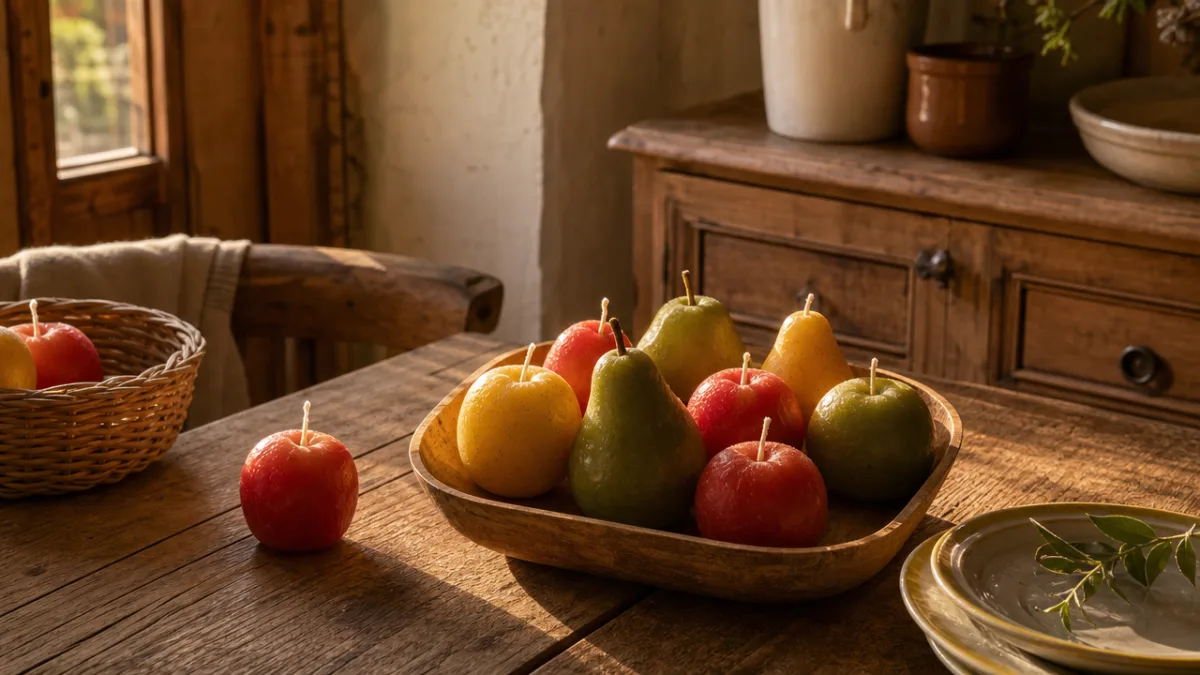
The Craft Behind Realistic Fruit and Vegetable Candles
Creating a truly convincing food-shaped candle requires a combination of artistic skill, material knowledge, and extraordinary patience. Most high-quality pieces begin with the selection of the right wax type. Soy wax, paraffin, and beeswax all have different properties in terms of color saturation, surface texture, and the way they hold fine details when poured into molds. Many artisans prefer a blend that offers the softness of soy wax with the structural integrity needed to hold the delicate curves and ridges of something like a strawberry or a fig.
The molding process is where much of the realism is established. Artisans frequently use real fruit and vegetables to create silicone molds, capturing every minute surface detail — the dimpling of an orange peel, the fine hairs on a peach, the segmented skin of a fig. These molds are then carefully filled with tinted wax, layered to achieve the natural gradients of color found in real produce. A lemon candle, for instance, might involve multiple pours of subtly different yellow tones to replicate the way sunlight plays differently across the ridged surface of the actual fruit.
Once the base form is removed from the mold, the hand-painting and finishing work begins. This is arguably the most labor-intensive stage of the process and the one that most dramatically separates a merely decorative candle from a genuinely artistic one. Using brushes as fine as those used in miniature portraiture, artisans apply pigments, waxes, and sometimes even powdered minerals to deepen shadows, create blush tones, add green tips, or suggest the occasional bruise or blemish that makes the piece look unmistakably like something pulled from a farmers market rather than manufactured in a factory.
Techniques That Elevate Candle Realism
Among the techniques that most dramatically enhance realism, layered wax dipping stands out as particularly effective. In this method, the formed candle is repeatedly dipped in vats of slightly different colored wax, building up translucent layers that mimic the way light passes through the skin of a real fruit. This is especially effective for citrus fruits like blood oranges and clementines, where the relationship between the opaque peel and the glowing interior creates a sense of depth that flat color simply cannot achieve. The candle seems to glow from within, much as a real piece of fruit does when held up to sunlight.
Texture application is another crucial technique. Rather than relying solely on the mold for surface detail, skilled makers will use tools — sometimes as simple as a toothbrush or sponge — to stipple, drag, or press additional texture into the still-soft wax. This adds the kind of organic randomness that distinguishes nature from machine. A wax tomato that is only mold-formed will look uniform and slightly artificial; one that has been hand-textured afterward will have the subtle imperfections that fool the eye into believing it is the real thing.
Scenting is the final and perhaps most unexpected layer of artistry. While the visual realism of a fruit candle is impressive on its own, the addition of a matching fragrance transforms the experience entirely. A lemon candle that smells like fresh-cut citrus, or a strawberry candle that carries notes of summer berry and cream, engages the senses in a way that deepens the illusion. High-quality fragrance oils or essential oil blends are carefully chosen and incorporated at specific stages of the wax-melting process to ensure even distribution and a scent throw that is pleasant without being overwhelming in the close quarters of a kitchen.
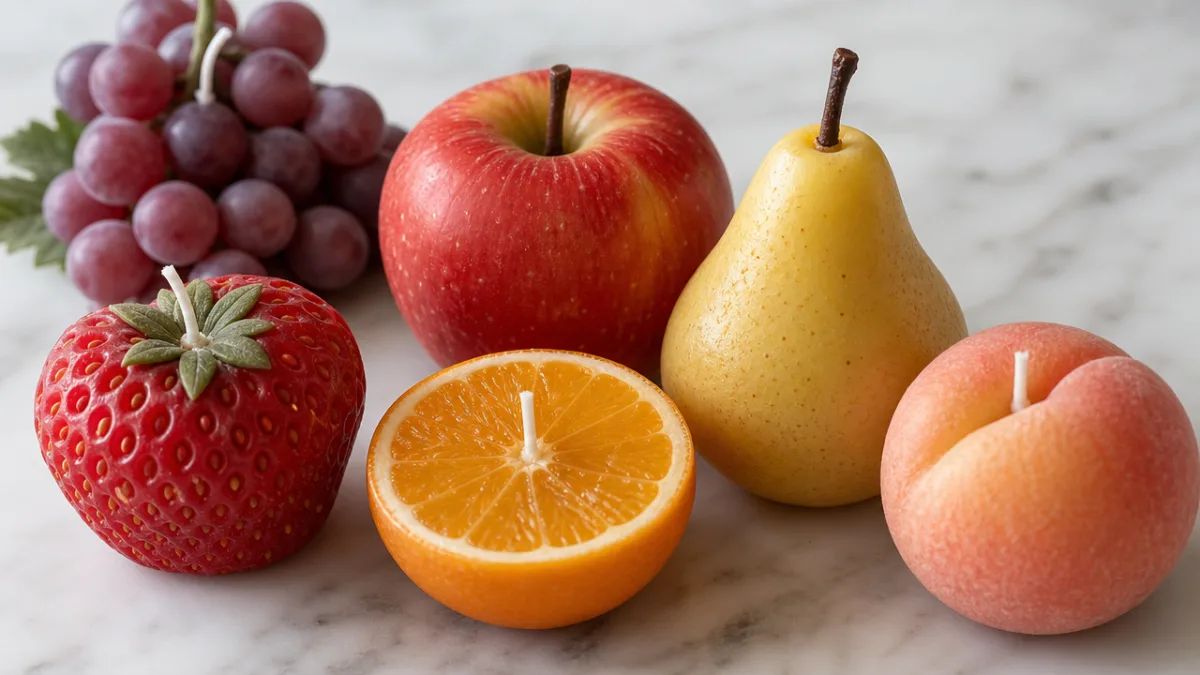
Styling Your Kitchen Table with Food-Shaped Candles
The kitchen table is one of the most versatile staging grounds in the home, and food-shaped candles offer an almost unlimited range of styling possibilities. The key to making them work as part of a broader tablescape is to treat them the way you would treat real produce — with an eye for color balance, scale variation, and contextual accessories. A single large wax pineapple makes a bold, standalone statement, while a collection of smaller pieces like wax figs, cherries, and grapes arranged in a shallow ceramic bowl creates a lush, market-stall abundance that feels immediately inviting.
One of the most effective styling approaches is to mix food-shaped candles with real or dried natural elements. Placing a cluster of wax lemons alongside actual dried eucalyptus branches, a linen runner, and a few terracotta pots creates a layered, organic arrangement that feels intentional rather than theatrical. The contrast between the hyper-real wax fruit and the genuinely natural dried botanicals creates a visual dialogue that is both sophisticated and warmly human. It also helps anchor the candles within a larger design story rather than presenting them as isolated curiosities.
Color coordination is another important consideration when styling food-shaped candles. Kitchens with warm, earthy palettes — terracotta tiles, aged wood, cream walls — are beautifully complemented by wax fruits in golden yellows, deep oranges, rich reds, and dusty greens. Cooler, more contemporary kitchens with white surfaces and stainless steel accents benefit from the warmth that fruit candles bring, using them almost as a deliberate counterpoint to the austerity of the design. In either setting, the goal is for the candles to feel like a natural extension of the kitchen’s personality rather than an afterthought.
Seasonal Styling Ideas for Every Time of Year
One of the great joys of food-shaped candles is their natural alignment with the rhythms of the agricultural calendar, making them ideal for seasonal decorating. In spring, a grouping of wax asparagus, peas in their pods, and pale green artichokes brings a feeling of fresh renewal to the kitchen table. These cool, crisp greens work beautifully with linen tablecloths in sage or dusty white, and can be paired with small glass vases of early seasonal flowers for a complete springtime vignette that feels considered without being fussy.
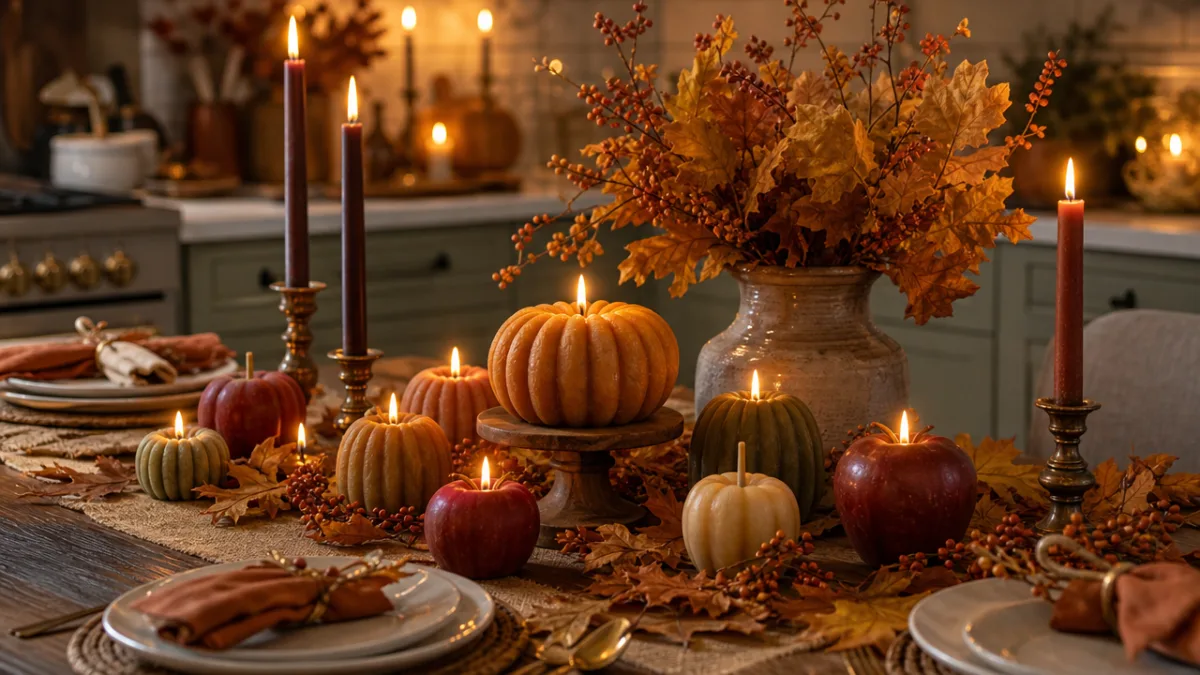
Summer calls for abundance and richness — a sprawling arrangement of wax peaches, plums, figs, and watermelon slices piled high in a wide wooden bowl captures the generous, overflowing quality of a market stall in peak season. Autumn is perhaps the most natural season for food-shaped candles, with the warm tones of wax pumpkins, gourds, apples, and pears echoing the colors of changing leaves outside. Winter styling can incorporate more unexpected choices — wax pomegranates in deep crimson, clementines with their green leaves still attached, or clusters of grapes in deep purple that suggest both the season’s contemplative quality and the warmth of candlelit evenings.
Beyond seasonal rotations, food-shaped candles can be styled around specific occasions. A dinner party centerpiece built around wax artichokes and lemons alongside real candlelight speaks to a Mediterranean-inspired aesthetic that feels both festive and relaxed. A birthday table styled with wax strawberries and cream-colored tapers has a gentle, romantic quality that flatters both the food and the gathering. For a housewarming gift, a selection of fruit candles paired with a handwritten note about their care and use transforms a simple object into a thoughtful, personal gesture that the recipient will remember long after more conventional gifts are forgotten.
Caring for and Displaying Your Fruit and Vegetable Candles
Because food-shaped candles are first and foremost works of art, caring for them properly ensures that their extraordinary detail and visual impact are preserved for as long as possible. The most important consideration is protection from direct sunlight. Even high-quality pigments and wax blends can fade or shift color over time when exposed to UV light. This is particularly noticeable in pieces with delicate gradient coloring, where the top layers might bleach while lower layers retain their original vibrancy. Displaying candles in areas with indirect natural light or warm artificial light will preserve both their color fidelity and their surface integrity.
Temperature management is equally critical. Wax is by nature a material that responds to ambient heat, and food-shaped candles should be kept away from direct heat sources including sunlit windowsills on hot days, proximity to stovetops, and even heating vents that blast warm air. A candle left too close to a heat source can lose the fine surface detail that defines its realism — the delicate texture of an orange peel may smooth out, or the carefully shaped stem of a pear may soften and droop. A cool, stable environment is the candle’s best friend, and the reward for thoughtful placement is a piece that holds its beauty for years.
Dusting and cleaning require a gentle touch. Unlike ceramic or glass objects that can withstand a damp cloth, wax surfaces can be marred by water or abrasive materials. The best approach is to use a very soft, dry brush — the kind used for applying powder in makeup application works beautifully — to gently whisk away surface dust without disturbing the texture or painted details. For smudges or fingerprints on smooth-surfaced pieces, a barely damp cloth followed immediately by a dry one can be used very carefully, but this should be done sparingly and avoided entirely on highly textured or hand-painted areas.
To Burn or Not to Burn: Making the Most of Your Candle Art
This question is one that every owner of a beautiful food-shaped candle eventually confronts, and there is no single right answer. Many collectors choose to display their pieces purely as decorative objects, never burning them and instead enjoying them as sculptures that happen to be made of wax. This approach preserves the candle’s visual integrity indefinitely and treats it explicitly as the work of art it truly is. When given as gifts, it is worth communicating this option clearly, as many recipients may assume they are expected to burn the candle and may feel conflicted about destroying something so beautiful.
Others, however, find deep satisfaction in engaging with the candle as it was ultimately designed to be used. Lighting a fruit-shaped candle for a special dinner and watching it slowly transform as the flame does its work can be a genuinely moving experience — a kind of beautiful impermanence that echoes the seasonal quality of real produce. If you choose to burn your candle, doing so mindfully and in a safe setting maximizes the experience. Place it on a heat-resistant surface, keep it away from drafts that cause uneven burning, and trim the wick to about a quarter of an inch before each use to ensure a clean, steady flame.
For those who want the best of both worlds, a practical middle path exists: purchase one food-shaped candle to display as art, and one as a burning candle for special occasions. Many artisan makers offer pieces in both formats, sometimes at slightly different price points, with the display version featuring more intensive hand-painting and the burning version using a slightly simpler finish that is nonetheless beautiful. This approach allows you to enjoy the sensory pleasure of a scented, burning fruit candle without any of the heartache of watching an irreplaceable art piece diminish over time.
Gifting, Sourcing, and Supporting Artisan Makers
Food-shaped candles have emerged as one of the most reliably well-received gifts across a wide range of occasions and recipient personalities. They occupy a sweet spot in the gift-giving landscape: they are distinctive and unexpected without being impractical, they are beautiful without being ostentatious, and they carry the added warmth of being handmade by an individual artisan rather than mass-produced in a factory. Whether you are buying for a housewarming, a birthday, a wedding, a hostess gift, or simply a gesture of appreciation, a well-chosen fruit or vegetable candle communicates thoughtfulness and an eye for quality that recipients genuinely notice and remember.
When sourcing food-shaped candles, the platform you choose matters. Marketplaces like Etsy remain the richest source for independent artisan makers, offering pieces ranging from accessible price points for new collectors to premium commissions for serious enthusiasts. Pinterest functions as an invaluable discovery tool in this space — a single saved pin can lead you through a rabbit warren of related makers and styles that broadens your understanding of what is possible within this art form. Following the makers you admire on social media allows you to track new releases, limited editions, and seasonal collections as they appear, giving you first access to the most coveted pieces before they sell out.
Supporting artisan candle makers has implications that extend well beyond the transaction itself. When you purchase a handcrafted food-shaped candle from an independent maker, you are supporting the preservation of a skill set that takes years to develop and is genuinely at risk of being displaced by cheaper, machine-made imitations. The growing availability of low-cost food-shaped candles produced in bulk means that the artisan market must be actively sustained by consumers who understand and value the difference. Choosing to buy handcrafted, even when it costs more, sends a signal that realism, quality, and the human touch are worth paying for — and that signal, multiplied across thousands of purchasing decisions, helps ensure that this beautiful craft form continues to flourish.
What to Look for When Evaluating Quality
Not all food-shaped candles are created equal, and learning to evaluate quality before purchasing will save disappointment and help you build a collection that holds its value and beauty over time. The most important indicator of quality is the level of surface detail. A truly exceptional piece will show evidence of hand-finishing — subtle variations in color, delicate texturing that catches the light differently from different angles, and carefully placed details like realistic stems, leaves, or seeds that suggest the maker spent considerable time on the finishing stages rather than relying entirely on the mold.
Fragrance quality is the second major quality indicator. Premium makers use phthalate-free fragrance oils or pure essential oil blends, and the scent should be recognizable and pleasant without being sharp or chemical. A citrus candle should smell like the fruit’s actual essential oils, not like a synthetic cleaning product. A berry candle should evoke the warmth and sweetness of real fruit rather than the artificial sweetness of candy flavoring. When purchasing online, reading reviews specifically for comments about the scent can provide valuable guidance that photographs alone cannot convey.
Finally, consider the maker’s background and reputation. Artisans who have been creating food-shaped candles for several years and who share behind-the-scenes content showing their process are generally more reliable sources of quality than newer shops with limited documentation of their work. Look for makers who offer clear information about their materials — wax type, fragrance sourcing, pigment safety — and who engage genuinely with their customers in reviews and comments. This transparency is itself a mark of pride in craft that tends to correlate strongly with the quality of the finished product you will receive.








What do you think?
It is nice to know your opinion. Leave a comment.