










7 Best Magnolia Tree Fertilizers: A Complete Guide to Nourishing Your Magnolia
Why Fertilizing Your Magnolia Tree Matters
Magnolia trees are among the most stunning ornamental trees you can grow in a home landscape, but even these resilient beauties need proper nutrition to reach their full potential. Fertilizing your magnolia isn’t just about encouraging more blooms — it’s about building a strong root system, supporting healthy foliage, and ensuring the tree can withstand the stresses of drought, disease, and environmental change. Without adequate nutrients, magnolias can become pale, sparse, and disappointingly bloom-free year after year.
The soil in most residential yards, especially those that have been developed or landscaped, is often nutrient-depleted or has a pH that doesn’t align with what magnolias prefer. Magnolias thrive in slightly acidic soil with a pH between 5.0 and 6.5, and when the soil drifts too alkaline, essential nutrients like iron and manganese become chemically locked up and unavailable to the roots. This is why you might see yellowing leaves — a condition called chlorosis — even when the soil technically contains enough nutrients. A good fertilizer program addresses both nutrient content and soil chemistry.
Beyond aesthetics, proper fertilization helps young magnolias establish quickly and older specimens maintain their vigor. Trees that receive balanced nutrition are better equipped to fight off pests like scale insects and fungal diseases that commonly plague weakened plants. The investment you make in a quality fertilizer and a consistent feeding schedule will pay dividends in dramatic spring blooms, glossy summer foliage, and a tree that lives for generations rather than decades.
Understanding Magnolia Nutritional Needs
Before selecting a fertilizer, it helps to understand what magnolias actually need in terms of macronutrients and micronutrients. Like all plants, magnolias require the three primary macronutrients: nitrogen (N), phosphorus (P), and potassium (K). Nitrogen drives leafy, vegetative growth and deep green color. Phosphorus supports root development and flowering. Potassium strengthens the tree’s overall immune function and helps regulate water movement within plant cells. A balanced fertilizer — one with roughly equal or slightly nitrogen-heavy NPK numbers — tends to work well for most magnolias in active growing seasons.
Magnolias also benefit from a suite of secondary nutrients and micronutrients, including magnesium, sulfur, iron, and manganese. Magnesium is a central component of chlorophyll, the molecule responsible for photosynthesis, and a deficiency shows up as yellowing between the veins of older leaves. Iron deficiency, meanwhile, causes yellowing of the newest growth while the veins remain green — a classic symptom of alkaline soil conditions. Many fertilizers formulated specifically for acid-loving plants include chelated iron and other micronutrients to address these common magnolia complaints.
Getting a soil test before you start fertilizing is one of the smartest steps you can take as a gardener. A basic test from your local cooperative extension service or a home testing kit will tell you your soil’s current pH, organic matter content, and levels of key nutrients. Armed with this information, you can select a fertilizer that genuinely addresses what your tree lacks rather than guessing. Over-fertilizing — particularly with nitrogen — can actually harm magnolias by pushing too much leafy growth at the expense of flowers and by burning sensitive feeder roots.
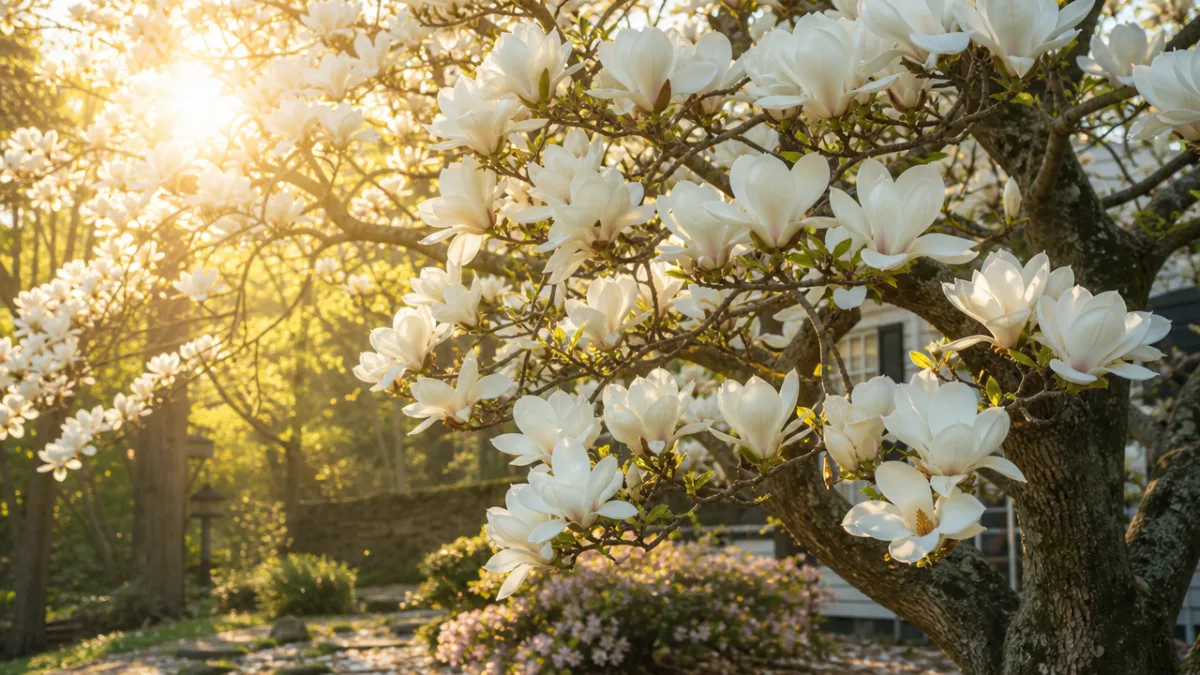
The 7 Best Magnolia Tree Fertilizers
With so many fertilizer options on the market, narrowing the field to the top performers for magnolias requires evaluating nutrient profiles, release mechanisms, ease of application, and real-world results from gardeners and arborists. The following seven fertilizers have consistently earned high marks for promoting vigorous growth, rich foliage color, and abundant flowering in magnolia trees of all sizes and species. Whether you’re growing a classic Southern magnolia, a saucer magnolia, or a Little Gem dwarf variety, there’s an ideal fertilizer on this list for your situation.
It’s worth noting that fertilizer type matters as much as fertilizer content. Granular slow-release fertilizers are convenient and feed trees gradually over months, reducing the risk of root burn and minimizing the frequency of applications. Liquid fertilizers act quickly and are excellent for correcting acute deficiencies or giving a young tree a fast start in spring. Spike fertilizers are easy to insert around the drip line and deliver nutrients directly to the root zone. Organic options improve soil biology over time and are ideal for gardeners who prefer a more natural approach.
Here is a closer look at seven outstanding choices for feeding your magnolia:
- Jobe’s Organics Fruit & Citrus Fertilizer (3-5-5): Despite its label, this organic granular fertilizer works beautifully for acid-loving trees like magnolias, enriching soil biology through its Biozome formula of beneficial microorganisms.
- Espoma Tree-tone (6-3-2): A classic slow-release organic granular blend with added calcium, ideal for feeding established magnolias throughout the growing season without risk of burning.
- Miracle-Gro Shake & Feed Flowering Trees & Shrubs (18-6-12): A high-nitrogen, slow-release granular fertilizer that delivers a strong boost for vigorous spring growth and is simple to apply around the drip line.
- Southern Ag Citrus & Pecan Tree Food (10-10-10): A balanced granular fertilizer that provides equal parts nitrogen, phosphorus, and potassium — a reliable all-purpose option for magnolias in average soil conditions.
- Scotts Evergreen, Flowering Tree & Shrub Continuous Release Plant Food (11-7-7): A long-lasting granular fertilizer that feeds for up to two months and is specially formulated for trees that bloom and produce vibrant foliage.
- Osmocote Smart-Release Plant Food Plus (15-9-12): One of the most trusted controlled-release fertilizers in horticulture, offering a balanced blend of eleven essential nutrients in a convenient granular form.
- Fertilome Liquid Iron & Soil Acidifier: Not a traditional all-purpose fertilizer, but an essential supplement for magnolias suffering from chlorosis due to alkaline soil — it delivers chelated iron and sulfur to lower pH and restore leaf color rapidly.
Each of these products serves a slightly different purpose, and many gardeners find the best results by combining a general-purpose slow-release granular fertilizer with a targeted micronutrient supplement like liquid iron. Understanding the specific needs of your tree — based on its age, the quality of your soil, and the symptoms you observe — will help you choose the right product or combination of products from this list.
How and When to Apply Magnolia Fertilizer
Timing is everything when it comes to fertilizing magnolia trees. The ideal window for the first application of the year is early spring, just as the soil begins to warm and the tree breaks dormancy. At this point, the magnolia’s root system is gearing up for a season of active growth, and a well-timed fertilizer application ensures nutrients are available right when the tree needs them most. For deciduous magnolias like saucer magnolias, you can apply fertilizer just before the buds begin to swell, which typically means late February or early March in most temperate climates.
A second application in early summer — typically June — supports the tree through the long growing season and helps it build energy reserves for the following year. Avoid fertilizing after midsummer, particularly with high-nitrogen products. Late-season nitrogen encourages a flush of new, tender growth that won’t have time to harden off before the first frost, leaving the tree vulnerable to cold injury. Evergreen magnolias like the Southern magnolia follow a similar schedule, though they are slightly more tolerant of late-season feeding because they don’t go fully dormant.
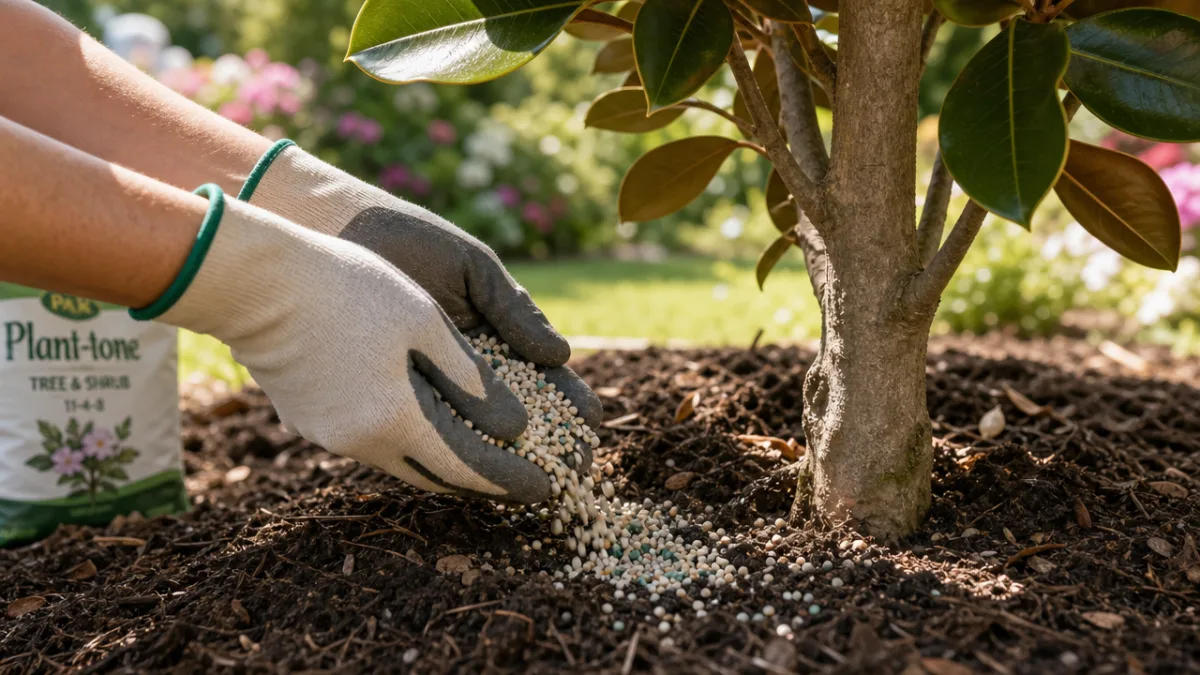
Application technique matters as much as timing. Rather than piling fertilizer against the trunk, always apply granular fertilizers in a wide circle extending from just inside the drip line — the outer edge of the tree’s canopy — to slightly beyond it. This is where the active feeder roots are concentrated, and applying fertilizer here ensures maximum uptake. Water the area thoroughly after applying granular fertilizers to begin the release process and prevent root burn. For liquid fertilizers, dilute according to package directions and apply evenly across the root zone, avoiding direct contact with the trunk.
Young magnolias in their first two years after planting need a more cautious fertilizer regimen. The priority for newly planted trees is root establishment rather than top growth, so a low-nitrogen, phosphorus-forward fertilizer or a diluted dose of a balanced fertilizer is most appropriate. Over-stimulating a young tree with heavy nitrogen can actually slow root development and make the tree more susceptible to transplant shock. Once a magnolia is well-established and showing vigorous new growth each year, you can move to a fuller fertilizer program with confidence.
Organic vs. Synthetic Fertilizers for Magnolias
The debate between organic and synthetic fertilizers is one that every gardener eventually faces, and for magnolia trees, both camps have their merits. Organic fertilizers — derived from natural materials like bone meal, feather meal, kelp, composted manure, and fish emulsion — work slowly by feeding the microorganisms in the soil, which in turn break nutrients down into forms the tree can absorb. This slow, steady release reduces the risk of nutrient burn, supports long-term soil health, and improves soil structure over time. Products like Espoma Tree-tone are excellent examples of organic options that deliver consistent results season after season.
Synthetic fertilizers, on the other hand, provide nutrients in immediately plant-available chemical forms. This means faster results — you’ll often see a response in leaf color and growth within days of a liquid synthetic application — but the trade-offs include potential for root burn if over-applied, leaching of nutrients into groundwater with heavy rain, and no benefit to soil biology. That said, synthetic slow-release fertilizers like Osmocote bridge this gap by encapsulating nutrients in a coating that releases gradually based on soil temperature and moisture, offering many of the convenience benefits of synthetics with a reduced risk profile similar to organics.
Many experienced magnolia growers adopt a hybrid approach: applying an organic granular fertilizer as the backbone of their feeding program in spring, supplementing with a liquid synthetic fertilizer when they need a quick boost, and using a targeted micronutrient supplement like chelated iron when deficiency symptoms appear. This layered strategy leverages the strengths of both fertilizer types and allows for fine-tuned control over the tree’s nutrition throughout the season. Whichever approach you choose, consistent application according to label directions is far more important than the specific philosophy behind the product you select.
Troubleshooting Common Magnolia Fertilizer Problems
Even with the best intentions and a quality fertilizer, problems can arise. One of the most common issues is chlorosis — yellowing of the leaves while the veins remain green — which signals an iron or manganese deficiency typically caused by soil that is too alkaline. If you’re fertilizing regularly but your magnolia’s leaves look pale or yellow, the first step is to test your soil pH. A pH above 6.5 can lock up iron and manganese even when those nutrients are physically present in the soil. The solution is to lower the pH with elemental sulfur or to apply a chelated iron supplement, both of which will make iron immediately available to the roots.
Conversely, over-fertilization is a surprisingly common mistake that can damage or even kill a magnolia tree. Signs of fertilizer burn include brown, scorched leaf edges, wilting despite adequate moisture, sudden dieback of branch tips, and in severe cases, complete collapse of the tree. If you suspect over-fertilization, flush the root zone with large quantities of water to dilute and leach the excess nutrients, stop all fertilizer applications immediately, and give the tree time to recover. Applying a thick layer of organic mulch can also help buffer the soil and protect remaining roots while the tree recovers its strength.
Poor flowering despite adequate nutrition is another frustrating puzzle. Magnolias can be reluctant to bloom for several reasons beyond nutrition, including insufficient sunlight, improper pruning that removes flower buds, late frost damage, and even a tree that is simply too young. However, if your magnolia is mature, gets at least six hours of direct sun, and has not been pruned heavily in recent years, adjusting your fertilizer to favor phosphorus over nitrogen can help encourage more flower bud development. Look for a bloom-boosting fertilizer with a higher middle number — the phosphorus value — and apply it in late summer to support bud formation for the following spring.
Root competition from nearby grass and groundcovers is an often-overlooked factor that can undermine even the most careful fertilizer program. Turf grass is remarkably aggressive in competing for nutrients, especially nitrogen, and a magnolia planted in a grass lawn may be losing a significant portion of its fertilizer to the surrounding sod. Maintaining a wide, mulched ring around the tree — extending at least to the drip line and ideally two feet beyond it — eliminates this competition, retains soil moisture, moderates soil temperature, and adds organic matter as the mulch decomposes. This single practice can dramatically improve your magnolia’s response to fertilization and overall health.
Long-Term Magnolia Care Beyond Fertilization
Fertilization is a critical pillar of magnolia care, but it works best as part of a broader, holistic approach to tree health. Watering practices play an enormous role in how effectively a tree can absorb and use the nutrients you provide. Magnolias prefer consistently moist but well-drained soil and are poorly adapted to drought conditions, particularly in their first several years after planting. During dry periods, deep, infrequent watering — soaking the root zone thoroughly once or twice a week rather than shallow daily sprinkles — encourages roots to grow deeper into the soil and makes the tree more resilient overall.
Mulching is perhaps the single most impactful thing you can do for a magnolia beyond fertilizing. A three to four inch layer of shredded bark, wood chips, or pine straw applied in a wide ring around the tree regulates soil temperature, suppresses competing weeds, retains moisture, and gradually improves soil structure and fertility as it breaks down. Be careful to keep mulch pulled a few inches away from the trunk to prevent rot and discourage disease. Refresh the mulch layer each spring before fertilizing, and you’ll create an ideal growing environment that amplifies the benefits of every other care practice you follow.
Pruning, while important for shaping and maintaining a magnolia, should be done thoughtfully and sparingly. Magnolias naturally develop a beautiful form with minimal intervention, and heavy pruning can remove the flower buds that were set the previous season — leaving you with a well-shaped but frustratingly bloomless tree. When pruning is necessary to remove dead, damaged, or crossing branches, the best time is immediately after flowering in spring. Using clean, sharp tools and making proper cuts just outside the branch collar will minimize wound size and allow the tree to seal over efficiently without creating entry points for disease.
Finally, remember that magnolias are long-lived, slow-maturing trees that reward patience and consistent care above all else. A magnolia planted today may take five to ten years to put on a truly spectacular floral display, but the tree you’re nurturing now will likely outlive you and become a defining feature of your landscape for generations to come. With the right fertilizer, applied at the right time and in the right way, you are giving that future tree the nutritional foundation it needs to reach its magnificent potential. Be consistent, observe your tree closely each season, and adjust your program as needed — that attentiveness is the real secret behind any beautiful magnolia.








What do you think?
It is nice to know your opinion. Leave a comment.