










Amazing DIY Upcycling: Transform Your Trash Into Treasure
What Is Upcycling and Why It Matters
Upcycling is the creative process of taking discarded materials or unwanted products and transforming them into something of higher quality, value, or purpose than the original. Unlike recycling, which breaks materials down into raw form before reuse, upcycling preserves the integrity of the object and reimagines its function entirely. It sits at the intersection of environmental responsibility and artistic ingenuity, making it one of the most rewarding DIY practices available to people of all skill levels and budgets.
The environmental case for upcycling is compelling and well-documented. Every year, millions of tons of furniture, textiles, glass, metal, and plastic end up in landfills — objects that still possess structural integrity and could be repurposed with a little imagination. When you upcycle, you reduce the demand for new raw materials, cut down on manufacturing emissions, and divert waste from overcrowded disposal sites. Even one upcycled piece per household per year can contribute meaningfully to a measurable reduction in waste on a community-wide scale.
Beyond the environmental benefits, upcycling offers something deeply personal: the satisfaction of creation. There is a unique joy in looking at a broken ladder, a stack of old pallets, or a worn-out suitcase and seeing not what it is, but what it could become. This mindset shift — from disposal to transformation — changes how you interact with the world around you. You begin to see potential in the overlooked and beauty in the imperfect, which is a genuinely life-enriching perspective to cultivate.
Getting Started: Tools, Materials, and Mindset
One of the most appealing aspects of upcycling is its accessibility. You do not need a fully equipped workshop or professional training to begin. Most starter upcycling projects require only basic tools: a hammer, sandpaper, a paintbrush, a hot glue gun, and a screwdriver. As your skills develop, you might invest in a jigsaw, a sewing machine, or a drill, but the fundamental truth is that upcycling rewards resourcefulness and creativity far more than it rewards expensive equipment or formal expertise.
Sourcing materials is half the adventure. Thrift stores, garage sales, estate auctions, curbside giveaways, and online marketplaces like Facebook Marketplace or Craigslist are goldmines for raw upcycling material. Look for items with good bones — solid wood furniture, sturdy metal frames, quality glass — even when the surface finish is worn or damaged. Cosmetic flaws are precisely what make upcycling materials affordable, and they are almost always fixable with the right preparation and a bit of effort applied in the right direction.
Perhaps most importantly, approach upcycling with a patient, experimental mindset. Not every project will turn out exactly as envisioned, and that is perfectly acceptable. Mistakes in upcycling are rarely catastrophic — a piece of wood can be resanded, a coat of paint can be applied over another, a stitch can be removed. Give yourself permission to experiment, to fail small, and to learn continuously. The iterative nature of the craft is what makes it so engaging and what keeps experienced upcyclers returning to their workshops with excitement again and again.
Furniture Upcycling: Giving Old Pieces New Life
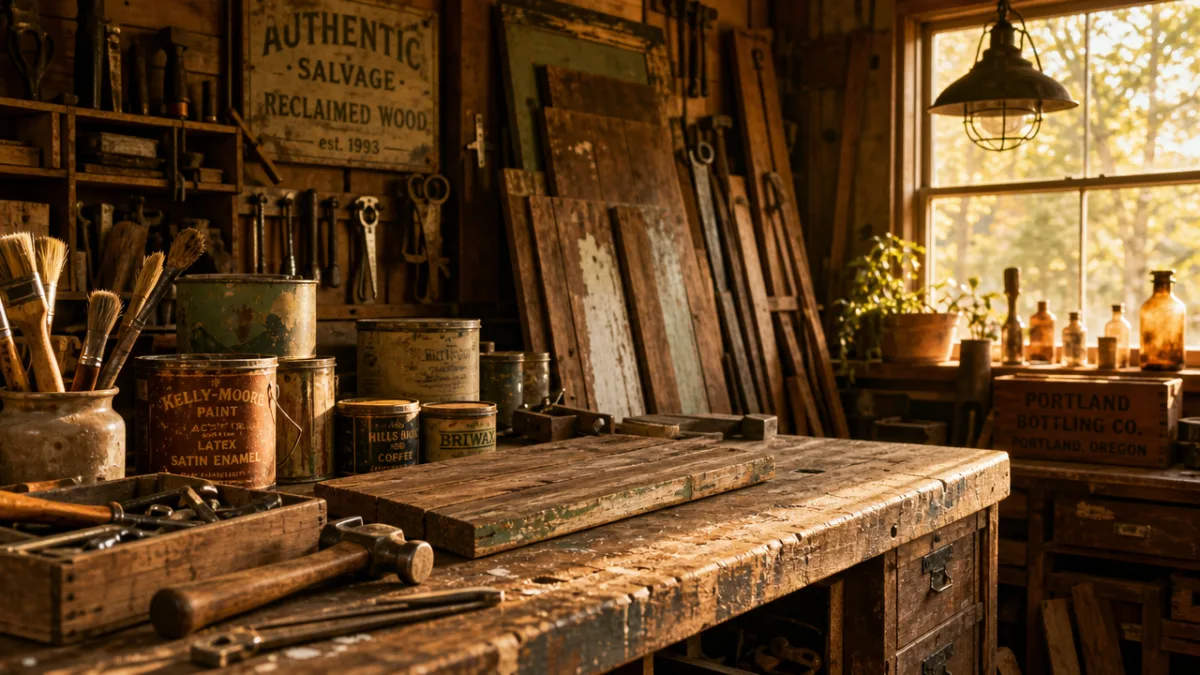
Furniture upcycling is arguably the most popular and impactful category of the craft, largely because the results are so dramatically visible and so immediately useful in everyday life. A tired dresser becomes a chic bathroom vanity. A broken chair gets stripped and reupholstered into a statement accent piece. A wobbly side table is sanded, painted in a bold color, and fitted with new hardware to become the focal point of an entire room. These transformations are not just cosmetic — they are genuinely functional renewals that extend the life of well-made objects by decades.
Chalk paint has become something of a revolution in furniture upcycling, and for good reason. It adheres to most surfaces without requiring sanding or priming, dries quickly, and produces a beautiful matte finish that can be distressed, waxed, or layered to create complex, artisanal effects. Brands like Annie Sloan popularized the technique, but affordable alternatives abound, and you can even mix your own using latex paint and unsanded tile grout. A single can of chalk paint and an afternoon of effort can turn a dingy thrift store dresser into something that looks custom-made and costs a fraction of comparable retail pieces.
For those interested in more structural transformations, decoupage, tile mosaic inlays, and wood burning open up extraordinary creative possibilities. A plain wooden coffee table can be covered in a collage of vintage maps, sealed with multiple layers of Mod Podge, and transformed into a conversation-starting centerpiece. Old dining chairs can have their seats replaced with woven rope or leather strips for a bohemian, handcrafted aesthetic. The key is to let the piece guide you — its existing shape, material, and proportions often suggest the direction a transformation wants to take if you look at it long enough with an open mind.
Popular Furniture Upcycling Techniques
- Chalk painting and waxing — ideal for wood and laminate surfaces, produces a soft, vintage finish that can be easily customized through layering and distressing techniques.
- Decoupage — applying paper, fabric, or thin material to a surface using adhesive and sealant, creating decorative or narrative effects on tabletops, drawer fronts, and cabinet doors.
- Reupholstering — replacing worn fabric on chairs, benches, and headboards with new or repurposed textiles, completely changing the character of a piece for relatively low cost.
- Hardware swapping — replacing knobs, pulls, and hinges with vintage or designer options is one of the fastest and most affordable ways to elevate the look of any furniture piece.
- Structural repurposing — converting a dresser into a kitchen island, turning a ladder into a bookshelf, or transforming a suitcase into a side table with added legs.
Upcycling Textiles and Clothing
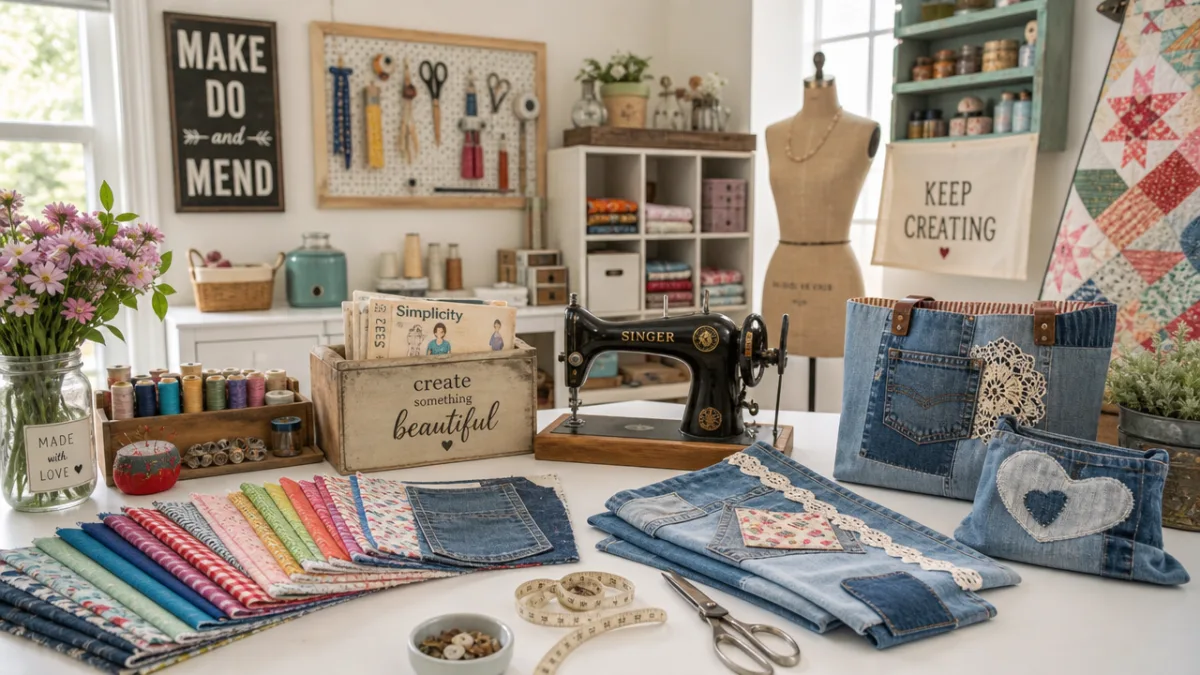
The fashion industry is one of the most polluting on the planet, and textile waste represents a staggering and growing global problem. Upcycling clothing and fabric scraps is a powerful, accessible way to push back against fast fashion culture while building a wardrobe or home décor collection that is genuinely unique. Even people with minimal sewing experience can begin with simple no-sew projects — cutting, knotting, and layering fabrics to create new garments, bags, or home accessories without a single stitch required.
Denim is one of the most versatile and forgiving materials for textile upcycling. Old jeans that are stained, torn, or simply out of style can be cut into shorts, patched creatively with embroidered fabric panels, or cut into strips and braided into rugs, baskets, or coasters. Denim jacket backs become canvases for hand-painted art or iron-on patch collages. Even small scraps can be sewn into patchwork quilts or used as stuffing for throw pillows. The sheer durability of denim — the quality that makes it seem unwearable after years of use — is precisely what makes it such excellent upcycling material.
Beyond denim, bed linens, curtains, and tablecloths offer enormous yardage that can be repurposed into garments, shopping bags, cushion covers, or wall hangings. Natural fibers like cotton and linen age beautifully and take dye well, meaning a faded set of sheets can be soaked in a botanical or tie-dye bath and transformed into vibrant new textiles with a character impossible to find in mass-produced goods. Old sweaters that have felted in the wash can be cut and sewn into mittens, slippers, or stuffed animals. In textile upcycling, the limitation is rarely the material — it is only the boundaries of imagination.
Upcycling in the Garden: Outdoor Transformations
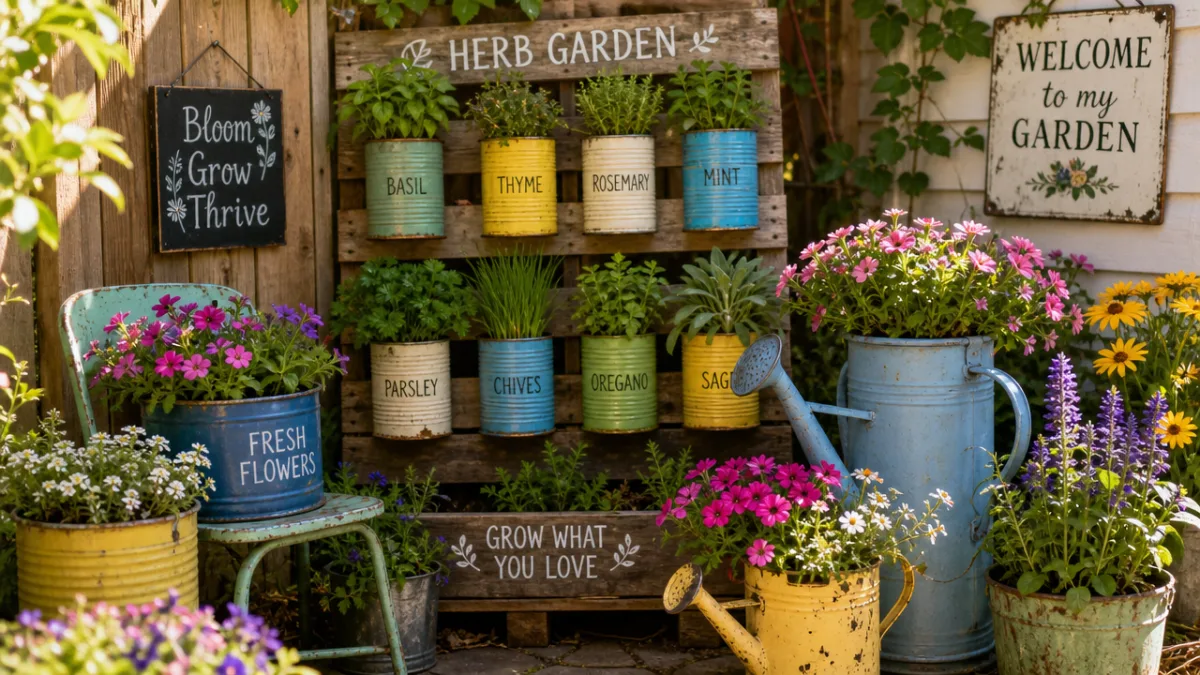
The garden is a wonderfully forgiving space for upcycling experimentation, where weathered surfaces and rustic aesthetics are not just acceptable but actively desirable. Old wooden pallets can be dismantled and rebuilt into raised planting beds, vertical herb gardens, or compost bins. Broken terracotta pots can be artfully arranged in a mosaic pattern and used as garden borders. Even a worn-out colander makes a charming and functional hanging planter when fitted with coco coir liner and a few S-hooks for suspension from a fence or pergola.
Metal objects offer particularly exciting possibilities in garden upcycling. Old galvanized watering cans, buckets, and tin cans become character-rich planters that develop a beautiful patina over time. Rusted metal wheelbarrows filled with trailing flowers make dramatic garden focal points. Old bicycle frames painted in bold colors and used as plant supports or decorative garden art bring whimsy and personality to outdoor spaces in a way that purchased garden décor rarely achieves. The age and wear of these objects is not a flaw to be hidden — it is a feature to be celebrated and showcased.
Water features are another extraordinary area for garden upcycling creativity. Old bathtubs, sinks, and even boots can be transformed into small ponds or water gardens with the addition of a submersible pump and aquatic plants. Vintage wine barrels cut in half make stunning half-barrel ponds that require no construction expertise and can be assembled in an afternoon. Even a large ceramic pot sealed with waterproof paint can hold a miniature water garden complete with a tiny water lily and a few aquatic grasses. These water features attract wildlife, add sound and movement to the garden, and have an undeniable charm rooted in their unexpected origins.
Garden Upcycling Project Ideas
- Pallet herb garden — stand a pallet vertically, line the slats with landscape fabric and staple securely, fill with potting soil, and plant herbs in the horizontal pockets for a space-saving kitchen garden that can be mounted on any fence or wall.
- Tin can planters — collect cans of various sizes, punch drainage holes in the base, paint with weather-resistant paint in coordinating colors, and group them on steps or shelves for a charming, cohesive display.
- Ladder plant stand — an old wooden ladder leaned against a wall or fence provides instant tiered display space for potted plants, requiring no modification beyond a light sanding and optional coat of exterior paint.
- Colander hanging basket — line a colander with coco coir, fill with trailing plants like lobelia or bacopa, and hang from a chain for a planter that doubles as a conversation piece.
Upcycling for Home Décor: Style With a Story
Home décor upcycling occupies a special place in the craft because the results live with you daily, embedding meaning and memory into your everyday environment. A lamp base made from a wine bottle you saved from a meaningful dinner. A gallery wall built entirely from thrift store frames painted in a unified color. A bookshelf constructed from reclaimed scaffolding planks that carry the history of a construction site in their grain and surface marks. These objects do not just fill space — they tell stories, spark conversations, and reflect a set of values that mass-produced décor simply cannot replicate.
Lighting is one of the most transformative and achievable areas of home décor upcycling. Pendant lights made from mason jars, colanders, or wire baskets can be assembled with basic electrical components available from any hardware store. Table lamps can be built from almost any hollow or stable object — wine bottles, ceramic vases, stacked books, even painted PVC pipe in geometric arrangements. The shade itself can be upcycled from fabric scraps stretched over a vintage frame, creating a lamp that is entirely one-of-a-kind and costs a fraction of comparable designer pieces found in home stores.
Wall art created through upcycling is endlessly diverse in its possibilities. Old window frames with their glass removed become shadow boxes for displaying collections. Wine corks arranged in a geometric pattern and mounted in a frame create textural wall art with warmth and depth. Vintage plates grouped in an arrangement bring color and pattern to a dining room wall. Maps torn from old atlases and decoupaged onto canvas create atmospheric travel-inspired art. The beauty of upcycled wall art lies in its deeply personal nature — each piece reflects not only creative skill but also the specific life, travels, and tastes of the person who made it.
Quick-Win Home Décor Upcycling Projects
- Wine bottle vases — remove labels with hot water and baking soda, spray paint in metallic gold or matte white, and group in odd numbers on a mantle or windowsill for elegant, cost-free floral displays.
- Vintage suitcase storage — stack old suitcases of decreasing size to create bedside table storage with enormous visual personality and a practical interior space for spare linens or seasonal items.
- Book page art — tear pages from damaged books, fold them into origami shapes, or arrange torn sections into typographic or botanical compositions framed under glass.
- Crate shelving — wooden produce crates mounted to walls in various configurations create modular, industrial-rustic shelving that is both affordable and highly adaptable to changing storage needs.
Building an Upcycling Practice: Community, Inspiration, and Progress
Upcycling, at its best, is not just a hobby but a practice — a consistent, evolving engagement with materials, creativity, and sustainability that deepens over time. Building this practice means developing habits: regularly visiting thrift stores and salvage yards with an open eye, maintaining a sketchbook of project ideas, setting aside dedicated workshop time, and giving yourself space to experiment without pressure or judgment. Like any craft, the skills compound over time, and what felt difficult in the early projects — cutting a straight line, applying an even coat of paint, executing a clean reupholster — becomes second nature with repetition and attention.
Community plays an enormous role in sustaining and enriching an upcycling practice. Online communities on Pinterest, Instagram, and dedicated forums like Hometalk offer millions of project ideas, tutorials, and transformations from practitioners at every skill level. Local swap groups and buy-nothing communities provide a constant stream of free materials while connecting you with neighbors who share your values around consumption and creativity. Upcycling workshops offered by community arts centers, libraries, and craft studios provide hands-on skill building and the particular motivation that comes from working alongside other creative people toward a shared goal.
Finally, it is worth remembering that every upcycling project, however modest, is a small act of resistance against a throwaway culture that profits from convincing people that objects have no value once they show signs of age or imperfection. When you sand, paint, sew, or build something new from something old, you are making a statement about the worth of materials, the value of craftsmanship, and the importance of slowing down and engaging thoughtfully with the physical world. Upcycling is not merely a way to decorate a home or save money — it is a way of seeing, a philosophy of abundance, and ultimately, a more sustainable and more satisfying way of living in relationship with the things that surround us every day.








What do you think?
It is nice to know your opinion. Leave a comment.