










Easy Garden Bug Repellent: 20 Plants for Natural Protection
Why Natural Plant-Based Bug Repellents Are the Smart Choice for Your Garden
Gardeners have been fighting off unwanted bugs forever — and honestly, it never stops being frustrating. Chemical pesticides seem like the obvious fix, but the more you learn about them, the less appealing they get. Residues on your food, harm to bees and butterflies, soil damage over time, and real concerns about kids and pets rolling around in treated grass. It’s a lot. That’s why so many home gardeners are ditching the spray bottle of chemicals and finding smarter ways to work with nature instead of against it.
The approach goes by a few names — companion planting, botanical pest management — but the basic idea is the same: certain plants are naturally good at keeping insects away. Over millions of years, these plants developed powerful essential oils and compounds specifically to avoid being eaten, and bugs still hate them. When you place the right plants in the right spots around your garden, you end up with a living defense system that runs on autopilot. No ongoing cost, no effort after planting, just plants doing what they’ve always done.
What makes this approach even better is that these plants pull double or triple duty. A lot of them are herbs you’ll actually want in your kitchen. Many produce gorgeous flowers that draw in pollinators and make your garden look incredible. Some have been used medicinally for centuries. When you bring these plants into your garden, you’re not just solving a pest problem — you’re building something multi-functional and genuinely sustainable that keeps giving back season after season.
The Top 20 Bug-Repelling Plants Every Gardener Should Know
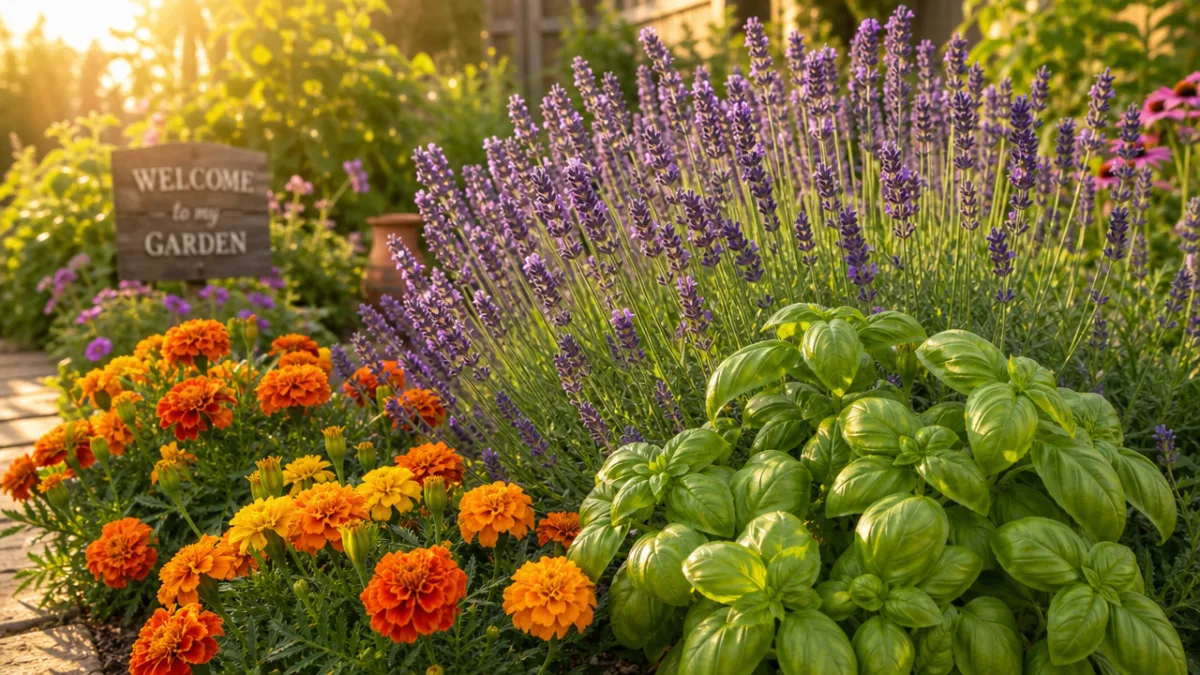
Lavender is probably the most popular natural insect repellent out there, and it’s popular for good reason. That rich, sweet scent that people love so much? Mosquitoes, fleas, flies, and moths absolutely can’t stand it. Plant lavender along walkways, around seating areas, or at your garden’s edges and you create a fragrant barrier that keeps the biters at bay. As a bonus, a bundle of dried lavender tucked into your closet works beautifully as a natural moth deterrent too.
Marigolds have earned their legendary status in the gardening world. Certain varieties contain pyrethrum, a compound so effective against insects that it’s used commercially in organic insecticides. French marigolds (Tagetes patula) are especially potent — their strong scent drives away whiteflies, aphids, and tomato hornworms, and their roots actually release compounds into the soil that deter nematodes. So they’re defending your garden from above and below ground at the same time.
Here’s a helpful rundown of all 20 plants worth adding to your natural pest-control lineup, organized by the pests they’re best at keeping away:
- Lavender — repels mosquitoes, fleas, flies, and moths with its powerful essential oils
- Marigolds — deter aphids, whiteflies, tomato hornworms, and soil nematodes
- Basil — drives away mosquitoes, flies, and aphids while improving tomato flavor nearby
- Mint — repels ants, aphids, flea beetles, and even rodents; best planted in containers
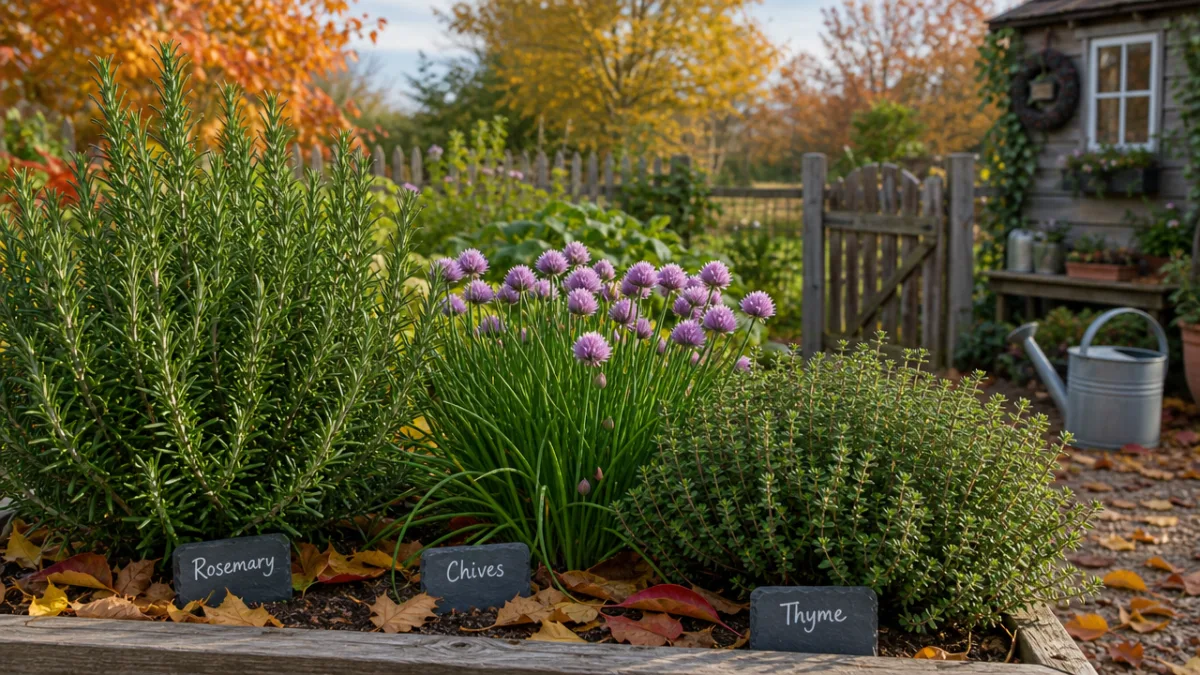
- Rosemary — protects brassicas from cabbage moths, bean beetles, and carrot flies
- Catnip — contains nepetalactone, which studies show is more effective than DEET against mosquitoes
- Chrysanthemums — contain pyrethrin, a natural insecticide effective against roaches, ants, and beetles
- Petunias — repel aphids, tomato hornworms, asparagus beetles, and leafhoppers
- Lemongrass — contains citronella, the well-known mosquito-repelling compound
- Garlic — deters Japanese beetles, aphids, and spider mites through its sulfur compounds
- Sage — repels cabbage moths, carrot flies, and flea beetles when planted near vegetables
- Thyme — effective against whiteflies, cabbage loopers, and tomato hornworms
- Fennel — repels aphids, slugs, and snails, though it should be planted away from most vegetables
- Dill — repels spider mites and aphids while attracting beneficial predatory insects
- Chives — deter Japanese beetles, aphids, and carrot flies with their mild onion scent
- Tansy — a powerful repellent for flying insects, ants, and beetles; use with care as it can spread aggressively
- Alliums — the entire onion family repels a broad range of insects and borers
- Nasturtiums — act as trap crops, luring aphids away from more valuable plants
- Eucalyptus — the strong menthol scent repels mosquitoes, flies, and cockroaches
- Wormwood — one of the most potent natural insect deterrents, repelling slugs, flea beetles, and moths
How to Use Companion Planting Strategically for Maximum Protection
Knowing which plants repel bugs is only half the puzzle. The other half is knowing where to actually put them. Companion planting — growing certain plants close together so they help each other out — is one of the oldest tricks in gardening, and it’s way more nuanced than most people realize. The famous Three Sisters method from Indigenous North American tradition (corn, beans, and squash planted together) is a classic example, but the concept extends into nearly every corner of the garden.
The goal is to create what experienced gardeners call a “pest-confusing” environment. Instead of your garden smelling like a buffet of whatever crop you’re growing, you want the whole space to smell like a complex blend of things bugs hate. When your tomatoes are nestled between basil, marigolds, and garlic, the insects that would normally zero right in on them get overwhelmed and disoriented. They often give up and move on. This isn’t just folk wisdom, either — agricultural entomology research has repeatedly shown real, measurable drops in pest populations in companion-planted gardens compared to single-crop plots.
Where you place things matters a lot in practice. Tall repellent plants like rosemary or lemongrass are great as border hedges around the garden’s perimeter — your first line of defense. Shorter herbs like thyme and basil work well tucked between rows of vegetables as ground-level companions. Mint is almost always better off in a container sunk into the ground, because left to its own devices it will take over everything. Nasturtiums are smartest placed slightly upwind of your most vulnerable plants, where they can do their job as decoy crops and pull aphids away before they reach anything you actually care about.
Creating DIY Natural Bug Sprays from Your Garden Plants
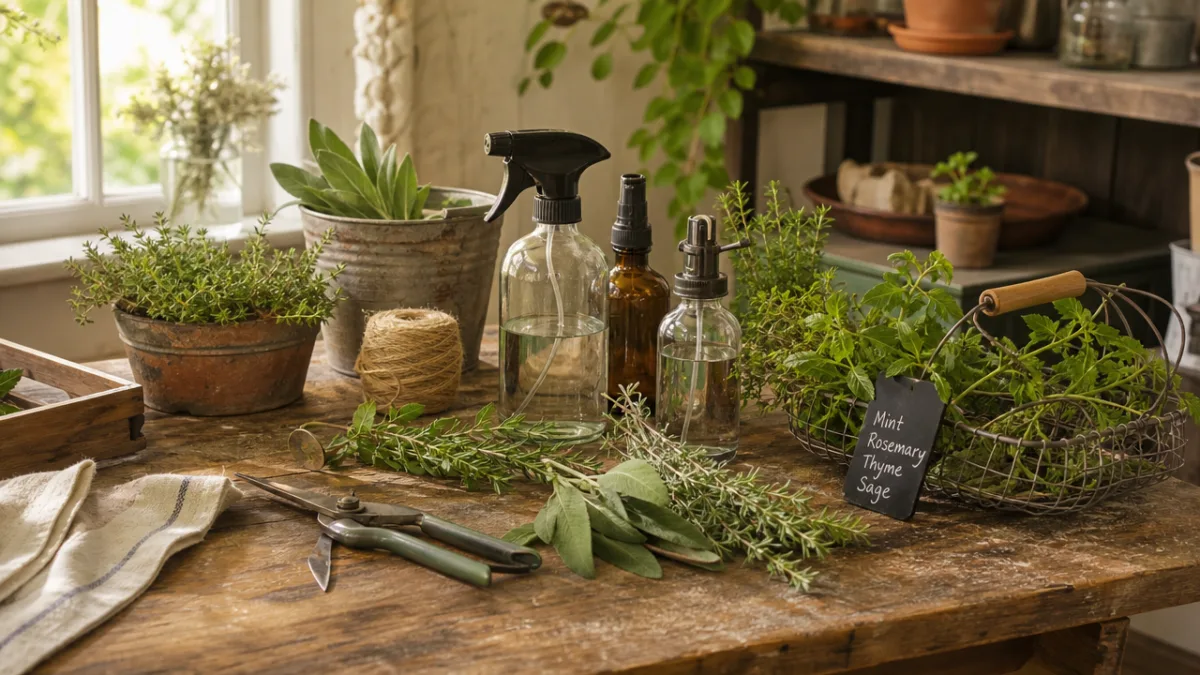
Your repellent plants can do even more than just grow in place. Many of them can be harvested and turned into homemade sprays you can apply directly to other plants, use on your skin before heading outside, or spritz around doors and windows to discourage insects from coming in. Making these sprays is genuinely easy — no special equipment, no complicated process — and they cost next to nothing compared to what you’d spend at the store, without any of the synthetic ingredients that make a lot of people uneasy about commercial products.
A peppermint or spearmint spray is one of the most popular go-to recipes and it really works. Bring two cups of water to a boil, toss in a big handful of fresh mint leaves, and let it steep for at least thirty minutes as it cools. Strain out the leaves, add a teaspoon of liquid dish soap to help it stick to plant surfaces, and pour it into a spray bottle. Apply it every few days directly to plants that are struggling with aphids, spider mites, or ants and you should see a real difference. Want something even stronger? Add some crushed garlic to the mix while it steeps and you’ve got a dual-action spray that covers a much wider range of pests.
For keeping mosquitoes and other biting insects away from you personally, a lavender and witch hazel blend is simple and effective. Mix twenty to thirty drops of lavender essential oil with four ounces of witch hazel and two ounces of distilled water — shake well before each use and apply to exposed skin, staying away from your eyes. For an extra boost, brew some catnip tea by steeping fresh leaves in hot water and add it to the mix. Research published in the Journal of the American Mosquito Control Association found that catnip’s active compound, nepetalactone, can actually outperform commercial repellents at similar concentrations. That’s a pretty remarkable thing to have growing in your garden.
Designing a Dedicated Bug-Repellent Garden Bed
If you really want to go all in, consider giving over an entire bed to insect-repellent plants. A well-designed repellent garden is both beautiful to look at and genuinely functional — it can protect your whole property while giving you a steady supply of herbs for cooking, homemade sprays, and dried arrangements throughout the season. Once established, these beds tend to be pretty low-maintenance and drought-tolerant in most climates. It’s one of those projects that feels like a lot up front but pays you back for years.
When you’re laying it out, think in tiers. Tall plants like lemongrass, fennel, and wormwood go at the back or center. Medium-height plants like lavender, rosemary, and sage fill in the middle zone. Low-growing groundcovers like thyme, chives, and creeping nasturtiums line the edges. Everyone gets enough sun this way, and you end up with a layered fragrant barrier that works at multiple heights. Visually it can be stunning — picture the silvery-green of wormwood next to purple lavender spikes, bright orange marigolds, and cheerful red and yellow nasturtiums all growing together.
Here are some practical things to keep in mind when planning the layout:
- Position the bed strategically — place it upwind of the garden areas you most want to protect, so fragrant compounds drift toward vulnerable plants on prevailing breezes.
- Choose a sunny location — most repellent herbs are Mediterranean in origin and require full sun to thrive and produce maximum concentrations of their repellent essential oils.
- Incorporate a water feature nearby — a small fountain or birdbath near the bed attracts beneficial predatory insects like dragonflies that supplement your plant-based pest control.
- Plan for year-round coverage — include some evergreen species like rosemary and some annuals like marigolds so the bed provides protection across as many months as possible in your climate.
- Leave some plants to flower fully — many repellent herbs, including dill, fennel, and chives, attract parasitic wasps and other beneficial insects when allowed to flower, adding another layer of biological pest control to your system.
Maintaining Your Natural Pest-Control Garden Throughout the Seasons
Like any garden, a plant-based pest management system needs some tending to stay at its best — but honestly, it’s far less work than keeping up with a chemical pest control routine. The main thing is keeping your repellent plants healthy and vigorous, because stressed or nutrient-deficient plants produce fewer of the essential oils that make them effective. Good basic gardening is pest management here. Take care of the plants and they’ll take care of the bugs.
One of the nice things about many of these herbs is that regular harvesting actually makes them work better. When you cut them back, they respond by pushing out dense new growth loaded with essential oils — so the more you use them, the more effective they become. Lavender should be trimmed back by about a third after each bloom cycle to encourage that rich new growth. Basil does best when you frequently pinch the growing tips before it can go to seed, which keeps it productive much longer into the season. Mint needs a hard cutback every few weeks in summer to stay tender and potent, rather than turning woody and losing its punch.
Seasonal transitions take a little forward planning to avoid gaps in your protection. In late summer and early fall, save seeds from dill, fennel, nasturtiums, and other self-seeding plants so you’re ready to sow again in spring. If you live somewhere cold, take cuttings of tender perennials like lemongrass and rosemary before the first frost hits and root them indoors on a sunny windowsill to overwinter. In autumn, divide established clumps of chives, mint, and garlic to expand your plantings for next year. A bit of planning goes a long way — and over time, your bug-repellent garden will just keep growing, becoming a bigger, more effective part of your garden ecosystem and something you’ll genuinely feel good about tending.








What do you think?
It is nice to know your opinion. Leave a comment.