










The Art of Beautiful Gift Wrapping: Transforming Simple Presents into Unforgettable Moments
Gift wrapping is far more than a practical necessity — it is a form of creative expression that communicates care, thoughtfulness, and personality before the recipient even glimpses what lies inside. The moment someone receives a beautifully wrapped gift, a story begins. The textures, colors, ribbons, and embellishments all whisper something about the giver’s intention and effort. In a world increasingly dominated by digital communication and instant gratification, a lovingly wrapped gift stands apart as something tangible and deeply human.
Throughout history, the tradition of wrapping gifts has evolved from simple cloths and natural materials to an elaborate art form with dedicated supplies, tutorials, and even professional gift wrappers. What began as a practical means of concealment has blossomed into a craft that can rival the gift itself in its beauty and complexity. Understanding the fundamentals of this art can transform even the most modest present into something that feels genuinely special and carefully considered.
Whether you are preparing gifts for a birthday, a wedding, the holiday season, or a simple gesture of appreciation, the techniques and ideas explored in this guide will help you elevate your wrapping game. From selecting the perfect paper to adding those finishing flourishes that make someone gasp with delight, every step of the process is an opportunity to express your creativity and show someone how much they mean to you.
Choosing the Right Wrapping Paper and Base Materials
The foundation of any beautiful gift wrap begins with the paper itself. The marketplace today offers an extraordinary range of options — from classic glossy foils and matte kraft papers to hand-printed artisan sheets and eco-friendly recycled alternatives. Selecting the right paper involves considering the occasion, the recipient’s personality, and the overall aesthetic you wish to achieve. A luxurious deep navy paper with gold accents speaks very differently from a playful polka-dot pattern or a soft botanical print, so it pays to think carefully before you reach for the first roll you see.
Thickness and texture matter enormously when it comes to achieving clean, professional-looking folds and crisp edges. Heavier paper holds its shape better and tends to produce sharper creases that give your wrapped package a tailored, polished look. Thinner papers, while beautiful, can tear more easily and may require extra patience and a lighter touch. If you are new to wrapping, starting with a medium-weight matte paper is often the best choice because it is forgiving and easy to manipulate without developing unsightly wrinkles or creases in the wrong places.
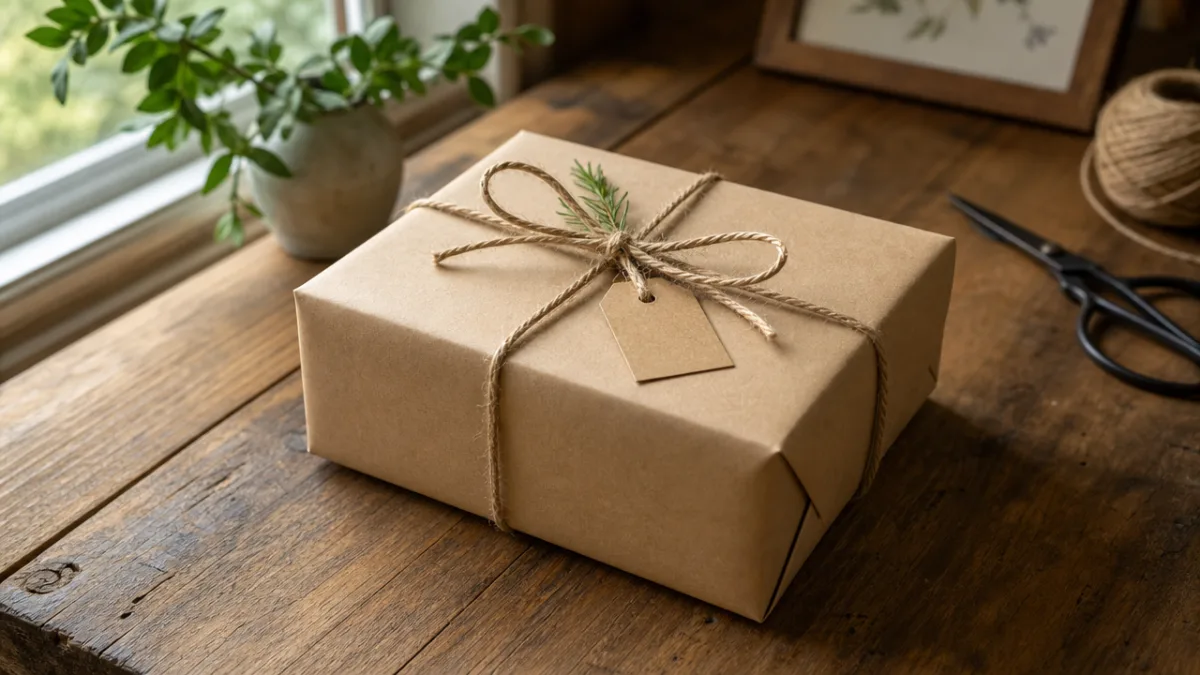
Beyond traditional wrapping paper, creative alternatives have surged in popularity among those who enjoy a more distinctive, personalized result. Brown kraft paper, for instance, provides a wonderful neutral canvas that pairs beautifully with twine, dried florals, and hand-stamped designs. Fabric wrapping — a technique inspired by the Japanese art of furoshiki — offers a zero-waste alternative that doubles as a second gift. Newspaper pages, old book pages, sheet music, and even large decorative leaves can all be pressed into service as charming and unexpected base materials that reflect genuine ingenuity and care.
Mastering the Fundamentals of Wrapping Technique
Even the most gorgeous paper will look sloppy if the underlying technique is poor, which is why taking the time to learn and practice proper wrapping methods is so worthwhile. The diagonal wrapping method, sometimes called the Japanese department store technique, is celebrated for its efficiency and elegance. By placing the box at a 45-degree angle to the paper rather than parallel to it, you can achieve a beautifully neat finish with significantly less paper waste — a win for both aesthetics and the environment.
One of the most common mistakes amateur wrappers make is using too much or too little paper. Before you cut, measure carefully by placing the gift on the sheet and rolling it to check coverage in all directions. As a general rule, you want approximately two to three inches of overlap on each side to fold cleanly without creating excessive bulk. Taking the extra thirty seconds to measure properly can be the difference between a gift that looks like it was wrapped by a professional and one that has messy, overlapping folds stuffed awkwardly at the ends.
Sharp, clean corners are the hallmark of expert gift wrapping and the detail that most impresses people when they first see a finished package. To achieve this, work slowly and deliberately at each end of the box, pressing the paper firmly against the edges to create defined folds before securing with tape. Using a bone folder — a tool borrowed from bookbinding — can help you achieve razor-sharp creases without tearing the paper. Double-sided tape is another professional secret worth adopting, as it keeps the surface of your wrapped gift completely clean and free of visible tape marks that can detract from the overall presentation.
Ribbons, Bows, and the Art of Embellishment
Once the paper is secure, the real fun begins — the embellishment stage is where a nicely wrapped gift becomes a truly spectacular one. Ribbon is the most versatile and impactful tool in the gift wrapper’s arsenal, available in an almost infinite variety of widths, textures, colors, and materials. Satin ribbon offers a classic, romantic elegance; grosgrain brings a crisp, preppy quality; velvet adds opulence and a tactile richness that is especially beautiful during the winter holiday season. Choosing ribbon that complements rather than competes with your paper is the key to a cohesive, harmonious final result.
Curling ribbon is a quick and cheerful way to add a festive, whimsical touch that appeals particularly to children and those who appreciate a playful aesthetic. Running the ribbon firmly over the blade of a pair of scissors causes it to curl into spiraling ringlets that cascade beautifully over the surface of the gift. Layering multiple curling ribbons in coordinating or contrasting colors creates a lush, celebratory effect that requires minimal skill but produces maximum impact. This technique works especially well for birthday and party gifts where a sense of fun and abundance is appropriate and welcomed.
Beyond ribbon, the world of gift embellishment is wonderfully broad and limited only by imagination. Consider incorporating some of the following elements to add texture, personality, and visual interest to your wrapped packages:
- Dried flowers, eucalyptus sprigs, or small pine cones tucked beneath the bow for a natural, organic aesthetic that feels both luxurious and earthy
- Hand-stamped or hand-lettered gift tags made from cardstock or brown luggage labels, which add a personal touch that printed labels simply cannot replicate
- Wax seals in metallic colors applied to envelope closures or used to secure decorative stickers onto the paper surface
- Small ornaments, bells, or charms threaded onto the ribbon as both decoration and a secondary gift in their own right
- Fresh or artificial greenery, berries, or cinnamon sticks for holiday packages that evoke warmth and seasonal abundance
- Personalized stamps, hand-painted designs, or rubber-stamped patterns applied directly to kraft paper to create one-of-a-kind wrapping
The key to successful embellishment is restraint balanced with confidence. It can be tempting to add every beautiful element you have available, but the most visually striking wrapped gifts tend to be those that commit to a clear theme or color palette and execute it with consistency. Choose two or three complementary elements and deploy them thoughtfully rather than piling on decoration in a way that creates visual confusion. A single spray of dried lavender tied with a linen ribbon against simple white paper can be infinitely more sophisticated than a bow bristling with every trim in your collection.
Creative Themes and Coordinated Gift Wrapping Schemes
For occasions involving multiple gifts — holiday gatherings, baby showers, wedding celebrations, or milestone birthday parties — creating a coordinated wrapping scheme can transform a collection of individual packages into a cohesive, visually stunning display. This approach involves selecting a limited palette of two to four colors and applying them consistently across all the gifts, varying only the pattern and texture of the papers used within that palette. The result is a gift table or pile that looks intentional and beautifully curated rather than a haphazard collection of mismatched wrapping.
Seasonal themes offer some of the richest opportunities for creative, cohesive gift wrapping that feels festive and immersive. A winter holiday scheme might draw on the classic combination of deep forest green, rich burgundy, and antique gold, using papers ranging from solid matte to subtle plaid to fine metallic. A summer birthday celebration could lean into bright, cheerful citrus tones — lemon yellow, tangerine, and coral — with tropical foliage and raffia in place of traditional ribbon. The discipline of working within a defined theme actually liberates creativity because it removes the paralysis of infinite choice and encourages you to find inventive solutions within a defined set of parameters.
Personalized wrapping schemes that reflect the individual recipient are particularly meaningful and memorable. Consider the things your recipient loves — their favorite colors, their hobbies, their aesthetic sensibility — and let these inform every element of the presentation. A gift for an avid gardener might be wrapped in botanical-print paper, tied with garden twine, and adorned with a small packet of heirloom seeds. A gift for a passionate reader might be wrapped in pages from a magazine, tied with a bookish ribbon, and labeled with a quote written in careful calligraphy. These personal touches transform the act of giving into a truly bespoke experience.

Eco-Friendly and Sustainable Gift Wrapping Alternatives
As awareness of environmental impact grows, many thoughtful gift-givers are reconsidering the traditional use of single-use wrapping paper, much of which — particularly the glossy, foil-printed varieties — cannot be recycled and ends up in landfill after a few moments of being torn open and discarded. The good news is that sustainable alternatives are not only readily available but often produce wrapping that is more beautiful, more distinctive, and more meaningful than conventional options. Making the switch to eco-friendly materials is one of those happy circumstances where doing the right thing and doing the beautiful thing coincide perfectly.
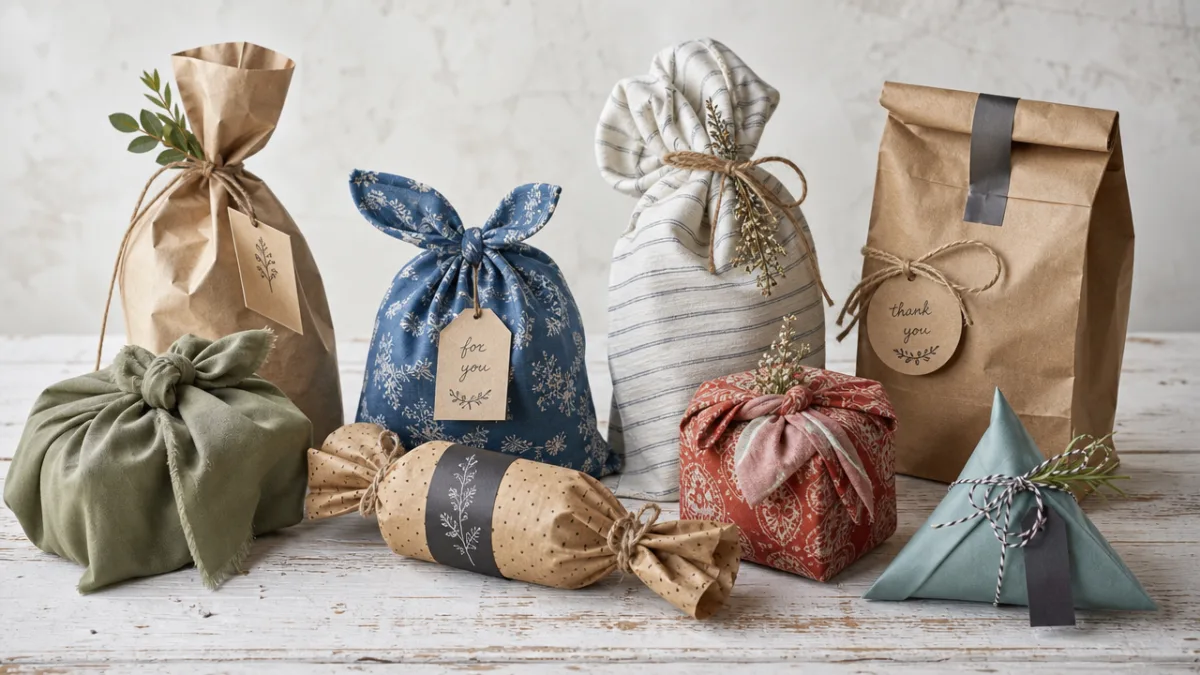
Reusable fabric wrapping is perhaps the most elegant sustainable solution, drawing on centuries of tradition from furoshiki wrapping in Japan. Any piece of fabric — a linen napkin, a silk scarf, a length of pretty cotton — can be used to wrap a gift in a way that becomes part of the present itself. The recipient receives both the gift inside and the beautiful wrapping material, which can be used again and again. Learning even a few basic furoshiki techniques from online tutorials will open up a world of beautiful wrapping possibilities that are entirely zero-waste and inherently luxurious in feel and appearance.
Other sustainable options worth exploring include the following approaches that have gained real traction among environmentally conscious gift-givers in recent years:
- Using recycled newspaper, old maps, or book pages as wrapping paper — elevated with beautiful ribbon and dried botanicals into something genuinely chic
- Repurposing fabric scraps, old scarves, or remnants from sewing projects as wrapping material that would otherwise be discarded
- Choosing FSC-certified or recycled wrapping papers when conventional paper is preferred, ensuring responsible forestry practices
- Using beeswax wraps, which are washable and reusable and work beautifully for smaller gifts and oddly shaped items
- Selecting paper ribbon and natural twine over synthetic satin or metallic ribbons that cannot be composted or recycled
The mindset shift required for sustainable gift wrapping is ultimately a creative one. Rather than viewing limitations as constraints, experienced eco-conscious wrappers learn to see them as invitations to find beauty in unexpected places and materials. When you wrap a gift in pages from a vintage atlas and tie it with garden twine, you are not settling for less than conventional wrapping — you are creating something genuinely original that the recipient is far less likely to simply tear off and throw away. Sustainability and artistry, in this context, are natural allies.
Wrapping Awkward Shapes and Challenging Packages
Every gift wrapper eventually encounters the nemesis: the awkwardly shaped gift that refuses to submit gracefully to conventional techniques. Spheres, cylinders, bottles, irregular objects, and oversized items all present unique challenges that require creative problem-solving and a willingness to depart from standard methods. Far from being a source of frustration, learning to handle these tricky shapes is one of the most satisfying aspects of developing real proficiency as a gift wrapper, because the solutions are often ingenious and strikingly beautiful.
Bottles and cylindrical items respond well to a technique involving tissue paper or fabric gathered at the top and secured with ribbon, creating an effect that resembles a beautifully wrapped bon-bon or old-fashioned sweet. Alternatively, a long rectangular box can house a bottle presented upright in a nest of shredded paper or tissue, converting an awkward shape into a conventional, easy-to-wrap package. Round items like balls or globes can be wrapped in a square of fabric or paper gathered at the top like a gathered pouch and tied with a generous bow, transforming the challenge into a charming presentation.
Gift boxes, bags, and creative containers offer elegant solutions when conventional wrapping simply will not work. A beautiful gift box lined with tissue paper and closed with a ribbon and seal is an entirely respectable and often superior alternative to struggling with paper around an impossible shape. Vintage tins, painted wooden crates, decorative baskets, and even potted plants used as containers all transform the presentation question entirely by making the vessel itself a meaningful part of the gift. The most creative gift wrappers understand that the goal is always beauty and thoughtfulness, and they are never afraid to set aside the paper and tape in favor of a solution that serves the recipient better.
Building Your Gift Wrapping Toolkit and Staying Inspired
Like any craft, gift wrapping is made significantly easier and more enjoyable when you have the right tools at hand. Building a well-stocked wrapping toolkit does not require a major investment, but having the essentials organized and accessible means you are never scrambling for supplies at the last minute or compromising on quality because you cannot find your good scissors. A dedicated box, drawer, or even a decorative basket for wrapping supplies transforms the activity from a stressful chore into a genuinely pleasurable ritual.
The core toolkit for any serious gift wrapper should include high-quality scissors with a sharp blade dedicated exclusively to cutting paper — using kitchen scissors or craft scissors that have cut other materials will result in ragged, uneven edges that undermine your work. A bone folder for crisp creases, a ruler or straight edge for measuring and scoring, a selection of double-sided tapes in different widths, and a good supply of gift tags and writing pens are all essential. Beyond these basics, a rotating selection of ribbons in core colors, a hot glue gun for securing embellishments, and a collection of natural and dried decorative elements round out a toolkit that can handle virtually any wrapping challenge.
Staying inspired and continuing to develop your wrapping skills is easier than ever in the age of visual social media and online tutorials. Platforms like Pinterest and Instagram are treasure troves of wrapping inspiration, showcasing everything from minimalist Japanese-influenced presentations to maximalist holiday extravagances dripping with ornament and ribbon. Saving images that appeal to you and returning to them when planning your wrapping approach is a simple and effective way to push your creativity forward. Beyond digital resources, visiting high-end department stores during the holiday season to observe how professional gift wrappers work, or taking a wrapping workshop at a local craft store, can provide a significant and lasting improvement in your technique and confidence. The art of gift wrapping rewards practice, attention, and curiosity — and the joy it brings both to the creator and the recipient makes every moment invested in it entirely worthwhile.








What do you think?
It is nice to know your opinion. Leave a comment.