










Sustainable Fabric Gift Wrapping: The Art of Furoshiki
What Is Furoshiki? A Tradition Woven Through Time
Furoshiki is the centuries-old Japanese art of wrapping objects in cloth, a practice that has served everyday life in Japan since at least the Nara period (710–794 AD). The word itself translates roughly to “bath spread,” a nod to its early use in public bathhouses where people would bundle their clothing and belongings in a square of fabric. Over the generations, furoshiki evolved from a purely functional tool into a sophisticated craft that reflects Japanese values of beauty, economy, and respect for materials.
Unlike the disposable paper and plastic wrappings that dominate modern gift-giving culture, furoshiki uses a single piece of reusable cloth to create stunning, sculptural presentations. The fabric itself becomes part of the gift, something the recipient can use, repurpose, and pass on. This philosophy of zero-waste elegance has made furoshiki one of the most compelling sustainability practices to emerge from traditional Japanese culture and find a global audience in the 21st century.
Traditional furoshiki cloths come in a range of standardized sizes, from small 45cm squares used for wrapping bottles and small boxes, up to large 105cm or 130cm squares capable of carrying groceries or bundling bulky items like clothing and books. They were historically made from silk, cotton, or linen, and were often decorated with intricate dyework, indigo prints, or family crests. Today, the range of available fabrics spans every texture, pattern, and price point imaginable, making the craft accessible to virtually everyone.
The Cultural Significance Behind the Cloth
In Japanese culture, the way a gift is presented carries as much weight as the gift itself. The act of wrapping something with care communicates respect and affection for the person receiving it. Furoshiki embodies this value deeply, because the effort required to learn and execute a beautiful fold is itself a form of devotion. When you hand someone a gift wrapped in a carefully chosen furoshiki, you are offering two gifts at once: the object inside and the fabric surrounding it.
Furoshiki also carries a democratic quality that sets it apart from many traditional craft forms. Throughout Japanese history, people of all social classes used furoshiki to carry market goods, transport gifts, and move household belongings. Merchants carried inventory in them; pilgrims bundled their essentials. This universality is part of what makes the practice so enduring. It belongs to no single class or context, but adapts itself gracefully to every occasion and need.
The revival of interest in furoshiki in Japan was significantly boosted in 2006 when then-Environment Minister Yuriko Koike promoted the practice as a government-backed environmental initiative, distributing specially designed furoshiki and encouraging citizens to replace single-use plastic bags with reusable cloth. This moment crystallized what many people already sensed: that this ancient art form was one of the most practical and beautiful answers to a very modern problem.
Why Furoshiki Is the Sustainable Choice for Modern Gift-Givers
The environmental case for furoshiki is both simple and staggering. Each year, the United States alone generates an estimated 4.6 million pounds of wrapping paper waste during the holiday season, much of it contaminated with glitter, foil, or dyes that make it unrecyclable. Add to this the mountains of tissue paper, plastic ribbon, foam peanuts, and bubble wrap, and gift wrapping becomes one of the most quietly destructive consumer habits we engage in. Furoshiki eliminates virtually all of this waste in a single, elegant step.
A single furoshiki cloth can be used hundreds or even thousands of times over its lifespan. A well-cared-for piece of cotton or linen fabric can last decades, meaning that one cloth might replace hundreds of rolls of wrapping paper. When you factor in the resources consumed in producing, printing, distributing, and disposing of conventional wrapping materials, the environmental calculus becomes even more striking. Choosing furoshiki is not a small gesture; it is a genuine and measurable shift in consumption habits.
Beyond the raw environmental math, furoshiki encourages a broader cultural shift in how we think about wrapping and packaging. It asks us to move away from the disposable mindset — where wrapping is merely a means to an end, torn off and discarded in seconds — and toward one of care and circularity. When the wrapping itself is valuable, the unwrapping becomes more intentional. Gifts arrive with a kind of weight and presence that throwaway packaging simply cannot convey.
Choosing the Right Fabric for Your Furoshiki Practice
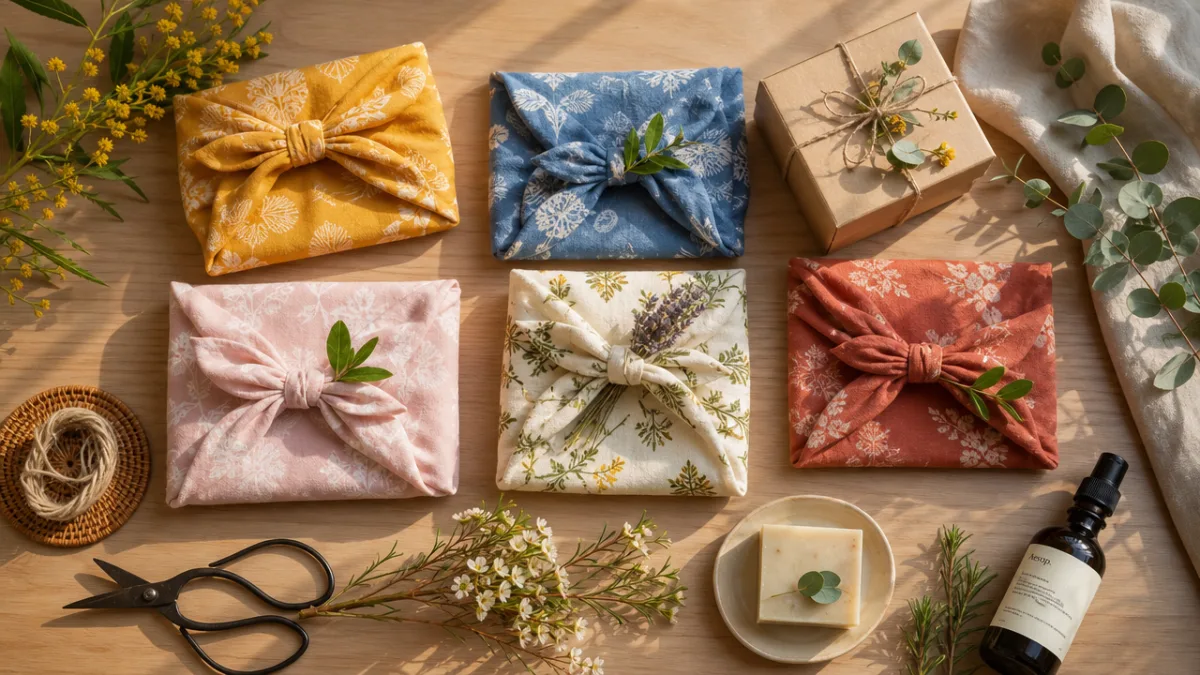
Not every fabric works equally well for furoshiki, and choosing the right material makes a significant difference both in how your wrapping looks and how well it holds its shape. Natural fibers like cotton, linen, and silk are the traditional choices, and for good reason. They drape beautifully, hold knots securely, and soften with each wash. A medium-weight cotton is often the best starting point for beginners, offering a balance of structure and flexibility that makes most basic folds manageable.
For more advanced wrapping, silk and silk blends produce an extraordinary visual effect, with a luminous quality that makes even simple folds look luxurious. However, silk can be slippery and less forgiving for complex knots. Linen offers a more textured, rustic aesthetic that suits natural and artisanal gifts beautifully. Thrifted scarves, bandanas, and vintage tablecloths make excellent furoshiki alternatives, giving new life to forgotten textiles while reducing your overall consumption.
It is worth being thoughtful about color and pattern when selecting your fabric. A busy print can compete visually with an intricate fold, making the overall presentation feel chaotic. Conversely, a bold, graphic pattern might be exactly right for a simple wrap. As a general principle, allow either the fabric or the fold to be the star. Solid colors and subtle prints tend to be the most versatile and universally flattering choices, particularly if you are new to the craft and still building confidence with your technique.
Core Furoshiki Folds: Techniques Every Beginner Should Know
One of the great joys of furoshiki is that a relatively small number of foundational techniques opens up an enormous range of wrapping possibilities. You do not need to master dozens of folds to become a capable and creative wrapper. Learning three or four core techniques well gives you the flexibility to wrap almost any shape or size of gift beautifully, and from there, experimentation and personal style take over naturally.
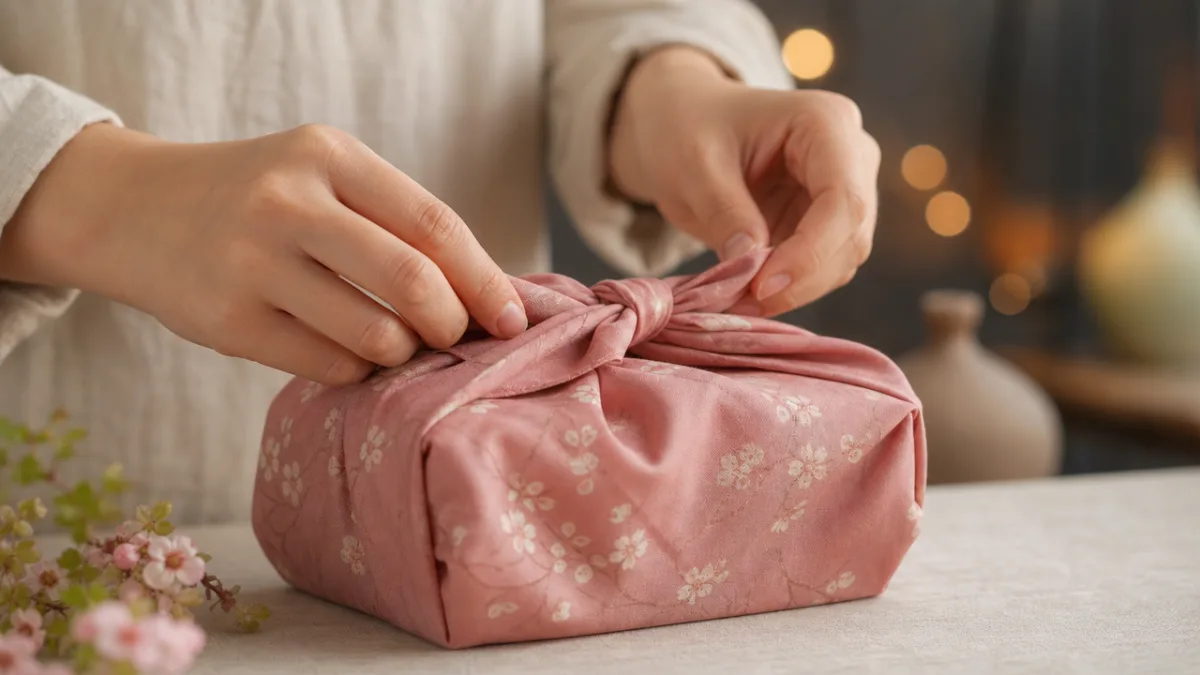
The most fundamental of all furoshiki folds is the hon-tsutsumi, or basic wrap, which is essentially the cloth equivalent of a traditional paper gift wrap. The object is placed diagonally at the center of the square cloth, and the corners are folded over in sequence, tucking and securing with a simple knot at the top. This method works well for boxes and book-shaped gifts, and it is an ideal starting point because it teaches the logic of diagonal placement that underlies most other furoshiki techniques.
As you grow more comfortable, you will naturally begin to experiment with the playful variations that make furoshiki so satisfying. The otsukai-tsutsumi, or carrying wrap, transforms your fabric into a handled bag, making it perfect for wine bottles, produce, or gifts that need to be transported. The kakushi-tsutsumi, or hidden knot wrap, produces a sleek, gift-box appearance with all the knots concealed inside, creating a polished aesthetic that rivals the cleanest paper wrapping. Each technique opens a new visual vocabulary.
Step-by-Step: The Bottle Wrap (Bin-tsutsumi)
The bottle wrap is arguably the most practical and visually impressive technique in a beginner’s furoshiki repertoire, because wine bottles and other cylindrical objects are notoriously difficult to wrap with conventional paper. With furoshiki, wrapping a bottle elegantly is genuinely straightforward once you understand the underlying geometry. It is also one of the most immediately impressive techniques to share with friends and family, making it a wonderful entry point for those who want to inspire others to try the practice.
To wrap a bottle, follow these general steps:
- Place your furoshiki cloth face-down on a flat surface and position the bottle horizontally near one edge, centered left to right.
- Roll the bottle toward the opposite edge, gathering the fabric tightly around it as you roll.
- Stand the bottle upright with the extra fabric pooling at the top.
- Separate the two fabric tails, cross them at the back of the bottle’s neck, bring them forward, and tie them in a square knot at the front.
- Adjust the knot and any excess fabric to create clean, even ears or a decorative bow as desired.
The result is a beautifully wrapped bottle with a structured handle at the top, ready to carry to a dinner party or set under a gift table. The technique works equally well with two bottles wrapped together in a single cloth, a particularly elegant presentation for a wine gift. As with all furoshiki techniques, the quality of the final result depends less on perfection of execution than on the care and attention you bring to the process. Imperfect knots have their own charm.
Wrapping Irregular Shapes
One of the areas where furoshiki genuinely outshines conventional wrapping is its ability to accommodate objects that would be maddeningly difficult to wrap in paper. Round objects, oddly shaped toys, potted plants, and bulky clothing items all present challenges for paper and tape, but cloth adapts to them effortlessly. The flexibility and drape of fabric means that the wrap conforms to the object rather than the other way around, producing a result that feels organic and intentional rather than forced.
For spherical objects like fruit, a ball, or a decorative globe, the tama-tsutsumi, or ball wrap, works beautifully. The object is centered on the cloth, all four corners are gathered upward, and the gathered fabric is secured with a knot or ribbon just above the object, creating a gathered pouch effect with fabric petals fanning out above. For very irregularly shaped items, a simple gathering wrap or a bag fold, where you essentially turn the cloth into a drawstring sack, will handle almost any shape with grace.
Furoshiki as Everyday Carrying and Storage
While furoshiki is most commonly discussed in the context of gift wrapping, its original and perhaps most practical application is as an everyday carrier for goods and belongings. The same cloth you might use to wrap a birthday present can, with a simple reconfiguration, become a shopping bag, a book bag, a lunch carrier, or a yoga mat sling. This versatility is at the heart of what makes furoshiki such a profound sustainable tool rather than merely a decorative one.
The musubi, or knot-bag configuration, is one of the simplest and most useful everyday forms. By tying opposite corners of a square cloth together in pairs, you create a handled bag that can hold a surprising amount of weight and volume. A 70cm cloth makes a bag adequate for a few grocery items or a packed lunch. A 105cm cloth becomes a proper shopping bag capable of carrying a substantial market haul. Unlike plastic bags, the furoshiki bag distributes weight evenly and is comfortable to carry over long distances.
For carrying books and files, the cha-kin-boh wrap creates a structured flat package with handles that sits neatly under your arm. Furoshiki can also be knotted to create a backpack configuration, with straps tied across both shoulders, freeing your hands while carrying heavier loads. These carrying applications make furoshiki not a specialty item but a genuine everyday companion — a single tool that replaces a drawer full of single-purpose bags and packaging materials.
Seasonal and Decorative Uses in the Home
Furoshiki cloths have a natural home beyond the gift-wrapping table and the shopping trip. Their square format and beautiful patterns make them ideal for a wide range of decorative applications throughout the house. A large furoshiki draped over a table as a runner, tied around a plain vase to add color and texture, or stretched and framed as a piece of textile art all represent the cloth’s dual life as both a functional and an aesthetic object.
During holidays and seasonal celebrations, furoshiki offers a sustainable alternative to decorative packaging materials that are typically used once and discarded. A collection of cloths in seasonal colors and motifs can be rotated throughout the year, stored flat when not in use, and brought out to transform the aesthetic of your home or your gift-giving ritual at each occasion. This kind of rotating, reusable decoration aligns beautifully with slow-living philosophies and mindful consumption practices.
Furoshiki can also serve as a travel companion, functioning simultaneously as packing material, clothing organizer, picnic blanket, beach mat, and impromptu bag. Experienced travelers often pack two or three furoshiki cloths of varying sizes and find that they collectively replace a significant number of single-purpose accessories. The weight and bulk savings are meaningful, and the versatility is remarkable. It is the kind of object that, once you begin using it regularly, you wonder how you managed without it.
Getting Started: Building Your Furoshiki Practice
Beginning a furoshiki practice requires very little investment, and that low barrier to entry is one of its most appealing qualities. You do not need to purchase anything special to start — any square piece of fabric you have at home will serve as your first furoshiki. An old cotton scarf, a bandana, a cloth napkin, or even a fabric remnant from a craft project can all become your first wrapping cloth. The only requirement is that the fabric be roughly square in shape and of a weight and weave that allows it to be knotted securely.
As your interest and confidence grow, you may want to invest in purpose-made furoshiki cloths, which are available from Japanese import shops, online retailers specializing in Japanese goods, and a growing number of sustainable lifestyle brands around the world. These cloths are typically made from high-quality cotton or polyester and are sized and finished specifically for furoshiki use, with hems that prevent fraying and proportions optimized for specific wrapping techniques. They often feature traditional Japanese patterns — geometrics, florals, water motifs — that add an authentic aesthetic dimension to your practice.
It is worth building a small collection of cloths in varying sizes rather than accumulating many cloths of a single dimension. A set that includes a small 45cm cloth, a medium 70cm cloth, and a large 105cm cloth will handle the vast majority of everyday wrapping and carrying needs. From there, specialty sizes and additional cloths can be added as specific needs arise or as your aesthetic preferences evolve. Quality over quantity is, fittingly, the right philosophy here.
Sharing Furoshiki with Others
One of the most impactful things you can do once you have developed a furoshiki practice is to share it. Because the technique is visual and tactile, it is most easily learned by watching and doing rather than by reading instructions. Consider hosting a casual furoshiki workshop for friends or family around a holiday season, providing simple cloths and a few objects to practice with. The experience tends to be immediately enjoyable — there is something genuinely satisfying about transforming a flat piece of fabric into a beautiful wrapped package with just a few folds and knots.
When you give gifts wrapped in furoshiki, take a moment to explain the cloth and its significance to the recipient, and to encourage them to reuse it. Include a small card with basic folding instructions, or point them toward one of the many excellent video tutorials available online. The more you normalize the idea of keeping and reusing the wrapping as part of the gift, the more the practice spreads organically. Each converted gift-giver is a node in a network of sustainable behavior change that compounds beautifully over time.
Children, in particular, respond enthusiastically to furoshiki once they understand that the fabric is theirs to keep and use. Wrapping a child’s gift in a boldly patterned cloth that can later become a cape, a doll blanket, or a secret-keeping pouch transforms the wrapping itself into a toy. This kind of layered generosity — giving a gift inside a gift — captures the spirit of furoshiki at its most generous and creative, and it plants the seeds of sustainable thinking in the next generation in the most joyful possible way.
Resources and Inspiration for Continued Learning
The furoshiki community online is warm, creative, and generous with knowledge. Video platforms host hundreds of tutorials ranging from absolute beginner basics to intricate advanced techniques that can take years to master. Japanese textile manufacturers such as Musubi and Kyosha offer not only beautiful cloths but detailed folding guides. The Japanese Ministry of the Environment has historically published free furoshiki instruction guides in multiple languages, reflecting the government’s longstanding recognition of the practice as an environmental tool.
Books on furoshiki and related Japanese textile arts offer deeper cultural context alongside practical instruction, and many public libraries carry titles on the subject. Local Japanese cultural centers and Japan Society chapters in major cities sometimes offer workshops and demonstrations. Following textile artists and sustainable living advocates on social platforms can provide a steady stream of seasonal inspiration, new technique variations, and creative applications you might not have considered on your own.
Ultimately, furoshiki is a practice that rewards patience, creativity, and a willingness to embrace imperfection. Your first attempts will not look like the pristine demonstrations in tutorial videos, and that is entirely as it should be. Each fold teaches your hands something new. Each gift you wrap with cloth rather than paper is a small, tangible act of care — for the person receiving it, for the materials involved, and for the planet that produced them. In a world overwhelmed by disposability, furoshiki offers something quietly radical: the idea that how we wrap things matters as much as what is inside.








What do you think?
It is nice to know your opinion. Leave a comment.