










40 Magical Dried Flower Crafts: A Complete Guide to Preserving Nature’s Beauty
The Art and History of Dried Flower Crafting
Dried flower crafting has been around for thousands of years — and honestly, it’s not hard to see why it’s stuck around. Ancient Egyptians tucked dried botanicals into tombs as offerings to their gods, and Victorian women turned pressed flower albums into a full-blown domestic art form. Now, this craft is having a serious comeback, with people everywhere rediscovering just how satisfying it is to work with flowers in their preserved, transformed state.
Part of what makes dried flower crafting so appealing is how accessible it is. You don’t need expensive supplies or years of practice to get started — beginners and experienced crafters can both jump in and make something beautiful. The materials are often free or close to it, whether you’re picking from your own garden, gathering from a field, or buying in bulk at the farmers’ market. The tools are minimal, and the end results have a rustic, personal quality that no store-bought décor can match.
There’s also something genuinely meaningful about working with dried flowers that goes beyond just making pretty things. Every bloom holds a moment — a season, a memory, a place you visited or a celebration you loved. Pressing the roses from your wedding bouquet, the wildflowers you picked on a summer hike, or the lavender from your grandmother’s garden turns those fleeting moments into something you can hold onto. That emotional dimension is a big part of why this craft resonates so deeply with so many people.
Essential Techniques for Drying and Preserving Flowers
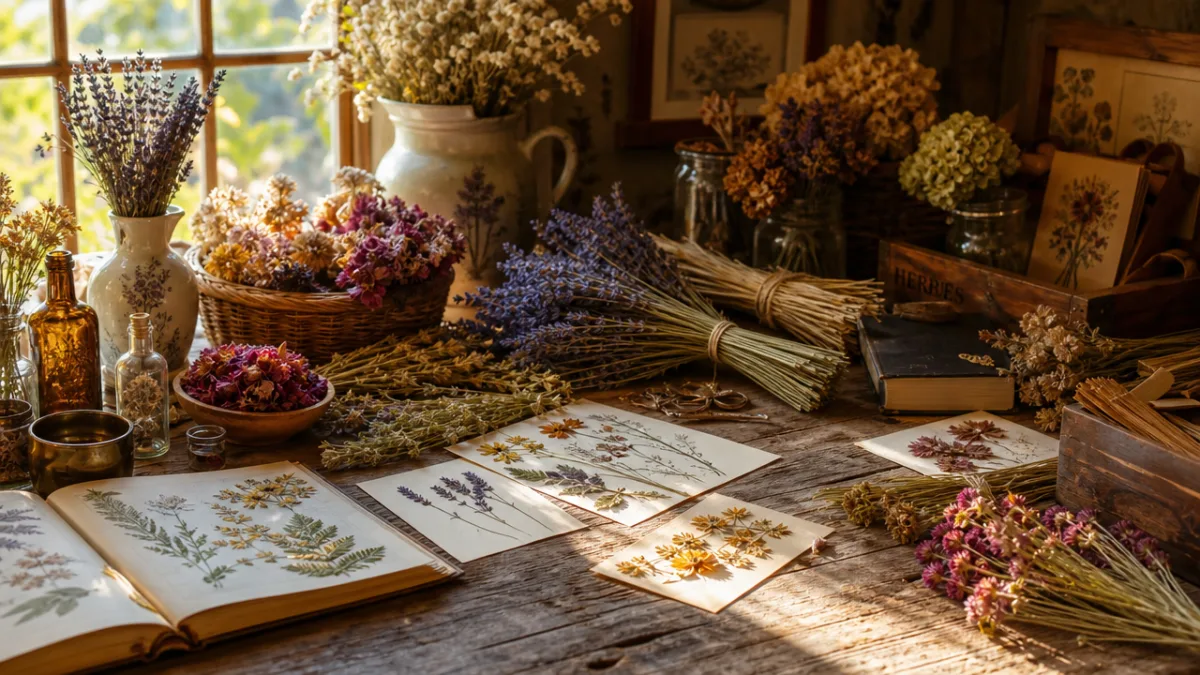
Before you dive into any specific project, it helps to understand your options for actually drying the flowers. The most traditional method is air drying — you bundle the stems together with a rubber band or piece of twine, hang them upside down somewhere warm, dry, and well-ventilated, and wait. Keep them out of direct sunlight, and most robust flowers like lavender, roses, strawflowers, statice, and ammobium will be ready in one to three weeks, depending on how humid your space is and how thick the blooms are.
Pressing is another go-to technique, especially for flatter or more delicate flowers like pansies, violas, daisies, and ferns. You can use a dedicated flower press, a heavy book layered with absorbent paper, or a microwave press if you’re short on patience — that last option can bring drying time down to just a few minutes. Pressed flowers hold their color and fine detail surprisingly well, which is why they’re such a natural fit for paper crafts, resin work, and framed botanical art. The trick is consistent, even pressure and plenty of absorbent paper.
If you want to preserve three-dimensional flowers with their shape and color as intact as possible, silica gel is your best friend. The crystals pull moisture out quickly and evenly, and most flowers are fully dried in two to seven days while still looking like themselves. It’s especially great for peonies, dahlias, tulips, and other fuller blooms that tend to shrink or warp when air dried. Glycerin preservation is worth knowing about too — it works particularly well for foliage and seed heads, leaving them soft and flexible rather than brittle, and they can last for years that way.
Choosing the Right Flowers for Your Projects
Not every flower dries the same way, and picking the right ones for your project makes a real difference. Flowers with naturally papery petals — strawflowers, statice, sea lavender — are the most forgiving options if you’re just starting out, because they barely change during the drying process. The floral trade actually calls these “everlastings,” which tells you everything you need to know about how well they hold up over time.
For bigger or more detailed projects, roses are hard to beat. They’re classic for a reason — gorgeous range of colors, sizes, and shapes, and they dry beautifully. Lavender is another staple, valued both for its soft purple-silver look and the scent that lingers long after it’s dried. Pampas grass, bunny tails, wheat, and other grasses add lovely texture and movement to wreaths and arrangements, while eucalyptus brings silvery-green foliage that stays fragrant for months after drying.
Wreaths, Garlands, and Floral Arrangements
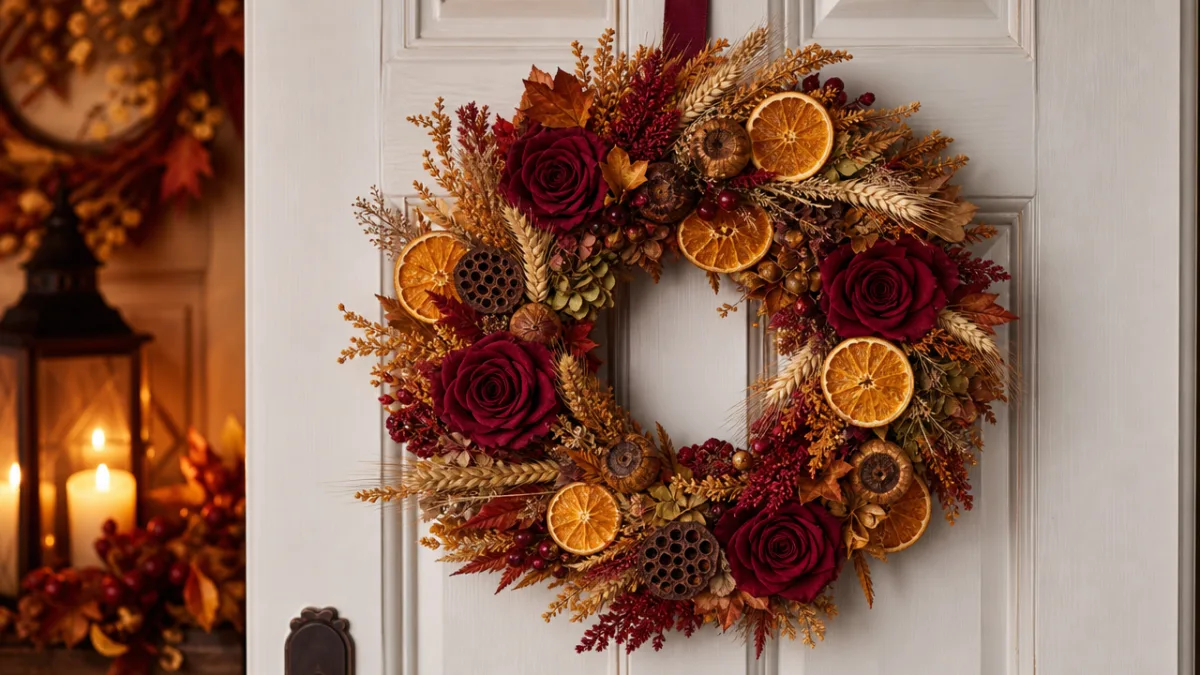
Wreaths are one of those projects that deliver a huge visual payoff without requiring a ton of experience. You start with a base — a wire ring, a grapevine wreath, or a foam form — and build it up by layering clusters of dried botanicals, wired or glued on in overlapping sections. What makes a wreath look professionally done is variety: mixing fluffy pampas grass with delicate statice, bold dried roses with feathery grasses, and playing with light and dark tones throughout so it feels balanced but interesting.
Garlands are a bit more linear, but just as versatile. You can drape them over a mantel, wind them through a stair railing, hang them above a bed, or string them across a wall for a relaxed, bohemian look. A basic dried flower garland is as simple as tying small clusters of dried botanicals to a length of twine or jute at regular intervals, making sure each bundle overlaps the last slightly to give it a full, layered look. Toss in some dried citrus slices, cinnamon sticks, or seed pods and you’ve got added texture — and sometimes a lovely scent too.
If you want the simplest possible entry point into dried flower crafts, just put some stems in a vase. Sounds obvious, but the results can be genuinely stunning, and the upkeep is zero — no water, no wilting, just occasional gentle dusting. A tall glass vase packed with pampas grass and dried roses makes a bold, modern statement. A small ceramic pot stuffed with mixed everlastings has more of a cozy cottage feel. Either way, dried arrangements work year-round, which is more than you can say for fresh flowers.
Wall Art and Framed Botanical Displays
Pressed flower framing never really went out of style, but the way crafters approach it now feels much more creative and intentional. Instead of just arranging individual flowers in a grid, people are building flowing botanical landscapes, abstract color compositions, and detailed scenes of whole garden beds within a single frame. The frame itself gives you a defined space to work within, and learning how to use negative space — the empty areas around your botanicals — is what separates a truly striking piece from a merely pretty one.
Herbarium-style botanical prints have become especially popular lately. These are displays that mimic the scientific specimen sheets botanists have made for centuries — real pressed plants paired with handwritten or printed labels identifying the species. The combination of artistry, education, and old-world nostalgia gives them a really distinctive quality. Grouping several framed herbarium specimens together on a wall creates a gallery installation that feels warm, organic, and a little bit scholarly, especially when paired with natural wood frames and neutral walls.
Candles, Soaps, and Wearable Botanical Creations
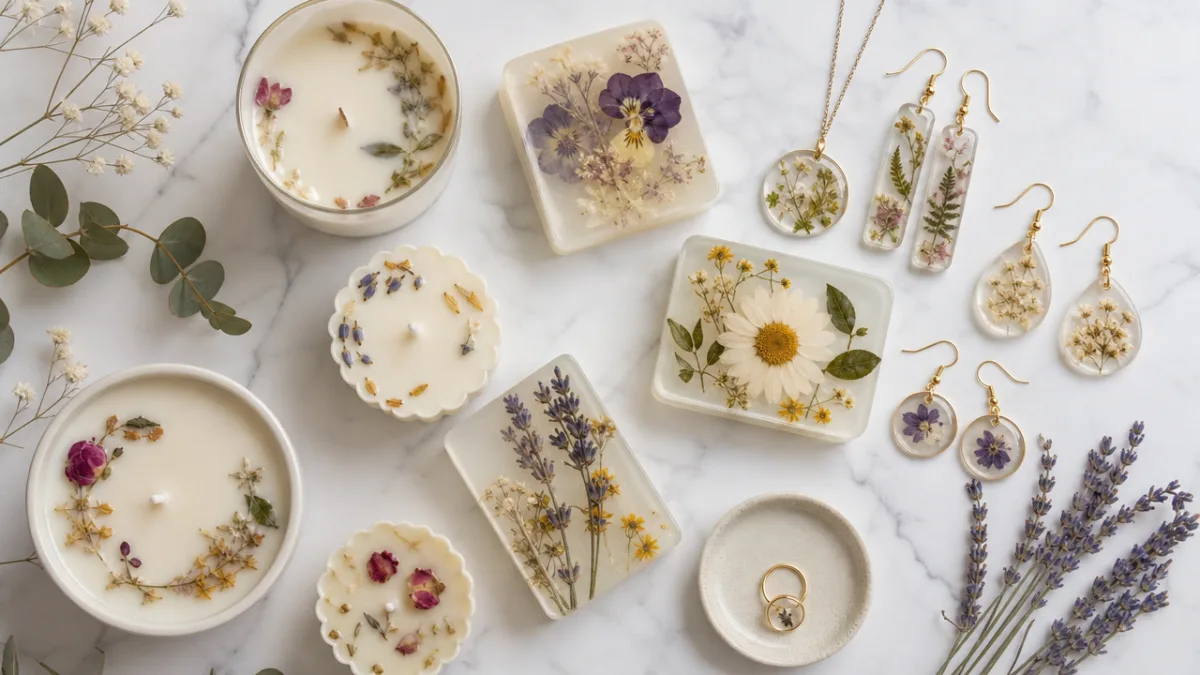
Botanical candles are one of those crafts that genuinely feel a little magical once they’re finished. The technique involves pressing dried petals, small blossoms, and delicate leaves against the surface of a candle and sealing them in place with a thin outer layer of clear wax. When the candle is lit, the wax glows warmly around the embedded flowers and creates this beautiful stained-glass effect that completely changes the mood of a room. Roses, lavender, chamomile, and pansies all work wonderfully for this.
Handmade soap with dried flowers embedded in it sits right at the intersection of functional craft and artisanal beauty. Whether you’re working with cold process or melt-and-pour soap, you can mix in dried lavender buds, rose petals, calendula flowers, or chamomile blossoms to create bars that look gorgeous and often carry gentle skin-friendly properties from the botanicals themselves. Placing dried flower heads carefully on top of the soap before it sets creates a jewel-like finish that honestly makes the bars almost too pretty to use.
Wearable botanical crafts are having a real moment right now. Resin jewelry with pressed flowers has taken off in a big way — crafters are making pendants, earrings, rings, and brooches that trap tiny blooms and petals in clear domes of hardened resin. Dried flower crowns and hair accessories, which started out as a bohemian festival thing, have made their way into bridal styling and even everyday wear, with floral designers creating increasingly refined pieces using high-quality preserved botanicals.
Home Fragrance and Wellness Crafts
Potpourri has a bit of an image problem — most people picture those overpowering scented bowls from the 1980s — but modern takes on this ancient craft are genuinely lovely. Today’s botanical potpourri leans into visually interesting combinations of dried flowers, seed pods, citrus peel, and spices, often with little or no added fragrance, letting the natural scents of the ingredients carry the experience. Displayed in a glass bowl, a wooden tray, or an open ceramic dish, a well-put-together potpourri works just as much as a decorative object as a fragrance one.
Lavender sachets are one of the most practically useful dried flower crafts you can make. A few simple fabric pouches filled with dried lavender tucked into drawers, wardrobes, and linen closets will naturally freshen everything stored there and gently keep insects away — no chemicals needed. You don’t need to be a skilled sewer to make them; just some basic stitching, a bit of muslin or linen fabric, and a good handful of dried lavender flowers. They also make incredibly thoughtful handmade gifts, the kind that people actually use and appreciate rather than just setting aside.
Seasonal Crafts, Celebrations, and Gift Ideas
Dried flowers lend themselves naturally to seasonal projects, and some of the most satisfying botanical crafts are tied to specific times of year. Autumn is especially rich for this — the harvest season brings an abundance of seed heads, grasses, berries, and warm-toned blooms that feel made for this kind of work. Building a wreath around dried Chinese lantern pods, wheat sheaves, preserved oak leaves, and deep burgundy roses is one of those seasonal rituals that fills the house with color and texture right when you need it most.
In winter, dried flowers offer a fragrant and often more sustainable alternative to imported fresh blooms. Dried orange slices, cinnamon sticks, pine cones, and preserved evergreen branches mixed with dried roses and silver-toned botanicals can create festive wreaths, arrangements, and table centerpieces with a warmly spiced, Nordic feel that somehow manages to be both traditional and fresh. Dried flower advent calendar designs — tiny botanical posies tucked into numbered envelopes or small glass bottles — make especially charming countdown displays for the holiday season.
As gifts go, dried flower crafts are some of the most personal and memorable you can give. A pressed flower card made from blooms gathered specifically for the recipient, a custom wreath built around their favorite colors, or a jar of homemade lavender sachets tied with a ribbon — these things communicate real care and effort in a way that most purchased gifts just can’t. For weddings and anniversaries especially, preserving flowers from a bouquet into framed art, a pressed flower journal, or a resin keepsake creates something the recipient will likely treasure for decades.
Sustainable Crafting and Sourcing Your Botanicals
One of the things that makes dried flower crafting feel so right for the moment we’re in is how naturally it aligns with more sustainable living. When you work with locally grown, seasonal, or foraged botanicals instead of imported fresh flowers that have been greenhouse-grown and flown across the world, you’re making a choice that’s genuinely better for the environment. Growing your own cutting garden for drying gives you full control over what you’re working with and the peace of mind of knowing your materials were grown without harmful pesticides or problematic labor practices.
Foraging adds a whole other dimension to the craft. There’s something deeply satisfying about gathering your own materials from the landscapes around you — Queen Anne’s lace, teasel, cattails, goldenrod, wild grasses — plants that grow freely in many regions and dry beautifully, giving your work a local character that commercially grown flowers simply can’t replicate. Just forage responsibly: take only what’s genuinely abundant, leave most of any plant population intact, and check your local regulations before collecting from public spaces.
The longer you practice dried flower crafting, the more you build up a personal archive of botanical materials, each with its own story — the roses from last June’s garden, the lavender from the farmers’ market in August, the wild grasses gathered on an October walk. Those materials carry a personal history that makes every project made from them feel like more than just a decorative object. It’s that layering of natural beauty, sustainable practice, creative expression, and personal meaning that keeps dried flower crafting close to people’s hearts, and why it’s going to keep being one of the most loved home arts around for a long time to come.








What do you think?
It is nice to know your opinion. Leave a comment.