










17 Free Crochet Bag Patterns: Totes & Crossbody Styles for Every Skill Level
Why Crochet Bags Are the Ultimate Handmade Accessory
There is something deeply satisfying about carrying a bag you made entirely with your own two hands. Crochet bags have surged in popularity over the past several years, and for good reason — they sit at the perfect intersection of fashion, functionality, and creative expression. Whether you are heading to the farmers market, the beach, or a casual coffee date, a handmade crochet bag adds a personal touch that no store-bought accessory can replicate. The texture, color, and stitch patterns you choose make every piece completely one of a kind.
Beyond aesthetics, crocheted bags are remarkably durable when worked with the right materials. Cotton yarns, jute twine, and nylon cords all produce sturdy fabrics that hold their shape beautifully over time. Unlike knitted counterparts, crochet fabric has very little stretch, which makes it ideal for bag construction — your belongings stay supported without the bag distorting under weight. Many experienced crafters actually prefer making bags over garments precisely because the structural properties of crochet lend themselves so naturally to this type of project.
Perhaps most exciting of all is the sheer variety of bag styles you can create with a hook and some yarn. From roomy market totes that can carry groceries to slim crossbody bags perfect for a night out, the design possibilities are practically endless. Free patterns available online have made it easier than ever to dive in, regardless of your experience level. Whether you are a curious beginner or a seasoned crocheter looking for your next challenge, there is a free crochet bag pattern out there with your name on it.
Essential Materials and Tools Before You Begin
Before casting on your first stitch, gathering the right supplies will make the entire process smoother and more enjoyable. The most fundamental choice is your yarn, and for bags this decision carries extra weight. Cotton yarn is widely considered the gold standard for bag projects because it is strong, washable, and holds its structure without becoming floppy. Bulky cotton works particularly well for tote-style bags where you want a defined, sturdy fabric, while a lighter weight cotton can give crossbody bags a more refined and elegant drape.
Your hook size should always be matched carefully to your chosen yarn, though many bag patterns actually recommend going down one hook size from the yarn label’s suggestion. Using a slightly smaller hook creates a tighter fabric with less give between stitches, which prevents small items from slipping through gaps and helps the bag maintain its intended shape. Ergonomic crochet hooks with cushioned grips are a worthwhile investment if you plan to work on a larger project like a tote that requires many hours of stitching — your hands will thank you by the end.
Beyond yarn and hooks, a few additional tools will help you finish your bag beautifully. Consider having the following on hand before you start any of these 17 free patterns:
- Stitch markers to track pattern repeats and round beginnings
- A yarn needle or tapestry needle for weaving in ends securely
- Scissors with sharp, fine tips for clean cuts
- A measuring tape for checking gauge and finished dimensions
- Bag handles, D-rings, or swivel clips if your pattern calls for hardware
- Fabric lining material and a sewing needle and thread for interior finishing
- Stitch count markers if working complex texture or colorwork patterns
Lining your bag is an optional but highly recommended finishing step that makes a dramatic difference in both the look and longevity of your finished piece. A simple cotton or canvas lining prevents items from catching on the crochet stitches, helps the bag hold its shape more rigidly, and gives the interior a polished, professional appearance. Many free patterns include lining instructions, but even if yours does not, adding one is a straightforward sewing project that requires only basic skills and a short amount of time.
Beginner-Friendly Tote Bag Patterns Worth Trying
If you are new to crochet or just new to making bags, tote patterns are the ideal starting point. Their construction is generally straightforward — most are worked in rows or simple rounds without complex shaping — and the generous size means small tension inconsistencies are far less noticeable than they would be on a garment. A basic market tote using single or double crochet stitches can be completed in a single weekend and makes a wonderfully practical finished object that you will actually use every day.
The classic mesh tote is one of the most beloved beginner bag patterns for good reason. Worked in a simple chain-space mesh stitch, it produces that iconic open lattice look that is eternally on trend and incredibly lightweight. Mesh totes are perfect for beach trips, grocery runs, or carrying produce, because the open weave allows water and air to pass freely through the fabric. Most mesh tote patterns require only the knowledge of chain, slip stitch, and either single or double crochet — making them genuinely accessible to anyone who has mastered the absolute basics.
Another beginner-friendly option is the flat-bottom tote, which features a rectangular base that gives the bag a defined, boxy shape rather than a rounded silhouette. These patterns typically start with a foundation chain worked in rows to create the base, then transition to working in rounds up the sides of the bag. The result is a roomy, structured tote that can stand upright on its own when filled. Many free versions of this pattern are available online in a range of sizes, from a small everyday bag to a large carryall that can substitute for a gym bag or beach tote.
The boho fringe tote is a slightly more advanced beginner project that adds decorative fringe along the base or body of a simple tote silhouette. Fringe is cut from lengths of yarn and looped through edge stitches using a lark’s head knot — a technique that requires no special skills whatsoever. The visual impact, however, is striking. Worked in earthy tones like terracotta, cream, and warm brown, a fringe tote captures the relaxed, bohemian aesthetic that has remained wildly popular in handmade fashion communities for years.
Stylish Crossbody Bag Patterns for Every Occasion
Crossbody bags occupy a special place in handmade fashion because they are simultaneously practical and chic. Unlike a tote that hangs from one shoulder or sits in the crook of an arm, a crossbody distributes weight evenly across the body, making it much more comfortable to wear for extended periods. Crocheted crossbody bags also tend to be smaller and more structured than totes, which means they can showcase intricate stitch patterns in a more concentrated and impressive way.
The envelope crossbody is a perennial favorite among intermediate crocheters. As the name implies, it features a flap closure that folds down over the opening, much like an envelope. This closure style not only looks elegant but also adds security for your belongings — a genuine practical advantage over open-top bags. Free patterns for envelope crossbodies often incorporate textured stitches like the moss stitch, waffle stitch, or bobble stitch on the flap to create visual interest, and many include magnetic snap or button closure instructions to give the finished piece a truly polished appearance.
For something a little more casual and weekend-ready, the bucket bag crossbody is an excellent choice. This round-bottomed, cylindrical bag style has a distinctive silhouette that photographs beautifully and holds a surprising amount despite its compact appearance. Bucket bag patterns are typically worked in continuous rounds from the base upward, with a drawstring closure at the top and a removable or fixed crossbody strap. Worked in a thick cotton or raffia-style yarn, a crochet bucket bag has a sophisticated, artisanal quality that looks far more expensive than it actually is to make.
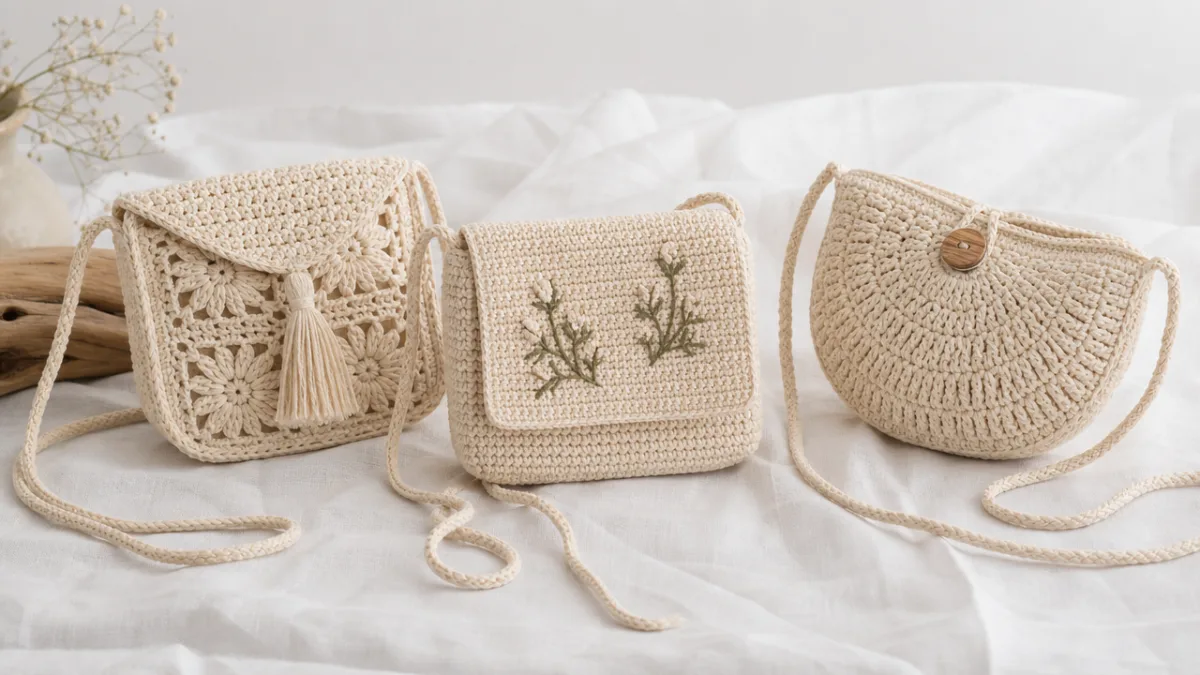
Mini bags — sometimes called micro bags or tiny crossbodies — are a fashion-forward trend that translates exceptionally well into crochet. These diminutive bags are typically just large enough to hold a phone, a few cards, and a lip balm, and they are worked up incredibly quickly. Because of their small size, they are ideal for experimenting with color, stitch texture, or even surface embellishment like embroidery or appliqué. A mini crossbody worked in a vibrant colorblock pattern or a rich jewel tone can become a true statement accessory that elevates even the simplest outfit.
Advanced Techniques That Elevate Your Bag Projects
Once you have a few basic bags under your belt, you may find yourself craving a new creative challenge. Several more advanced techniques can dramatically elevate the look and quality of your crochet bag projects without requiring years of additional experience to learn. Tapestry crochet, for instance, involves carrying two or more colors of yarn simultaneously while crocheting, allowing you to create bold geometric patterns, florals, or even pictorial motifs directly into the fabric of the bag. The resulting fabric is thick, structured, and strikingly beautiful — ideal for a statement tote or a structured crossbody with real visual impact.
Granny square construction is another technique that transforms a bag from a simple textile project into something that feels genuinely artistic. Traditional granny squares are small, modular crochet motifs that can be joined together to create a larger fabric panel. When used for bags, individual squares are joined using a flat join or a surface slip stitch join, then seamed into the desired bag shape. The beauty of this approach is its flexibility — you can mix colors freely across individual squares, creating a patchwork effect that is playful, colorful, and deeply personalized. Many free granny square bag patterns are available ranging from beginner to advanced difficulty.
For crocheters interested in surface texture, incorporating raised stitches like front post and back post double crochets can add extraordinary depth and dimensionality to a bag’s fabric. These stitches are worked around the post of a stitch from the previous row rather than through the top loops, creating ridges and cables that stand out dramatically from the surface of the work. Cable crochet bags in particular have an almost woven or knitted appearance that surprises people who assume crochet can only produce flat or simple textures. A cable-front tote bag or a ribbed crossbody strap is an impressive project that demonstrates just how sophisticated crochet can be.
Tips for Customizing and Caring for Your Crochet Bags
One of the greatest joys of making your own bags is the freedom to customize every detail to suit your personal taste and practical needs. Color is the most obvious starting point — swapping the suggested yarn color in a free pattern for something that coordinates with your existing wardrobe is a simple change that makes your finished bag feel truly personal. But customization goes well beyond color. You can alter the strap length to suit your preferred carrying style, adjust the bag dimensions by adding or removing rows, or substitute a different closure type — a zipper, a button, a magnetic snap, or a simple drawstring — to better match your needs.
Adding hardware is one of the most effective ways to give a handmade crochet bag a professional, polished finish. Gold or brass D-rings, swivel clasps, and adjustable slides are all widely available at craft stores and online retailers, and they are surprisingly easy to incorporate into bag projects. Many free patterns include instructions for attaching hardware, but even if yours does not, the process typically involves creating a short strap tab, folding it around the hardware, and sewing or slip stitching it securely in place. The transformation this small addition makes to the overall appearance of a bag is genuinely remarkable.
Caring properly for your finished crochet bags will ensure they stay beautiful through years of regular use. Most cotton and cotton-blend bags can be machine washed on a gentle cycle in cold water, though hand washing is always the safest option for bags with added hardware or lining. Reshape the bag while it is still damp and allow it to air dry flat or stuffed with tissue paper to help it retain its intended shape. Avoid wringing or twisting the bag to remove excess water, as this can distort the stitches and permanently alter the shape of the finished piece.
Blocking is a finishing technique that many crocheters overlook but that can make a significant difference in the final appearance of a bag. To block a finished crochet bag, dampen it thoroughly with clean water, gently shape it into its intended dimensions, and pin it in place on a blocking board or foam mat while it dries completely. This process evens out stitch tension, opens up lace or mesh patterns beautifully, and helps boxy or structured bags hold their precise shape. For bags made from natural fibers like cotton or linen, blocking produces an especially noticeable improvement in the overall quality and professionalism of the finished piece.
Where to Find the Best Free Crochet Bag Patterns Online
The internet has made finding high-quality free crochet patterns easier than at any point in the history of the craft. Several dedicated platforms host thousands of free bag patterns contributed by designers from around the world. Ravelry remains one of the largest and most trusted pattern databases available, with robust search and filtering tools that let you narrow results by yarn weight, difficulty level, stitch type, bag style, and much more. Creating a free account allows you to save patterns to project queues, track your yarn stash, and connect with other crocheters working on similar projects.
Pinterest is an invaluable discovery tool for finding crochet bag patterns because it aggregates visual content from blogs, pattern shops, YouTube channels, and social media accounts all in one place. A single search for terms like “free crochet tote pattern” or “crochet crossbody bag tutorial” will surface hundreds of options with preview images, allowing you to quickly identify styles that appeal to you before clicking through to the full pattern. Following boards curated by prolific craft bloggers is a particularly efficient way to continuously discover new patterns without having to search from scratch each time.
Individual craft blogs remain some of the best sources for free, high-quality crochet bag patterns. Designers who publish on their own blogs often provide more detailed instructions, clearer photographs, and more thorough troubleshooting guidance than patterns published on larger aggregator platforms. Many bloggers also actively respond to comments and questions, creating a genuine community of support around their patterns. Some of the most consistently excellent free bag patterns available online come from independent crochet bloggers who are deeply passionate about both the craft and the community that surrounds it.
YouTube tutorial videos deserve special mention as a resource for visual learners who find written patterns challenging to follow. Many talented crochet designers publish full video walkthroughs of their bag patterns, working through the project stitch by stitch so viewers can follow along in real time. These tutorials are especially helpful for techniques like working in the round, joining motifs, attaching hardware, or inserting a lining — steps that can be difficult to visualize from written instructions alone. Watching an experienced crocheter demonstrate a technique even once can save hours of confusion and frustration for newer crafters.








What do you think?
It is nice to know your opinion. Leave a comment.