










Crochet Hook Sizes Chart: A Free Conversion Guide
Understanding Crochet Hook Sizes and Why They Matter
If you have ever picked up a crochet pattern and felt confused by the hook size listed at the top, you are certainly not alone. Crochet hook sizes are one of the most fundamental — and most frequently misunderstood — aspects of the craft. Whether you are a complete beginner just starting your first dishcloth or an experienced crocheter tackling an intricate lace shawl, choosing the right hook size is essential to achieving the correct gauge, the correct drape, and ultimately a finished project that actually matches the dimensions the designer intended.
The reason hook sizes cause so much confusion is that there are multiple sizing systems used around the world, and they do not always align neatly with one another. In the United States, hooks are labeled with a combination of letters and numbers. In the United Kingdom and much of Europe, hooks are labeled with millimeter measurements. Other countries and older vintage patterns may use entirely different numbering systems that seem to bear no relationship to either of those standards. When you are browsing patterns from international designers on platforms like Pinterest or Ravelry, understanding how to convert between these systems becomes an indispensable skill.
Beyond international differences, hook sizes matter because they directly affect the size of your stitches. A larger hook creates bigger, more open stitches with greater drape, which is perfect for chunky blankets or airy summer tops. A smaller hook creates tighter, denser stitches, which is ideal for amigurumi, structured bags, or fine lacework. Even a difference of half a millimeter can change the overall dimensions of a finished project significantly, which is why patterns always recommend checking your gauge before starting any major piece.
The Three Major Crochet Hook Sizing Systems Explained
The millimeter system is the most universally understood crochet hook sizing method and is used as the baseline for most modern patterns published internationally. Millimeter sizing simply refers to the diameter of the hook shaft, which is the part of the hook that determines the actual size of your stitches. Because this system is based on a precise physical measurement, it leaves very little room for ambiguity. A 5mm hook is a 5mm hook regardless of where in the world it was manufactured, making it the most reliable system for cross-referencing patterns from different countries and publishers.
The United States letter and number system is the one most North American crocheters grow up learning. In this system, hooks range from B/1 (approximately 2.25mm) on the smaller end through Q and beyond on the larger end. The letter designation was the original system, while the number was added later in an attempt to create more precision. Unfortunately, the letter-number system has some well-known inconsistencies — for example, the jump between letter sizes is not perfectly uniform, and different manufacturers have historically assigned slightly different millimeter equivalents to the same letter designation, which can cause real frustration when switching between brands.
The United Kingdom system, which was widely used throughout the twentieth century and still appears in many older British patterns, uses a numerical scale that runs in the opposite direction from what most modern crocheters expect. In the UK system, a higher number actually means a smaller hook, while a lower number means a larger one. This is the exact inverse of the US number system, which is one of the most common sources of error for crocheters working with vintage patterns. Canadian hooks historically followed the UK numbering, so any pattern originating from Canada before the global adoption of metric sizing deserves the same careful attention to conversion.
A Complete Crochet Hook Size Conversion Chart
Having a reliable conversion chart on hand is one of the most practical tools any crocheter can keep in their craft room. The chart below covers the most commonly used hook sizes and provides their equivalents across the millimeter, US, and UK systems. Keep in mind that some sizes do not have a direct equivalent in every system — in those cases, the closest approximate size is listed. When in doubt, always default to the millimeter measurement as your most accurate reference point, and use a physical gauge swatch to confirm before committing to a full project.
For the very smallest hooks, typically used for thread crochet and fine lacework, the sizing systems diverge most dramatically. Steel crochet hooks — the slim, short hooks used for fine cotton thread — use their own separate numbering scale in the United States, ranging from size 00 (the largest, at about 3.5mm) down to size 14 (the smallest, at about 0.75mm). This steel hook numbering system is completely separate from the letter-number system used for standard yarn hooks, so it is important to recognize which type of hook a pattern is calling for before purchasing materials. European thread crochet patterns will still list steel hook sizes in millimeters, making conversion straightforward.
The following chart covers the standard range from the smallest commonly used yarn hooks through the largest bulky and super bulky sizes. Note that hooks larger than 25mm are sometimes referred to simply by their millimeter size in all regions, as no consistent letter or number designation exists at the extreme large end of the scale. Jumbo hooks used for arm crocheting or super-chunky projects often fall into this uncategorized territory and are best purchased by their millimeter measurement alone.
| Millimeter (mm) | US Size | UK Size |
|---|---|---|
| 2.25mm | B/1 | 13 |
| 2.75mm | C/2 | 12 |
| 3.25mm | D/3 | 10 |
| 3.5mm | E/4 | 9 |
| 3.75mm | F/5 | 9 |
| 4.0mm | G/6 | 8 |
| 4.5mm | 7 | 7 |
| 5.0mm | H/8 | 6 |
| 5.5mm | I/9 | 5 |
| 6.0mm | J/10 | 4 |
| 6.5mm | K/10.5 | 3 |
| 8.0mm | L/11 | 0 |
| 9.0mm | M/N/13 | 00 |
| 10.0mm | N/P/15 | 000 |
| 12.0mm | O/P/16 | — |
| 15.0mm | P/Q | — |
| 19.0mm | S | — |
| 25.0mm | T/U/X/25 | — |
Matching Hook Sizes to Yarn Weight
One of the most helpful ways to use a crochet hook size chart is to pair it with a yarn weight guide. Yarn weight and hook size are deeply interconnected — each standard yarn weight has a recommended hook size range, and working within that range is the best starting point for any new project. The Craft Yarn Council, which is the industry body that standardizes yarn and hook labeling in the United States, publishes official guidelines pairing each yarn weight category with its corresponding hook size range, and these guidelines are generally followed by major yarn manufacturers and pattern publishers worldwide.
For very fine lace-weight yarn, hooks in the range of 1.5mm to 2.25mm are typically recommended, producing delicate, intricate fabric suitable for fine shawls and doilies. Fingering or sock-weight yarn works well with hooks between 2.25mm and 3.5mm. Sport-weight yarn is generally paired with 3.5mm to 4.5mm hooks, while DK weight sits comfortably in the 4.0mm to 5.0mm range. Worsted weight, which is arguably the most popular yarn weight for crochet patterns, is typically worked with hooks between 5.0mm and 6.0mm, and the beloved H/8 hook at 5mm is a standard worsted companion beloved by crocheters everywhere.
Moving into heavier weights, bulky yarn calls for hooks in the 6.0mm to 9.0mm range, super bulky works best between 9.0mm and 15.0mm, and jumbo or roving-weight yarn requires the largest hooks of 15.0mm and above. It is worth noting that these are recommendations rather than rules — many designers intentionally work outside the recommended hook range to achieve specific effects. Using a smaller hook than recommended creates a denser, stiffer fabric, which is desirable for structured items like bags. Using a larger hook creates an open, airy fabric, which some designers prefer for decorative wall hangings or boho-style home décor pieces.
How Hook Material Affects Your Crocheting Experience
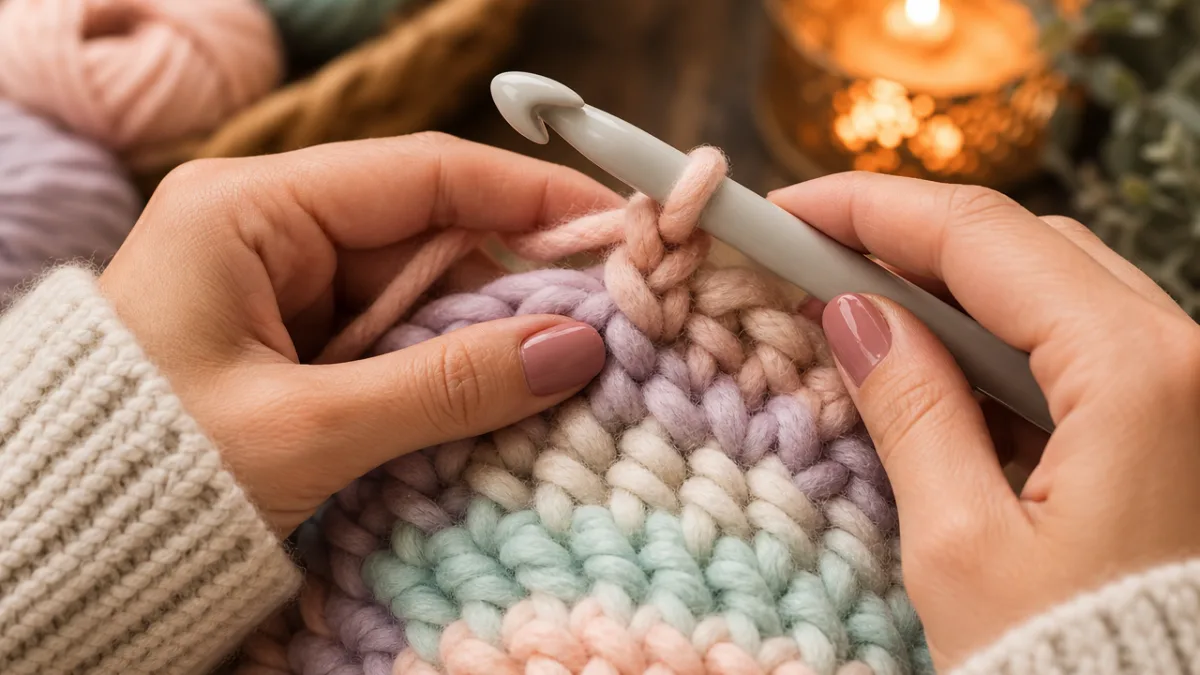
While the size of your crochet hook is critically important for gauge and stitch size, the material your hook is made from has a significant impact on your overall crocheting experience, your speed, and even the health of your hands during long crafting sessions. Crochet hooks are manufactured from a wide variety of materials, each with distinct characteristics that appeal to different types of crafters. Understanding the properties of each material will help you make informed decisions when building your hook collection, especially as you invest in higher-quality tools over time.
Aluminum hooks are probably the most widely used hooks in the world, and for good reason. They are inexpensive, durable, smooth, and lightweight. Aluminum conducts cold and heat easily, so they tend to feel cool and slippery in the hand, which many crocheters find helps yarn glide along the hook quickly. This makes aluminum hooks a popular choice for crocheters who prefer a faster pace and work with slippery yarn fibers like silk blends, mercerized cotton, or acrylic. Most budget-friendly hook sets available for beginners are made from aluminum, and they provide a reliable, consistent performance that suits a wide range of projects.
Wood and bamboo hooks have a loyal following among crocheters who find that the natural warmth and slight grip of organic materials feels more comfortable over extended periods. Because wood and bamboo have a tiny bit of natural friction, they are particularly well-suited for working with slippery yarns that tend to slide off aluminum hooks unpredictably. Ergonomic hooks, which feature a wider, cushioned grip section, are available in a variety of materials and are strongly recommended for crocheters who experience hand fatigue, wrist pain, or conditions like carpal tunnel syndrome or arthritis. Investing in an ergonomic hook can genuinely transform the crocheting experience for anyone who crafts for long stretches at a time.
Tips for Choosing the Right Hook for Your Project
Selecting the right crochet hook goes beyond simply matching the size listed on your pattern or yarn label. Experienced crocheters develop a nuanced understanding of how their individual tension and crocheting style interact with different hook sizes and materials, and they use this knowledge to make deliberate choices about their tools. If you consistently crochet more tightly than average — meaning your gauge swatches always come out smaller than specified — you may find that going up half a size or a full size in your hook helps you achieve the correct gauge without forcing yourself to consciously loosen your tension, which is both exhausting and inconsistent.
Before starting any project that has specific size requirements — garments, fitted accessories, home décor items with precise measurements — always crochet a gauge swatch. A gauge swatch is simply a small square of fabric worked in the pattern stitch using your intended hook and yarn. Measure the swatch carefully and compare it to the gauge information in the pattern. If your swatch has too many stitches per inch, go up a hook size. If it has too few stitches per inch, go down a hook size. Repeat the process until your swatch matches the specified gauge. This step is frequently skipped by eager beginners, but it is the single most reliable way to ensure your finished project turns out the right size.
When working with a new yarn from an international pattern, pay close attention to whether the hook size listed is in millimeters or in a US or UK size designation. If the pattern is from a UK source and lists a number that seems unusually large, remember that the UK numbering system runs in reverse, and cross-reference immediately with a conversion chart. Keeping a printed or bookmarked copy of a comprehensive hook size conversion chart readily available will save you time and frustration every time you venture outside familiar pattern sources. Over time, reading and converting hook sizes becomes second nature, and you will find yourself automatically reaching for the right tool with confidence.
Building and Organizing Your Crochet Hook Collection
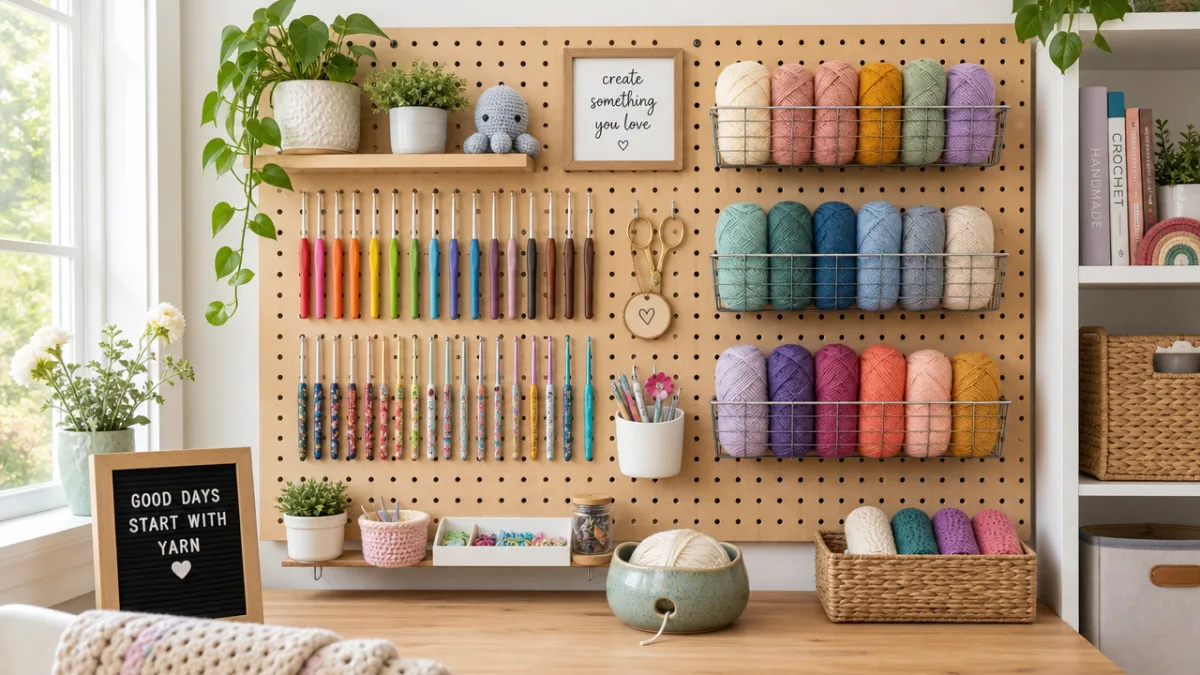
For many crocheters, accumulating hooks over time leads to a collection that becomes difficult to manage without a good organizational system. Hooks have a tendency to migrate to the bottom of project bags, roll under furniture, and generally disappear at the most inconvenient moments. Investing in a quality hook case or roll is one of the most practical purchases you can make as your collection grows. Hook rolls made from canvas or leather can hold a full range of hooks in individual slots, keeping them sorted by size, easy to see at a glance, and protected from damage during transport.
When building a hook collection intentionally, rather than just accumulating hooks randomly over time, it helps to think about the range of projects you most commonly crochet. If you primarily make garments, you will use hooks in the 4mm to 6mm range most heavily and should invest in high-quality options in those sizes — perhaps ergonomic or hand-turned wooden hooks — while keeping budget aluminum hooks on hand for sizes you use less frequently. If you love making amigurumi or stuffed animals, smaller hooks in the 2.5mm to 3.5mm range will be your workhorses. Blanket makers tend to heavily favor the 5mm to 8mm range, particularly if they enjoy working with chunky or super-chunky yarn for quick, satisfying finishes.
Labeling your hooks clearly is an underrated but genuinely useful practice, particularly for hooks that have worn or faded size markings. Many hooks, especially older ones or inexpensive sets, have their size stamped or printed in a location that rubs off with regular use. Keeping a permanent marker handy to re-label hook handles, or attaching small key-ring tags with size information, ensures you can always identify each hook quickly without having to reach for a millimeter gauge tool. A millimeter gauge — a small flat tool with holes drilled to specific sizes — is itself a worthwhile investment for measuring any unmarked hook you encounter at a thrift store, in an inherited collection, or lurking mysteriously at the bottom of a craft bin.
- Start with a basic set covering 3.5mm through 9mm to handle most standard yarn weights and patterns.
- Add a steel hook set for thread crochet if you enjoy making doilies, fine lace, or intricate appliqués.
- Invest in ergonomic grips for your most-used sizes to protect your hands during long sessions.
- Keep a millimeter gauge tool in your kit for measuring unlabeled or vintage hooks accurately.
- Use a hook roll or case with individual slots to keep hooks organized, protected, and easy to find.
- Label hooks with permanent marker or tags if the original size markings have worn away over time.
- Consider jumbo hooks in the 15mm to 25mm range if you enjoy arm crochet or super-chunky projects.
As your skills grow and your projects become more varied and ambitious, your hook collection will naturally evolve with you. Do not feel pressured to own every hook size immediately — build your collection gradually in response to the projects you want to make, prioritizing quality in the sizes you reach for most often. A well-maintained, thoughtfully organized hook collection is one of the most satisfying aspects of being a dedicated crocheter, and having the right tool for every project is one of the small but genuine pleasures that makes the craft so enduringly enjoyable.








What do you think?
It is nice to know your opinion. Leave a comment.