










10 Easy Home Decor Shelving Ideas to Style Your Walls Instantly
Why Wall Shelving Transforms Your Living Space
Wall shelving is one of the most powerful and underutilized tools in home decorating. Unlike bulky furniture that dominates floor space, shelves draw the eye upward, creating the illusion of height and making even the smallest rooms feel more open and intentional. When styled thoughtfully, a well-placed shelf can become the focal point of an entire room, telling a story about who lives there through the objects it holds.
The beauty of shelving as a design element lies in its flexibility. You can invest very little money into floating shelves from a hardware store and transform them into something that looks curated and expensive simply through the objects you choose to display and how you arrange them. Unlike a painting or a tapestry, shelves are three-dimensional, adding depth and texture to your walls in a way that flat art simply cannot replicate.
There is also a deeply practical side to wall shelving that makes it doubly appealing. In homes where storage is at a premium, shelves do double duty as both decorative features and functional organizers. Books, plants, candles, baskets, and everyday essentials can all find a home on a well-chosen shelf, keeping countertops and tables clear while adding visual warmth to your walls. This dual purpose makes shelving one of the smartest investments you can make in your home decor.
The Psychology of Vertical Space
Interior designers have long understood that humans perceive rooms differently depending on where their eyes are directed. Furniture that sits low to the ground can make a room feel squat and heavy, while elements that rise toward the ceiling create a sense of airiness and grandeur. Installing shelves at varying heights takes advantage of this psychological effect, guiding the eye on a visual journey that makes the space feel larger and more dynamic than it actually is.
When you place objects at eye level and above, you are essentially creating visual anchors that establish a room’s personality and mood. A shelf filled with greenery and warm-toned ceramics communicates something entirely different from one lined with leather-bound books and brass accents. Understanding this allows you to use shelving not just for storage but as a genuine form of self-expression that shapes how both you and your guests feel when you enter the room.
Floating Shelves: The Modern Classic
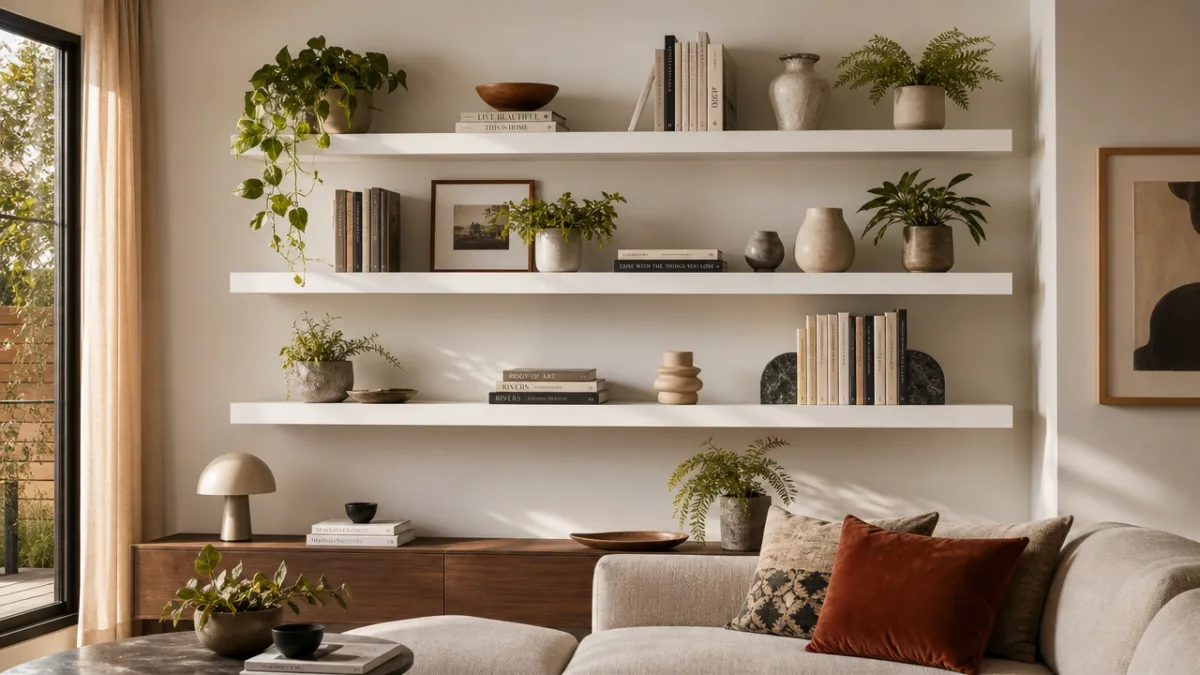
Floating shelves remain one of the most popular shelving options for a very good reason: they are clean, versatile, and work in virtually any room of the house. Because the mounting hardware is concealed inside the wall or hidden behind the shelf itself, they appear to hover effortlessly, giving any space a sleek and contemporary feel. Available in wood, metal, glass, and composite materials, floating shelves can be adapted to suit farmhouse, minimalist, industrial, or maximalist aesthetics with equal ease.
The key to making floating shelves look professionally styled rather than haphazardly filled is to follow the rule of threes and to mix textures deliberately. Group objects in odd numbers, vary the heights within each grouping, and always include at least one natural element such as a plant, a stone, or a piece of driftwood. Mixing matte and glossy finishes, rough and smooth surfaces, and organic and geometric shapes creates a sense of visual tension that keeps the eye moving and makes the arrangement feel alive rather than static.
Installation is more straightforward than many homeowners assume. Most floating shelf kits come with all the hardware you need, and as long as you locate wall studs or use appropriate drywall anchors, the process is manageable as a weekend DIY project. If you are renting or simply prefer not to make permanent changes to your walls, there are also peel-and-stick floating shelf options that use heavy-duty adhesive strips capable of holding several pounds, making them ideal for lightweight decorative displays in bathrooms or small entryways.
Choosing the Right Shelf Depth and Length
Not all floating shelves are created equal, and choosing the wrong dimensions for your space can make even the most beautiful shelf look awkward. As a general rule, shelves in living rooms and bedrooms work best when they are between eight and twelve inches deep, deep enough to display books and larger objects without appearing too narrow but not so deep that they intrude noticeably into the room. In kitchens, slightly deeper shelves of twelve to fourteen inches allow for practical storage of plates, bowls, and jars alongside decorative pieces.
Length is equally important and should be proportional to the wall you are working with. A single short shelf on a wide expanse of wall will look lost and unintentional, while an overly long shelf on a small wall segment can feel oppressive. A useful trick is to tape out the intended shelf dimensions on your wall using painter’s tape before purchasing, allowing you to visualize the proportions in the actual space and make adjustments before committing to installation.
Gallery Ledge Shelves for Art and Photography Displays
Gallery ledge shelves, sometimes called picture ledges, are shallow shelves with a small raised lip at the front that allows framed artwork, prints, and photographs to lean against the wall without needing to be individually hung. This style of shelving has surged in popularity in recent years because it makes rotating and updating your art display effortless. There is no patching nail holes every time you want to refresh your walls, and you can layer frames of varying sizes to create rich, dimensional gallery walls with minimal effort.
The styling possibilities with gallery ledges are genuinely endless. You might lean a large statement print in the center and flank it with smaller photographs, mixing black-and-white images with colorful illustrations for eclectic contrast. Alternatively, a monochromatic approach using frames of the same color in varying sizes creates a sophisticated, gallery-like atmosphere that feels elevated and considered. Small objects like vases, figurines, and air plants can be interspersed among the frames to break up the flat geometry and add three-dimensional interest.
Gallery ledges are particularly effective in children’s rooms and nurseries, where the ability to swap out artwork as the child grows means you are not permanently committing to any one aesthetic. They also work beautifully in entryways as a welcoming visual introduction to your home. A single ledge near the front door displaying seasonal art, a small plant, and a meaningful keepsake sets a warm, personal tone the moment guests step inside and costs far less than an elaborate entryway makeover.
Layering Frames for Maximum Impact
The secret to a stunning gallery ledge arrangement is confident layering. Do not be afraid to overlap frames slightly, allowing the front pieces to partially obscure those behind them. This depth and layering is exactly what gives professional interior designers’ gallery walls their lush, collected feel. Start with your largest or most meaningful piece as an anchor, then build outward and in front of it with smaller frames and objects, adjusting until the arrangement feels balanced without being symmetrical.
Color coordination plays a significant role in the overall success of a ledge gallery. While a mix of frame colors and finishes can work beautifully in maximalist or eclectic spaces, most rooms benefit from some degree of cohesion. Consider keeping frames within the same color family, for example, natural wood tones ranging from light pine to deep walnut, or a mix of black and aged brass, to create unity without sacrificing variety. The artwork itself can be as diverse as you like; it is the frames that provide the visual scaffolding.
Corner Shelves and Unexpected Spaces
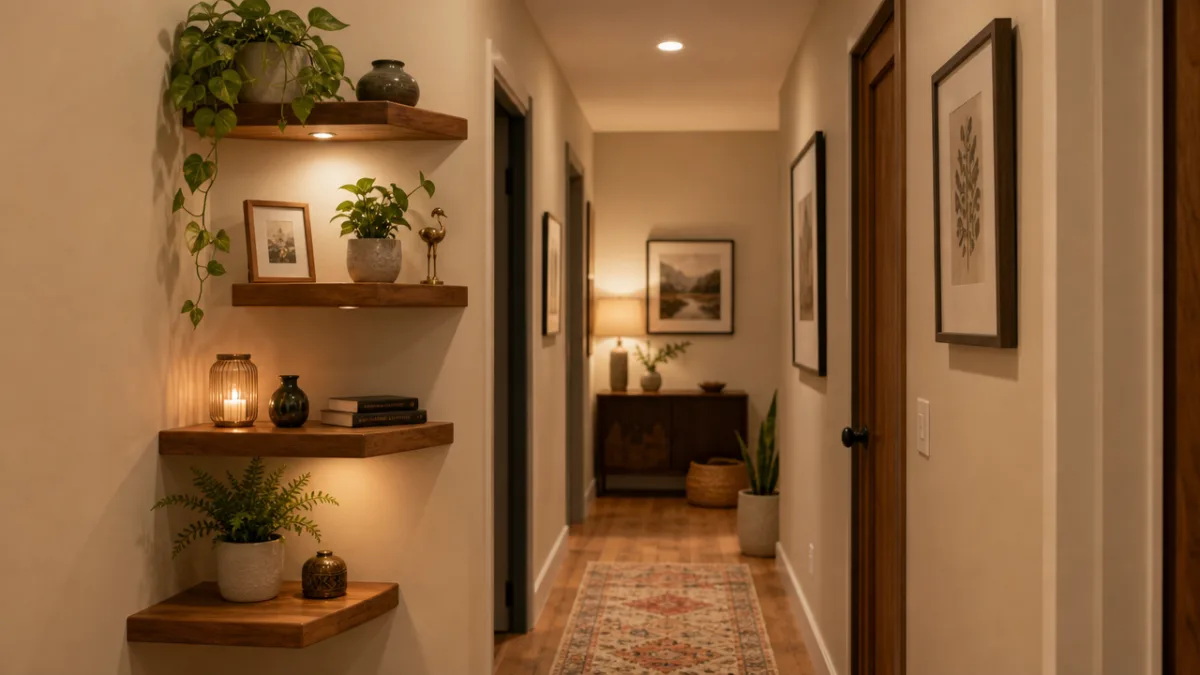
Corners are among the most chronically wasted spaces in any home, and corner shelves offer a brilliant solution to this common problem. Triangular corner shelves fit snugly into right-angle corners and can transform what was previously dead space into a charming display nook or practical storage spot. In bathrooms, a corner shelf between the sink and the wall is ideal for toiletries and candles. In living rooms, stacked corner shelves create an intriguing asymmetry that draws the eye and makes the room feel more architecturally interesting.
Wraparound corner shelves, which extend from one wall around the corner and along the adjacent wall, are a more ambitious option that rewards the effort handsomely. When lined with books, they create the effect of a small built-in library that adds enormous character to a room. This type of installation requires more careful planning and precise measurement but can dramatically elevate the perceived value and personality of a space at a fraction of the cost of actual built-in cabinetry.
Beyond corners, think creatively about other overlooked wall real estate in your home. The wall space above a doorway is almost always ignored, yet a slim floating shelf installed at that height can display items that do not need to be accessed frequently, such as decorative baskets, vintage finds, or seasonal objects. The wall beside a staircase offers another opportunity, where a series of small shelves installed at staggered heights following the staircase angle creates a dynamic, gallery-style installation that transforms a purely functional space into a design feature.
Staircase and Hallway Shelf Installations
Hallways present unique opportunities for creative shelving because they are transitional spaces where people pass through rather than linger, which means a series of small, interesting shelves can create a journey of visual discovery rather than needing to work as a single cohesive display. Consider installing a series of small circular or hexagonal shelves along a hallway wall at varying heights, each holding a single meaningful object. This approach turns a bland passage into something that feels intentional and even whimsical.
Along staircases, shelves that follow the pitch of the ceiling create a custom, built-in look that is actually achievable as a DIY project with careful measurement and a level. The key is maintaining consistent spacing between shelves even as they step upward, and choosing objects for display that are either secured in place or heavy enough not to be easily knocked off by the vibration of foot traffic on the stairs. Books are an ideal choice here, as their weight keeps them stable and their spines create a satisfying visual rhythm.
Styling Principles That Make Any Shelf Look Curated
Even the most beautiful shelf can look cluttered and chaotic without a thoughtful approach to styling. Professional interior stylists follow a handful of core principles that, once understood, make the process of arranging a shelf feel far less overwhelming and far more intuitive. The first and perhaps most important principle is negative space: leaving portions of the shelf empty is not a failure to fill it but a deliberate design choice that gives the eye places to rest and makes the objects that are present feel more significant and intentional.
The rule of threes is another foundational guideline that applies beautifully to shelf styling. Grouping objects in sets of three, or in odd numbers generally, creates arrangements that feel dynamic and naturally balanced without becoming rigid or symmetrical. Within each grouping, vary the height of objects by including one tall element, one medium, and one low or flat piece. This creates a visual triangle that is inherently pleasing to the eye and prevents the flat, regimented look that makes amateur shelf arrangements feel stiff.
Color should be approached with the same intentionality you would bring to selecting paint or fabric. Repeating one or two accent colors across the length of a shelf ties disparate objects together into a cohesive whole. If your shelf holds a blue ceramic vase, consider adding a small blue-spined book or a blue candle elsewhere on the same shelf to create deliberate repetition. This kind of color echoing is the trick that makes styled shelves in magazine photographs look so effortlessly polished, and it is a technique anyone can apply with a bit of forethought.
Incorporating Plants and Natural Elements
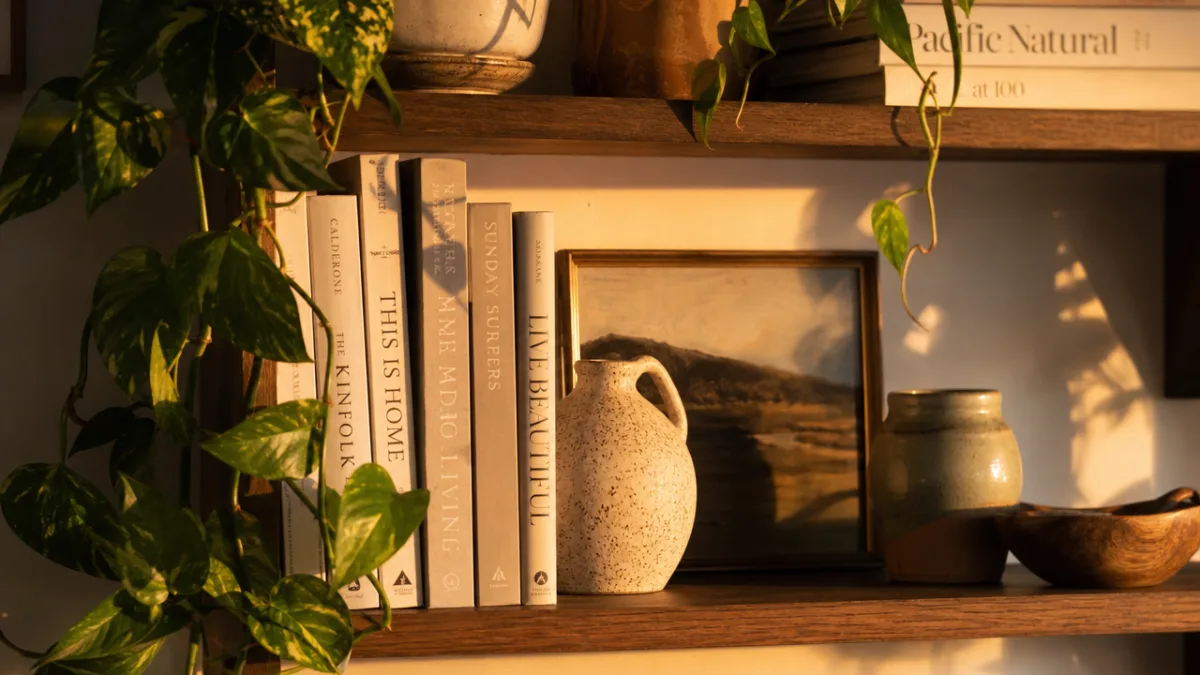
Plants are arguably the single most transformative element you can add to any shelf. Whether you choose a trailing pothos that drapes over the shelf edge, a structural succulent in a terracotta pot, or a vase of dried pampas grass, living or natural elements bring an organic warmth and unpredictability to shelf arrangements that no manufactured object can fully replicate. They also introduce movement, as trailing plants shift subtly with air currents and grow over time, meaning your shelf display is always gently evolving.
For shelves that do not receive enough natural light to support live plants, high-quality artificial plants and dried botanicals offer excellent alternatives. Preserved moss panels, dried lavender bundles, eucalyptus stems, and artificial fiddle-leaf branches have become increasingly sophisticated in their appearance and can add natural texture and color to dark or windowless spaces. Pairing these with natural materials like raw wood, woven baskets, and stone or ceramic objects maintains the organic aesthetic even in the absence of truly living elements.
Seasonal Refreshing and Long-Term Maintenance
One of the greatest pleasures of thoughtfully styled shelves is the ability to refresh them seasonally without major expense or effort. Swapping out a few key objects, such as replacing summer-toned ceramics with deep amber and burgundy pieces in autumn, or adding small string lights and pine cones in winter, keeps your shelves feeling current and alive throughout the year. This kind of intentional seasonal rotation also means you never truly tire of your shelves because they are never quite the same from one month to the next.
Maintenance is worth addressing practically: shelves do collect dust, and the objects on them require periodic cleaning to look their best. Building a simple quarterly rotation into your cleaning routine, where you remove everything from a shelf, dust both the shelf and each object, and then restyle from scratch, is a surprisingly enjoyable ritual that also gives you the opportunity to reconsider whether each object truly earns its place. This regular editing process is what keeps styled shelves looking intentional rather than accumulated over time.
- Dust shelves and objects at least once a month to maintain a clean, polished appearance and prevent buildup from dulling surfaces and finishes.
- Rotate seasonal accents every three months to keep displays feeling fresh and aligned with the mood of the current season.
- Edit ruthlessly twice a year, removing any objects that no longer feel relevant, beautiful, or meaningful to your current aesthetic vision.
- Repot or replace plants as needed, removing any that have declined and introducing new varieties to maintain the vitality of natural elements on the shelf.
- Photograph your favorite arrangements before dismantling them so you have a visual record to reference or recreate in the future.
Budget-Friendly Shelving Ideas That Look Expensive
One of the most encouraging aspects of shelving as a design element is that expense is genuinely not a prerequisite for impact. Some of the most visually stunning shelf arrangements you will find on platforms like Pinterest were assembled from thrift store finds, repurposed materials, and budget shelving from mass-market retailers. The difference between a shelf that looks expensive and one that does not almost never comes down to the cost of the objects on it but rather to the intentionality and coherence of the arrangement.
Thrift stores and estate sales are particularly rich sources for shelf-worthy objects. Vintage ceramics, interesting glass vessels, old hardcover books with beautiful spines, and small sculptures can all be found for a fraction of their retail price and often have a patina and character that new objects lack. The key is to look past the current condition and imagine each object cleaned, grouped thoughtfully with others, and placed in the context of a well-styled shelf. A chipped ceramic bowl that costs fifty cents can look genuinely beautiful when grouped with a trailing plant and a stack of well-chosen books.
DIY shelving materials offer another avenue for beautiful results on a limited budget. Reclaimed wood boards sanded smooth and sealed with a clear wax make exquisite floating shelves with a warmth and character that mass-produced options rarely achieve. Hairpin legs attached to a simple plank create a chic, industrial-modern shelf bracket. Even repurposed wooden crates mounted horizontally on the wall provide charming, textured storage that looks deliberately bohemian rather than improvised. The willingness to invest a little time rather than significant money is often all that stands between an ordinary wall and a beautiful one.
Sources and Shopping Strategies
When shopping for shelving and shelf decor on a budget, developing a clear sense of your aesthetic before you begin is invaluable. Saving images of shelves you admire to a mood board helps you identify the colors, textures, and object types that consistently appeal to you, which in turn makes thrift store and discount shopping far more efficient. Rather than browsing aimlessly, you enter each shop with a clear picture of what you are looking for and can make quick, confident decisions about what belongs in your home.
Online marketplaces including Facebook Marketplace, Craigslist, and Etsy’s vintage section are excellent sources for both shelving hardware and decorative objects at accessible price points. Locally, flea markets and antique fairs often yield the most interesting and characterful finds, particularly for the kind of aged, weathered objects that add depth and story to shelf arrangements. Building your shelf decor collection gradually over time, adding pieces only when they feel genuinely right rather than purchasing in a single panic-buy session, consistently produces the most cohesive and satisfying results.
- Begin with a clear mood board or inspiration collection before purchasing anything, to ensure all future acquisitions work together cohesively.
- Invest in the shelf itself as your primary purchase and allow the decorative objects to be gathered gradually at low cost from thrift stores and sales.
- Shop vintage and secondhand markets for objects with genuine age and patina, which will add depth and character that new budget items often lack.
- Repurpose objects from elsewhere in your home before buying new ones; a vase from your kitchen or a candle from your bathroom may be exactly what your shelf needs.
- Edit your shelf regularly, returning items to storage or donating them when they no longer serve the arrangement, to keep the display feeling fresh and intentional.
Ultimately, the most important investment you can make in your shelf styling is not financial but attentional. Taking the time to step back and evaluate your arrangement from across the room, adjusting objects incrementally, and living with each configuration for a few days before deciding whether it works is the practice that separates genuinely beautiful shelf displays from rushed or formulaic ones. Your walls are among the largest canvases in your home, and the shelves you install on them are an ongoing creative project, one that rewards patience, curiosity, and a willingness to experiment freely.








What do you think?
It is nice to know your opinion. Leave a comment.