










Fassett’s Locoweed (Oxytropis campestris): A Comprehensive Guide to a Remarkable Prairie Wildflower
Introduction and Overview
Fassett’s Locoweed, known scientifically as Oxytropis campestris var. fassettii, is a captivating and ecologically significant wildflower native to North America. A member of the vast legume family Fabaceae, this perennial herbaceous plant belongs to a genus commonly called locoweeds or crazyweed — names that reflect the toxic properties associated with many species in this group. Despite its somewhat ominous common name, Fassett’s Locoweed is a visually striking plant that plays an important role in the ecosystems where it thrives.
Named in honor of Norman Carter Fassett, a prominent Wisconsin botanist who made substantial contributions to the study of North American flora during the early and mid-twentieth century, this variety carries both scientific and historical significance. Fassett’s meticulous field work and taxonomic research helped define many regional plant species, and this locoweed variety stands as a lasting tribute to his legacy. Understanding the plant that bears his name provides insight not only into regional botany but into the broader story of plant conservation across the American Midwest and Great Lakes region.
This article explores the full ecological, botanical, and conservation story of Fassett’s Locoweed, examining its physical characteristics, preferred habitats, ecological relationships, potential toxicity, and its current conservation status. Whether you are a botanist, a wildflower enthusiast, a land manager, or simply a curious naturalist, the story of Oxytropis campestris var. fassettii offers a rich window into the complexity and beauty of native prairie and grassland ecosystems.
Botanical Description and Identification
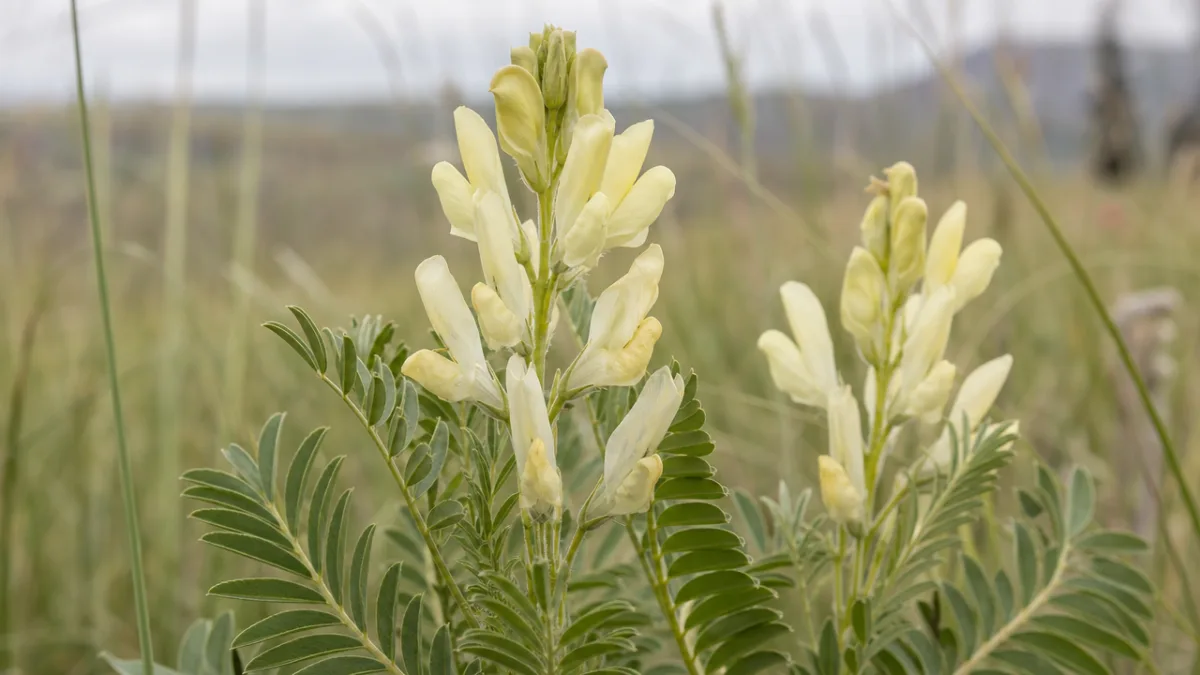
Fassett’s Locoweed is a low-growing perennial forb, typically reaching heights of between 5 and 25 centimeters. Like many members of the genus Oxytropis, it grows in a compact, tufted form, with leaves and flowering stems arising from a woody, multi-crowned base called a caudex. The plant is acaulescent, meaning the leaves emerge directly from the base rather than from a true above-ground stem. This growth habit is a common adaptation among plants that inhabit windswept or exposed environments where low-growing forms offer structural advantages.
The leaves of Fassett’s Locoweed are pinnately compound, meaning each leaf is divided into numerous smaller leaflets arranged along a central stalk. Typically, there are between 15 and 25 leaflets per leaf, each leaflet being narrowly elliptic to lance-shaped and covered with fine, silky hairs that give the foliage a soft, silvery appearance. This pubescence is not merely ornamental — the hairs help reduce water loss and reflect intense sunlight, both critical survival strategies in open, exposed habitats. The overall effect is a graceful, feathery texture that makes the plant distinctive even when not in flower.
The flowers of Oxytropis campestris are among its most recognizable features. They are borne in dense, elongated clusters called racemes that rise above the foliage on slender stalks. Each individual flower is pea-shaped in the classic legume fashion, with a broad upper petal (the banner or standard), two side petals (the wings), and two lower petals fused into a keel. In this variety, flower color ranges from pale yellow to creamy white, sometimes with faint purple or lilac tinges. The keel petal bears a characteristic pointed tip — a defining feature that distinguishes Oxytropis from the closely related genus Astragalus.
The fruit is a papery, inflated pod typical of the legume family. These seed pods are generally erect or spreading, and they contain several small, hard seeds. The pods may persist on the plant well into autumn and winter, providing an additional identification feature during the dormant season. Identifying Fassett’s Locoweed can require close attention to several characteristics at once, including the following key features:
- Acaulescent growth habit with a basal rosette of compound leaves
- Pinnately compound leaves with 15–25 silky-hairy leaflets
- Pale yellow to creamy white flowers with a pointed keel petal
- Dense raceme inflorescences rising above the foliage
- Erect, papery seed pods with persistent style remnants
- A woody, multi-crowned caudex at the base
Habitat and Geographic Distribution
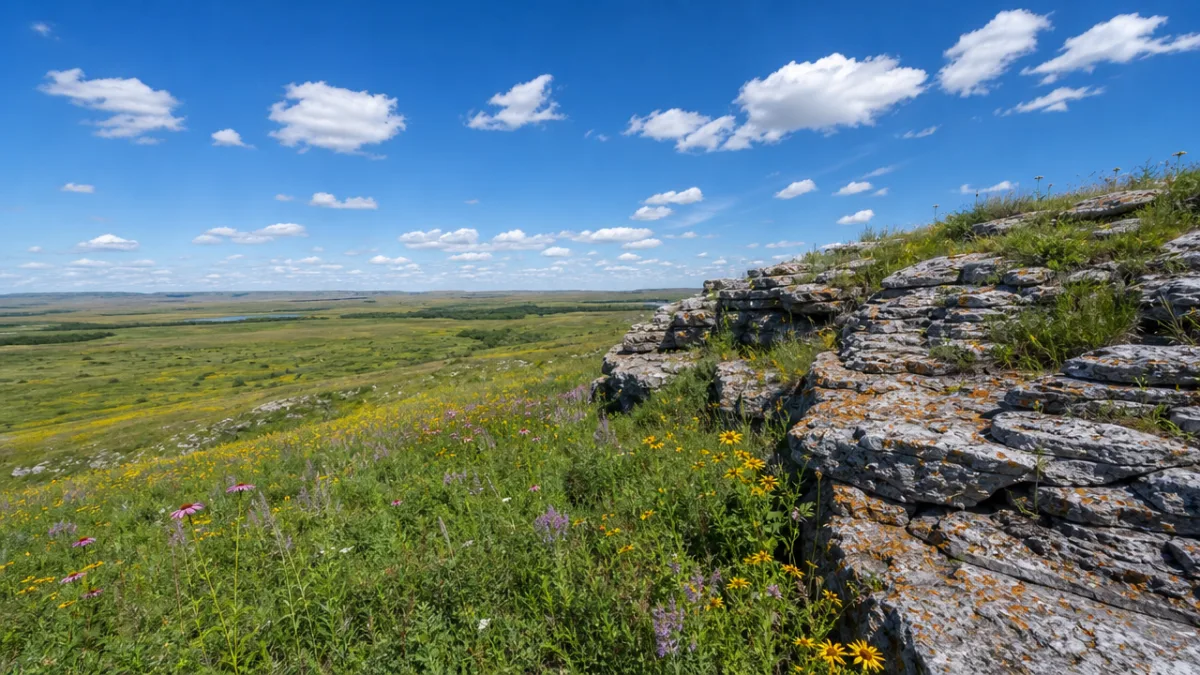
Fassett’s Locoweed has a relatively restricted geographic range compared to many of its close relatives. It is primarily found in the Upper Midwest of the United States, with the core of its distribution centered in Wisconsin and extending into adjacent portions of neighboring states. The plant is strongly associated with specific geological substrates, particularly calcareous soils derived from limestone, dolomite, or glacial outwash deposits. These calcium-rich substrates support a distinctive suite of plant species collectively referred to as calcareous prairie or alvar vegetation communities.
Within its range, Fassett’s Locoweed tends to grow in open, sunny habitats with sparse vegetation. It is most commonly found on dry to mesic prairies, rocky outcrops, cliff faces, open sandy or gravelly slopes, and the edges of alvars — those distinctive, nearly bare limestone pavements found in parts of the Great Lakes region. The plant requires high light availability and does not persist well under shade from woody encroachment. This preference for open, disturbed, or naturally thin-soiled habitats reflects an ancient ecological heritage stretching back to the postglacial landscapes of the Upper Midwest.
The broader species complex, Oxytropis campestris, has a much wider range that spans temperate and boreal zones across North America, from the Rocky Mountains east to the Atlantic Coast and north into Canada and Alaska. However, the specific variety fassettii is more geographically constrained and is considered a regionally endemic taxon. Its narrow range and specific habitat requirements make it particularly vulnerable to land-use changes, habitat fragmentation, and the suppression of natural disturbance regimes like fire that historically maintained open prairie and grassland ecosystems.
The ecological communities where Fassett’s Locoweed thrives are themselves among the most imperiled in North America. Dry calcareous prairies and rocky barrens have been lost at catastrophic rates over the past two centuries due to agricultural conversion, urban development, and the invasion of woody shrubs and trees in the absence of fire. The following habitat types are most frequently associated with documented occurrences of this species:
- Dry calcareous prairie with thin, rocky soils over limestone or dolomite
- Glacial outwash terraces with well-drained sandy or gravelly substrates
- Rocky cliff edges and talus slopes in exposed, sunny positions
- Open alvar barrens along the Great Lakes shoreline
- Remnant prairie openings within larger savanna complexes
Ecological Roles and Relationships
Like all members of the legume family, Fassett’s Locoweed forms a mutualistic symbiosis with nitrogen-fixing bacteria in the genus Rhizobium and related genera. These bacteria colonize the roots of the plant, forming nodules in which atmospheric nitrogen is converted into forms usable by plants. This biological nitrogen fixation makes legumes like Oxytropis important contributors to soil fertility, particularly in the nutrient-poor, rocky soils they often inhabit. Over time, nitrogen fixed by plants like Fassett’s Locoweed enriches the soil and can facilitate the establishment of other plant species in the community.
The flowers of Fassett’s Locoweed are pollinated primarily by native bees, particularly bumblebees in the genus Bombus and a variety of solitary bees. The pea-shaped flower structure is specifically adapted for pollination by bees capable of triggering the release of pollen through a mechanism known as buzz pollination or sonication, in which a bee vibrates its flight muscles at a specific frequency to dislodge pollen from the anthers. This specialized pollination strategy creates a close ecological relationship between the plant and its native bee pollinators, and the decline of native bee populations is therefore a potential secondary threat to the reproductive success of this already rare plant.
The seeds of Oxytropis campestris are dispersed primarily by wind and gravity, though small mammals and birds may also play a role in secondary seed dispersal. The hard seed coat of legume seeds can confer long viability in the soil seed bank, meaning that seeds may persist for years or even decades before germinating. This seed bank persistence is an important life history trait for species that inhabit variable or periodically disturbed environments, providing a reservoir of genetic diversity and a buffer against local population extinction during unfavorable years.
Toxicity and the “Loco” Legacy
The common name “locoweed” carries a long and colorful history rooted in the experience of ranchers and farmers across the American West. The term derives from the Spanish word loco, meaning crazy or mad, and was applied to plants in the genera Oxytropis and Astragalus that caused a distinctive and debilitating neurological syndrome in livestock that consumed them. Affected animals would exhibit erratic behavior, staggering, loss of coordination, depression, and ultimately death if exposure continued. The economic losses caused by locoweeds to the cattle and sheep industries of the West were historically enormous.
The toxic compounds responsible for locoweed poisoning are swainsonine, an indolizidine alkaloid that inhibits the enzyme alpha-mannosidase, which is critical for normal cellular function. When animals ingest swainsonine-containing plant material over time, the inhibition of this enzyme leads to the accumulation of toxic sugars within cells throughout the body, causing widespread cellular dysfunction, particularly in neural tissue. The resulting syndrome, called locoism, is chronic and progressive, and affected animals rarely recover fully once clinical signs have developed. The toxin is also known to cause reproductive failure, fetal abnormalities, and immune suppression.
It is important to note, however, that the degree of toxicity varies significantly among species and varieties within the Oxytropis genus. Not all species produce swainsonine in sufficient quantities to cause clinical disease, and the concentration of the alkaloid can also vary depending on plant maturity, growing conditions, and geographic location. The specific toxicological profile of Oxytropis campestris var. fassettii has not been as thoroughly studied as that of the more widespread western locoweeds, and it is not generally implicated as a serious livestock hazard within its limited Wisconsin-centered range. Nevertheless, the name persists as a reflection of the broader genus to which it belongs.
From a human health perspective, the risk posed by Fassett’s Locoweed to people who encounter it in the field is negligible under ordinary circumstances. The plant should not be consumed, and those with agricultural livestock should be aware of its presence on grazing land. However, for the vast majority of naturalists, hikers, and botanists who encounter this plant in its native habitat, it presents no meaningful danger and can be appreciated safely as part of the native flora. Its toxicity, in a sense, is itself an ecological adaptation — a chemical defense that reduces herbivory and allows the plant to invest energy in reproduction rather than tissue replacement.
Conservation Status and Threats
Fassett’s Locoweed is currently recognized as a species of conservation concern across much of its range. In Wisconsin, it is listed as a threatened species under state natural heritage laws, reflecting the significant decline in both the number and size of known populations over the past several decades. The species is tracked by the Wisconsin Natural Heritage Inventory and is the subject of ongoing monitoring and management efforts by state conservation agencies, land trusts, and volunteer naturalist groups. Its status as a named variety rather than a full species adds some complexity to its legal protection under federal statutes, but it is nonetheless recognized as a priority taxon for conservation planning.
The primary threats to Fassett’s Locoweed are those facing virtually all native prairie and barrens species in the Upper Midwest. Habitat loss and degradation due to agricultural conversion and urban development have eliminated the vast majority of calcareous prairie that once covered large portions of Wisconsin and surrounding states. Fragmentation of remaining habitat patches reduces genetic connectivity between populations and increases the vulnerability of small, isolated populations to local extinction. Invasive plant species, particularly aggressive exotic grasses and shrubs like buckthorn and honeysuckle, can rapidly overtop and shade out low-growing forbs like Oxytropis campestris in the absence of management intervention.
Fire suppression is perhaps the most pervasive and insidious threat to the open habitats that Fassett’s Locoweed requires. Throughout the Holocene, periodic wildfires ignited by lightning or set by Indigenous peoples maintained the open structure of prairies and savannas across the Midwest. European settlement dramatically reduced the frequency of fire on the landscape, allowing woody plants to encroach on former grasslands at a rapid rate. Modern conservation efforts have increasingly recognized the value of prescribed burning as a management tool for restoring and maintaining open habitats, and controlled burns are now regularly applied to prairie remnants where Fassett’s Locoweed and its ecological associates survive.
Climate change represents an emerging and increasingly serious threat to the long-term viability of this rare species. Shifts in temperature and precipitation patterns are already altering the competitive dynamics within plant communities across the Upper Midwest, with warmer winters and more variable precipitation potentially favoring invasive and generalist species over specialists like Fassett’s Locoweed. Phenological mismatches between the flowering period of the plant and the activity periods of its native bee pollinators are another potential climate-related risk. Conservation strategies must therefore account not only for current threats but for the projected trajectory of environmental change over the coming decades.
Conservation Efforts and Future Outlook
Conservation efforts on behalf of Fassett’s Locoweed are embedded within the broader framework of prairie and grassland conservation in the Upper Midwest. Organizations such as The Nature Conservancy, the Wisconsin Department of Natural Resources, and numerous local land trusts have been instrumental in protecting and restoring the calcareous prairie habitats on which this species depends. Land acquisition, conservation easements, and management agreements have helped secure some of the most important remaining populations. Volunteer stewardship programs engage citizen naturalists in monitoring, invasive species removal, and prescribed burn activities at key sites.
Seed banking and ex situ conservation are increasingly important tools for safeguarding rare plant species against catastrophic habitat loss or stochastic events that could eliminate small wild populations. Seeds collected from Fassett’s Locoweed populations have been deposited in regional seed banks, providing insurance collections that could be used for future restoration efforts. Research into the germination requirements and cultivation protocols for this species is ongoing, as successful propagation in nursery settings is a prerequisite for large-scale habitat restoration seeding projects. These efforts reflect a broader shift in plant conservation philosophy toward proactive, integrated strategies that combine in situ protection with ex situ safeguarding.
Public awareness and education play an essential role in the conservation of rare species like Fassett’s Locoweed. Many of the threats facing this plant — from recreational trampling of fragile barrens habitats to the introduction of invasive species through contaminated seed mixes — can be reduced through informed human behavior. Natural areas where the plant occurs are increasingly featured in guided botanical walks, educational programs for school groups, and citizen science monitoring projects. By connecting people to rare native plants in their own region, conservationists hope to build a constituency for prairie conservation that extends beyond the scientific community into the broader public.
The future of Fassett’s Locoweed depends ultimately on the willingness of society to prioritize the conservation of natural heritage alongside economic development. While the prognosis for many prairie species is sobering, there are genuine reasons for cautious optimism. Awareness of biodiversity loss has increased substantially in recent years, and funding for conservation programs has grown accordingly. The resilience of prairie ecosystems when properly managed is well documented — degraded sites can recover dramatically within years of appropriate restoration intervention. With sustained effort, scientific knowledge, and community engagement, there is every reason to hope that Fassett’s Locoweed will continue to grace Wisconsin’s rocky prairies for generations to come.
In the end, the story of Fassett’s Locoweed is a microcosm of a much larger narrative about humanity’s relationship with the natural world. It is a story about the fragility of ecological specialization in a rapidly changing landscape, about the legacies of botanists who devoted their lives to understanding plant diversity, and about the hard work of conservation practitioners who struggle to preserve that diversity against formidable odds. It is also, simply, the story of a beautiful and resilient wildflower that has persisted on limestone outcrops and rocky prairies through millennia of environmental change — and that deserves, if nothing else, our attention and our care.








What do you think?
It is nice to know your opinion. Leave a comment.