










Sourwood: A Complete Guide to Oxydendrum arboreum
Introduction to Sourwood
Sourwood, known botanically as Oxydendrum arboreum, stands as one of North America’s most celebrated native trees, earning its place as a beloved fixture in forests and landscapes across the eastern United States. This deciduous tree belongs to the heath family, Ericaceae, making it a botanical relative of blueberries, mountain laurels, and rhododendrons. Its common name derives from the distinctly sour taste of its leaves, which Native American peoples historically chewed to quench thirst during long journeys through the mountains and forests of Appalachia.
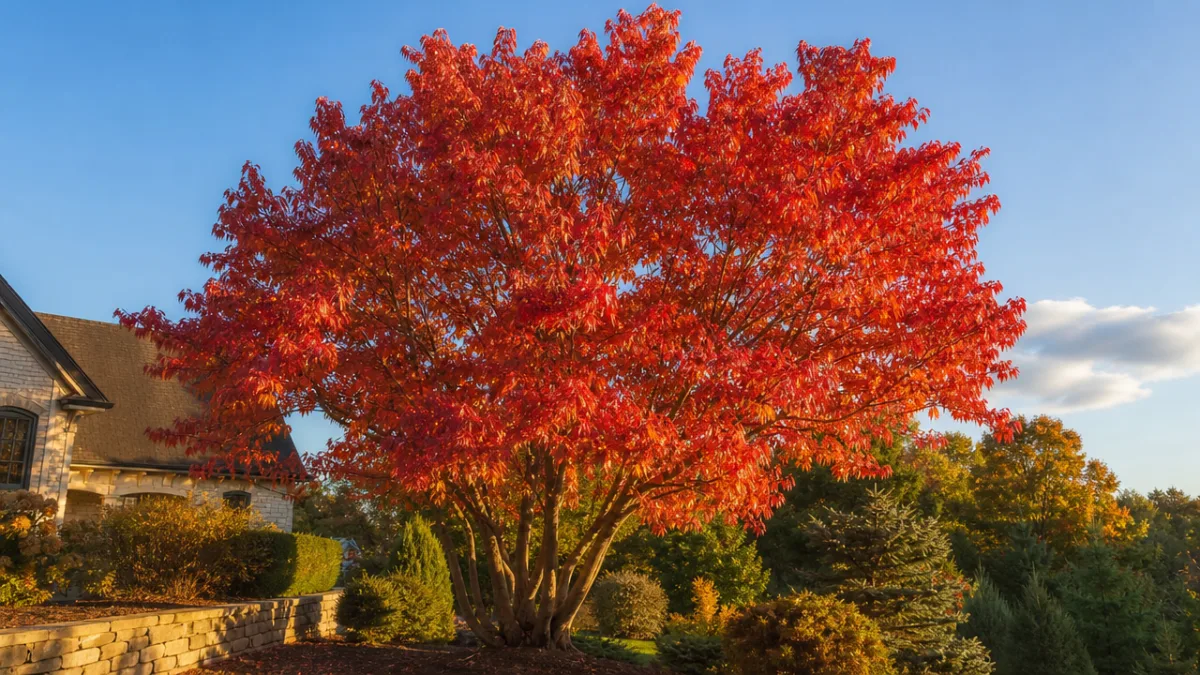
What makes sourwood truly exceptional is its extraordinary ornamental value across all four seasons. In spring, fresh lime-green foliage unfurls with an elegant grace. Summer brings cascading clusters of delicate white flowers that arch gracefully from branch tips. Autumn transforms the canopy into a spectacular display of deep scarlet and burgundy that rivals even the most celebrated fall foliage trees in the region. Even in winter, the tree’s distinctive ridged bark and persistent seed capsules offer quiet visual interest against a gray sky.
Despite its many virtues, sourwood remains surprisingly underutilized in residential landscaping. Many gardeners overlook it in favor of more familiar ornamentals, unaware of the extraordinary beauty this tree offers. As awareness of native plants and their ecological benefits continues to grow, sourwood is finally receiving the attention it richly deserves. Its moderate size, stunning flowers, and breathtaking fall color make it an ideal choice for home landscapes, naturalistic garden designs, and urban tree plantings where space and ecological function are both priorities.
Natural Habitat and Geographic Range
Sourwood is native to the eastern United States, with its natural range extending from southwestern Pennsylvania and southern Ohio southward through the Appalachian Mountains into northern Florida and westward into Louisiana. The tree is most commonly associated with the Southern Appalachians, where it thrives in the understory and forest edges of mixed deciduous woodlands. Within this range, it can be found growing at elevations from near sea level along the coastal plain to nearly 6,000 feet in the higher reaches of the Great Smoky Mountains.
In its natural habitat, sourwood tends to favor acidic, well-drained soils on dry to moist slopes, ridgelines, and forest edges. It frequently grows alongside oaks, hickories, tulip poplars, and various ericaceous shrubs such as mountain laurel and flame azalea. This association with other acid-loving plants tells us a great deal about the soil conditions the tree prefers. In the wild, sourwood rarely dominates a forest stand but instead occupies a quiet ecological niche as a mid-story tree, filtering dappled light down to the forest floor while supporting a rich community of insects and wildlife above.
The tree’s ecological role extends well beyond its physical presence in the forest. Sourwood flowers are a critical late-summer nectar source for numerous pollinators, including native bees, butterflies, and other beneficial insects that visit during July and August when many other flowering trees have finished blooming. The seeds, enclosed in persistent five-valved capsules, provide food for birds and small mammals throughout the autumn and winter months. By planting sourwood in cultivated landscapes, gardeners actively participate in the preservation of this ecological web, providing resources for wildlife even in suburban and urban settings.
Physical Characteristics and Growth Habits
Sourwood is a relatively modest tree in terms of size, typically reaching between 25 and 30 feet in height at maturity in cultivated landscapes, though specimens in ideal forest conditions can occasionally approach 50 to 60 feet tall. The tree develops a narrow, pyramidal to oval crown when young, gradually becoming more irregular and open with age. This refined silhouette makes it particularly well-suited to smaller residential lots and mixed border plantings where a more restrained canopy is desirable without sacrificing visual impact.
The leaves of sourwood are among its most distinctive features. Lance-shaped and finely toothed, they typically measure between 4 and 8 inches in length, emerging in spring with a fresh yellowish-green color before deepening to a lustrous dark green through the summer months. The leaf surface is smooth and somewhat glossy, giving the foliage a refined, almost tropical appearance when backlit by summer sunlight. As autumn approaches, the leaves undergo one of the most dramatic color transformations of any North American native tree, cycling through brilliant shades of scarlet, crimson, burgundy, and orange before finally dropping to the ground in late October or November.
The bark of mature sourwood trees is deeply furrowed with interlacing ridges, creating a rough, blocky texture that provides year-round visual interest and serves as important habitat for overwintering insects and small invertebrates. The branching pattern tends to be irregular and somewhat pendulous at the tips, giving the tree a graceful, slightly weeping appearance that is especially noticeable when the flower clusters are in bloom. The wood itself is heavy, hard, and fine-grained, and was historically used by Appalachian craftspeople for tool handles, sled runners, and other implements requiring both strength and durability.
Flowering, Fruiting, and Seasonal Interest
The floral display of sourwood is one of the finest offered by any native North American tree, and it arrives at a particularly welcome time of year. Beginning in late June and continuing through July and August, the tree produces long, arching racemes of small, urn-shaped white flowers that closely resemble lily-of-the-valley blossoms. These flower clusters, which can reach 10 inches or more in length, dangle elegantly from the tips of the current year’s growth, often bending gracefully downward under their own weight in a display that landscape designers and gardeners universally find captivating.
The flowering period of sourwood is especially valuable from an ecological standpoint because it coincides with a relative lull in the blooming of other trees and shrubs across much of its native range. This gap in the floral calendar makes sourwood a critical resource for pollinators, particularly honeybees, which produce from its nectar a highly prized monofloral honey widely considered one of the finest American honeys available. Sourwood honey is a significant agricultural product in parts of North Carolina, Tennessee, and Georgia, where beekeepers position their hives near sourwood stands specifically to take advantage of the abundant late-summer nectar flow.
As summer transitions into autumn, the spent flower clusters transform into attractive clusters of silvery-gray seed capsules that persist on the branches well into winter, adding a delicate textural element to the bare tree’s winter silhouette. Meanwhile, the foliage stages its legendary autumn performance, often beginning to color as early as late August in the higher elevations of the Appalachians and continuing through October at lower elevations. The intensity of the fall color is remarkable; in a good year, a well-sited sourwood tree can stop passersby in their tracks with a display of pure crimson that seems almost luminous in the slanted light of a September afternoon.
Growing Conditions and Cultivation Requirements
Successfully cultivating sourwood begins with understanding and replicating the conditions it experiences in its native habitat. Soil pH is perhaps the single most critical factor in sourwood culture. Like all members of the heath family, this tree requires acidic soil with a pH between 4.5 and 6.0 to thrive. In soils that are neutral or alkaline, the tree will struggle to absorb essential micronutrients, particularly iron and manganese, leading to chlorosis, poor growth, and eventual decline. Before planting, gardeners in areas with naturally neutral or alkaline soils should amend extensively with elemental sulfur or acidifying fertilizers, or consider raised bed planting with an acidic growing medium.
Beyond soil acidity, sourwood performs best in the following conditions:
- Full sun to partial shade, with at least four to six hours of direct sunlight daily for optimal flowering and fall color development
- Well-drained soil that does not remain waterlogged after heavy rainfall, as prolonged wet feet can cause root rot and dieback
- Consistent moisture during the establishment period, which may last two to three growing seasons after transplanting
- Protection from harsh drying winds, particularly in the first few years after planting
- Mulching with an organic mulch such as shredded leaves or pine bark to maintain soil moisture, moderate soil temperature, and gradually acidify the soil as it decomposes
One of the most important considerations when planting sourwood is selecting the right location from the outset, as this tree does not transplant well once established. The deep taproot that develops in mature specimens makes moving them extremely difficult and often fatal to the tree. For this reason, sourwood is best planted as a young container-grown specimen and sited thoughtfully in a location where it can grow undisturbed for decades. Patience is also essential: sourwood is not a fast-growing tree, and gardeners accustomed to the rapid establishment of species like red maple or tulip poplar may find its measured pace initially frustrating. However, the extraordinary beauty of a mature sourwood in full fall color more than repays this patience.
Landscape Uses and Companion Planting
Sourwood’s modest size, multi-season interest, and tolerance for partial shade make it an exceptionally versatile tree in the designed landscape. It functions beautifully as a specimen tree placed where its autumn color and summer flowers can be appreciated from a window, patio, or frequently used garden path. Its narrow, upright form when young also makes it suitable as a screening tree or informal hedge when planted in a line, eventually maturing into a graceful, irregular grove with enormous visual character. In woodland garden settings, it integrates seamlessly into naturalistic plantings that celebrate the diversity and beauty of eastern North American native flora.
Companion plants that thrive alongside sourwood and share its preference for acidic, well-drained conditions include a remarkable range of ornamental species. Some of the most effective and beautiful combinations include:
- Mountain Laurel (Kalmia latifolia) — A native shrub with spectacular late spring flowers that provides a natural understory beneath sourwood’s canopy
- Flame Azalea (Rhododendron calendulaceum) — A stunning deciduous azalea native to the same Appalachian forests where sourwood thrives naturally
- Fothergilla (Fothergilla spp.) — A compact native shrub offering excellent fall color that complements sourwood’s scarlet leaves with orange and yellow tones
- Blueberries (Vaccinium spp.) — Edible native shrubs that share sourwood’s soil preferences and contribute their own outstanding autumn color
- Native ferns — Including cinnamon fern and interrupted fern, which thrive in the dappled shade beneath sourwood’s canopy
From a broader ecological design perspective, incorporating sourwood into a home landscape contributes meaningfully to local biodiversity and ecosystem function. The tree supports dozens of species of native bees and other pollinators, provides nesting sites and foraging opportunities for birds, and contributes organic matter to the soil as its leaves decompose each autumn. As part of a broader planting that emphasizes native species, sourwood helps create a landscape that is not only beautiful to human observers but also genuinely functional as wildlife habitat, connecting fragmented ecosystems across the suburban matrix and providing stepping stones of native vegetation across an otherwise inhospitable landscape.
Pests, Diseases, and Long-Term Care
One of sourwood’s most appealing qualities as a landscape tree is its exceptional resilience in the face of pests and diseases. When grown in appropriately acidic, well-drained soils, it is remarkably trouble-free, requiring little intervention from the gardener beyond routine observation and care. This low-maintenance character is a significant advantage over many popular ornamental trees that require regular spray programs or careful monitoring for chronic pest problems. Sourwood’s relative freedom from serious pests and diseases also means that it can be cultivated as part of an ecologically responsible, pesticide-free landscape without compromising its health or ornamental value.
The most common problems encountered with sourwood in cultivation are related to cultural conditions rather than specific pathogens or insects. Chlorosis caused by inadequate soil acidity is the most frequently observed issue, manifesting as yellowing between the leaf veins while the veins themselves remain green. This iron-deficiency chlorosis is easily corrected by acidifying the soil and, in the short term, applying chelated iron as a foliar spray or soil drench. Drought stress during hot summers can cause leaf scorch and premature leaf drop, particularly in trees that have not yet developed an extensive root system. Consistent supplemental irrigation during dry periods, combined with a generous layer of organic mulch maintained over the root zone, will prevent most drought-related problems.
Pruning requirements for sourwood are minimal, which further contributes to its appeal as a low-maintenance landscape tree. The natural form of the tree is inherently beautiful and should be preserved rather than aggressively shaped. Any pruning that is necessary should be limited to the removal of dead, damaged, or crossing branches, and is best performed in late winter before new growth begins. Because sourwood flowers on the current season’s growth, summer pruning to shape or reduce the canopy will sacrifice that year’s floral display and should be avoided. With appropriate siting, adequate soil preparation, consistent moisture management during establishment, and minimal intervention thereafter, a sourwood tree can be expected to thrive and beautify the landscape for generations, becoming ever more magnificent with each passing year.








What do you think?
It is nice to know your opinion. Leave a comment.