










Osmunda regalis: The Royal Fern — A Comprehensive Guide
Introduction to the Royal Fern
If you’ve ever come across a fern that stopped you in your tracks, there’s a good chance it was Osmunda regalis — the Royal Fern. This is one of the most striking and ancient ferns you’ll find growing across the temperate world, and it more than earns its regal name. Part of the family Osmundaceae, it can throw up fronds two to three meters tall when it’s happy, making it an absolute statement plant whether it’s tucked beside a woodland stream or holding court at the back of a damp garden border.
What makes the Royal Fern even more remarkable is just how old it is. The genus Osmunda has been around for more than 200 million years, and the plant growing in your garden today looks essentially the same as fossils preserved in ancient rock. Botanists and plant enthusiasts tend to find that almost mythological — here’s a living organism that evolution saw no reason to improve on for geological timescales. That’s a pretty extraordinary track record.
Beyond the science, Osmunda regalis has woven itself into human culture in all sorts of ways. European folklore gave it magical associations, and its fibrous root mass — known as osmunda fiber — was once highly sought after as a growing medium for orchids. Today it remains a favorite among gardeners, naturalists, ecologists, and photographers who keep coming back for its dramatic silhouette and the way its foliage shifts and glows through the seasons.
Botanical Characteristics and Identification
One of the first things you’ll notice about the Royal Fern is how different its sterile and fertile fronds look from one another. The sterile fronds are broadly bipinnate — each frond divides into pinnae, which divide again into oblong, rounded pinnules with smooth or finely toothed edges. The foliage has a slightly leathery quality, yet it looks delicate, and in early morning or evening light it takes on an almost luminescent glow that’s really quite beautiful.
The fertile fronds are where things get genuinely unusual. Unlike most ferns, which tuck their spore cases neatly under the pinnules, the Royal Fern carries them at the very tips of its fertile fronds in brownish, tassel-like clusters. The effect is so unlike typical fern reproduction that the plant can look like it’s actually flowering — which is why people who’ve never seen one before often do a double take. It’s one of those details that makes this plant genuinely interesting rather than just pretty.
The root system is something else worth knowing about. Over time, the plant builds up a dense, raised mass of dark fibrous roots and old frond bases — sometimes called a crown or stool — that can take decades to develop fully. On a mature specimen, this structure can look almost trunk-like, giving the whole plant a prehistoric, imposing quality you just don’t get from most herbaceous garden plants.
- Height: typically 1–2 meters; up to 3 meters in optimal conditions
- Frond type: deciduous, bipinnate, with distinct sterile and fertile sections
- Pinnule shape: oblong-ovate, with rounded or blunt tips
- Colour: bright green in spring, deepening in summer, turning amber and gold in autumn
- Root mass: dense, fibrous crown that builds up over many growing seasons
- Sporangia: borne at frond tips in brown, tassel-like clusters
Natural Habitat and Global Distribution
The Royal Fern gets around. It’s one of the most widely distributed fern species on the planet, growing naturally across Europe, Asia, Africa, and the Americas. In Europe you’ll find it everywhere from Scandinavia down to the Mediterranean, thriving in wet woodlands, marshes, riverbanks, and bog margins. It particularly loves the Atlantic-influenced climates of western Europe — think Wales, Ireland, and western Scotland — where rainfall is generous and the air stays reliably damp.
In North America it’s mainly an eastern species, turning up in swampy forests, along stream edges, and in boggy clearings. It follows similar wet habitats through Central and South America and pops up across parts of Asia too — China, Japan, Korea, and montane forests in South and Southeast Asia, wherever moisture is consistently high and the elevation keeps temperatures in check.
Wherever you find it growing wild, the Royal Fern is telling you something useful about that place. Its presence almost always signals clean, well-oxygenated water nearby, undisturbed soil rich in organic matter, and reliably high humidity. That’s what makes its decline so concerning — because it depends on pristine wetland conditions, drainage, water pollution, and changing land use have hit wild populations hard in many parts of its range, and it now has protected status in several countries.
Growing Conditions and Garden Cultivation
The secret to growing Osmunda regalis well is simple: give it what it gets in the wild. That means consistently moist to wet soil, and ideally a spot where it won’t have to rely on you remembering to water it. It’s genuinely one of the best large ornamental plants for waterlogged ground — a situation that defeats most things — and it looks spectacular at the edge of a pond, a stream, or a bog garden. You can grow it in ordinary garden soil, but without reliable moisture it’ll never really hit its stride.
Soil chemistry matters too. Osmunda regalis wants something acidic to neutral, ideally with a pH between about 4.5 and 6.5, and it loves organic richness. A planting mix that combines loam, peat or a peat alternative, and leaf mold will come close to the humus-rich boggy soils it naturally grows in. As for light, it’s more flexible than you might expect — it’ll cope with full sun or deep shade — but in sunnier spots you’ll need to keep the moisture levels up, or the fronds can scorch. In shadier positions the growth might be a touch slower, but the foliage tends to stay lush and green well into the season.
Once it’s settled in, the Royal Fern is a pretty low-maintenance plant and can live for an extraordinarily long time. Mulching around the base each year with well-rotted organic matter keeps moisture in and gradually feeds the soil as it breaks down. One thing worth knowing: resist the urge to cut the fronds back in autumn. Left standing through winter, they shelter overwintering invertebrates and help protect the crown from hard frost. Come early spring, you can tidy them away to make room for the fresh growth pushing up from below — and that emerging growth is one of the real highlights of the gardening year.
- Choose a site with consistently moist or waterlogged, acidic soil in partial to full shade.
- Prepare the planting area with generous additions of organic matter such as leaf mold or composted bark.
- Plant in spring or autumn, ensuring the crown sits at soil level rather than being buried.
- Water thoroughly after planting and maintain consistent moisture throughout the first growing season.
- Mulch annually in late autumn to protect roots and enrich the soil over winter.
- Leave old fronds standing until early spring to provide frost protection and wildlife habitat.

Seasonal Appearance and Ornamental Value
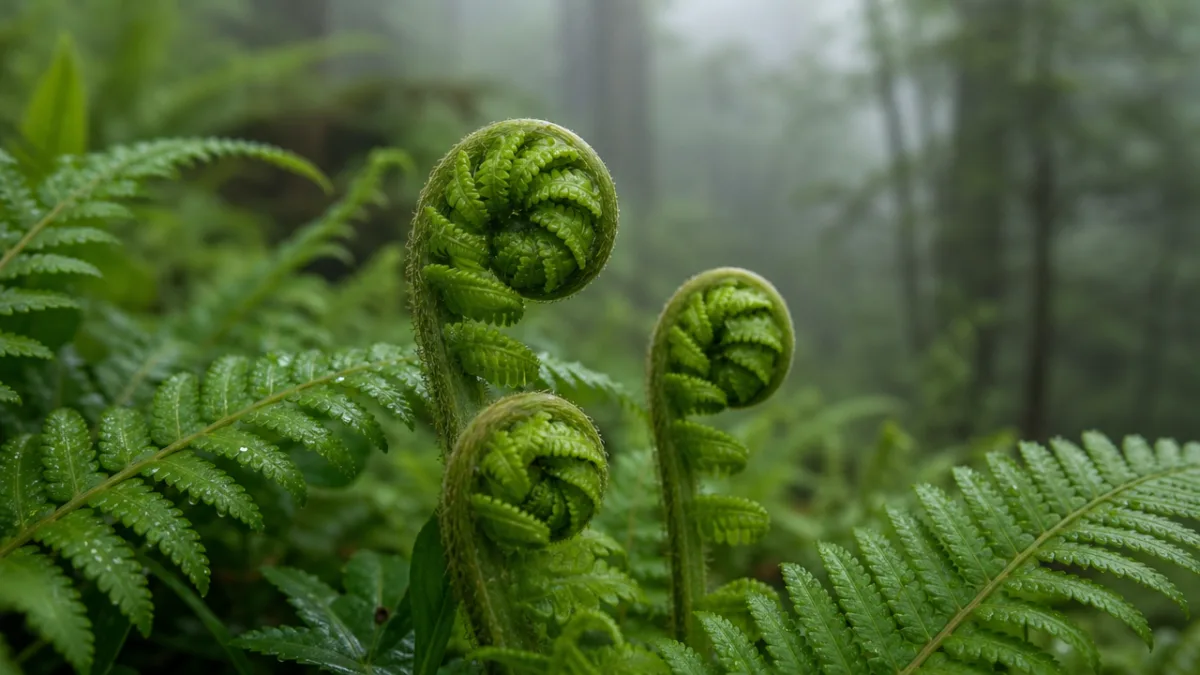
There aren’t many garden plants that put on a show quite like Osmunda regalis across an entire year. Spring is where it all begins, when the croziers push up from the crown — tightly coiled young fronds covered in a soft, coppery-brown fuzz that’s unlike anything else in the garden. Watching them unfurl is genuinely one of those experiences that reminds you why gardening is worth it. As they open and extend, the foliage moves through bronze into a clean, vivid green that brings real light and life to shaded waterside plantings.
By midsummer the plant is at its most commanding. The tall, arching canopy of bipinnate foliage creates a lush, almost tropical feel that works particularly well in larger plantings or as a bold backdrop for smaller water-lovers like irises, primulas, and astilbes. Add the fertile frond tips with their distinctive brown sporangia, and you’ve got a plant with genuine sculptural presence — especially when the fronds arch over the reflective surface of still water.
But autumn might actually be the best season of all for the Royal Fern. As the days shorten and temperatures fall, the fronds move through russet, amber, golden yellow, and warm ochre before settling into a rich tawny brown. In a woodland setting where it grows alongside deciduous trees, this coloring fits beautifully into the wider seasonal shift of the landscape. And even in winter, when the fronds have died back, the fibrous crown remains as a quiet architectural presence in the garden — still useful, still interesting, just waiting for spring to start the whole cycle again.
Ecological Importance and Wildlife Value
The Royal Fern does a lot of quiet ecological work that’s easy to overlook. The dense fibrous crown accumulates organic matter over the years, turning into a refuge for beetles, spiders, centipedes, and all manner of invertebrates that tuck themselves into the tangled root mass. Those invertebrates in turn draw in ground-feeding birds, amphibians, and small mammals, so a well-established clump of Royal Fern can support a surprisingly rich little food web in a fairly small space.
The overarching fronds do their bit too, creating a cool, shaded microclimate underneath that frogs, toads, and newts actively seek out in warm weather — both as shelter and as hunting ground for the invertebrates sheltering there. The root systems also help bind stream and pond banks together, which is genuinely useful in landscapes where heavy rain or flooding is a regular occurrence. It’s one of those plants that earns its place ecologically, not just aesthetically.
On a larger scale, the Royal Fern has become something of a flagship species for wetland conservation. Organizations across Europe and North America point to its declining wild populations as an indicator of broader wetland degradation, and it’s regularly used to make the case for protecting and restoring bogs, fens, and wet woodlands. For gardeners with the right conditions, growing Osmunda regalis isn’t just a pleasing aesthetic choice — it genuinely helps support the invertebrates and amphibians associated with it, connecting your garden to something much bigger than itself.

Historical Uses and Cultural Significance
The Royal Fern has had a surprisingly practical relationship with humans over the centuries. Its most significant historical use was the harvesting of osmunda fiber — the dense, fibrous root mass — as a growing medium for orchids. From at least the seventeenth century, orchid growers found that this material held moisture well while still draining freely, making it close to ideal for epiphytic plants. Demand grew so large that osmunda fiber became an internationally traded commodity, harvested from wild populations across Britain, Europe, and North America to fuel the Victorian obsession with orchid collecting. It’s one of the reasons wild Royal Fern populations took such a hit in some areas.
In folk medicine, the plant turned up in traditional remedies across several cultures. European herbalists used the rootstock as a tonic and prescribed it for everything from rickets to jaundice, though none of these uses have held up under modern scrutiny. Some North American Indigenous traditions used it both topically and internally. It also had a life in folklore as a protective charm — in certain traditions, carrying a piece of osmunda root was said to keep evil spirits at bay and bring luck to those traveling far from home.
Artistically and culturally, the Royal Fern has always had admirers. Its combination of elegant form and deep geological age appealed strongly to the Romantic movement, and it appears in botanical illustration, landscape painting, and decorative arts from the eighteenth and nineteenth centuries. Today, the renewed interest in naturalistic garden design — inspired by the work of designers like Piet Oudolf — has brought Osmunda regalis back into the spotlight, with its bold architectural presence and ancient lineage now celebrated as genuine design virtues rather than just botanical footnotes.
Conservation Status and Future Outlook
The Royal Fern isn’t globally threatened, but that doesn’t mean all is well. Across parts of Europe and North America, populations have declined considerably over the past century — largely because of wetland drainage, land use change, and the historical over-harvesting for the orchid trade. Germany and parts of Scandinavia now give it legal protection, and collecting from wild populations there is prohibited. Conservation bodies including Plantlife and the IUCN have flagged the need for ongoing monitoring and habitat protection to make sure wild populations remain viable across the species’ range.
Climate change adds another layer of uncertainty. In regions where Osmunda regalis currently thrives, more frequent summer droughts could stress populations that depend on reliably moist soils — and that’s a real concern. On the other hand, warming temperatures at higher latitudes or elevations might open up new areas of suitable habitat. The bigger challenge for conservationists is figuring out how to maintain the wet, acidic, undisturbed conditions the plant needs in a landscape that’s shifting in ways that are genuinely hard to predict.
Ultimately, the future of the Royal Fern is bound up with the future of wetlands more broadly. Efforts to restore degraded peat bogs, rewild river valleys, and protect ancient woodland edges will benefit Osmunda regalis along with all the other species that depend on those habitats. And for individual gardeners and land managers, creating the right conditions for even a single plant — a damp corner, the edge of a garden pond — contributes to a wider network of refugia that can make a real difference. It’s a reminder that growing one magnificent fern can be a small but genuine act of ecological stewardship, connecting your own patch of ground to something far larger.








What do you think?
It is nice to know your opinion. Leave a comment.