










Athyrium niponicum var. pictum: The Complete Guide to Painted Lady Fern
Introduction to the Painted Lady Fern
If you’ve ever stumbled across a fern that made you do a double-take, there’s a good chance it was Athyrium niponicum var. pictum — better known as the Painted Lady Fern or Japanese Painted Fern. It’s one of the most eye-catching ornamental ferns you can grow, and gardeners around the world have fallen for it hard. Native to eastern Asia — Japan, China, and Korea — this deciduous perennial looks less like something you’d find in a woodland and more like something an artist spent a long afternoon on. The fronds swirl together silver, green, and burgundy in a way that shifts as the light changes, which is exactly how it earned that name.
The Royal Horticultural Society has awarded it the Award of Garden Merit — which, if you’re not familiar, is the RHS’s way of saying “we’ve actually tested this, and it delivers.” That means real garden trials, real conditions, and consistent results. It’s a stamp of approval that carries genuine weight in horticultural circles, and this fern has more than earned it.
What really makes the Painted Lady Fern stand out, though, is what it does for shady spots. Most shade-loving plants play it safe with quiet greens and understated shapes. This one doesn’t. It belongs to the Athyriaceae family and sits within the broader Athyrium niponicum species, but the pictum variety is the one everyone’s talking about. Whether you’re tucking it into a container on a shaded patio, weaving it through a woodland border, or planting it near a water feature, it earns its place in the garden season after season.
Physical Characteristics and Appearance
The fronds are really what this plant is all about, and once you understand how they’re structured, it’s easy to see why they cause such a stir. Each frond is bipinnate — meaning the leaflets are themselves divided again — which gives the whole thing a delicate, lacy quality that softens everything around it. They arch outward from a central crown and typically reach somewhere between 30 and 45 centimeters tall, though a particularly happy specimen in ideal conditions can push up to 60 centimeters.
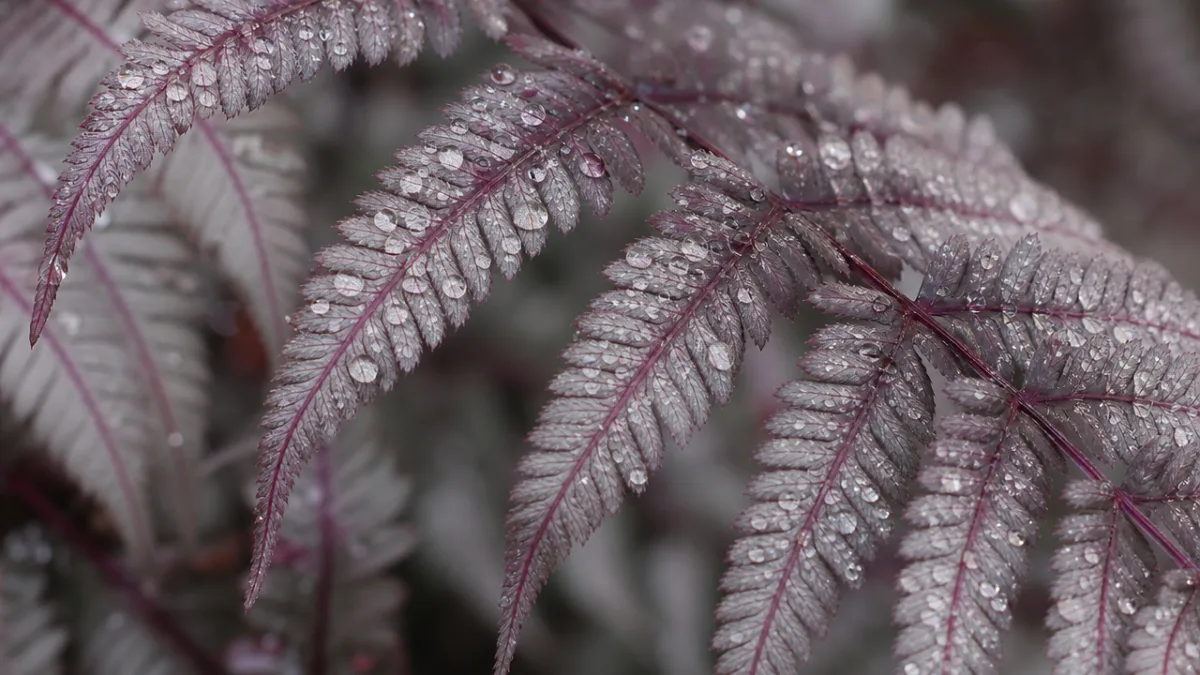
The coloring is where things get really interesting. Each frond has a deep burgundy or wine-red midrib running through it, and contrasting against that is a silvery gray-green blade that seems to catch the light differently depending on where you’re standing. It’s that metallic silver quality — almost like someone dusted the surface with fine powder — that gives the plant its ethereal, painted-on look. As the season moves along, the colors can actually deepen, especially if the plant is getting a little filtered morning light along with its usual shade.
Spring is when the show really starts. The new fronds unfurl with the most intense silver and burgundy tones you’ll see all year — even the fiddleheads coming up are worth a closer look. Through summer the colors settle into something a touch more subdued, but the characteristic appearance stays intact right through the growing season. And before the plant dies back for winter, autumn can bring some extra warmth to the foliage, giving you one last display before it retreats underground until spring.
Growing Conditions and Habitat Requirements
The best way to understand what this fern needs is to picture where it comes from. In its native eastern Asian range, it grows in moist, humus-rich woodland, where trees filter the light above and the soil stays cool and consistently damp underfoot. That tells you almost everything: dappled shade, moisture-retentive soil loaded with organic matter, and shelter from drying winds and harsh afternoon sun. Give it those things and it will reward you generously.
For soil, aim for something slightly acidic to neutral — a pH between 5.5 and 7.0 is ideal. Organic matter is your best friend here, both for feeding the plant and for holding onto that moisture the fern depends on. If you’re working with heavy clay, mix in plenty of leaf mold, well-rotted compost, or fine bark before planting. Sandy soil needs the same treatment, just for the opposite reason — you’re adding organic matter to improve water retention rather than drainage. Either way, the goal is a rich, cool, moist root zone.
One thing worth knowing: the Painted Lady Fern handles gentle light a bit better than many of its fern relatives, particularly in cooler climates. Morning sun with afternoon shade can actually intensify those silver tones and make the foliage even more striking. What you want to avoid is direct afternoon sun, especially in warmer regions — it’ll scorch the fronds and drain the color. In terms of hardiness, it’s reliable across USDA zones 4 through 9, which covers a pretty wide slice of the map.
Planting and Cultivation Techniques
Getting the planting right from the start makes a real difference with this fern. Spring is ideal — once the last frost has passed — though early autumn works well too, giving the roots time to settle in before winter. When you’re choosing a spot, think consistent moisture, dappled or partial shade, and some protection from wind. A north or east-facing border, beneath a deciduous tree, or against a shaded wall are all great options.
Dig your planting hole about twice the width of the root ball and deep enough that the crown sits at or just slightly below soil level. Mix the removed soil with a generous amount of leaf mold or compost before backfilling, then water thoroughly once it’s in. After that, mulch around the base — extending 30 to 45 centimeters from the crown — with something like composted bark, leaf mold, or well-rotted compost. That mulch layer does a lot of work: it holds moisture in, keeps the soil temperature stable, suppresses weeds, and breaks down slowly to feed the plant over time.
Growing in containers is absolutely doable, which makes this fern a great option for patios, balconies, or gardens where the soil isn’t cooperating. Choose a pot with good drainage holes and fill it with a mix of ericaceous compost, peat-free multipurpose compost, and a little horticultural grit for drainage without drying out. Container plants will need more frequent watering than those in the ground and will appreciate a slow-release fertilizer in spring. Every two to three years, repot to refresh the compost and keep the plant from becoming root-bound.
Care, Maintenance, and Seasonal Management
Once it’s established, the Painted Lady Fern is genuinely low-maintenance — but it does appreciate some seasonal attention to stay at its best. Through spring and summer, moisture is the main thing to stay on top of. This fern does not like drying out, and if it does, you’ll know about it: the frond edges will brown and curl. During dry spells, water deeply and regularly, ideally in the morning so any moisture on the foliage has time to dry off before evening. Wet leaves sitting overnight are an invitation for fungal problems.
Feeding is worth doing, but keep it light. A single application of a balanced slow-release granular fertilizer worked gently into the soil in early spring is plenty for the whole season. Another good option is an annual top-dressing of well-rotted leaf mold or garden compost, which feeds the plant while also mulching — a nice two-for-one that mimics the natural cycle of a woodland floor. One thing to avoid: high-nitrogen fertilizers. They push lush, soft growth but can actually mute those beautiful silver and burgundy tones that make this fern worth growing in the first place.
As autumn comes and temperatures drop, the fronds will start to die back and lose their structure. At that point, you have a choice: leave them in place over winter (they offer a little crown insulation and add some texture to the winter garden), or cut them back to ground level once they’ve fully died down. In most of the plant’s hardiness range, the crown copes perfectly well without extra protection. But if you’re in a colder zone or expecting a particularly brutal winter, a thick layer of straw or dry leaf litter over the crown will give it some extra insurance.
Propagation Methods
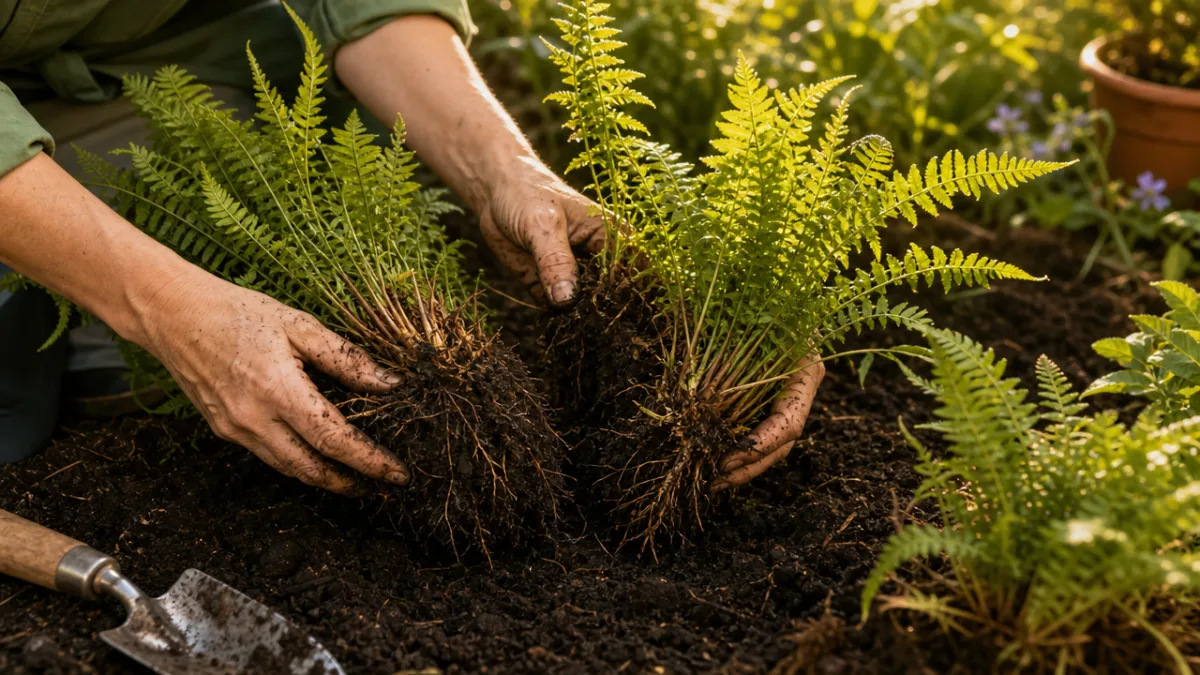
If you want more of this fern — and once you’ve grown it, you will — propagation is straightforward. The easiest method by far is division. You simply lift an established clump and split it into smaller sections, each with its own healthy rhizome and crown. Early spring, just as new growth starts to show, is the ideal time, though early autumn works as well. Use a sharp spade or knife to make clean cuts and keep damage to the roots and rhizomes to a minimum.
Each division needs a decent section of rhizome, a few healthy crowns, and a reasonable root system. Replant them promptly into prepared soil or fresh potting mix, water well, and keep them consistently moist while they find their feet. If you can shade the new divisions from direct sunlight for the first few weeks, that’ll help reduce transplant stress considerably. Given a full growing season, a good division will develop into a fully formed, beautifully colored plant that looks just like its parent.
Growing from spores is another route — more time-consuming, but genuinely rewarding if you’re patient. Spores develop on the undersides of mature fronds in structures called sori, which look like small elongated brown or rust-colored dots. To collect them, lay a mature frond spore-side down on a sheet of clean white paper and leave it for 24 to 48 hours — the spores will drop onto the paper. Sprinkle the collected spores onto the surface of a moist, sterile growing medium (peat-free seed compost or fine vermiculite both work well) in a sealed transparent container to hold the humidity in. Growth is slow — we’re talking months, not weeks — and the tiny prothalli and young ferns that follow need careful, attentive care before they’re ready to pot on individually. But it’s a satisfying process if you enjoy the slower side of gardening.
Landscape Uses and Garden Design Applications
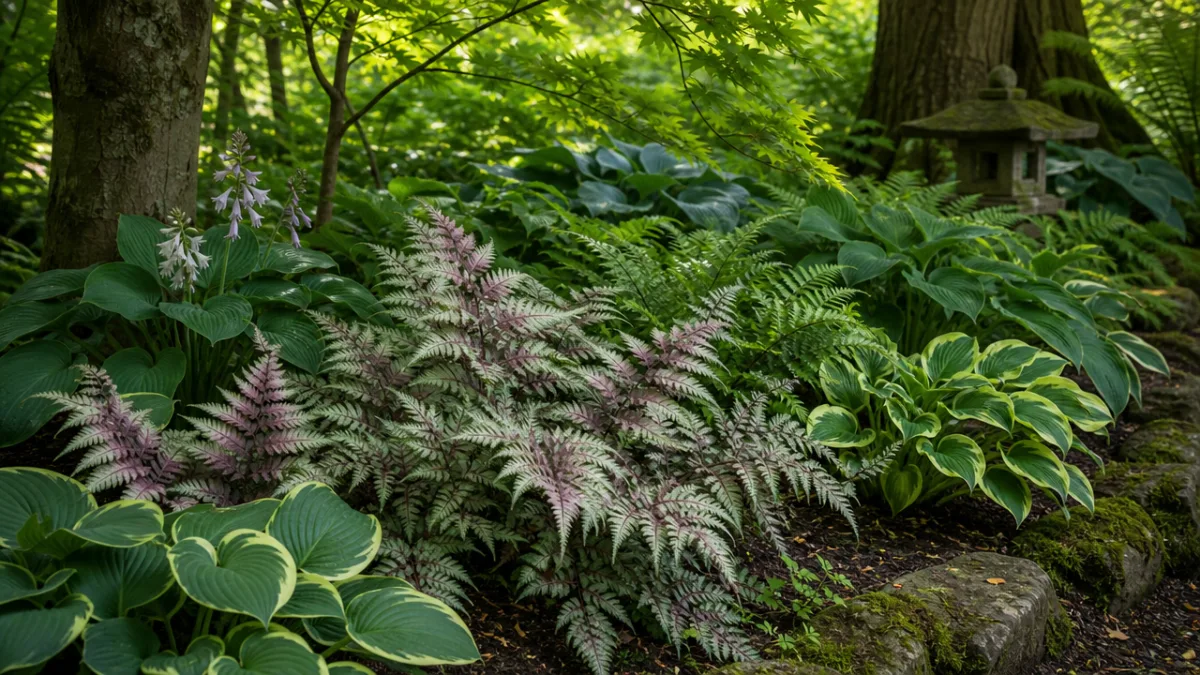
One of the things that makes the Painted Lady Fern such a pleasure to design with is how versatile it is. Depending on how you use it, it can play a supporting role — adding soft texture and a hint of shimmer behind showier plants — or take center stage as a proper focal point in a shade garden. In woodland-style planting, it layers beautifully with other shade-loving perennials and shrubs, evoking the depth of a forest understory. And in darker corners of the garden, those silver tones genuinely brighten things up in a way that green-only plants simply can’t.
Some of the most successful companion planting combinations for the Painted Lady Fern include the following plants, each chosen for their complementary colors, textures, or growing requirements:
- Hostas, particularly those with blue or yellow foliage, which contrast magnificently with the silver and burgundy of the fern fronds while sharing identical growing requirements for shade and moisture.
- Astilbes, whose feathery plumes in shades of pink, red, white, and purple echo the burgundy tones of the fern’s midrib and provide vertical interest alongside the horizontal spread of the fern fronds.
- Heucheras and Heucherellas, which offer a wide range of foliage colors and textures that complement the painted fern beautifully, particularly those with copper, bronze, or deep purple tones.
- Trilliums and other woodland wildflowers, which create naturalistic planting schemes with an authentic woodland character.
- Epimediums, whose heart-shaped leaves and delicate spring flowers provide ground-level interest and are equally tolerant of dry shade once established.
- Bleeding heart (Lamprocapnos spectabilis), whose arching stems and pendant flowers create an elegant visual partnership with the fern’s arching fronds.
Beyond border planting, there are a few specific design contexts where this fern really comes into its own. Waterside planting is a particularly good fit — the fern’s love of moisture is fully satisfied, and watching those silver fronds shimmer above a water surface is something special. Japanese and Asian-inspired gardens are a natural home for it too, given its origins and the way it embodies that quality of restrained, foliage-focused elegance. And in contemporary shaded courtyard gardens, planting it en masse as a drifting groundcover creates something that looks deceptively sophisticated while being remarkably easy to maintain across an entire growing season.
Pest, Disease, and Common Problems
Good news: the Painted Lady Fern is a pretty tough plant and doesn’t come with a long list of problems. That said, no garden plant is completely trouble-free, and knowing what to look out for means you can catch anything early before it becomes a real issue.
Slugs and snails are the main pest to watch for, especially in spring when those fresh new fronds are just unfurling and at their most tender. Wet weather makes things worse, and if you’re mulching around your plants — which you should be — just know that organic mulch also happens to be prime slug real estate. A few approaches that work well together:
- Applying organic, pet-safe ferric phosphate-based slug pellets around vulnerable plants in spring and after rainfall.
- Encouraging natural predators such as hedgehogs, frogs, toads, and ground beetles by creating suitable habitat features like log piles and wildlife ponds.
- Conducting evening patrols with a torch and collecting slugs and snails by hand for disposal away from the garden.
- Creating physical barriers around prized plants using copper tape, sharp grit, or wool-based pellets.
On the disease front, this fern rarely runs into serious trouble if it’s growing in the right conditions. The main thing to be aware of is fungal issues — rust or leaf spot can pop up if foliage stays wet for extended periods, particularly in cool, humid spots with poor air movement around the plants. Watering at soil level rather than overhead, giving plants enough space to breathe, and removing any affected fronds promptly all help prevent problems from taking hold. Root rot is also possible if the soil stays waterlogged for too long, which is a good reminder of why drainage matters even in a moisture-loving plant — there’s a difference between consistently moist and perpetually soggy.








What do you think?
It is nice to know your opinion. Leave a comment.