










Neobenthamia gracilis: A Complete Guide to the Tanzanian Jewel Orchid
Introduction to Neobenthamia gracilis
Neobenthamia gracilis is a monotypic orchid genus, meaning it contains just one species, native to the lush montane forests of Tanzania in East Africa. This remarkable plant holds a special place in the orchid world, not only for its rarity in the wild but also for the striking beauty it brings to any collection. Discovered and described in the late nineteenth century, it has fascinated botanists and horticulturalists alike for well over a hundred years, earning devoted admirers across every continent where orchid cultivation is practiced.
The genus name honors George Bentham, a highly influential nineteenth-century British botanist who made enormous contributions to the systematic classification of flowering plants. The species epithet gracilis, meaning slender or graceful in Latin, is a perfectly chosen descriptor for this plant’s reed-like canes and delicate overall appearance. Understanding the etymology and history behind a plant’s name often enriches the experience of growing it, connecting the modern enthusiast to generations of scientists and explorers who came before them.
What makes Neobenthamia gracilis particularly captivating among orchid growers is its combination of accessibility and visual drama. Unlike many orchids that demand exacting conditions and reward patience with a single annual bloom, this species produces clusters of small, brilliantly white flowers in generous quantities. For intermediate to experienced growers looking to diversify their collections with something genuinely unusual, Neobenthamia gracilis represents a deeply rewarding choice that consistently earns admiring comments from visitors and fellow enthusiasts alike.
Botanical Description and Physical Characteristics
Neobenthamia gracilis grows as a terrestrial or lithophytic orchid, forming tall, slender canes that can reach heights of one to two meters under ideal cultivated conditions. These canes are sympodial in structure and emerge from a relatively compact root system. Along their length, they bear narrow, lance-shaped leaves arranged in two alternating rows, giving the plant a graceful, almost bamboo-like silhouette that distinguishes it immediately from the more rounded growth habits of many other orchid genera. The leaves are a rich, deep green and carry a slight texture that catches light pleasingly.
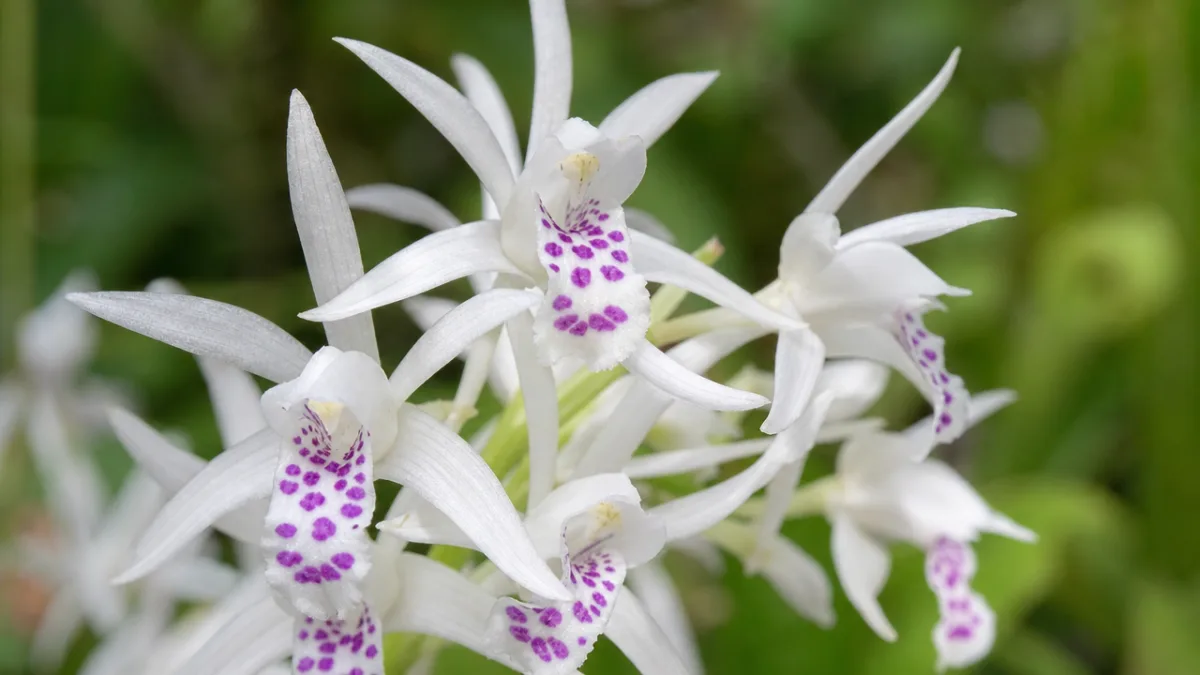
The flowers of Neobenthamia gracilis are produced in terminal clusters known as racemes at the apex of the mature canes. Each individual flower is relatively small, measuring around two centimeters across, but the flowers are borne in dense heads of many blooms simultaneously, creating a composite effect of considerable visual impact. The petals and sepals are white to creamy white, while the lip features a delicate pattern of purple or magenta spots or streaks in the center, creating a beautiful contrast that draws pollinators and human observers alike to the floral display.
The roots of this species are robust and fleshy in comparison to the slender elegance of its above-ground growth, reflecting the plant’s adaptation to well-drained, rocky, or humus-rich substrates in its native highland habitat. The root tips are green when actively growing, transitioning to silvery white as the velamen, a specialized outer layer unique to orchid roots, dries between waterings. This velamen layer is a critical adaptation that helps the plant absorb moisture and nutrients rapidly when rain arrives, and understanding it is essential for successful cultivation.
Natural Habitat and Geographic Distribution
In the wild, Neobenthamia gracilis is endemic to Tanzania, where it grows primarily in the Eastern Arc Mountain ranges, one of Africa’s most important biodiversity hotspots. These ancient mountains, which include ranges such as the Usambara, Uluguru, and Udzungwa, harbor an extraordinary concentration of endemic species due to their geological age and the stability of their climate over millions of years. The orchid typically grows at elevations between 1,000 and 2,000 meters above sea level, in environments characterized by cool temperatures, seasonal rainfall, and well-drained, rocky or humus-rich soils.
The forest ecosystems where Neobenthamia gracilis thrives are classified as montane tropical forests, featuring a canopy of broad-leaved evergreen trees draped in mosses, ferns, and epiphytic plants. Within this environment, Neobenthamia gracilis often grows along forest margins, in clearings, and on rocky outcrops where it receives more light than the deep shade interior. This preference for brighter, more open conditions is an important clue for growers seeking to replicate optimal conditions in cultivation, as it suggests the plant requires significantly more light than shade-loving terrestrial orchids.
Seasonality plays a defining role in the life cycle of wild Neobenthamia gracilis populations. The Eastern Arc Mountains experience a bimodal rainfall pattern, with distinct wet and dry seasons that the plant has evolved to respond to physiologically. The dry season represents a period of reduced growth and potential stress, while the wet season triggers vigorous new cane production and eventually flowering. Conservation of this species in its native range is a pressing concern, as habitat loss due to agricultural encroachment and timber extraction continues to threaten the montane forests that Neobenthamia gracilis and thousands of other endemic species call home.
Cultivation and Growing Requirements
Successfully cultivating Neobenthamia gracilis begins with a thorough understanding of the conditions it experiences in its native montane Tanzanian habitat and making thoughtful approximations of those conditions within a home, greenhouse, or shade house environment. The plant thrives in intermediate to warm temperatures, ideally with daytime highs between 24 and 30 degrees Celsius and nighttime lows that drop to around 15 to 18 degrees Celsius. This temperature differential between day and night is particularly important for stimulating flowering and maintaining robust growth, and growers in temperate climates should factor this into their setup planning.
Light is one of the most critical variables in Neobenthamia gracilis cultivation. The plant requires bright, indirect light and can tolerate some direct morning sun, which in a greenhouse or window setting translates to an east-facing or lightly shaded south-facing exposure. Insufficient light is one of the most common reasons the plant fails to flower in cultivation, resulting in tall but spindly canes and disappointing vegetative growth. Growers should aim for light levels of around 2,000 to 3,000 foot-candles and can use a light meter or the shadow test method to gauge whether their growing space provides adequate illumination throughout the day.
Watering Neobenthamia gracilis correctly involves balancing the plant’s preference for consistently moist conditions during active growth with the need to allow adequate drainage and some drying between applications. During the growing season, which typically corresponds to spring and summer in cultivation, watering freely and generously is appropriate, allowing water to flow through the pot and drain completely. In autumn and winter, when growth slows, watering frequency should be reduced considerably, though the roots should never be allowed to desiccate completely, as severe drought stress can damage the fleshy root system and set back the following season’s growth significantly.
Fertilization supports vigorous growth and reliable flowering in Neobenthamia gracilis. A balanced orchid fertilizer applied at half the recommended strength on a weekly basis during the growing season provides the nitrogen, phosphorus, and potassium the plant needs, along with the trace elements that support cellular function and stress resistance. Growers often switch to a low-nitrogen, high-phosphorus formula in late summer to encourage flower bud initiation before the plant enters its seasonal rest period. Flushing the potting medium with plain water periodically prevents the accumulation of fertilizer salts that can damage root tips over time.
Potting Media and Repotting Techniques
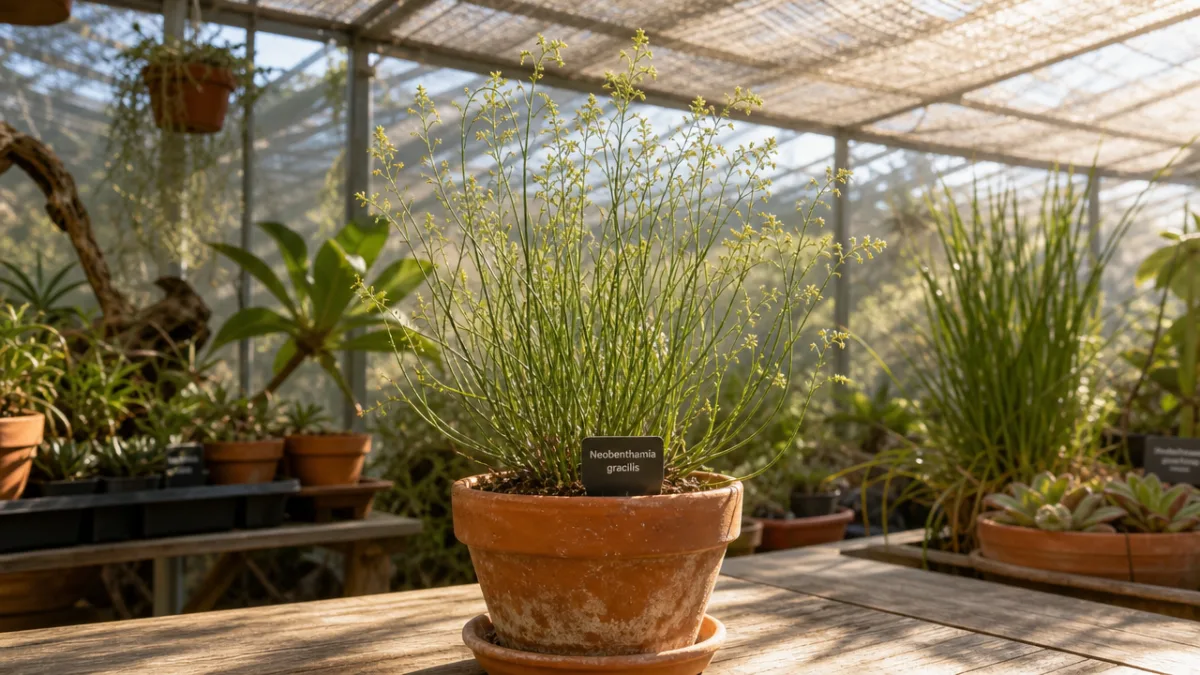
Choosing the right potting medium for Neobenthamia gracilis is crucial to long-term success, as the plant’s fleshy roots demand excellent drainage and aeration while retaining just enough moisture to support consistent growth between waterings. A mix of medium-grade bark, perlite, and charcoal in roughly equal proportions creates a well-aerated, fast-draining substrate that mimics the rocky, humus-rich soils of its natural environment. Some growers also incorporate coarse coconut husk chips for additional moisture retention, or add a small amount of sphagnum moss to the lower third of the pot to provide a zone of slightly higher humidity around the root zone.
Container selection matters more than many new growers realize. Because Neobenthamia gracilis develops a relatively extensive root system for its size and benefits from some air pruning of roots that venture beyond the container, terracotta pots and wooden slat baskets are popular choices among experienced cultivators. These porous or open containers allow oxygen to reach the roots from all directions and help prevent the waterlogging that can lead to root rot, which is one of the most common causes of decline in this species. Plastic pots can also be used successfully if watering discipline is maintained and the growing mix is sufficiently open.
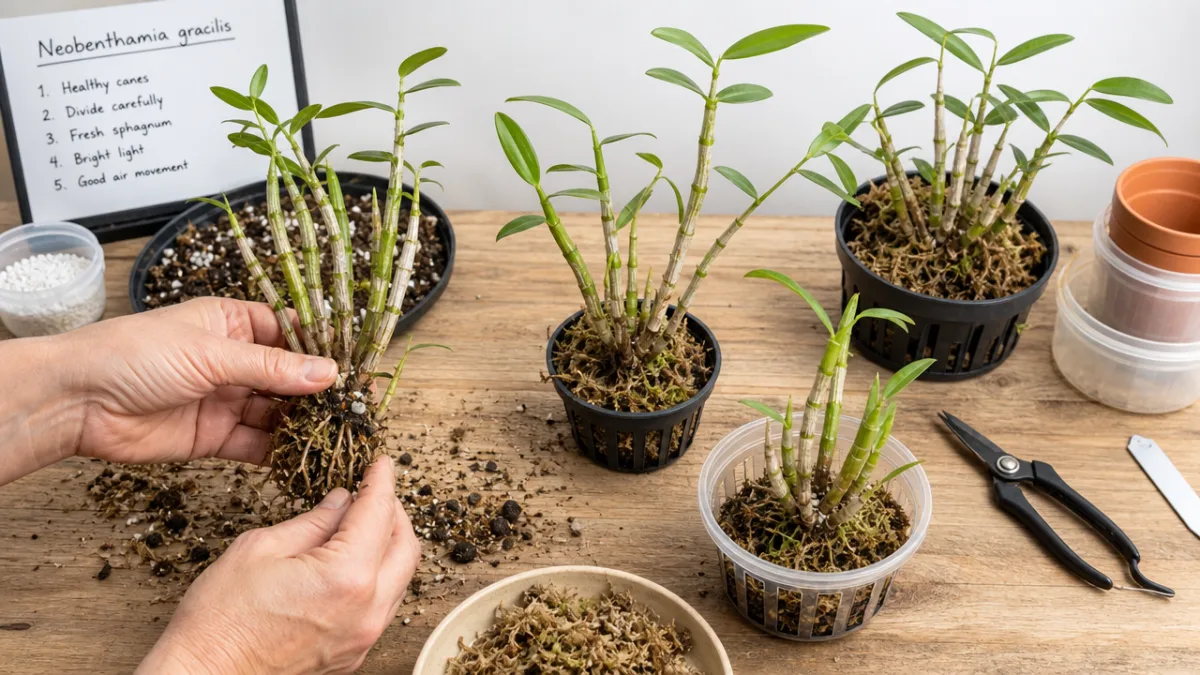
Repotting should ideally be undertaken every two to three years, or whenever the potting medium has decomposed to the point where it no longer drains freely. The best time to repot is in late winter or early spring, just as new growth begins to emerge from the base of the plant. Carefully remove the old medium from around the roots, trim any dead or damaged roots cleanly with sterilized scissors, and allow cut surfaces to dry for several hours before placing the plant into its new container and fresh medium. Avoid watering for several days after repotting to allow any root wounds to callus and reduce the risk of fungal infection.
Propagation Methods
Propagating Neobenthamia gracilis is a satisfying way to expand a collection, share plants with other enthusiasts, or produce backup specimens as insurance against loss. The most reliable and commonly practiced propagation method is division, which involves separating mature clumps into smaller sections, each containing several healthy canes and an intact portion of the root system. Division is best performed at repotting time in early spring, using a sharp, sterilized cutting tool to minimize tissue damage and infection risk. Each division should ideally include at least three mature canes along with new growth shoots to ensure rapid establishment and continued vigorous performance.
Back bulbs, or older leafless canes that have completed their productive cycle, can also be used for propagation under the right conditions. Rather than discarding these seemingly spent structures at repotting time, growers can place them horizontally in trays of moist sphagnum moss and provide warm temperatures and bright indirect light. With patience of several weeks to months, dormant growth buds along the base of the old canes may activate and produce new plantlets that can eventually be potted individually once they develop adequate roots of their own. Success rates with back bulb propagation are variable, but the technique costs little and can yield rewarding results.
Seed propagation of Neobenthamia gracilis is theoretically possible but is rarely attempted outside of specialist botanical institutions and laboratories because orchid seeds require sterile symbiotic fungal partners to germinate and develop in nature, and replicating these conditions artificially demands laboratory-grade sterile technique and specialized growing media. Flasking, as this process is known, involves germinating seeds on nutrient agar in sealed flasks under strictly sterile conditions, then gradually acclimatizing the resulting seedlings to greenhouse conditions over a period of many months. For most hobbyist growers, division remains the practical and highly effective preferred route to multiplying their Neobenthamia gracilis collections.
Pests, Diseases, and Common Problems
Like all cultivated plants, Neobenthamia gracilis is susceptible to a range of pests and diseases that growers should learn to recognize and address promptly to prevent serious damage. Among the most frequently encountered insect pests are spider mites, which thrive in warm, dry conditions and cause characteristic stippling of the leaves as they feed on plant cells by piercing the leaf surface and extracting cell contents. Regular inspection of the undersides of leaves, where spider mites congregate and spin their fine webbing, is the most effective early detection strategy. Infestations can be treated with insecticidal soaps, neem oil, or miticide sprays applied thoroughly to all plant surfaces.
Scale insects and mealybugs represent another common pest challenge for growers of Neobenthamia gracilis and related orchids. Scale insects attach themselves to stems and leaf undersides, protecting themselves under waxy shells while they feed on plant sap, weakening the plant over time and excreting sticky honeydew that promotes the growth of sooty mold. Mealybugs create cottony white masses in the leaf axils and at the junction between cane and leaf sheath. Both pests can be controlled with rubbing alcohol applied directly to affected areas, systemic insecticides, or horticultural oil sprays, with repeat treatments necessary to break the pest life cycle and achieve reliable control.
Disease problems in Neobenthamia gracilis most commonly arise from overwatering or inadequate airflow around the plant, which creates the humid, stagnant conditions favored by fungal and bacterial pathogens. Symptoms may include dark, water-soaked lesions on leaves or canes, soft rotting at the base of new growth shoots, or a general decline in vigor and coloration. Prevention through good cultural practices is far more effective than treatment after the fact. Key preventive measures include the following:
- Ensuring excellent drainage in the potting medium and container at all times
- Providing adequate spacing between plants to promote air circulation
- Avoiding wetting foliage in the evening when temperatures drop and drying slows
- Removing dead leaves and plant debris promptly to eliminate fungal inoculum sources
- Applying preventive fungicide drench treatments at the start of the wet growing season
Root rot caused by Phytophthora or Pythium water molds is perhaps the most serious disease threat to Neobenthamia gracilis in cultivation, capable of destroying an established plant rapidly if not caught in its early stages. The condition typically presents as yellowing of lower leaves, loss of turgidity in the canes, and the discovery of blackened, mushy roots when the plant is removed from its pot. Treatment involves cutting away all affected tissue with sterilized tools, treating the remaining healthy roots with a fungicide drench, repotting in fresh medium, and significantly reducing watering frequency during recovery. Severely affected plants may not recover, underscoring the importance of preventive cultural management.
The Role of Neobenthamia gracilis in Orchid Culture and Conservation
Within the broader world of orchid cultivation, Neobenthamia gracilis occupies an interesting and valued niche as a striking yet relatively approachable species for growers who have moved beyond the standard hybrid Cattleyas and Phalaenopsis and are ready to explore the remarkable diversity of the orchid family. Its unusual growth habit, generous flowering, and African provenance make it a genuine conversation piece in any collection, and it is regularly exhibited at orchid society shows where it reliably attracts attention and admiration from both novice visitors and seasoned growers. Its cultural requirements, while specific, are well within the reach of anyone with access to a greenhouse or a suitably bright indoor growing area.
Conservation of wild Neobenthamia gracilis populations is an issue that responsible growers and orchid societies increasingly take seriously, recognizing that the popularity of a species in cultivation must not come at the expense of its survival in the wild. Tanzania’s Eastern Arc Mountains, the plant’s only native habitat, face ongoing pressure from deforestation, agricultural expansion, and climate change, all of which threaten the specialized montane ecosystems on which this and thousands of other endemic species depend. Supporting conservation organizations working to protect these habitats, purchasing only nursery-propagated plants from reputable suppliers, and participating in botanical garden seed banking programs are concrete ways individual growers can contribute to the species’ long-term security.
The orchid hobby has a long and complex relationship with conservation, including historical instances where collecting pressure contributed to the decline of wild populations and more recent examples of how hobbyist networks, botanical institutions, and conservation organizations have collaborated to propagate threatened species and maintain living collections as genetic repositories. Neobenthamia gracilis benefits from its appeal to collectors, which has driven sufficient commercial propagation to make wild collection economically unnecessary, but continued vigilance from the orchid community remains important. Growing this extraordinary plant is an act of appreciation for the astounding biodiversity of East Africa’s mountain forests, and treating it with the care and respect it deserves honors both the plant and the fragile ecosystem that gave rise to it.








What do you think?
It is nice to know your opinion. Leave a comment.