










Large Concrete Pillar CANDLE with Gold Accent: The Art of Modern Minimalist Home Décor
The Rise of Concrete in Contemporary Home Design
Over the last ten years or so, concrete has had a pretty remarkable glow-up in the world of interior design. It used to be the stuff of parking garages and brutalist office buildings — now it shows up in some of the most thoughtfully designed homes around. That shift says something real about what people are drawn to these days: authenticity, texture, materials that don’t try to be something they’re not. Concrete isn’t pretending to be marble or wood. It’s just concrete, completely itself, and honestly? That confidence is a big part of why it works so well in a modern space.
The handmade concrete candle sits right at this interesting crossroads of craft and design thinking. When makers started pouring candles into concrete molds, they weren’t just chasing a quirky trend — they were responding to something real. People genuinely want objects in their homes that have a bit of weight to them, literally and otherwise. A concrete pillar candle on a shelf or coffee table quietly tells you something about the person who put it there: they care more about substance than flash, they find beauty in restraint, and they’re drawn to that sweet spot where industrial meets domestic.
Part of what keeps this trend going rather than fading out is how concrete actually behaves with light and other materials. That grey, slightly porous surface absorbs and softens warm candlelight in a way that glass or polished ceramic just can’t match. And because the material varies naturally, no two concrete candles look exactly the same — each one has its own character that mass-produced objects simply can’t replicate. In a world full of identical everything, that individuality genuinely means something to people who are paying attention.
Understanding the Handmade Process Behind Concrete Candles
Making a concrete pillar candle is more involved than it might look. It starts with getting the mix right — the ratio of cement, aggregate, and water is one of those things that really matters. Too much water and the finished piece ends up weak and crumbly. Too little and it’s a nightmare to pour, full of air bubbles. Experienced makers develop a feel for it over time, learning to recognize when the consistency is just right to flow smoothly into the mold while still picking up all the fine surface detail that makes the end result actually beautiful.
Centering the wick is another place where skill really shows. It has to be held in exactly the right position while the concrete sets — and that can take anywhere from twenty-four to forty-eight hours depending on the temperature and humidity in the room. During that window, the concrete is going through a chemical process called hydration, slowly hardening and developing its strength. Pulling it out of the mold too early is a quick way to ruin hours of careful work, so patience is a real part of the craft here.
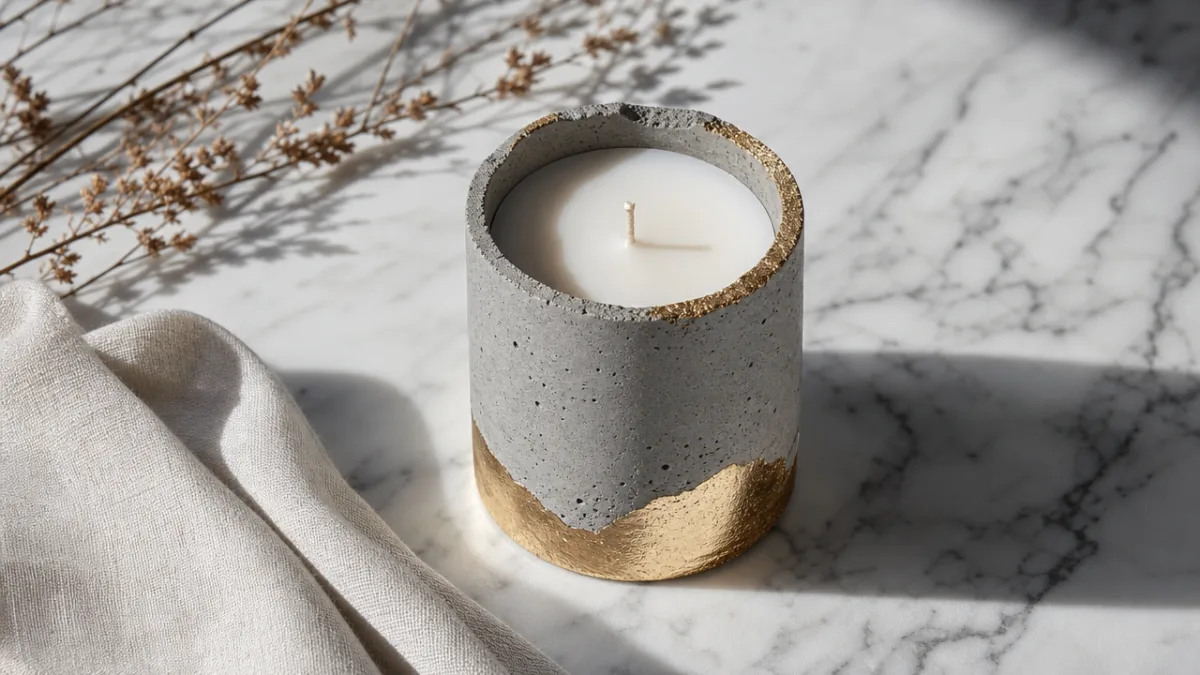
Once the concrete has fully cured and the mold comes off, the finishing stage begins. This is where the gold accent gets added, and where the piece goes from being an interesting material experiment to something genuinely lovely. Whether it’s gold leaf, metallic paint, or resin mixed with gold pigment, the effect is the same: a warm, rich contrast against all that cool grey. There’s something deeply satisfying about that combination — rough concrete next to the shimmer of gold, the industrial sitting right alongside the opulent.
The Aesthetic Language of Minimalist Décor
Minimalism gets misread a lot. People tend to assume it just means owning less stuff, but it’s really about intentionality — only bringing things into a space that genuinely earn their place through function, beauty, or meaning. A handmade concrete candle with a gold accent checks all three boxes at once. It’s functional as a light source and fragrance. It’s beautiful in a quiet, honest way. And as a handcrafted piece that exists nowhere else in quite the same form, it carries real meaning too.
The color palette here — cool grey with a hit of warm gold — plays nicely with just about every popular interior style going. Scandinavian-inspired rooms with white walls and pale wood? It fits. Industrial spaces with exposed brick and dark metal fixtures? Also yes. Grey is such a useful neutral precisely because it doesn’t tip too warm or too cold on its own, and it acts as a natural bridge between different tones in a room. The gold keeps it from feeling flat or clinical.
Scale matters a lot in minimalist design, and the pillar format is particularly good at making a quiet statement. A single large pillar candle on a low table, a fireplace mantel, or a bathroom shelf draws the eye through its sheer presence — not through busy detail or loud color. That’s really the heart of confident minimalist design: letting one well-chosen object do the work, without needing a crowd of accessories around it to make the point.
Styling Your Concrete Candle: Placement and Composition
Where you put a concrete pillar candle can change how the whole room feels, and it’s worth thinking about. On a dining table, one large concrete candle at the center becomes a natural anchor — the kind that sets a tone of unhurried, considered elegance without demanding much maintenance. Unlike flowers, which need replacing every few days, a concrete candle gets more interesting over time as the wax melts and reshapes itself. The gold accent catches the light from the flame above it, adding a subtle warmth to the table without fighting with anything else going on.
In living rooms, concrete candles pair really well with other natural and tactile materials. A few combinations that tend to work especially well:
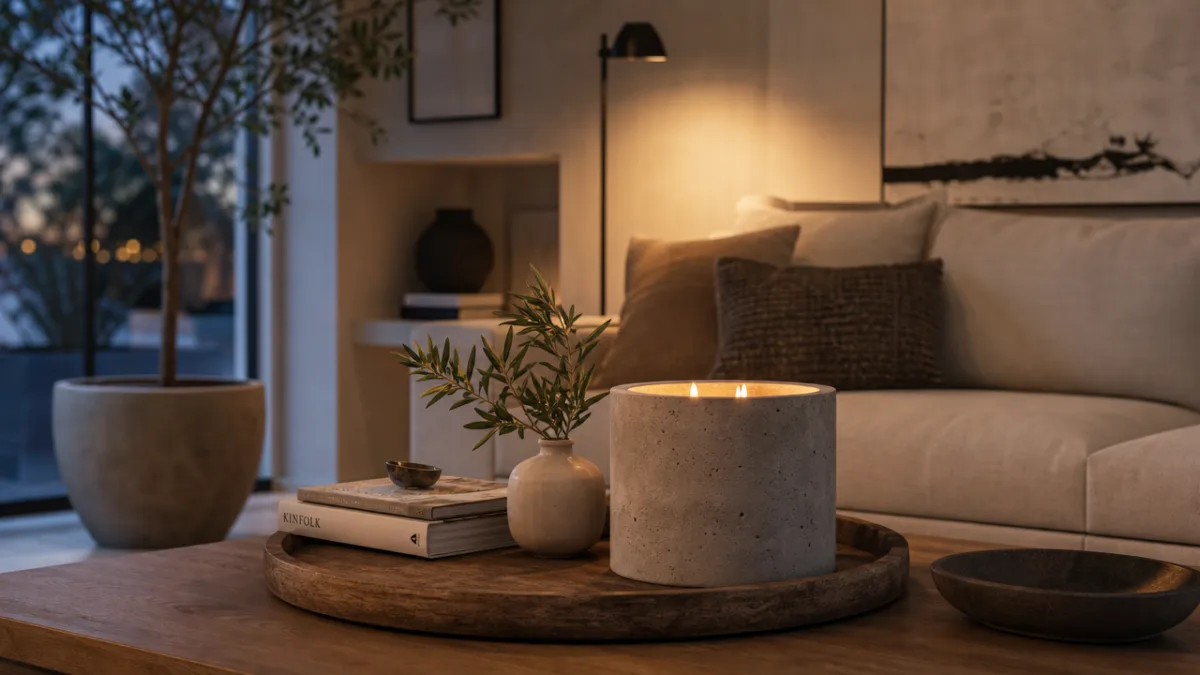
- A concrete pillar candle next to a stack of art books and a small ceramic vessel creates a little vignette that feels personal and collected rather than like something out of a showroom.
- Setting the candle on a raw wooden tray or a piece of slate grounds it visually and catches any wax drips, while throwing in another layer of material contrast.
- Grouping a large concrete candle with smaller votives or tea lights in complementary materials — frosted glass, brushed brass, terracotta — adds depth and a bit of rhythm to the arrangement.
- In a bathroom, a concrete candle near a deep soaking tub with some fresh eucalyptus and a folded linen towel creates that spa-at-home atmosphere that makes an ordinary bath feel like something worth looking forward to.
It’s also worth thinking about light when you’re choosing where to put it, because a concrete candle reads very differently throughout the day. In natural daylight, the grey surface looks cooler and more sculptural. Once evening comes and you actually light the candle, the whole mood shifts — the flame warms the wax from within, the gold starts to glow, and the concrete takes on a softer, more intimate quality. The fact that it works so well under all these different conditions is honestly what sets it apart from most decorative objects, which tend to look great in one setting and just okay in everything else.
Why Handmade Objects Matter in the Age of Mass Production
We’re in a strange moment right now where handmade objects are both rarer than ever and more sought-after than ever. Mass production has made it possible to churn out millions of identical things at almost no cost, and paradoxically, all that abundance has made people hungry for something singular and human. When someone buys a handmade concrete candle from an artisan, it’s more than just a purchase. It’s a choice to support an actual person making things with their hands, to bring something genuinely one-of-a-kind into their home, and to step — at least in this small way — outside the logic of mass sameness.
Handmade objects also have a different relationship with time than manufactured ones do. A factory candle is produced in seconds by a machine that never gets tired, never has a moment of inspiration, and never makes a happy accident that turns out more beautiful than the original plan. A handmade concrete candle represents hours of someone’s focused attention. The maker mixed the concrete, placed the wick, and applied the gold accent with real care. That investment is embedded in the object itself, and a lot of people find it changes how they relate to it — they handle it more gently, display it more thoughtfully, and just feel better having it around.
There’s also the environmental angle, which more and more people are thinking seriously about. Concrete is durable — a well-made concrete candle holder will long outlast the wax inside it, and once the candle’s burned down the vessel can be repurposed as a planter, a storage container, or filled with a new candle. Artisan makers typically work in small batches with far less waste than industrial processes generate, and many are deliberate about sourcing their waxes, wicks, and pigments from ethical suppliers. In a lot of cases, buying handmade is also just buying better.
Caring for Your Concrete Pillar Candle
A concrete candle doesn’t ask for much, but a little know-how goes a long way. The surface is porous, which means it can pick up stains from wax drips, oils, or moisture if it hasn’t been sealed by the maker. It’s worth asking about the finishing process before you buy. Many artisans apply a clear sealant that protects the surface without changing the natural grey look of the concrete at all. If yours is unsealed, keeping it on a protective tray and handling it with clean, dry hands will help it stay looking its best over time.
How you burn it matters too, both for safety and for how the candle develops. The first time you light a large pillar candle, let it burn long enough for the melt pool to reach all the way to the edges — this stops tunneling, where the wax burns down the middle and leaves a thick ring of unmelted wax around the outside that never catches up. That first burn might take a few hours, but it sets the candle up to burn evenly and beautifully every time after that. Keeping the wick trimmed to about six millimetres before each use also makes a real difference — it keeps the flame steady and clean, reduces soot, and extends the life of the candle noticeably.
The gold accent deserves a little extra thought too. Whether it’s gold leaf, metallic paint, or pigmented resin, the finish can be sensitive to prolonged heat or moisture exposure. Try to keep the candle out of direct sunlight for long stretches, since UV light can dull metallic finishes over time. If dust settles on the surface, a soft dry cloth is really all you need to bring the shine back. Look after it in these small ways and a quality handmade concrete candle with a gold accent will stay beautiful for years — the kind of piece that outlasts passing trends and keeps adding warmth and character to a room long after most other decorative objects have come and gone.








What do you think?
It is nice to know your opinion. Leave a comment.