










Crochet Scrap Yarn Shorts: The Ultimate Guide to Creating Colorful, Sustainable Summer Wear
Introduction: Why Scrap Yarn Shorts Are the Perfect Crochet Project
If you’ve been crocheting for any length of time, you almost certainly have a growing collection of leftover yarn — those half-used skeins and partial balls that pile up after completing blankets, scarves, and sweaters. Crochet scrap yarn shorts are one of the most exciting and practical ways to put all of that stash yarn to work, transforming what might otherwise feel like clutter into a genuinely wearable, vibrant garment. The result is a pair of shorts that is entirely unique to you, carrying the history of your past projects in every colorful stripe and block.
What makes scrap yarn shorts especially appealing is the freedom they offer. Unlike projects that require precise color matching or large quantities of a single yarn, scrap shorts actively celebrate variety. Mismatched colors, unexpected combinations, and spontaneous design decisions are not just acceptable — they are the whole point. Every crocheter’s version will look completely different, making this a deeply personal and creative endeavor that rewards improvisation as much as planning.
Beyond the creative appeal, scrap yarn shorts also carry a meaningful sustainability story. Fast fashion contributes enormously to global textile waste, and handmade garments crafted from existing materials represent a genuine alternative. When you crochet shorts from yarn you already own, you extend the life of materials that have already been produced, reduce the need to purchase new supplies, and create something with lasting personal value. This is slow fashion at its most joyful and practical.
Choosing the Right Yarns from Your Stash
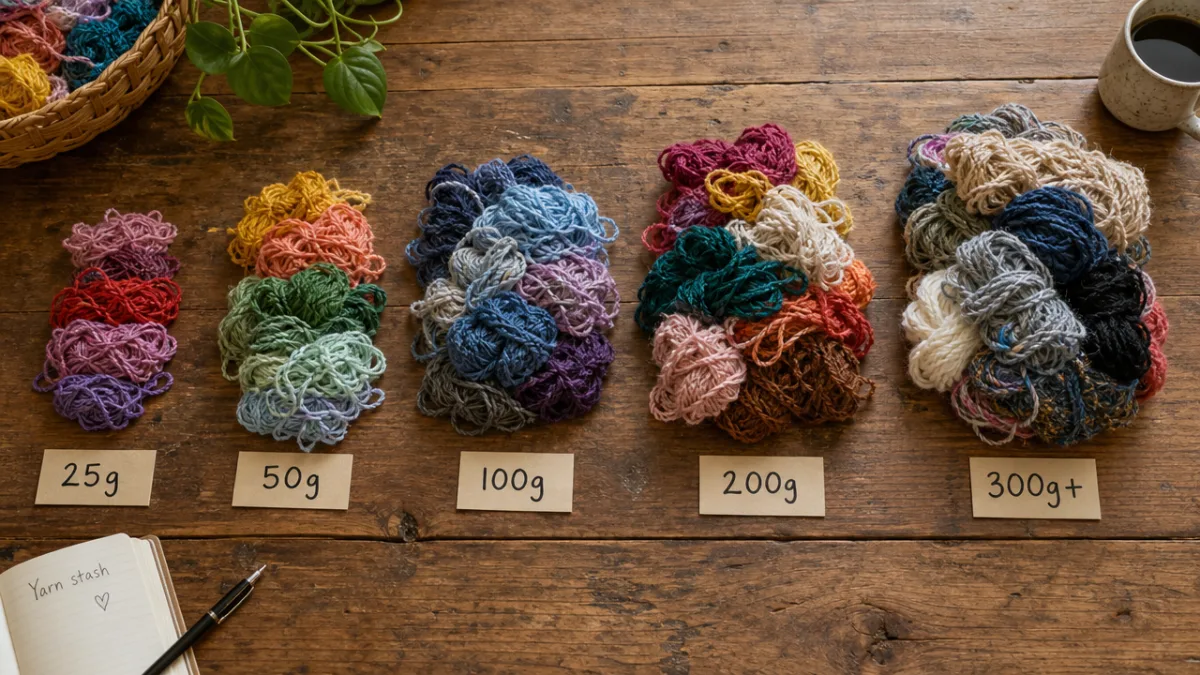
The most important consideration when selecting scrap yarns for shorts is consistency of weight. While you are absolutely encouraged to mix colors freely, mixing yarn weights within the same garment can create uneven tension, warped fabric, and a final product that doesn’t drape or fit as expected. Before you begin pulling skeins from your stash, sort your scraps by weight — fingering, sport, DK, worsted, bulky — and decide which weight you will work with for the entire project. Most crocheters find that DK or worsted weight yarns strike the best balance between drape, stitch definition, and speed of crocheting.
Fiber content is another factor worth thinking through carefully. Shorts sit against the skin and are worn in warm weather, so comfort matters enormously. Cotton and cotton-blend yarns are ideal for this application because they are breathable, moisture-wicking, and soft against the skin. They also tend to hold their shape well, which is important for a garment that needs to maintain structure through wear and washing. If your scrap collection leans heavily toward wool or acrylic, don’t despair — many acrylic yarns are surprisingly soft and functional for warm-weather wear, though you may want to avoid 100% wool for a garment that will be worn in summer heat.
Once you’ve sorted by weight and considered fiber, the fun begins: arranging your colors. Lay your chosen skeins out on a flat surface and experiment with sequencing. Some crocheters prefer a roughly gradient approach, moving through a color family before transitioning to the next. Others love the visual energy of high-contrast, random color changes. You might also consider grouping colors by the width of stripe each skein can produce — a small scrap might yield only one or two rows, while a larger remnant might carry you through a whole section. Planning this loosely in advance helps the finished garment feel intentional rather than chaotic.
Understanding Crochet Shorts Construction
Crochet shorts can be constructed in several different ways, and understanding the options will help you choose an approach that suits your skill level and desired outcome. The most common method for beginners and intermediate crocheters is working the shorts in the round from the waistband down. You begin by crocheting a tube that forms the waistband and upper body of the shorts, then divide the work at the crotch to form two separate leg openings. This top-down approach allows you to try the garment on as you work, making fit adjustments easy and intuitive.
A second popular construction method is the flat-panel approach, where you crochet two or more panels separately and seam them together. This technique gives you a great deal of control over shaping, particularly at the seat and thigh, and can produce a more tailored fit. It is also well-suited to scrap yarn projects because each panel can be crocheted as a separate color story, and the seams become a design feature in their own right. The downside is that seaming requires additional time and skill, and some crocheters find the finishing work less enjoyable than the crocheting itself.
Regardless of which construction method you choose, you will need to think carefully about the crotch shaping, which is the most structurally complex part of any crocheted shorts pattern. Most patterns handle this through increases and decreases worked over several rows to create a curved gusset that allows for comfortable movement. When working with scrap yarns and frequent color changes, it helps to mark your increase and decrease points clearly so that the color transitions don’t distract you from the shaping work. Stitch markers are your best friend in this phase of the project.
Essential Stitches and Techniques for Scrap Yarn Shorts
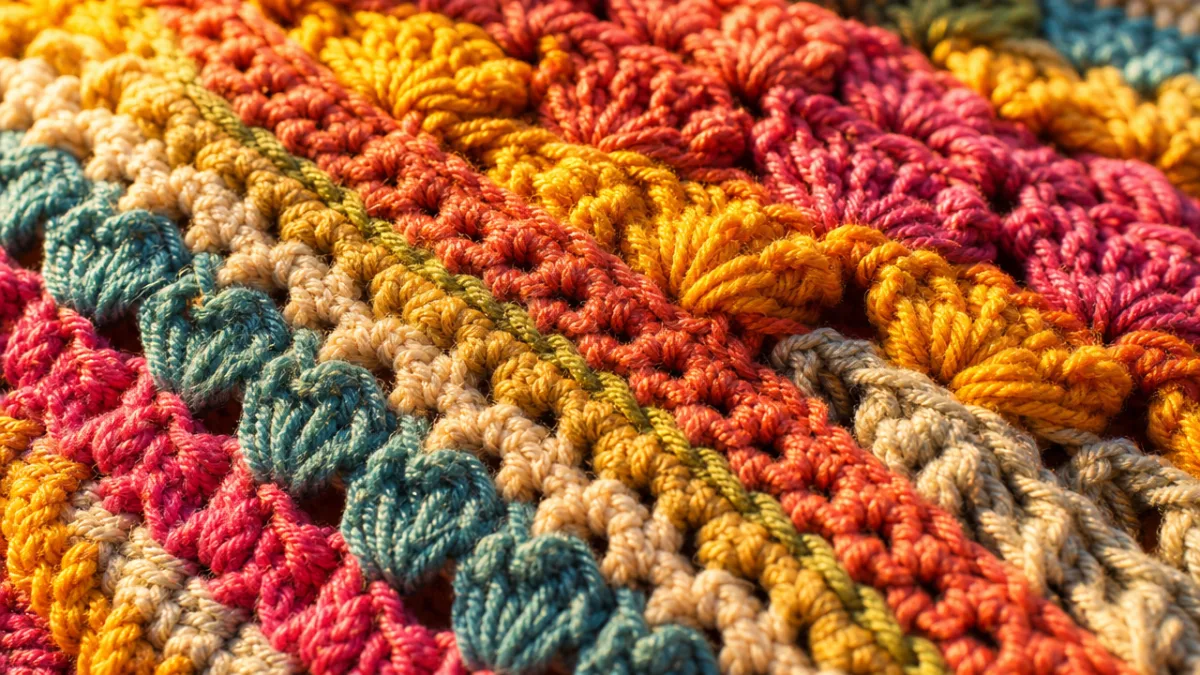
The stitches you choose will significantly affect the look, feel, and functionality of your finished shorts. A simple half-double crochet fabric is a popular choice because it creates a dense, stretchy material with excellent drape that works beautifully for close-fitting garments. The half-double crochet stitch is also forgiving when it comes to color changes — the yarn-over at the beginning of each stitch creates a subtle texture that blends colors naturally at transition points, softening what might otherwise be stark lines between your scrap colors.
For crocheters looking for more visual interest, textured stitch patterns like the moss stitch, linen stitch, or even simple ribbing can add tremendous dimension to a scrap yarn project. Ribbing is particularly useful at the waistband and leg openings, where a structured, elastic edge helps the garment stay in place during wear. You can work ribbing either as a separate piece that is seamed to the main body, or directly into the existing fabric through a series of slip stitches or back-loop-only rows. Including even a few rows of ribbing transforms the overall finish of the shorts from homemade to polished.
Color change technique is worth mastering before you begin a project that involves as many transitions as scrap shorts typically do. The cleanest method is to complete the last yarn-over of a stitch with the new color rather than finishing the stitch with the old color, then continuing with the new yarn. This creates a crisp, clean color line. Weaving in ends as you go — rather than leaving them all for the finishing stage — is also highly recommended when working with scraps, since you may accumulate dozens of ends over the course of a pair of shorts. Crocheting over the tails for several stitches is an efficient and tidy solution.
- Half-double crochet (hdc): Creates a dense, stretchy fabric with excellent drape, ideal for the main body of the shorts.
- Single crochet ribbing: Worked in back loops only to create a structured, elastic edge at the waist and leg openings.
- Moss stitch: Alternating single crochets and chain spaces produce a beautiful textured fabric that highlights color variation in scrap yarns.
- Slip stitch seaming: A clean, flat method for joining panels or attaching waistbands without adding bulk.
- Magic ring: Used when beginning construction in the round for a tight, invisible start at the waistband.
Sizing, Gauge, and Fit Considerations
Getting the fit right is one of the most important and sometimes most challenging aspects of crocheting garments. Unlike accessories such as hats or scarves where fit is relatively forgiving, shorts need to accommodate specific body measurements in order to be wearable and comfortable. Before you cast on a single stitch, take accurate measurements of your waist, hips, thighs, and desired inseam length. Write these down and refer to them throughout the project. It is far better to spend five minutes measuring than to finish a pair of shorts that won’t pull past your hips.
Gauge swatching is non-negotiable for a garment project, and this is especially true when working with scrap yarns that may come from different manufacturers with different thicknesses, even if they are nominally the same weight. Crochet a swatch of at least four by four inches using your chosen stitch and hook size, wash and block it the way you intend to treat the finished garment, and then measure your stitches and rows per inch. Compare these numbers to the gauge requirements of your chosen pattern, and adjust your hook size up or down as needed. Even a half-stitch difference in gauge can translate to several inches of difference in a finished garment.
Ease — the difference between your body measurements and the garment’s finished measurements — also requires thoughtful consideration. Crochet fabric typically has less natural stretch than knit fabric, particularly when worked in cotton, so you may need to build in slightly more ease than you would expect for a knitted garment of the same style. For fitted shorts, aiming for zero to one inch of positive ease at the waist and hip will give a relaxed but not baggy fit. If you want the shorts to be truly fitted and your yarn has significant stretch, you can work to negative ease, but test the fabric’s elasticity thoroughly before committing to a smaller measurement.
Finishing Touches: Waistbands, Leg Openings, and Embellishments
The waistband is one of the most functionally important parts of your shorts, and it deserves careful attention during the finishing process. A crocheted waistband on its own may not provide enough hold, particularly if the yarn has limited stretch. Many crocheters choose to thread a length of elastic through a folded channel at the waist, which creates a secure and comfortable fit that adapts to different body positions throughout the day. To create the channel, simply fold the top edge of the waistband over to the inside of the garment and seam it down, leaving a small opening to insert the elastic. Cut the elastic to your waist measurement plus a small overlap, thread it through, and stitch the ends securely together.
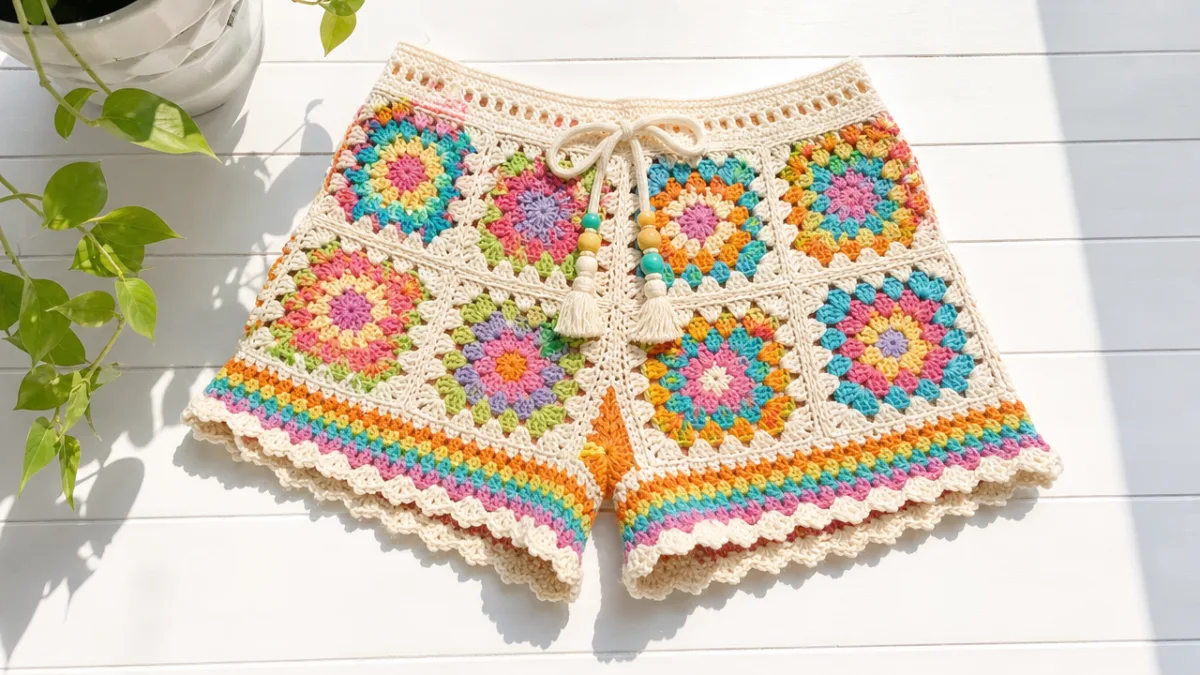
Leg openings can be finished in several ways depending on the aesthetic you are going for. A simple single-crochet border worked around each opening adds a neat, tidy finish without adding much bulk. For a more decorative edge, a shell stitch or picot trim can turn the leg openings into a feature rather than just a functional border. If you have particularly small scraps remaining after completing the main body of the shorts, the leg borders are an excellent place to use them — even a few yards of a contrasting color can create a striking accent at the hem.
Embellishments offer the final opportunity to make your scrap shorts truly one of a kind. Crochet flowers, small appliqués, or decorative pockets can be added to the finished garment using the same scrap yarns that appear throughout the shorts, creating a cohesive look that ties all the colors together. Surface slip stitch can also be used to draw patterns or stripes across the finished fabric, adding graphic detail without requiring any additional construction. A simple crocheted tie or drawstring at the waist adds both function and visual interest, and can be worked in a color that contrasts or harmonizes with the overall palette of the shorts.
- Measure and cut your elastic to the correct waist length, adding about half an inch for overlap and seaming.
- Fold the waistband edge to the inside and pin it in place, leaving a one-inch opening for elastic insertion.
- Seam the waistband channel using a whipstitch or slip stitch, working through the back loops of the existing crochet fabric.
- Thread the elastic through the channel using a safety pin attached to one end as a guide.
- Overlap the elastic ends by half an inch and stitch them securely together before closing the remaining channel opening.
Caring for Your Finished Scrap Yarn Shorts
Because your shorts are made from multiple different yarns, potentially with different fiber contents and dye processes, caring for them requires a little more thought than caring for a single-yarn garment. The safest universal approach is to hand wash the shorts in cool water with a gentle, pH-neutral soap. This method is appropriate for virtually every yarn type, including cotton, acrylic, and most wool blends, and minimizes the risk of shrinkage, felting, or color bleeding that can occur in a machine wash cycle. Gently press the water out rather than wringing or twisting the fabric, which can distort the stitches and stretch the garment out of shape.
If machine washing is important to you for practical reasons, test each of your scrap yarns individually before committing the finished garment to the machine. Cut a short length of each yarn you plan to use, wet it thoroughly, and allow it to dry flat. Note any changes in length, texture, or color. Any yarn that shows significant shrinkage or color bleed in this test should be set aside for a different project, or used only in locations where a small amount of change would be acceptable. Being thorough in this pre-project testing will save you significant disappointment after the shorts are complete.
Blocking the finished shorts after washing is highly recommended, as it evens out the tension between different sections, relaxes the stitches, and helps the garment return to its intended shape and dimensions. Lay the damp shorts flat on a blocking mat or clean towel, gently reshape them to the correct measurements, and allow them to air dry completely before wearing or storing. With proper care, a well-made pair of crochet scrap yarn shorts can last for many seasons, aging gracefully as the colors soften slightly with repeated washing and the fabric becomes even more supple and comfortable with use.
The Community and Culture Behind Scrap Yarn Crochet
Crochet scrap yarn projects have developed a vibrant and enthusiastic community of practitioners online and in person, and scrap shorts have become a beloved showcase piece within that community. Platforms like Pinterest, Instagram, and Ravelry are filled with inspiring examples of finished shorts in every imaginable color combination, from sophisticated earth tones to electric neons, from pastels to jewel-bright contrasts. Searching hashtags like #scrapyarncrochet, #crochetshorts, and #stashbust will connect you with a world of fellow crafters who are as passionate about using up their yarn collections as you are.
Many crocheters find that sharing their scrap projects — particularly at the planning stage when they’re laying out their color choices — invites wonderful feedback and encouragement from the wider community. Asking for color-order opinions in a crochet group or forum often results in dozens of enthusiastic responses, with members offering creative suggestions you might never have considered on your own. This collaborative spirit is one of the most distinctive and warm aspects of the crochet community, and scrap projects seem to bring it out in full force because they are so universally relatable — virtually every crocheter has a stash, and virtually every crocheter has experienced the particular pleasure of watching that stash transform into something beautiful and wearable.
Beyond the digital community, scrap yarn crochet connects to broader traditions of textile resourcefulness that stretch back through generations of makers who created clothing and household items from whatever materials they had on hand. Crocheting shorts from leftover yarn is, in this sense, a thoroughly modern expression of an ancient human instinct — the desire to make something useful and beautiful from the materials at our disposal, to honor the work and resources that went into those materials by using every last bit of them. When you wear your finished scrap yarn shorts, you carry all of that history and intention with you, making them far more than just a garment.








What do you think?
It is nice to know your opinion. Leave a comment.