










Helianthus ‘Miss Mellish’: A Complete Guide to the Giant Sunflower Perennial
Introduction to Helianthus ‘Miss Mellish’
Among the many cultivars within the vast and celebrated genus Helianthus, few command attention quite like ‘Miss Mellish’. This towering perennial sunflower, captured with such striking clarity in Bjorn Hansson’s stock photography, represents one of the most dramatic and rewarding plants a gardener can choose to cultivate. Unlike the familiar annual sunflower that most people picture when they hear the word “sunflower,” ‘Miss Mellish’ returns faithfully year after year, growing from an established rootstock that strengthens with each passing season, producing ever more impressive displays of golden blooms.
Helianthus ‘Miss Mellish’ is a hybrid cultivar believed to involve Helianthus tuberosus and possibly other North American species in its parentage. This heritage explains much of its vigor — the Jerusalem artichoke lineage contributes not only height and robustness but also the plant’s remarkable ability to spread and colonize a space over time. Gardeners who welcome it into their borders should understand from the outset that this is a plant with ambitions, one that will reward generous space and patient management with seasons of breathtaking late-summer and autumn color.
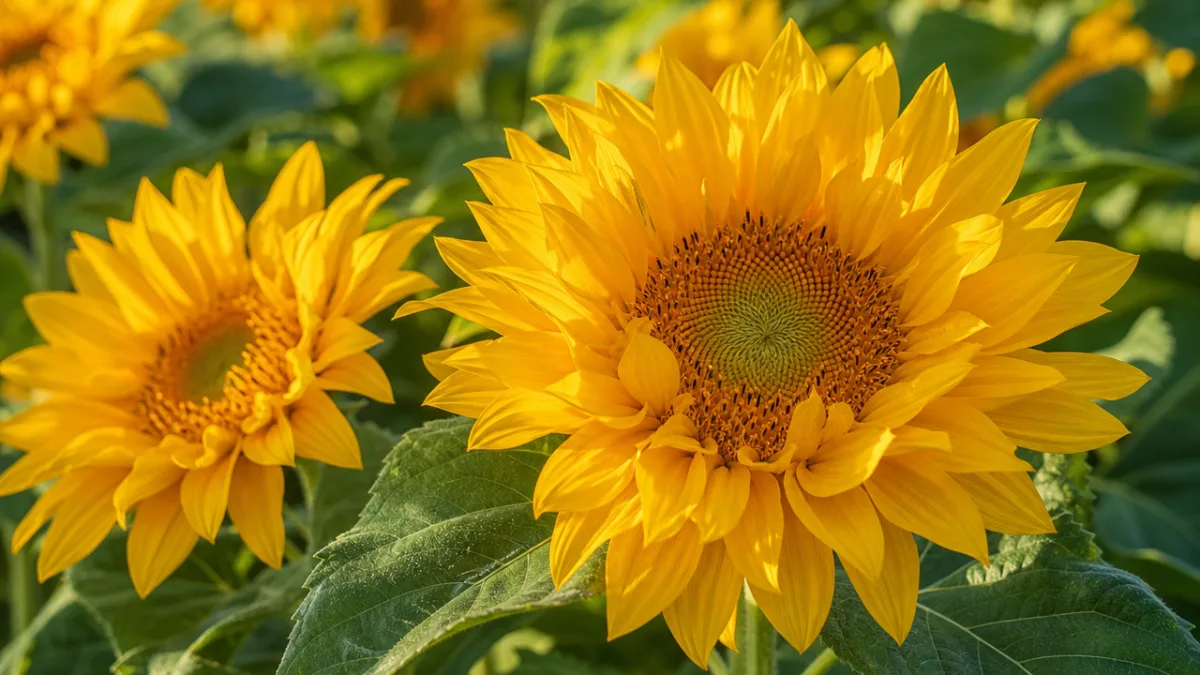
The photography of Bjorn Hansson captures the essence of ‘Miss Mellish’ with particular skill — the semi-double flowers glow against natural backgrounds, their warm yellow petals radiating outward from dark, button-like centers in a way that feels both wild and refined simultaneously. For gardeners, flower arrangers, naturalists, and horticulture enthusiasts alike, this cultivar occupies a special place in the landscape of perennial gardening, offering scale, movement, wildlife value, and pure visual joy in a single package that few other plants can match.
Botanical Profile and Key Characteristics
From a botanical standpoint, Helianthus ‘Miss Mellish’ belongs to the Asteraceae family, which encompasses an enormous range of flowering plants including daisies, coneflowers, and chrysanthemums. The genus name Helianthus derives from the Greek words “helios” meaning sun and “anthos” meaning flower — a description that could hardly be more fitting for a plant whose blooms so perfectly mimic the radiant disk of the sun. ‘Miss Mellish’ is a sterile hybrid, which means it does not set viable seed and therefore spreads exclusively through vegetative means, primarily via underground rhizomes.
In terms of physical dimensions, ‘Miss Mellish’ is genuinely impressive. Mature plants routinely reach heights of 2 to 3 meters, and in particularly fertile, moisture-retentive soils with good light, specimens touching 4 meters are not unheard of. The stems are strong and slightly rough to the touch, clothed in lance-shaped to ovate leaves that are similarly textured — a characteristic of many plants in the Helianthus genus, which evolved in open prairies where physical deterrence against grazing animals was advantageous. This rough texture also helps the plant retain moisture in drier conditions.
The flowers themselves are the defining glory of this cultivar. Each bloom measures approximately 7 to 10 centimeters across and displays a ring of bright golden-yellow ray florets surrounding a dark brown to purplish central disc. The term “semi-double” is sometimes applied because the number of ray florets is often higher than in straight species, creating a fuller, more sumptuous appearance. Flowering typically begins in late summer — August in the Northern Hemisphere — and continues well into October, providing color at a time when many other perennials are beginning to fade and retreat.
Growing Conditions and Site Requirements
Successfully cultivating Helianthus ‘Miss Mellish’ begins with choosing the right location. This plant is fundamentally a sun-lover — its very name encodes this preference — and it performs best in positions that receive full sun for at least six hours per day. In shadier conditions, the plant will still grow, sometimes vigorously, but flowering will be reduced and the stems may become lax, requiring staking that would otherwise be unnecessary. A south or west-facing aspect in temperate gardens is ideal, particularly where the plant can benefit from warmth reflected off nearby walls or fences.
Soil requirements for ‘Miss Mellish’ are relatively forgiving, which is part of what makes it such an accessible plant for gardeners of all experience levels. It will grow in average garden loam, clay-heavy soils, and even relatively sandy ground, though it performs best where moisture retention is reasonable. The plant is notably drought-tolerant once established, having developed the capacity to store energy and moisture in its thickened rhizomes. However, during its first growing season, consistent moisture helps the root system establish, so supplementary watering during prolonged dry spells is advisable.
One consideration that is particularly important for prospective growers is drainage. While ‘Miss Mellish’ appreciates moisture, it does not tolerate waterlogged or permanently wet soils, which can cause the rhizomes to rot, particularly during winter dormancy. Raised beds, sloped ground, or borders amended with grit and organic matter all help ensure the sharp drainage that keeps the root system healthy. In terms of pH, the plant is broadly adaptable but shows a preference for neutral to slightly acidic conditions — a pH range of 6.0 to 7.0 is generally considered optimal.
Planting, Propagation, and Garden Management
Planting Helianthus ‘Miss Mellish’ is most successfully done in spring, once the risk of hard frost has passed and the soil has begun to warm. Because the plant is a sterile hybrid, propagation is achieved through division of the rhizomatous root system — a process that also serves as a management technique, preventing the plant from spreading beyond its designated space. Divisions can be taken using a sharp spade to slice through the root mass, with each section ideally retaining at least two or three visible growth buds to ensure strong re-establishment.
Once planted, ‘Miss Mellish’ requires relatively little intervention to thrive. An annual application of balanced general-purpose fertilizer in spring, combined with a mulch of well-rotted compost or bark around the base of the plant, will support vigorous growth and plentiful flowering. Staking is worth considering in exposed positions or on particularly fertile soils where stem growth may outpace the plant’s own structural capacity. Bamboo canes or purpose-made metal hoops inserted early in the season, before the plant reaches full height, are far less obtrusive than attempts to stake mature growth.
The question of management is one that every grower of ‘Miss Mellish’ will need to address thoughtfully. This plant spreads enthusiastically through its rhizomes, and without periodic control it can gradually overwhelm neighboring plants and expand well beyond the space initially allocated. Annual division, the installation of root barriers at planting time, or the deliberate use of the plant as a structural backdrop where spreading is acceptable are all valid strategies. Many experienced gardeners find the plant easiest to manage when planted in bold, dedicated blocks rather than attempting to integrate individual specimens within a mixed border.
- Divide plants every two to three years in early spring to control spread and maintain vigor.
- Cut stems down to ground level after the first hard frost has blackened the foliage in autumn.
- Leave seed heads standing through autumn and early winter to provide food for birds.
- Apply a protective mulch over the root zone in the first winter after planting in colder climates.
- Water newly planted divisions thoroughly and do not allow them to dry out during the first growing season.
Wildlife Value and Ecological Importance
One of the most compelling arguments for including Helianthus ‘Miss Mellish’ in any garden is the extraordinary contribution it makes to local wildlife. Although the plant is sterile and does not produce viable seed, the flowers are rich in nectar and pollen, making them enormously attractive to a wide range of pollinating insects. Bumblebees, honeybees, solitary bees, hoverflies, and numerous butterfly species are all regular visitors to the blooms, particularly during the late summer period when many other sources of nectar have already been exhausted and the ecological value of late-flowering plants is at its highest.
The timing of ‘Miss Mellish’ flowering — August through October — is ecologically significant in ways that are easy to overlook. Late summer and early autumn represent a critical window for bumblebee queens, who are building up the energy reserves they will need to survive winter hibernation, and for migratory butterflies preparing for long journeys. A planting of ‘Miss Mellish’ in full flower during this period can function almost like an ecological service station, providing concentrated, accessible nutrition at precisely the moment when demand is highest and supply from other plant species is beginning to diminish.
Beyond the direct benefits to pollinators, the dense, tall growth habit of ‘Miss Mellish’ creates valuable structural habitat within gardens. The thick stands of stems and foliage provide shelter and nesting sites for beneficial insects, and the protected microclimate at the base of an established clump can support populations of ground beetles, spiders, and other invertebrates that play important roles in natural pest regulation. Birds, particularly sparrows and finches, will investigate the stems and foliage for insects and will return to visit spent flower heads in search of any nutritional residues even in the absence of viable seed.
Ornamental Uses and Garden Design Applications
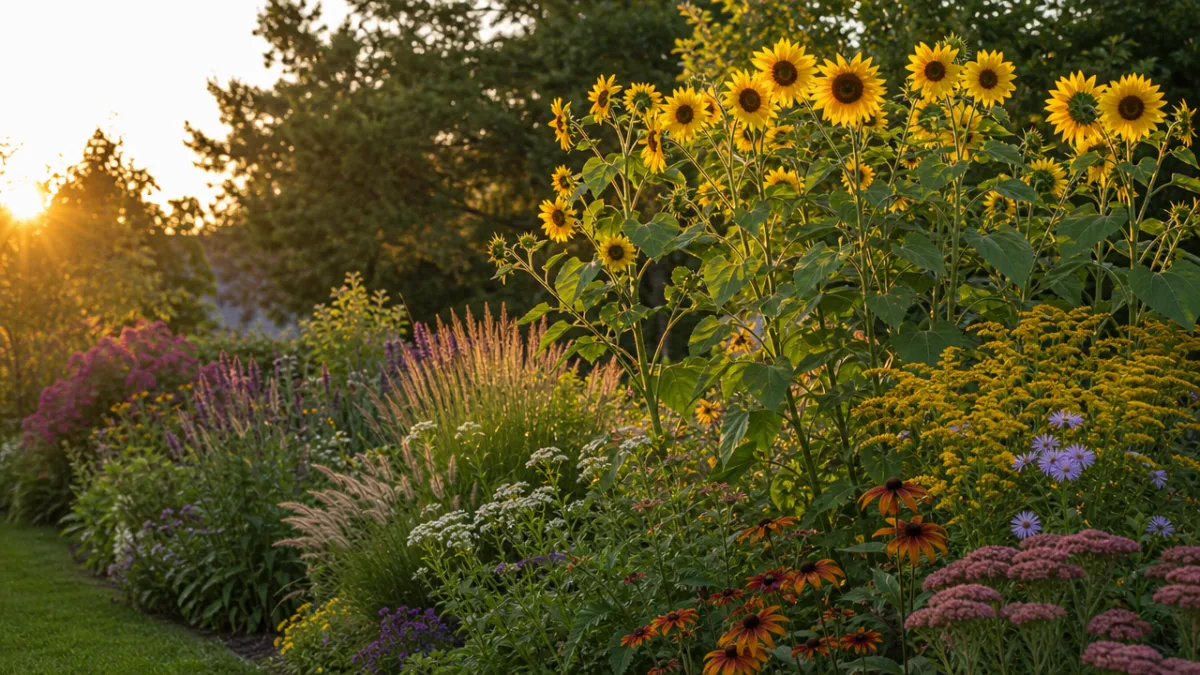
From a purely aesthetic and design perspective, Helianthus ‘Miss Mellish’ is a plant of extraordinary versatility. Its height makes it an obvious candidate for the back of a traditional herbaceous or mixed border, where it can serve as a dramatic structural backdrop against which shorter, more delicate plants are displayed to advantage. The warm golden yellow of the flowers is a color that works harmoniously with a wide spectrum of companions — from the rich purples and blues of late asters, agastache, and verbena bonariensis, to the russet and amber tones of heleniums, rudbeckias, and ornamental grasses.
The naturalistic or “prairie-style” planting approach that has become increasingly popular in contemporary garden design is particularly well suited to ‘Miss Mellish’. When combined with other robust perennials and ornamental grasses in loose, informal masses, it contributes a sense of scale, movement, and ecological richness that feels both designed and spontaneous — the hallmark of the best naturalistic planting. In this context, the plant’s tendency to spread becomes an asset rather than a challenge, as the gradually expanding mass creates increasingly convincing drifts of color and texture over time.
For those interested in cut flowers, ‘Miss Mellish’ offers excellent material for large-scale arrangements. The stems are long and sturdy, the flowers are long-lasting once cut and conditioned appropriately, and the warm yellow color is one of the most universally flattering in the arranger’s palette. Stems should be cut early in the morning when the flowers are just beginning to open, immediately placed in deep, cool water, and allowed to condition in a cool, dark location for several hours before arranging. This process, sometimes called “hardening off,” significantly extends the vase life of the blooms and ensures they remain fresh and upright in arrangements.

Historical Background and Horticultural Legacy
The name ‘Miss Mellish’ connects this plant to the personal histories and horticultural networks of the nineteenth and early twentieth centuries, a period of intense interest in hardy perennial plants among British and European gardeners. While the precise origins of the cultivar name are somewhat obscure — a common situation with older garden plants that were passed between gardeners, nurseries, and estates over many decades before formal registration became standard practice — the name suggests a personal dedication, possibly to a gardening enthusiast or the family member of the hybridizer who first selected this particular plant from a population of seedlings or sports.
The broader history of perennial sunflowers in cultivation is a fascinating narrative of plant exploration, hybridization, and evolving taste. Helianthus species are native to North America, and many were known to indigenous peoples not only for their ornamental qualities but for their practical value — the Jerusalem artichoke, Helianthus tuberosus, being the most celebrated example, grown for its edible tubers. European explorers and botanists brought various species back to gardens across the Atlantic from the sixteenth century onward, and the process of accidental and deliberate hybridization that followed gave rise to many of the garden-worthy cultivars we grow today.
By the time of the great Arts and Crafts gardening movement in Britain — associated with figures such as William Robinson and Gertrude Jekyll — perennial sunflowers were firmly established as important components of the late-season border. Jekyll herself wrote appreciatively of their contribution, noting the way their golden flowers seemed to capture and reflect the quality of autumn light in a manner that no other plant could quite replicate. This endorsement from one of history’s most influential garden designers helped cement the status of perennial Helianthus cultivars, including ‘Miss Mellish’, as serious horticultural subjects rather than mere cottage garden curiosities.
Seasonal Care Calendar and Troubleshooting
Organizing care for Helianthus ‘Miss Mellish’ around the rhythm of the seasons makes management logical and straightforward. In spring, as new shoots emerge from the soil — often appearing later than many other perennials, which can cause unnecessary concern in impatient gardeners — the focus should be on clearing away any remaining dead stem material from the previous year, applying a top dressing of compost or well-rotted manure around the emerging shoots, and installing any staking infrastructure that will be needed before the plant reaches full height. This is also the optimal moment for dividing and replanting sections of the root system if control or propagation is desired.
Through summer, the plant requires relatively little intervention beyond occasional watering during prolonged drought and monitoring for the pest and disease issues that occasionally affect Helianthus species. Powdery mildew can be a problem in dry years, particularly when the plant is under moisture stress — improving irrigation and ensuring good air circulation around the base of the plant are the most effective preventive measures. Slug and snail damage to emerging spring shoots can sometimes be significant, particularly in damp years, and appropriate measures — physical barriers, traps, or biological controls — should be considered if previous seasons have shown vulnerability.
Autumn and winter management centers on the question of when to cut the plant down. Many gardeners now prefer to leave the standing stems and any remaining flower heads through autumn and into winter, for the wildlife benefits already described and for the genuine ornamental contribution of the skeletal stems and seed heads in frost and low winter light. The final cutback to ground level is typically carried out in late winter or very early spring, just before or as the new shoots are beginning to emerge from the soil — a moment that provides a satisfying sense of transition between the seasons and of the garden’s perpetual renewal.
- Late Winter/Early Spring: Cut previous year’s stems to ground level; apply compost mulch around emerging shoots.
- Mid Spring: Divide overcrowded clumps; install support structures; apply general fertilizer.
- Early Summer: Monitor for pests and disease; water during dry periods; tie in stems to supports.
- Late Summer: Enjoy peak flowering; harvest stems for cutting; deadhead to prolong display if desired.
- Autumn: Allow seed heads to stand for wildlife; remove dead foliage but retain stems for structure.
- Winter: Leave stems standing for frost interest and habitat; plan divisions for the following spring.
Troubleshooting problems with ‘Miss Mellish’ most commonly involves addressing either the plant’s vigorous spreading habit or instances of poor flowering. When flowering is disappointing — few blooms, weak color, or flowers that fail to fully open — the most common causes are insufficient light, waterlogged soil, or root competition from overcrowding within an established clump that has not been divided for too many years. A thorough renovation, involving lifting and dividing the entire clump, replanting divisions into refreshed, well-prepared soil in a sunnier position, will typically resolve all of these issues within a single growing season and restore the plant to full, glorious performance.








What do you think?
It is nice to know your opinion. Leave a comment.