










Floral Candle Decor for Romantic Interiors
The Art of Combining Florals and Candlelight
Honestly, there aren’t many design pairings that hit quite the way flowers and candlelight do together. People have been reaching for these two things for centuries whenever they wanted a space to feel romantic, celebratory, or just quietly special. Bring them together on purpose in your home and something shifts — the room starts to feel both timeless and unmistakably yours. There’s something about a candle flame flickering against fresh petals or dried botanicals that no LED bulb will ever replicate. It turns ordinary rooms into little sanctuaries that feel made for slow evenings and tender moments.
Part of why this combination works so well is that each element brings something genuinely different to the room. Flowers add color, texture, and scent — they feel alive and draw you in naturally. Candles do something else entirely: they change the quality of the light itself, softening shadows and casting that warm golden glow that makes everything look a little better. Put the two together and you get what designers call layered ambiance, where nothing feels like it’s trying too hard but everything makes the whole feel richer.
The good news is you don’t need a design background or a big budget to pull this off. Whether you’re placing a single pillar candle in the middle of some garden roses or going all out with taper candles woven through trailing greenery, the same basic principles apply. Scale, color harmony, and thoughtful placement will take you most of the way there — and once you get a feel for them, you’ll find yourself putting together beautiful little moments all over your home without even really thinking about it.
Choosing the Right Candles for a Romantic Setting
Not all candles are created equal when it comes to romantic styling. The shape, color, and scent of what you choose will do a lot of the heavy lifting in terms of mood, so it’s worth slowing down and being a little intentional here. Pillar candles have a sculptural quality that makes them great anchors for bigger floral arrangements. Tapers bring a vertical elegance that naturally draws the eye upward and gives any space a sense of occasion. Tea lights and votives work differently — scatter them through an arrangement and you get this beautiful constellation effect, dozens of tiny flames that feel genuinely magical up close.
Color matters more than most people expect. Ivory and cream are hard to beat for versatility — they warm up just about any floral palette in a way that stark white never quite does. Blush and dusty rose candles alongside peonies, garden roses, or ranunculus create a soft monochromatic look that feels effortlessly romantic. If you want something with more drama, deep burgundy or oxblood candles next to pale flowers hit differently — there’s a moody, old-world richness to that contrast that feels luxurious and a little sultry.
Scent is the variable people most often overlook, which is a shame because it might be the most powerful one. If you’re using scented candles near fresh flowers, think about how those two fragrances are going to get along in a room together. A rose or peony candle next to fresh florals of the same variety creates this enveloping, layered scent that feels incredibly cohesive. If you’d rather let the flowers do their own thing, a neutral scent like clean linen, warm amber, or sandalwood will support the natural perfume of your blooms without competing with it.
- Pillar candles: Best for centerpieces and statement arrangements requiring height and volume.
- Taper candles: Ideal for dining tables and mantelpieces where elegance and verticality are desired.
- Tea lights and votives: Perfect for scattering through arrangements to multiply the glow of candlelight.
- Jar and container candles: Great for bedroom styling where a contained, long-burning flame is preferred.

Floral Selection and Arrangement Techniques
Your flowers will define the whole personality of an arrangement, so choosing them thoughtfully really does make a difference. For a classically romantic look, it’s hard to top garden roses, peonies, and ranunculus — those full, layered blooms catch candlelight in a way that makes them seem to glow from the inside out. It’s genuinely beautiful in the right setting. Pair those showstopper blooms with something lighter like baby’s breath, astilbe, or wax flower and you get airiness and movement that keeps the arrangement from feeling heavy or overdone.
Dried and preserved florals have made a real comeback in interior styling lately, and they’re especially handy when you’re working with candles. No water, no refrigeration, no wilting — they just sit there looking gorgeous for months. Dried pampas grass, lunaria, lavender, and preserved roses all develop this muted, antique quality over time that looks absolutely stunning next to aged brass candlesticks and warm candlelight. The earthy tones of dried arrangements also pair naturally with beeswax, tallow, or unscented soy candles, creating a cohesive organic feel throughout the whole display.
When you’re actually positioning flowers around candles, fire safety has to come first. Fresh flowers are generally safer near flames because of their higher moisture content — dried botanicals can catch fire much more easily, so be careful with placement. Nothing should hang directly over an open flame, and the flame itself should either sit above the florals or be fully enclosed in a lantern or hurricane vase. On the visual side, the encirclement technique works beautifully here: ring the base of your candle with flowers so the flame appears to rise up out of a little garden. It’s a simple trick that always looks stunning.
- Begin with your largest blooms as focal points, placing them at varying heights to create visual interest.
- Fill gaps with medium-sized secondary flowers, building volume around the candle base without crowding the flame.
- Weave in trailing elements such as ivy, eucalyptus, or jasmine vine to soften the edges of the arrangement.
- Add dried or textural elements last as finishing details that add depth without overwhelming the composition.
- Step back regularly to assess the arrangement from multiple angles, ensuring it looks beautiful from every perspective in the room.
Room-by-Room Styling Strategies
Each room in your home offers its own opportunities for this kind of styling, and tailoring your approach to how a space actually gets used will make a real difference in how it lands. The dining room is probably the most natural fit for an elaborate candle and floral centerpiece — it’s where people gather and linger, and a beautiful display at the center of the table immediately sets the tone for the whole meal. A long, low runner of flowers interspersed with taper candles has a distinctly European romantic quality that can turn an ordinary weeknight dinner into something that feels like an occasion. For a smaller table, one generous arrangement combining a pillar candle with a good cluster of blooms achieves the same warmth on a more intimate scale.
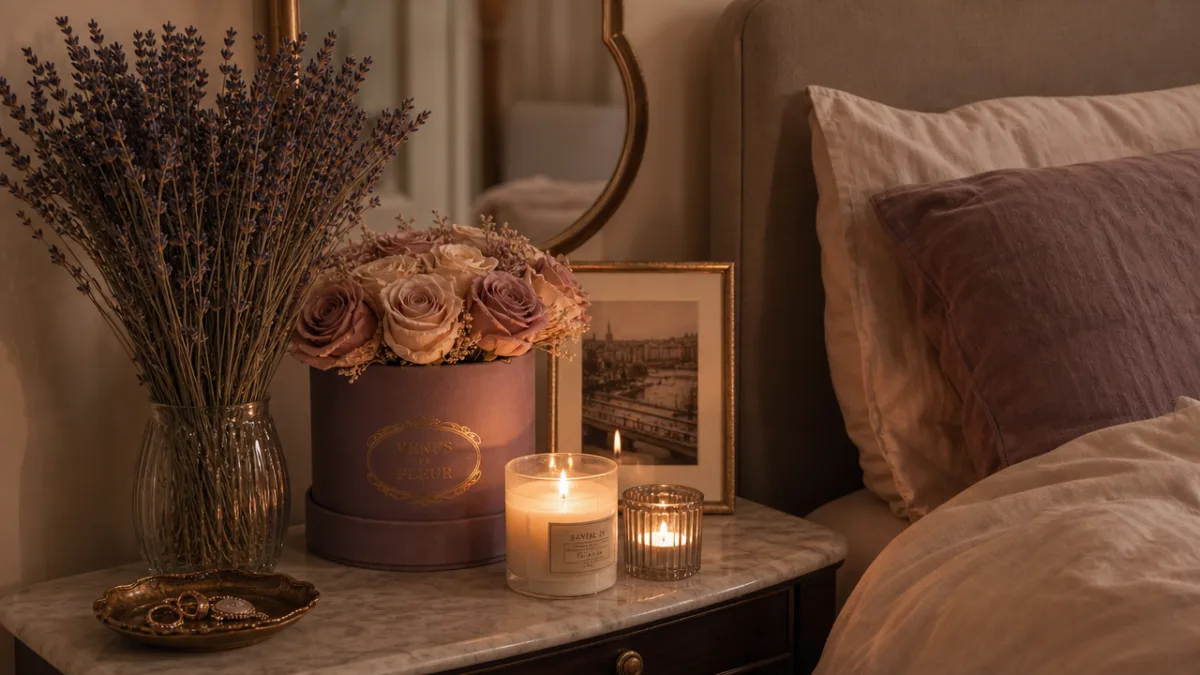
The bedroom is where this kind of styling can have the most profound effect — but it’s also where restraint matters most. Too much and it tips from intimate into theatrical, which is the opposite of what you’re going for. Aim for arrangements that feel personal and a little uncontrived. A pair of candlesticks flanking a small vase of roses on a bedside table is simple, symmetrical, and genuinely romantic without being showy. Or try grouping a few candles at different heights with a loose arrangement of dried lavender and preserved flowers on a dresser — it creates a bohemian, sensory-rich little corner that feels incredibly calming to come home to.
Living rooms and entryways give you the most creative freedom because they’re the spaces that shape first impressions — both for guests and for yourself when you walk through the door after a long day. If you have a fireplace, the mantelpiece is honestly one of the best spots in any home for this type of styling. The architectural weight of the mantel elevates even a simple arrangement into something that feels intentional and beautiful. Layer candlesticks at different heights, tuck in some trailing greenery, and nestle a few blooms at the lower points to create something that looks abundant without feeling cluttered or like it’s trying too hard.

Seasonal Approaches to Floral Candle Decor
One of the best things about floral candle styling is how naturally it shifts with the seasons. Your home gets to breathe and evolve right alongside the world outside, which keeps things from ever feeling stale. Spring is the time to lean into pale, soft-toned florals — tulips, daffodils, cherry blossom branches, the first garden roses of the year arranged loosely around white or pale green candles. The mood should feel fresh and gently hopeful, like the arrangement itself is celebrating the fact that warmth and color are finally back after a long winter.
Summer arrangements can afford to be bolder and more saturated, which is fitting — the season at its peak is exuberant and generous, and your flowers can be too. Deep coral dahlias, sunflowers, zinnias, and hydrangea alongside candles in rich amber or natural beeswax tones feel vibrant and celebratory in all the right ways. Summer evenings outside are also a perfect opportunity to bring this aesthetic into the garden: a cluster of candle lanterns surrounded by cut flowers on an outdoor table creates an atmosphere of effortless hospitality that’s perfectly suited to long, warm evenings with people you love.
Autumn and winter are honestly where this style really comes into its own. The richness of texture and color available in these seasons pairs so naturally with candlelight that the whole thing just clicks. In autumn, dried seed heads, rosehips, burgundy chrysanthemums, and terracotta dahlias alongside burnished brass candlesticks have this cozy, harvest-inspired warmth that feels both ancient and current. Winter styling almost naturally gravitates toward evergreens — pine branches, eucalyptus, holly, and rosemary clustered around pillar candles in ivory, cream, or deep forest green creates a feeling of warmth and refuge that is honestly hard to beat when it’s dark and cold outside.
Creating Lasting Impressions with Thoughtful Details
The details that separate a truly beautiful arrangement from a forgettable one are usually small on their own, but together they make all the difference. Choosing your vessel with intention is one of the most impactful places to start: an antique silver pitcher, a weathered terracotta pot, a faceted crystal vase, an aged wooden box — each one brings an entirely different character to the arrangement before you’ve even added a single flower or lit a single flame. Think about the story you want the arrangement to tell, and choose your vessel the way you’d choose a frame for a painting you really love — with genuine care for what it’s going to hold.
Height and layering is another detail that really separates arrangements that feel polished from those that feel a little flat. Grouping candlesticks of different heights together creates this skyline effect that’s visually dynamic and interesting in a way that a row of same-height elements never is. You can create similar variation by propping some vessels on small risers, books, or decorative trays so that parts of the arrangement sit higher while other elements trail lower. That interplay between tall and low, upright and cascading creates a visual rhythm that draws the eye through the whole composition rather than exhausting it in one glance.
And finally — the most romantic interiors always feel genuinely lived in and personally meaningful, not perfectly curated in a way that looks untouchable. Let your arrangements reflect your own taste: your favorite flowers, the candlesticks you inherited, the colors that make you feel most at home. Romance in an interior isn’t about following a formula. It’s the result of a lot of small, beautiful, considered choices made by someone who knows what they love and isn’t afraid to surround themselves with it. Light the candles, put the flowers out, and let the atmosphere that follows be a real reflection of you.
Safety, Sustainability, and Longevity in Floral Candle Styling
Beautiful interiors are always more satisfying when you’ve created them responsibly, and this is no different. Candle safety isn’t optional: never leave burning candles unattended, always place them on non-flammable surfaces, and keep flames well away from any floral material that could catch. Hurricane vases, lanterns, and enclosed candle holders add an important layer of protection while also making the flame look even more beautiful through the glass. And if you have kids, pets, or a particularly busy household, it’s worth knowing that flameless battery-operated candles have gotten remarkably realistic — they can be a genuinely good option for arrangements in high-traffic spaces.
Sustainability is increasingly part of how a lot of us think about our homes, and there are some easy wins here. Candles made from natural waxes like beeswax, soy, or coconut skip the petroleum derivatives found in most conventional paraffin candles, which is better for your indoor air quality and supports more environmentally conscious production. For flowers, choosing seasonal blooms from local growers cuts down dramatically on the carbon footprint that comes with flying cut flowers across the world, and the blooms you get will be fresher and more beautiful for it. If you have even a small patch of outdoor space, a little cutting garden gives you genuinely zero-miles flowers and the joy of growing the exact varieties you love most.
A few simple habits can also stretch the life of your arrangements well beyond what most people expect. Re-trim fresh flower stems at an angle every couple of days, change the water daily, and keep arrangements away from direct heat — including the candles they’re styled alongside. As the fresh blooms start to fade, you can dry them in place or press individual petals, transitioning the whole arrangement gradually from fresh to dried without starting over. This slower, more evolving approach to floral styling builds a more thoughtful relationship with the things in your home — and there’s something genuinely lovely about watching an arrangement change and develop its own character over time.








What do you think?
It is nice to know your opinion. Leave a comment.