










The Art of Leaf-Cast Concrete Planters: Nature’s Own Mold
There is something deeply satisfying about creating a garden object that carries the exact imprint of the living world around it. Leaf-cast concrete planters have surged in popularity among garden crafters and interior designers alike, blending the raw industrial texture of cement with the delicate, organic beauty of botanical forms. The result is a piece that feels simultaneously ancient and modern, as though it could have been unearthed from an archaeological site or displayed in a contemporary design gallery. When you use a real Alocasia leaf as your mold, you are essentially letting nature do the artistic heavy lifting, and the detail it produces is genuinely breathtaking.
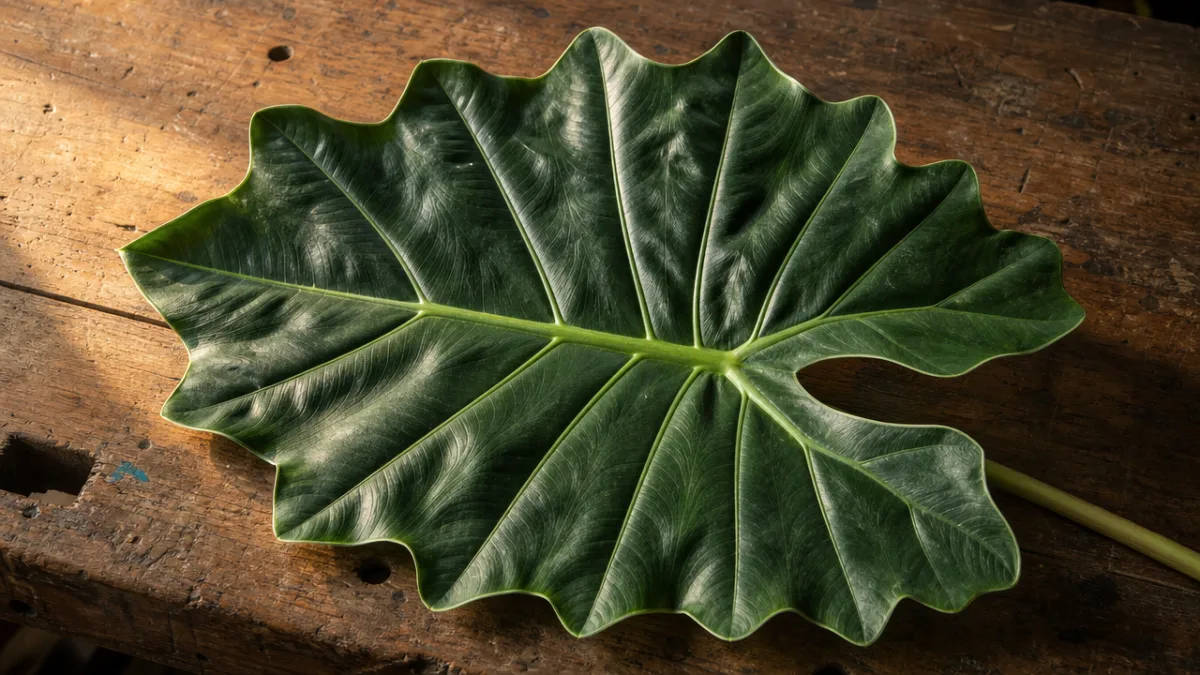
Alocasia, commonly known as elephant ear, is one of the most visually dramatic tropical plants available to home gardeners and craft enthusiasts. Its leaves can grow to remarkable sizes, sometimes exceeding two feet in length, and they are defined by deeply pronounced veining that runs from a central midrib outward in bold, architectural patterns. When pressed into concrete, these veins translate with extraordinary fidelity, creating a surface texture that no hand tool could replicate with such consistency and organic irregularity. The sheer scale of the leaves also means that a single leaf can produce a planter large enough to hold a small succulent, a trailing vine, or a cluster of herbs.
This technique sits at the intersection of garden art and functional craft, producing objects that are genuinely useful as well as visually compelling. Unlike decorative stepping stones or simple leaf prints on paper, these planters are structural, weather-resistant, and designed to last for years outdoors or serve as striking indoor accents. The process of making them is meditative and approachable, requiring no special tools, no kiln, and no professional training. If you have ever wanted to try concrete crafting but felt intimidated by complexity, this project is an ideal starting point that yields genuinely impressive results.
Why Alocasia Leaves Are the Ideal Casting Material
Not every leaf produces the same quality of impression in concrete, and understanding why Alocasia excels at this task will help you appreciate the science behind the craft. The key factors are leaf size, rigidity, surface texture, and vein depth. Alocasia leaves score exceptionally well on all four criteria. Their waxy, semi-rigid surface holds its shape when concrete is pressed or poured over it, and it does not absorb moisture the way thinner, more papery leaves would. This water resistance is crucial because concrete needs to cure at its own pace, and a leaf that absorbs water from the mix can interfere with the hydration chemistry that gives concrete its strength.
The vein structure of Alocasia is genuinely architectural in its complexity. The primary midrib is thick and raised, almost like a structural spine, while secondary veins branch off in a herringbone pattern before further subdividing into finer tertiary networks. When concrete fills this texture from below during casting, it captures every ridge and groove with remarkable precision. The finished planter surface, once the leaf is peeled away, looks almost like a topographic map of a landscape, with ridges and valleys that catch light and shadow differently throughout the day, making the piece appear to change subtly depending on the time and angle of viewing.
Another practical advantage of Alocasia is that garden centers and tropical plant nurseries stock them widely, and the leaves naturally shed and replace themselves throughout the growing season. This means you can often source a casting leaf without harming your plant at all, simply waiting for a mature leaf to be ready for harvest, or gently removing one that is already beginning to yellow at the edges. If you have a friend or neighbor who grows these plants, they will almost certainly have leaves to spare and will likely be delighted to know their garden is contributing to a creative project.
Gathering Your Materials and Setting Up Your Workspace
The beauty of this project lies partly in how minimal the supply list actually is. You do not need a fully equipped studio or an extensive budget to produce a professional-looking result. The core material is concrete mix, and for leaf casting most crafters prefer a fine-aggregate or countertop-grade concrete blend rather than standard construction concrete, which contains larger gravel pieces that can create voids and rough patches in the finished surface. Portland cement mixed with fine sand at a ratio of roughly one part cement to one and a half parts sand also works very well and gives you greater control over the final texture and color of your planter.
Beyond the concrete mix itself, you will need a few additional supplies that are either already in your home or easily sourced from a hardware or craft store. A plastic sheet or garbage bag laid over a flat surface gives your leaf somewhere to rest and keeps your workspace protected from staining. A spray bottle filled with water helps you keep the concrete surface damp during curing. Rubber gloves are non-negotiable, as wet concrete is highly alkaline and will irritate or even burn bare skin with prolonged contact. A trowel or sturdy spatula helps spread and shape the mix, and a small misting bottle or damp cloth is useful for the slower curing phases.
Your workspace should be flat, stable, and protected from direct sunlight and strong wind during the initial curing period. Concrete cures through a chemical reaction called hydration, and this process is sensitive to temperature and moisture levels. Too much heat or wind will cause the surface to dry too quickly, leading to cracking, while temperatures below about fifty degrees Fahrenheit significantly slow the process and can compromise the final strength of the piece. A shaded garage floor, a covered porch, or even a kitchen table protected with drop cloths is entirely suitable. Set everything out before you begin mixing so that you can work efficiently once the concrete is prepared.
Optional Enhancements and Colorants
One of the pleasures of working with concrete is its versatility as a medium. In its natural state, cured concrete produces a cool, neutral gray that pairs beautifully with almost any planting material and suits both modern and rustic design aesthetics equally well. However, if you want to push the aesthetic further, there are several enhancement options worth exploring. Concrete pigments, available in powder or liquid form from masonry suppliers, can be blended into the wet mix to produce earthy terracottas, sandy beiges, deep charcoals, or even soft sage greens. These pigments bond chemically with the concrete rather than sitting on the surface, meaning the color is permanent and will not peel or fade the way paint eventually does.
Another popular approach is to apply treatments to the cured surface after demolding. Acid staining creates variegated, mottled color effects that resemble natural stone, while concrete sealers applied with a brush can deepen the color of the concrete and give it a slight sheen that makes the leaf texture appear even more defined. Some crafters add a light dry-brush of gold, bronze, or copper metallic paint to the raised veins of the finished planter, which creates a striking contrast against the matte gray background and gives the piece an almost sculptural quality that works particularly well as an indoor accent piece on a shelf or side table.
You might also consider embedding drainage holes into the design from the start, which is far simpler than attempting to drill through cured concrete later. A small cylinder of foam, a plastic straw, or even a tightly rolled piece of plastic wrap placed at the lowest point of the leaf mold before you apply the concrete will create a void that becomes a drainage hole once cured. This practical addition transforms the planter from a decorative bowl that might waterlog plant roots into a genuinely functional container that supports healthy plant growth over the long term, making your beautiful craft object useful as well as beautiful.
The Step-by-Step Casting Process
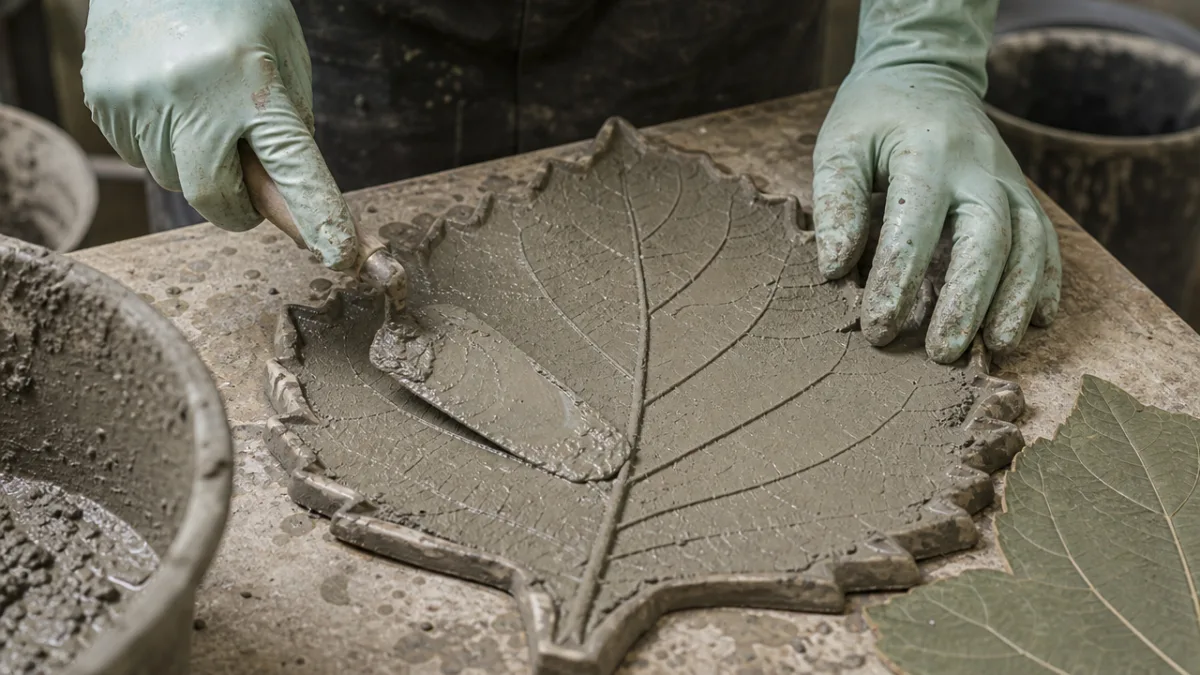
Once your workspace is prepared and your materials are assembled, the casting process itself moves through several distinct phases that each require attention and care. Begin by placing your Alocasia leaf face-side up on your protected flat surface, vein-side facing toward you. The underside of the leaf, where the veins are most pronounced and three-dimensional, will become the working face of your mold. Some crafters choose to build a small mound of damp sand beneath the leaf to give the finished planter a gentle, bowl-shaped curve that improves its functionality as a container, while others prefer a flatter profile that better showcases the full spread of the leaf’s shape.
Mix your concrete according to the package directions, aiming for a consistency that is roughly like thick peanut butter or a firm yogurt. It should hold its shape when scooped but not be so dry that it crumbles or so wet that it slumps immediately. This consistency is important because too-wet concrete will flow off the edges of the leaf before it begins to stiffen, while too-dry concrete will not bond well to itself and will be difficult to spread without tearing the delicate vein impressions you are trying to capture. Mix thoroughly and work out any dry pockets before you begin applying concrete to the leaf.
Apply the concrete in layers, starting with a thin initial coat pressed gently but firmly onto the leaf surface. This first layer is the most critical because it captures all the fine texture detail of the veining. Take care to work the concrete into the deepest grooves without pressing so hard that you distort or damage the leaf itself. Once this first layer is applied, allow it to stiffen slightly for ten to fifteen minutes before adding subsequent layers to build up the thickness of the planter walls. A finished thickness of about three-quarters of an inch to one inch is generally sufficient for structural integrity while keeping the weight manageable.
Curing, Demolding, and Finishing
Patience is perhaps the most important ingredient in successful concrete casting. After applying your final layer of concrete, cover the piece loosely with plastic wrap or a damp cloth and allow it to cure undisturbed for at least twenty-four hours, though forty-eight hours is considerably safer in typical indoor conditions. During this initial cure period, check on the piece occasionally and mist the surface lightly if it appears to be drying too quickly or developing surface cracks, which are usually a sign of moisture loss rather than structural failure. Slow, even curing produces stronger concrete, so resist the temptation to rush this phase.
Demolding is one of the most genuinely exciting moments in the entire process. Gently peel the Alocasia leaf away from the cured concrete, starting at the tip and working carefully toward the stem. The waxy surface of the leaf releases from concrete more cleanly than you might expect, and the moment the leaf peels away to reveal the perfectly transferred vein pattern beneath is a genuinely thrilling payoff for the patient work that preceded it. In some cases, small fragments of leaf may remain in deep recesses of the texture, but these can be gently removed with a soft brush and water, and any residual green color will break down and fade with time and exposure.
After demolding, allow the planter to continue curing for an additional week before placing plants in it or exposing it to frost. During this time the concrete continues to gain strength through ongoing hydration, a process that actually continues for weeks and even months at a diminishing rate. Once fully cured, you may wish to sand any rough edges gently with medium-grit sandpaper, apply a concrete sealer to improve weather resistance and enhance the visual depth of the surface texture, and then add a layer of gravel to the bottom of the planter before introducing potting mix and your chosen plant.
Choosing the Right Plants for Your Leaf Planter
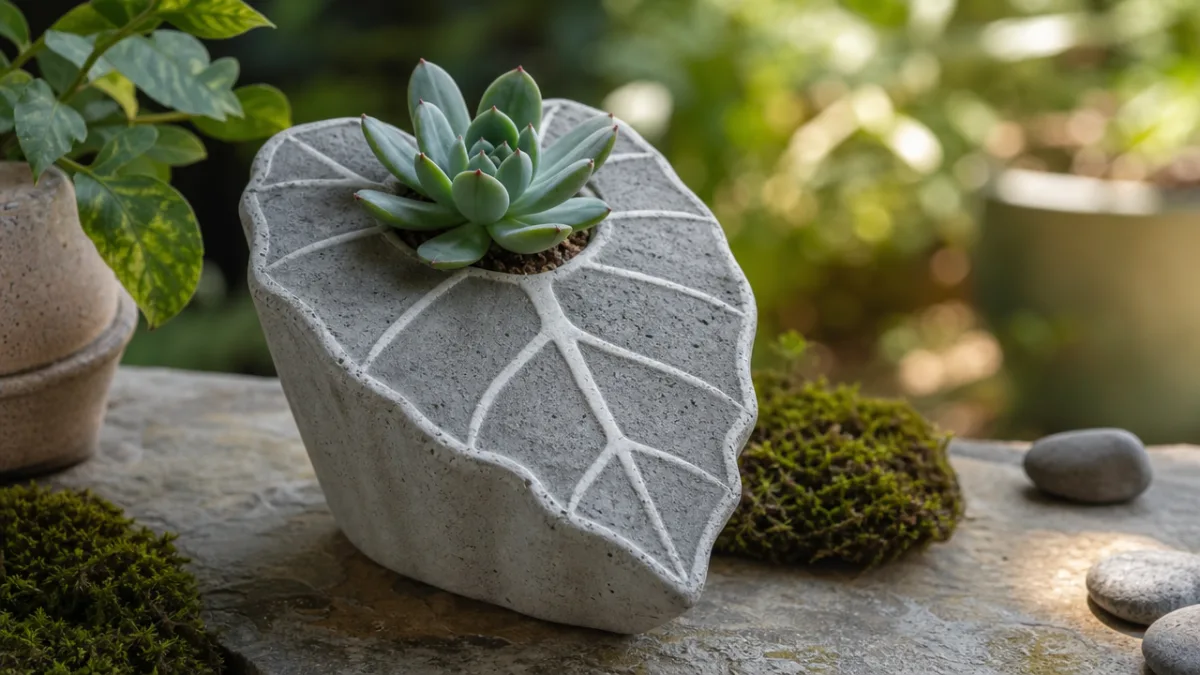
The visual character of a leaf-cast concrete planter is bold, textural, and distinctly natural, which means the plants you choose to display in it will either complement or compete with its inherent personality. The most successful pairings tend to lean into contrast, pairing the hard, cool texture of the concrete with soft, lush, or delicate plant forms that highlight how different two natural materials can look when placed in dialogue with each other. Compact succulents with rosette growth habits, such as Echeveria, Sempervivum, or Graptoveria varieties, are perennially popular choices because their geometric symmetry echoes the structured venation of the leaf without overpowering it.
Trailing plants also work beautifully in these planters, particularly when the planter is displayed on an elevated surface such as a shelf, staircase ledge, or garden wall bracket. String of pearls, creeping Jenny, baby tears, or a small pothos cutting will spill softly over the edges of the leaf form, softening its outline and creating a composition that feels both curated and naturally abundant. This combination of hard and soft, structured and flowing, is a foundational principle of both garden design and interior styling, and the leaf planter makes it almost effortless to achieve because the object itself already carries so much visual information.
For outdoor use in temperate climates, cold-hardy sedums, alpine plants, and drought-tolerant grasses are excellent choices that will thrive in the relatively shallow root space a leaf planter provides while requiring minimal watering and maintenance. In warmer climates or indoor settings, small ferns, prayer plants, or even a single dramatic specimen of a compact tropical variety can transform the planter into a living artwork. The key practical consideration is matching the plant’s water needs to the drainage capacity of your planter, ensuring that the concrete does not stay saturated in ways that would damage either the plant roots or the concrete structure over time.
Caring for Concrete Planters Long-Term
Concrete is one of the most durable materials available for garden use, but it does benefit from some basic maintenance to keep it looking its best over many seasons. New concrete contains elevated levels of lime, which creates a highly alkaline surface environment that can stress the roots of plants sensitive to pH levels. To neutralize this, you can leach the planter by filling it with water and letting it soak for twenty-four hours, then draining and repeating the process two or three times before planting. Alternatively, rubbing the interior with a diluted vinegar solution and rinsing thoroughly achieves a similar neutralizing effect more quickly.
Outdoors, concrete planters will naturally develop a patina over time as moisture, minerals, and microorganisms interact with the surface. Many gardeners find this weathered appearance highly desirable, as it gives the planter a sense of permanence and age that aligns beautifully with cottage garden, naturalistic, and woodland garden aesthetics. If you prefer to maintain the cleaner appearance of newer concrete, an annual application of a penetrating concrete sealer will slow the development of this patina and also improve the planter’s resistance to freeze-thaw damage in cold climates, where water expanding inside the concrete pores can eventually cause surface spalling.
Store particularly fine or decorative pieces indoors during hard freezes if you want to preserve their surface detail indefinitely. Bring them into a garage, shed, or covered porch before the first frost of the season and return them to their outdoor position once overnight temperatures reliably stay above freezing in spring. With this modest level of care, a well-made leaf-cast concrete planter can remain a centerpiece of your garden or home for a decade or more, its leaf impression growing more beautiful with age as the patina deepens and the texture catches the changing light of each new season.
Displaying and Styling Your Finished Creation
A leaf-cast concrete planter is versatile enough to work across a remarkably wide range of design contexts, from a highly curated Japandi-inspired interior shelf to a relaxed cottage garden overflowing with self-seeding annuals. The key to styling these pieces effectively is understanding that they are already strong visual statements on their own, and they tend to look best when given a degree of space and breathing room rather than being crowded together with too many competing objects. A single large Alocasia leaf planter displayed alone on a wooden crate or stone pedestal in a garden corner has far more presence than a dozen similar objects crammed onto a shelf without intention.
Indoors, grouping planters of different sizes but consistent material creates a cohesive, curated collection that feels like a considered design choice rather than an accumulation of craft projects. If you make several planters from leaves of different sizes, arranging them at varying heights using stacks of books, wooden blocks, or purpose-made plant stands creates a composition that draws the eye upward and adds dimension to a flat surface. Mixing your leaf planters with other natural materials such as raw wood, linen textiles, woven baskets, and ceramic vessels reinforces the organic, nature-inspired aesthetic that makes these pieces so appealing to begin with.
For outdoor display, consider the interplay of your planter with its surrounding environment across different seasons. In summer, the contrast of lush green planting against the cool gray concrete is striking and fresh. In autumn, when surrounding foliage turns gold and amber, the neutrality of the concrete allows it to harmonize with the warm palette without clashing. In winter, an unplanted concrete planter dusted with frost or snow becomes a sculptural element in its own right, its leaf-vein texture highlighted by the white surface in a way that recalls botanical illustration. This year-round versatility is one of the qualities that makes handmade concrete garden objects such enduring favorites among garden makers and home stylists.
Sharing the Craft and Building Community
One of the quieter pleasures of this kind of making is how naturally it invites sharing and connection. A handmade concrete planter given as a gift carries a weight of meaning that a store-bought object simply cannot match, communicating something about the time and care and personal investment of the maker. A planter cast from a leaf grown in your own garden and filled with a cutting from a plant already thriving in your home is as personal and thoughtful a gift as almost anything you could give, suitable for housewarmings, birthdays, teacher appreciation, or simply as an expression of friendship to someone who loves plants and beautiful things.
The growing community of concrete crafters online, particularly on visual platforms where finished pieces can be shared and techniques demonstrated through short videos, has made this an especially vibrant and encouraging creative space. Seeing the extraordinary range of results that different makers achieve with the same basic technique, from minimalist architectural pieces to whimsical garden ornaments, is genuinely inspiring and demonstrates how much personal interpretation is possible within a relatively simple set of materials and steps. If you share your own results, you will almost certainly find an enthusiastic audience and, very likely, new friendships with fellow makers who share your passion for this intersection of nature and craft.
Teaching the technique to others, whether through a casual afternoon with friends in a backyard, a more structured community workshop, or simply by walking a curious neighbor through the process, is one of the best ways to deepen your own understanding of the craft. When you articulate why you add concrete in layers, or why you wait before demolding, or how you judge the consistency of the mix, you consolidate your own knowledge and often discover refinements and improvements you had not previously considered. The leaf-cast concrete planter is, in the end, not just a beautiful object but a gateway into a whole way of seeing the natural world as an endlessly creative collaborator, one that offers up its forms and textures freely to anyone willing to look carefully and press gently into the material.








What do you think?
It is nice to know your opinion. Leave a comment.