










Waxleaf Privet Hedge: The Complete Guide to a Classic Landscaping Choice
What Is Waxleaf Privet?
Waxleaf privet, known botanically as Ligustrum japonicum or sometimes referred to as Japanese privet, is one of the most widely used evergreen shrubs in landscaping across warm and temperate climates. Its common name derives from the distinctive glossy, waxy coating on its dark green leaves, which gives the plant a polished, refined appearance year-round. Native to Japan and Korea, this adaptable shrub has become a staple in gardens and streetscapes throughout the American South, Southwest, and similar Mediterranean-style climates around the world.
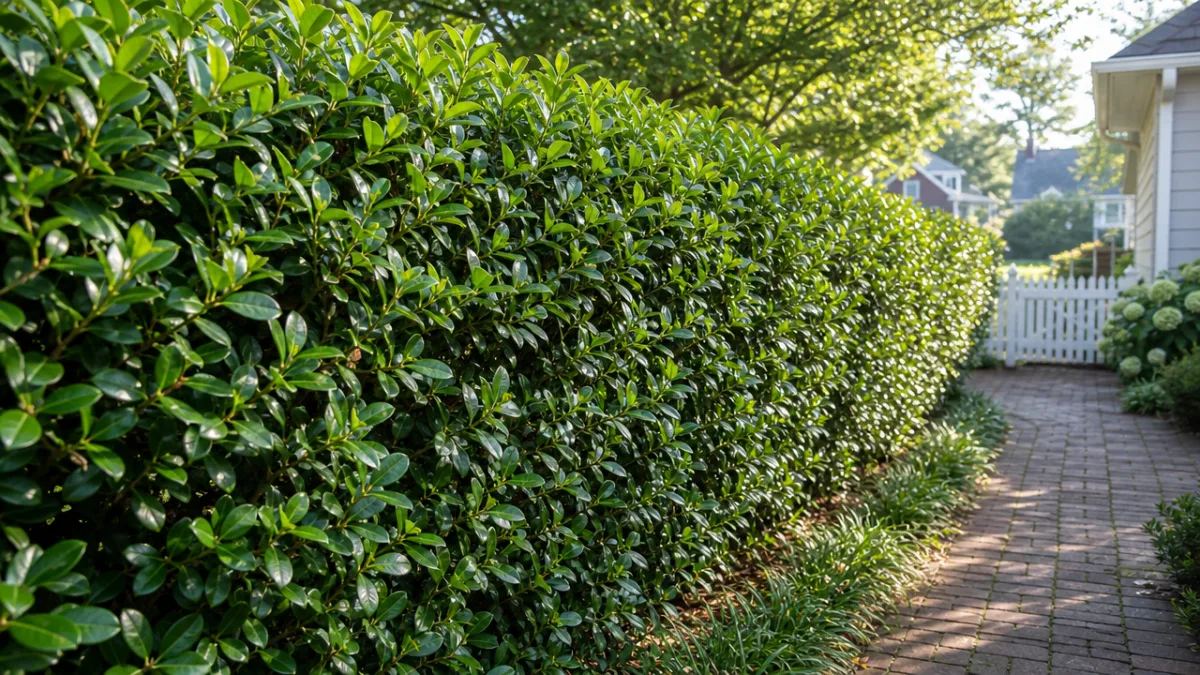
The plant belongs to the olive family, Oleaceae, and shares some visual characteristics with its relatives, including clusters of small, fragrant white flowers that bloom in late spring to early summer. These blooms are followed by small, dark berries that provide food for birds and wildlife, adding ecological value to its ornamental appeal. Mature plants typically reach heights of 8 to 12 feet, though they can grow taller if left unpruned, and they spread to create a dense, full canopy of foliage that is nearly impenetrable to wind, noise, and unwanted views.
What sets waxleaf privet apart from many other hedging plants is its combination of durability, aesthetics, and low maintenance requirements. It tolerates a wide range of soil conditions, performs well in both full sun and partial shade, and handles drought with surprising resilience once established. Gardeners who want a formal, manicured hedge or a more natural privacy screen will find that waxleaf privet delivers both options with equal success. It is this versatility that has earned it a permanent place in the landscape designer’s toolkit.
Why Choose Waxleaf Privet for a Hedge?
When homeowners and landscape professionals evaluate hedging plants, they weigh a complex mix of factors including growth rate, ultimate size, maintenance demands, visual appeal, and environmental adaptability. Waxleaf privet scores impressively across virtually every one of these categories. Its moderate-to-fast growth rate means a newly planted hedge can achieve functional privacy within two to three growing seasons, which is considerably faster than many alternatives like boxwood or holly. This rapid establishment makes it an especially attractive choice for new construction landscapes where privacy is an immediate priority.
Beyond speed of growth, waxleaf privet offers a visual elegance that few other hedging plants can match. The large, oval leaves with their characteristic shine catch and reflect light in a way that gives hedges a lush, well-maintained look even between trimmings. The foliage holds its rich dark green color throughout the year without the yellowing or bronzing that afflicts some evergreens during cold weather. This consistency makes it an excellent backdrop plant as well, providing a stable, neutral wall of green against which colorful flowers and ornamental plants can be displayed to great effect.
Waxleaf privet also offers practical advantages that go beyond appearance. Its dense growth habit creates an effective sound barrier, which is particularly valuable in urban and suburban settings where road noise or neighborhood activity can disrupt outdoor living spaces. Property owners near busy streets or commercial areas frequently choose waxleaf privet hedges precisely for this acoustic benefit. Additionally, the thickness of a mature privet hedge provides a genuine physical barrier, deterring foot traffic and offering a level of security that chain-link or wooden fences struggle to replicate with the same aesthetic grace.
Planting Waxleaf Privet: Soil, Spacing, and Timing
Successful hedge establishment begins with thoughtful site preparation and planting decisions. Waxleaf privet is notably forgiving of soil conditions, tolerating clay, loam, and sandy soils with equal success, but like most plants it thrives best in well-drained ground amended with organic matter. Before planting, it is worth working compost or aged bark into the soil to a depth of at least 12 inches, which improves drainage in heavier soils and moisture retention in sandier ones. Testing soil pH is also advisable; waxleaf privet performs best in a slightly acidic to neutral range of 6.0 to 7.5.
Spacing is one of the most critical decisions when planting a privet hedge, and it depends on how quickly you want coverage and how formal the finished hedge should look. For a dense privacy screen that fills in within two to three years, plants spaced 3 to 4 feet apart are ideal. For a more open, naturalistic effect or when budget limits the number of plants, spacing of 5 to 6 feet is workable, though it will take longer for the hedge to knit together fully. Double-row planting, with rows offset in a staggered pattern, creates an exceptionally thick barrier and is favored for high-privacy applications.
Timing the planting correctly improves survival rates and speeds establishment considerably. In most warm climates where waxleaf privet is commonly grown, fall planting is ideal because cooler temperatures reduce transplant stress while still allowing roots to establish before summer heat arrives. Spring planting is a viable second choice, provided adequate irrigation is available during the first summer. Container-grown plants, which are the most common form available from nurseries, can technically be planted at any time of year, but summer planting in hot climates should be approached cautiously and with a commitment to frequent watering during the critical first weeks.
Step-by-Step Planting Guide
- Mark the hedge line with stakes and string to ensure a straight planting row before digging any holes.
- Dig each planting hole two to three times as wide as the root ball but no deeper than the root ball height, so the plant sits at or slightly above ground level.
- Remove the plant from its container and gently loosen any circling roots to encourage outward growth into the surrounding soil.
- Backfill with a mixture of native soil and compost, tamping gently to eliminate air pockets around the roots.
- Water each plant deeply immediately after planting, then apply a 3-inch layer of mulch around the base, keeping mulch several inches away from the trunk to prevent rot.
- Install a drip irrigation line or plan a consistent hand-watering schedule for the first growing season to support root establishment.
Watering, Fertilizing, and General Care
During the first year after planting, waxleaf privet requires consistent moisture to develop a strong root system capable of sustaining the plant through drought and heat stress. New plantings should be watered deeply two to three times per week during warm months, tapering off to weekly irrigation as temperatures cool. Deep, infrequent watering is strongly preferred over shallow daily watering because it encourages roots to grow downward into more stable, moisture-retaining soil layers rather than staying near the surface where they are vulnerable to drying out rapidly. A drip irrigation system delivers water most efficiently and reduces the risk of fungal issues associated with overhead watering.
Once established, typically after the first full growing season, waxleaf privet becomes significantly more drought-tolerant and requires much less supplemental irrigation. In regions with regular rainfall, established hedges may need no additional watering at all except during extended dry spells. This reduced water demand is one of the plant’s most valued characteristics in water-conscious communities and xeriscaping contexts. However, even drought-tolerant plants perform better with some moisture during the hottest months, and hedges kept in full sun on sandy soil will benefit from occasional deep watering during summer regardless of how long they have been established.
Fertilization supports healthy growth and the rich leaf color that makes waxleaf privet so attractive. A balanced, slow-release granular fertilizer applied in early spring gives plants the nutrients they need to support vigorous new growth as the season begins. A second application in midsummer can be beneficial for hedges that are being pruned frequently, since each trimming removes foliage that represents an investment of nutrients. Avoid fertilizing after late summer, as encouraging new growth too close to winter increases frost sensitivity in climates that experience occasional freezes. Soil testing every few years provides the most precise guidance on what amendments are truly needed.
Pruning and Shaping Your Privet Hedge
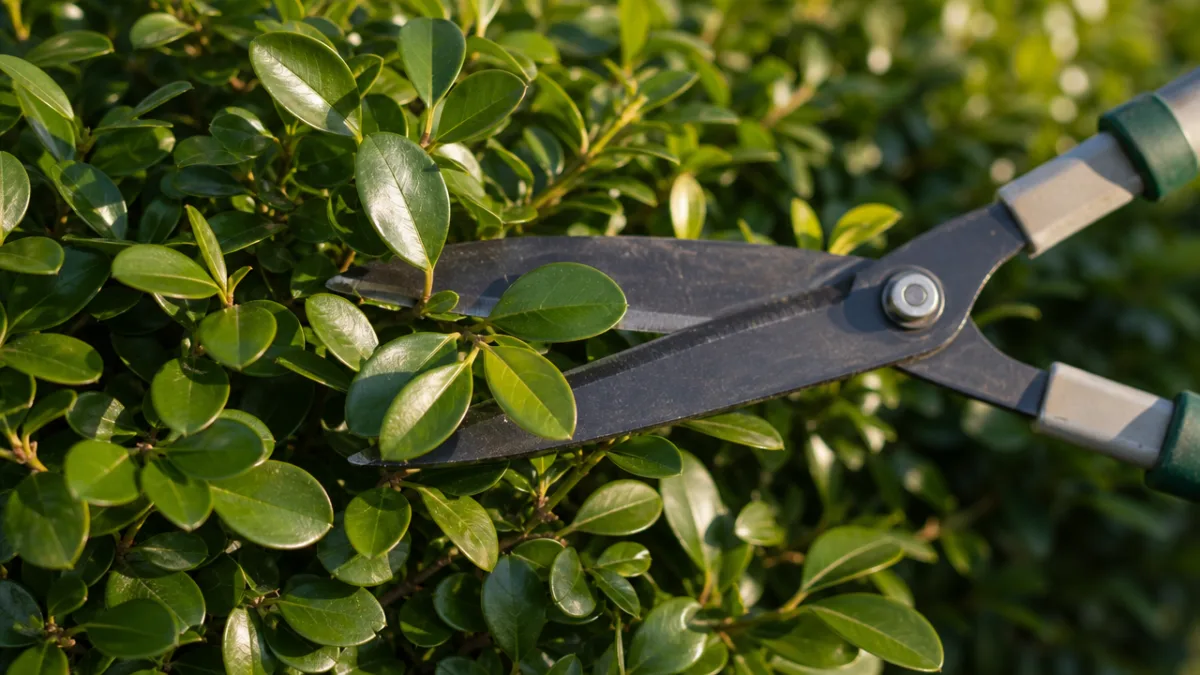
Pruning is both the art and the ongoing commitment that defines the character of a waxleaf privet hedge. Left entirely unpruned, waxleaf privet grows into a large, multi-stemmed shrub with an informal, rounded shape that is attractive in its own right but unsuitable for formal hedging applications. For a crisp, architectural hedge, regular shearing is necessary to maintain clean lines and encourage the dense branching that creates a solid wall of foliage. Most gardeners prune waxleaf privet two to three times per year, with major cuts in late winter before new growth begins and lighter shaping done in summer after the primary flush of growth has hardened.
The shape of the hedge cross-section matters more than many people realize. A hedge that is wider at the top than at the bottom is prone to losing lower foliage because the upper branches shade out the lower ones, creating a bare, leggy base over time. The most effective shape is one that tapers slightly toward the top, sometimes called a batter, which ensures that sunlight reaches all levels of the hedge and the entire surface remains clothed in dense foliage. This principle applies regardless of whether the desired finish is a flat top, a rounded top, or a more naturalistic profile.
For the most uniform results, using a string line or a lightweight wooden frame as a guide during major pruning sessions helps maintain consistent height and edge angles along the entire hedge. Electric hedge trimmers speed the work considerably on longer runs, while hand shears allow greater precision around curves, corners, and the ends of the hedge. After pruning, collecting and removing clippings promptly reduces the risk of disease and keeps the surrounding landscape neat. Some gardeners leave fine clippings as a light mulch directly under the hedge, where they break down and return modest amounts of organic matter to the soil.
Pruning Calendar at a Glance
- Late Winter (February–March): Major structural pruning before new growth emerges. This is the time to reduce overall size if needed and re-establish clean lines.
- Early Summer (June): Light shaping after the main spring flush of growth has matured. Remove excess new growth to maintain the desired profile.
- Late Summer (August–September): Optional light cleanup trimming to keep hedges tidy going into fall. Avoid heavy cutting that stimulates vulnerable new growth before cooler weather.
Common Problems and How to Solve Them
Waxleaf privet is considered a robust, low-problem plant, but like any living organism it is not entirely immune to pests and diseases. One of the most common issues encountered is powdery mildew, a fungal condition that produces a white, dusty coating on leaf surfaces, particularly during humid weather or when plants are growing in poor air circulation. While powdery mildew is rarely fatal, it detracts significantly from the plant’s visual appeal. Improving airflow through selective thinning pruning, avoiding overhead irrigation, and applying a registered fungicide if the problem is severe are all effective management strategies.
Scale insects and aphids occasionally colonize waxleaf privet, particularly on stressed plants or in situations where natural predator populations are suppressed by pesticide use elsewhere in the garden. Scale insects appear as small brown or gray bumps on stems and leaf undersides, while aphid infestations cause new growth to appear curled, sticky, or distorted. Horticultural oil applied during the dormant season or insecticidal soap sprayed during active growth stages provide effective control for both pests without disrupting beneficial insect populations significantly. Strong blasts of water from a garden hose can also dislodge aphid colonies before chemical intervention becomes necessary.
Root rot caused by Phytophthora or other water mold pathogens is a potential issue in poorly drained soils where water pools around the root zone. Symptoms include yellowing foliage, wilting despite adequate soil moisture, and eventual dieback of entire sections of the hedge. Prevention is far more effective than treatment: ensuring good drainage before planting, avoiding overwatering once plants are established, and maintaining a mulch layer that keeps soil temperatures and moisture levels stable are the best defenses. If root rot is suspected, improving drainage through raised planting or the addition of gravel channels below the planting area may help save affected plants in early stages.
Waxleaf Privet in the Landscape: Design Applications
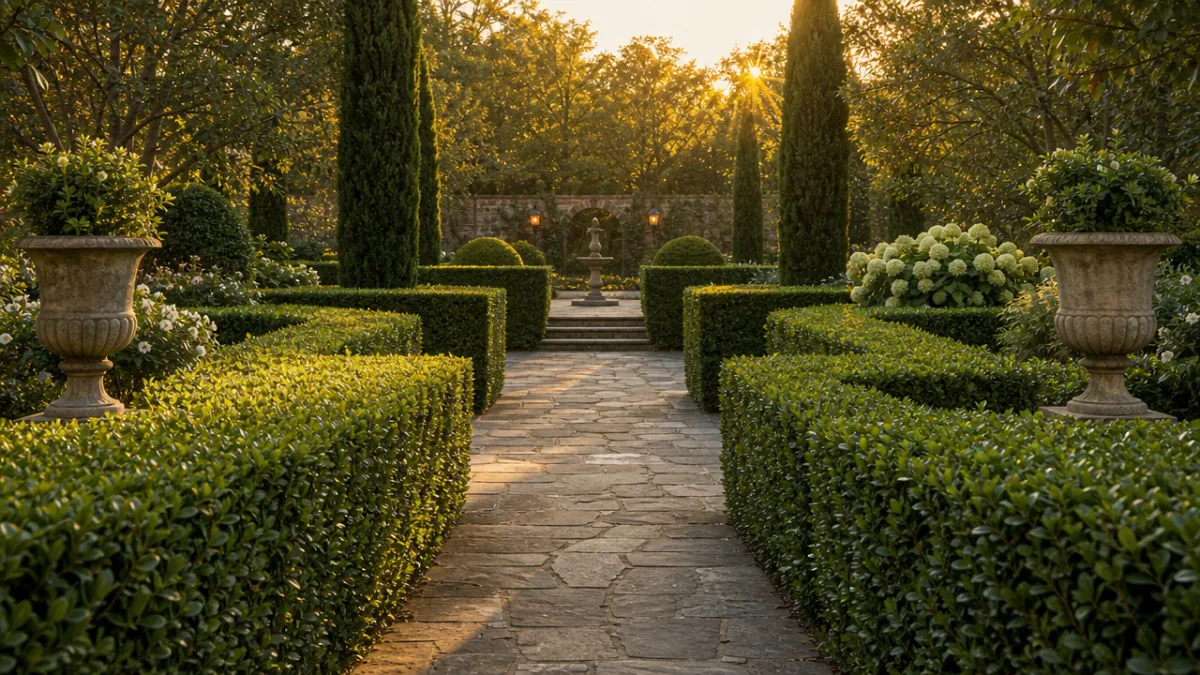
The versatility of waxleaf privet as a design element extends far beyond its most familiar role as a simple privacy hedge along a property boundary. Landscape designers use it as a structural backbone in formal garden compositions, shaping it into geometric forms that frame garden rooms, line allées, or create dramatic backdrops for perennial borders and rose gardens. Its dark, neutral foliage color makes it an ideal foil for virtually any other plant, from the soft pastels of lavender and salvia to the bold contrast of ornamental grasses and bright flowering annuals planted at its base.
In contemporary landscape design, waxleaf privet is increasingly being used in creative ways that depart from traditional hedging applications. Trained as a standard tree form, a single-trunk privet with a globe-shaped crown creates a refined sculptural accent for entry courtyards, patio perimeters, and formal planters. Planted in rows, these tree-form privets create a sophisticated colonnade effect that adds vertical structure and repeating rhythm to a space. This approach delivers much of the ornamental impact of expensive ornamental trees at a fraction of the cost, since privet is generally among the more affordable landscape plants available from nurseries.
For residential landscapes specifically, waxleaf privet hedges perform multiple simultaneous functions that justify their popularity. They provide the privacy of a solid fence while offering the softness and ecological value of living vegetation. They define outdoor spaces in a way that feels natural and rooted in the landscape rather than imposed upon it. They require no painting, staining, or structural repairs the way wooden or metal fencing does. And over time, a well-maintained privet hedge becomes a genuine landscape asset that adds measurable value to a property, in ways that functional but visually neutral fencing rarely achieves.
Popular Design Combinations with Waxleaf Privet
- Pair with Salvia leucantha (Mexican bush sage) at the base for a striking contrast of soft purple against dark green, particularly beautiful in fall.
- Use as a backdrop for white-flowering shrubs such as gardenia or iceberg roses, which pop dramatically against the deep foliage.
- Combine with ornamental grasses like Muhlenbergia capillaris in front of a privet hedge for a layered, naturalistic effect with seasonal interest.
- Plant in alternating rows with boxwood for a more textured, mixed hedge that provides visual interest at close range.
- Use clipped privet pillars flanking an entry gate or garden doorway for a classic, welcoming formality.
Ultimately, waxleaf privet earns its enduring place in horticulture not through novelty but through consistent, dependable performance season after season. It is a plant that rewards attention with elegance and forgives occasional neglect without complaint. Whether defining a property boundary, creating an intimate garden enclosure, or serving as the structural skeleton of a larger landscape design, waxleaf privet brings a combination of practical utility and genuine beauty that is genuinely difficult to surpass. For gardeners seeking a hedge plant that will look good in the ground, on a tight maintenance budget, and under the demands of real-world climate stresses, waxleaf privet remains one of the wisest and most rewarding choices available.








What do you think?
It is nice to know your opinion. Leave a comment.