










Photography and the Circular Economy: A Visual Journey Through Sustainable Imaging
Understanding the Circular Economy Through the Lens of Photography
The circular economy represents one of the most transformative concepts in modern environmental thinking, and photography stands as a uniquely powerful medium to communicate its principles to a global audience. Unlike linear economic models that follow a straightforward take-make-dispose trajectory, the circular economy envisions a regenerative system where materials, products, and resources are kept in use for as long as possible. Infographics and visual diagrams have become essential tools in making this complex framework accessible, and photographers and designers are increasingly rising to the challenge of rendering these ideas in compelling, memorable ways.
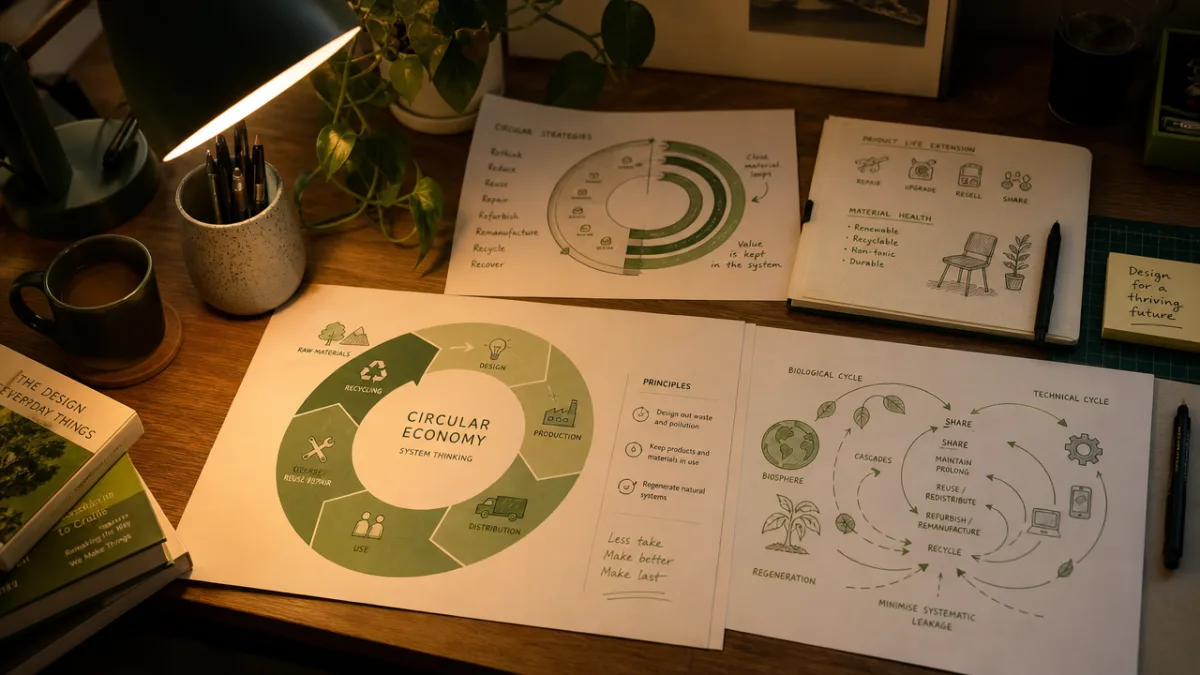
When we examine a circular economy infographic through the eye of a photographer or visual communicator, we begin to appreciate the layered symbolism at play. Green color palettes are not accidental choices — they signal ecological responsibility, growth, and renewal. The circular diagram itself mirrors the very concept it represents: a loop without a beginning or end, suggesting perpetual motion, regeneration, and the elimination of waste. For photographers documenting sustainability initiatives, understanding this visual language is foundational to creating work that resonates with both specialist audiences and the general public.
Photography has long served as evidence, as testimony, and as inspiration. In the context of the circular economy, images carry the weight of an urgent message: that humanity must fundamentally rethink its relationship with resources. From aerial shots of recycling facilities to intimate close-ups of repaired electronics, the camera transforms abstract policy concepts into tangible human stories. The infographic tradition merges with photographic sensibility to produce materials that educate, persuade, and motivate action across industries, governments, and communities worldwide.
The Art and Science of Environmental Infographic Design
Designing an effective circular economy infographic is as much an art form as it is a scientific exercise. Skilled designers must balance data integrity with visual appeal, ensuring that complex flows of materials, energy, and information remain legible and engaging without sacrificing accuracy. The green diagram style popularized by sustainability communicators draws on principles borrowed from photography composition — rule of thirds, leading lines, and contrast — to guide the viewer’s eye through intricate systems in an intuitive, pleasurable way.
Color theory plays a central role in environmental infographic design, just as it does in professional photography. Green, as the dominant hue, carries immediate associations with nature, sustainability, and hope. However, skilled designers layer in secondary tones — blues representing water and clean energy, browns evoking soil and organic materials, and whites suggesting purity and transparency — to create a visual ecosystem within the diagram itself. This chromatic storytelling mirrors the techniques photographers use when composing shots of natural landscapes or sustainable architecture, where color harmony communicates meaning before a single word is read.
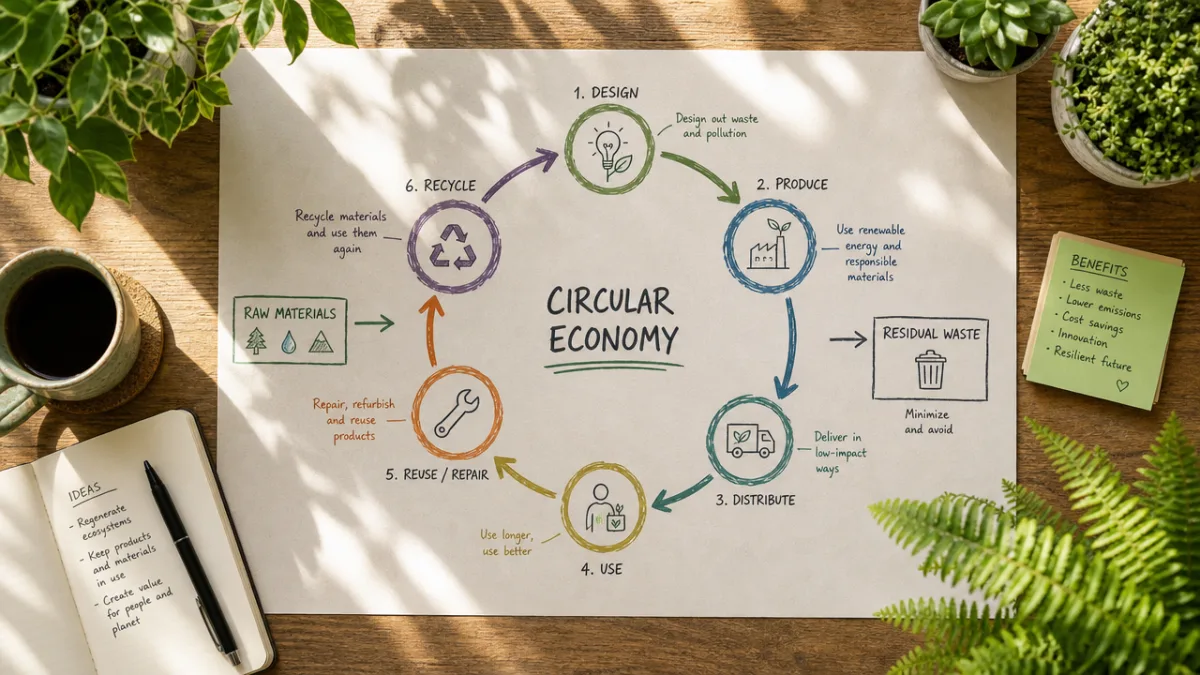
The line-based infographic format, such as the circular economy line infographic style referenced in contemporary design work, draws heavily on the traditions of technical illustration and data visualization. These flowing lines represent material pathways, tracing the journey of a product from raw resource extraction through manufacturing, consumer use, collection, and eventual re-entry into the production cycle. For photographers who work alongside designers on sustainability campaigns, understanding these visual conventions is essential to creating complementary images that reinforce rather than contradict the infographic narrative.
Modern infographic design tools have democratized the creation of these materials, allowing individuals, nonprofits, and small businesses to produce professional-quality circular economy diagrams. Yet the principles that distinguish truly effective visual communication remain constant: clarity of hierarchy, intentional use of negative space, and a coherent visual voice that speaks across cultural and linguistic boundaries. These are lessons that professional photographers learn through years of practice, and they translate directly into the world of sustainable visual storytelling.
Photography’s Role in Documenting Circular Economy Practices
Documentary photography has always been at the forefront of environmental communication, and the rise of the circular economy as a policy and business framework has created an entirely new genre of sustainability photography. Photographers working in this space are commissioned to capture everything from the inner workings of industrial composting facilities to the artisan workshops where broken furniture is restored to new life. Each image serves as proof that the circular economy is not merely a theoretical construct but a living, breathing set of practices already transforming industries around the world.
One of the most visually compelling aspects of circular economy documentation is the contrast between the familiar and the unexpected. A photograph of a mountain of discarded smartphones becomes a powerful statement about linear consumption; a subsequent image of those same devices being carefully disassembled, their precious metals recovered and their components redirected into new products, tells a completely different story. This visual juxtaposition is a technique borrowed from the documentary tradition, and when applied to sustainability subjects it carries enormous persuasive power, shifting viewer perceptions from helplessness to possibility.
Fashion and textile photography within the circular economy context has exploded in recent years, driven by growing consumer awareness of the environmental cost of fast fashion. Photographers documenting circular fashion initiatives capture the beauty of upcycled garments, the skill of zero-waste pattern cutting, and the quiet dignity of repair cafes where community members learn to extend the life of their clothing. These images challenge the dominance of glossy, wasteful fashion advertising while demonstrating that sustainability and aesthetic beauty are entirely compatible — a message that resonates powerfully when communicated through skilled photography.
Agricultural and food systems photography represents another vital frontier in circular economy visual documentation. Images of anaerobic digesters converting food waste into biogas, of urban farms growing produce on former industrial sites, and of community composting schemes returning nutrients to the soil all contribute to a rich visual archive of circular thinking in action. Photographers who specialize in this field must combine technical knowledge of agricultural processes with a sensitivity to the human stories embedded within them, producing work that is simultaneously informative and deeply moving.
Green Diagram Aesthetics: Visual Conventions in Sustainability Communication
The green diagram has become a recognizable visual shorthand for sustainability discourse, and its conventions are worth examining in detail for anyone working at the intersection of photography and environmental communication. The archetypal circular economy diagram features concentric rings or flowing loops, each representing a different stage in the lifecycle of a material or product. Arrows indicate direction of flow, while icons or small illustrations anchor each stage to a real-world process. The overall effect is one of elegant complexity — a system that is intricate but intelligible, challenging but ultimately hopeful.
Typography choices within green diagrams reinforce their visual identity in ways that parallel the compositional choices photographers make. Clean, sans-serif fonts suggest modernity and clarity, aligning with the forward-looking ethos of circular economy thinking. Hierarchical text sizing guides the reader from headline concepts to supporting detail, mirroring the way a skilled photographer uses depth of field to direct attention from foreground subject to contextual background. When photographs are integrated into infographic layouts — as is increasingly common in digital sustainability communications — the typographic and photographic elements must work in harmony to create a unified visual argument.
The line infographic format in particular has proven remarkably versatile across different contexts and audiences. Whether rendered in a highly technical style for industry publications or simplified and brightened for consumer-facing campaigns, the core visual logic remains consistent: resources enter a circular system, pass through various transformation stages, and return to be used again. Photographers contributing to these campaigns must understand how their images will be integrated into these linear-yet-circular layouts, ensuring that composition, color temperature, and subject framing align with the overall design language of the infographic system.
Iconography within circular economy diagrams draws on a shared visual vocabulary that has emerged across the sustainability sector over the past decade. Leaf symbols, recycling arrows, water droplets, and sunbursts have become the hieroglyphics of the green economy, instantly communicating complex ideas about renewable energy, water stewardship, and biological cycles. For photographers, understanding this iconographic language opens up creative possibilities for images that either directly reference these symbols or subtly echo them through compositional choices, creating visual rhymes that deepen the impact of sustainability campaigns.

Integrating Photography and Infographics for Maximum Impact
The most effective sustainability communications today rarely rely on a single medium. Instead, they integrate photography, infographic design, data visualization, and narrative text into layered experiences that engage audiences at multiple levels simultaneously. This integrated approach is particularly powerful when communicating circular economy concepts, where the interplay between abstract system thinking and concrete human action is central to the message. Photographers and designers who can collaborate fluidly across these disciplines are increasingly valued in the sustainability communications sector.
Annual reports and sustainability disclosures for major corporations represent one of the highest-profile contexts in which photography and infographics must work in concert. These documents must satisfy the rigorous expectations of investors and regulators while also engaging employees, customers, and the broader public. Circular economy sections within these reports typically feature flow diagrams showing material inputs and outputs alongside photographs that humanize the data — a worker at a take-back facility, a product beautifully refurbished, a community benefiting from a sharing scheme. The visual dialogue between diagram and photograph creates a richer understanding than either element could achieve alone.
Digital platforms have expanded the possibilities for integrating photography and circular economy infographics in dynamic ways. Animated diagrams can unfold to reveal the stages of a circular system, with photographic overlays appearing at each stage to illustrate the real-world counterpart of each abstract process. Interactive infographics allow users to click through to photographic essays exploring each element in depth. Social media carousels combine bold infographic slides with photographic storytelling in sequences that keep audiences engaged across multiple swipes. These formats require photographers to think architecturally about their image sets, planning shoots that will complement the structural requirements of the infographic framework.
Educational contexts present particularly rich opportunities for the marriage of photography and circular economy infographics. School curricula around the world are increasingly incorporating sustainability literacy, and the combination of clear visual diagrams with compelling photographs provides teachers with powerful tools for explaining complex systems to young learners. Photographers commissioned to create educational content must approach their subjects with an additional layer of intentionality, ensuring that images are not only visually striking but also pedagogically effective — clear, accurate, and free from visual noise that might distract or confuse.
The Future of Circular Economy Visual Communication
As artificial intelligence, augmented reality, and immersive media technologies continue to evolve, the visual communication of circular economy concepts is entering an exciting new phase. AI-generated infographic elements can now be personalized in real time to reflect a viewer’s specific industry, location, or product category, making circular economy diagrams more relevant and actionable than ever before. Photography’s role in this evolving landscape is to provide the irreducible human element — the faces, hands, places, and textures that no algorithm can authentically generate and that remain essential to emotional engagement with sustainability topics.
Augmented reality applications are beginning to transform how circular economy infographics are experienced in physical spaces. Museum exhibitions, trade show installations, and educational environments increasingly use AR overlays to animate static diagrams, allowing visitors to see circular processes unfold in three dimensions around them. Photography contributes to these experiences through the creation of high-quality texture maps, background imagery, and photorealistic reference materials that ground the digital overlays in tangible reality. Photographers working in this space must develop new technical competencies while retaining their core skills in lighting, composition, and visual storytelling.
The growing field of circular economy certification and labeling creates ongoing demand for clear, trustworthy visual communication. As certification schemes for products, buildings, and business practices proliferate, photography and infographic design must work together to communicate complex certification criteria in forms that consumers can quickly understand and trust. This is an area where the green diagram tradition and professional photography are likely to continue converging, with certified circular products photographed against standardized backgrounds and incorporated into diagram templates that communicate their sustainability credentials at a glance.
Community-generated photography is emerging as a powerful complement to professionally produced circular economy infographics. Participatory photography projects invite members of the public to document circular economy practices in their own neighborhoods — repair cafes, community gardens, zero-waste shops, tool libraries — creating authentic visual archives that reflect the genuine diversity of circular economy activity across different communities and cultures. When these community photographs are integrated into infographic frameworks, they produce communications that are both rigorous in their systemic thinking and deeply rooted in human experience, combining the best qualities of data visualization and documentary photography in service of a more sustainable world.
- Community repair cafes where skilled volunteers extend the life of electronics, clothing, and household items, reducing waste and building social capital simultaneously.
- Industrial symbiosis networks where the waste output of one factory becomes the raw material input for another, captured in striking aerial and ground-level photography.
- Biomimicry design studios where products are engineered to mimic natural circular processes, with photographers documenting both the natural inspirations and the finished human designs.
- Digital product passports that trace the material history of manufactured goods, supported by photographic evidence of responsible sourcing and ethical manufacturing conditions.
- Urban mining operations recovering precious metals from electronic waste, where dramatic industrial photography communicates both the scale of the challenge and the ingenuity of the solution.
The intersection of photography and circular economy infographic design represents more than a professional niche — it reflects a fundamental shift in how humanity tells stories about its relationship with the material world. As the urgency of environmental challenges intensifies, the demand for visual communications that are simultaneously honest about the scale of the problem and inspiring in their vision of solutions will only grow. Photographers, designers, and visual communicators who develop deep literacy in both the aesthetic traditions of their crafts and the substantive knowledge of circular economy systems will be uniquely positioned to shape the narrative of the sustainability transition. Their images and diagrams will not merely illustrate a changing world but actively contribute to bringing that change about.








What do you think?
It is nice to know your opinion. Leave a comment.