










Is Dumpster Diving Legal in California? A Complete Guide to Finding Treasures in Trash
Dumpster diving — the practice of searching through discarded waste to find usable, valuable, or recyclable items — has grown from a fringe activity into something embraced by environmentalists, bargain hunters, and sustainability advocates alike. California, with its dense urban centers, thriving college towns, and culture of innovation, is one of the most active states for this practice. But before you grab a pair of gloves and head for the nearest trash bin, it’s worth understanding the legal landscape that surrounds this activity. The rules are more nuanced than a simple yes or no, and knowing them could save you from a fine — or worse.
The question of legality touches on constitutional law, local ordinances, private property rights, and environmental regulations all at once. California residents and visitors who engage in dumpster diving operate in a patchwork of rules that vary dramatically from one city to the next. What is perfectly acceptable in an unincorporated rural area might result in a misdemeanor charge in a major metropolitan zone. Understanding the difference between public and private trash, reading signs, and knowing your rights are all essential parts of diving responsibly and safely.
This guide will walk you through the legal framework governing dumpster diving in California, the most common rules and restrictions you’ll encounter, practical tips for staying safe and legal, and the ethical considerations that serious divers take into account. Whether you’re motivated by financial necessity, environmental concern, or sheer curiosity about what people throw away, this article will give you the knowledge you need to dive smart.
The Constitutional Foundation: California v. Greenwood
The single most important legal precedent for dumpster diving in the United States is the 1988 U.S. Supreme Court case California v. Greenwood. In this landmark ruling, the Court held that individuals have no reasonable expectation of privacy in garbage left for collection on a public street. The case involved police searching a suspect’s trash bags left at the curb without a warrant. The Court’s decision established that once you place your trash at the curb for pickup, you effectively abandon any legal claim to it — and that includes the public’s right to look through it.
This ruling has enormous practical implications for dumpster divers. Because trash placed at the curb is considered abandoned property with no expectation of privacy, picking through it is generally not considered theft under federal constitutional interpretation. The person who threw it away has, in legal terms, surrendered their ownership. This principle forms the bedrock on which most dumpster diving is treated as legal activity — though it does not mean the practice is without restriction or consequence, particularly at the local level.
It’s worth emphasizing that California v. Greenwood established a federal constitutional minimum, not a California-specific rule. California may actually offer its citizens stronger privacy protections under the California Constitution, and local governments retain the authority to enact their own ordinances restricting or prohibiting dumpster diving entirely. So while the Supreme Court opened the door, California and its many municipalities can — and often do — partially close it again through specific local laws and regulations.
State-Level Laws and What They Mean for Divers
At the state level, California does not have a single statute that explicitly prohibits or permits dumpster diving. Instead, relevant legal considerations come from a combination of trespassing laws, theft statutes, and recycling regulations. California Penal Code Section 602 governs trespassing, and this is the provision most commonly invoked against dumpster divers who access private property without permission. If a dumpster is located on private property — behind a store, in an apartment complex, or within a gated area — entering that property to access the dumpster can constitute criminal trespass, regardless of what you intend to do once there.
California’s theft laws add another layer of complexity. While abandoned property cannot technically be stolen, property that is not yet abandoned — such as a dumpster belonging to a business that still considers it under their control — may be treated differently. Some retailers and property owners post signs explicitly stating that their waste remains their property and that removal is prohibited. Courts have occasionally upheld such claims, particularly when the business can demonstrate it had not yet relinquished ownership of the discarded items. The placement of the dumpster and whether it is locked or fenced can also affect how courts interpret the situation.
Recycling law is another consideration unique to California. The California Beverage Container Recycling and Litter Reduction Act governs the redemption of CRV (California Redemption Value) containers — those aluminum cans and plastic bottles with a nickel or dime deposit. Taking recyclable CRV containers from someone else’s trash or a recycling bin to redeem them yourself is actually a misdemeanor under California law, and it has been actively prosecuted in some cities. This is an important distinction for divers who hope to recoup money by collecting bottles and cans, as this specific activity is treated separately from general dumpster diving.
City-by-City Variation: How Local Ordinances Change Everything
Perhaps the most critical thing to understand about dumpster diving in California is that local rules vary enormously, and your legal standing can shift the moment you cross a city limit. Los Angeles, San Francisco, San Diego, Sacramento, and dozens of smaller municipalities have each enacted their own regulations that either restrict or effectively prohibit the practice within their boundaries. Failing to research the rules in your specific location before diving is one of the most common mistakes newcomers make — and it can result in citations, fines, or even arrest.
In Los Angeles, the Los Angeles Municipal Code Section 66.32 designates solid waste placed for collection as the property of the city once it is set out. This means that once trash is at the curb in LA, it legally belongs to the city — not to the original owner and not to a diver who picks it up. Taking items from curbside collection in Los Angeles can therefore be considered theft of city property, a misdemeanor. Enforcement varies widely by neighborhood and time of day, but the legal exposure is real. San Francisco has similar provisions under its Public Works Code, which also designates collected recyclables as the property of the city’s contracted haulers.
Other California cities take a more permissive or simply unenforced approach. In smaller cities, agricultural towns, and unincorporated county areas, dumpster diving is far less likely to result in legal trouble, partly because enforcement resources are limited and partly because local ordinances are less restrictive. College towns like Davis, Santa Cruz, and Chico have long-established diving communities, particularly around end-of-semester move-outs when students discard furniture, electronics, clothing, and food in large quantities. The practical rule of thumb: always research the ordinances of your specific city before diving, and when in doubt, ask local authorities or look up municipal codes online.
Private Property Rules and How to Stay on the Right Side of the Law
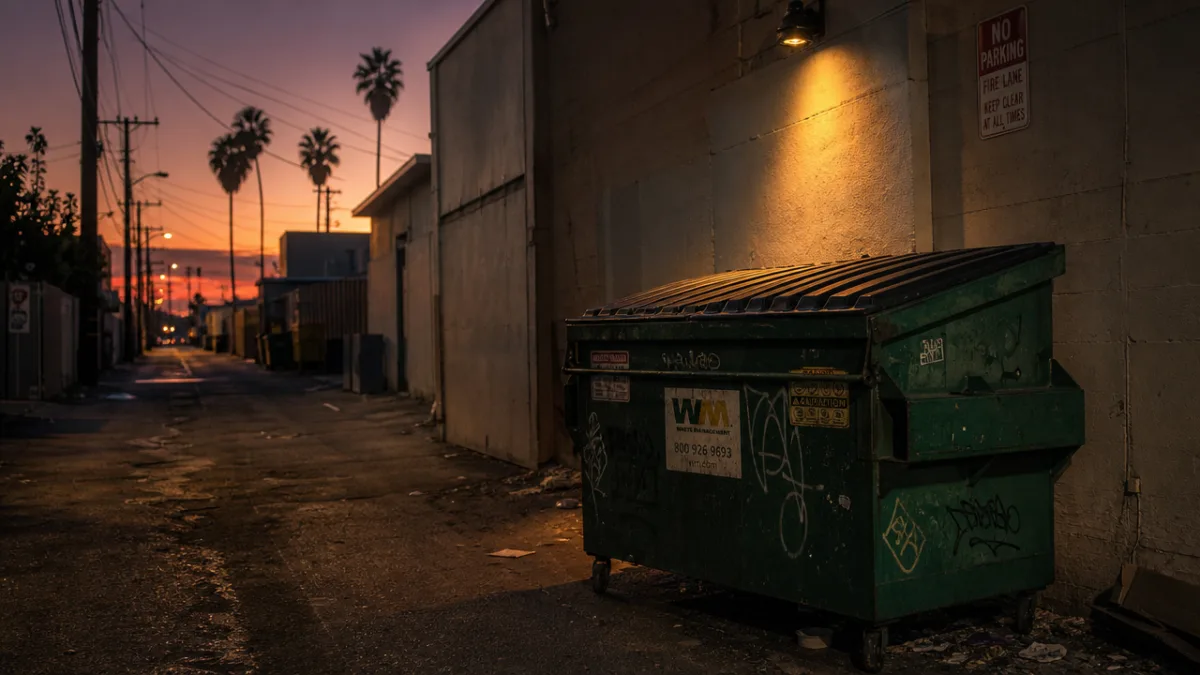
Even where dumpster diving is not explicitly banned by local ordinance, the private property issue remains the most common legal trap for divers. The overwhelming majority of commercial dumpsters — those belonging to grocery stores, restaurants, retailers, and office buildings — are located on private property. Accessing private property without permission to reach a dumpster exposes you to trespassing charges under California Penal Code 602, which can result in fines and, in repeat cases, misdemeanor charges. Recognizing the boundaries of private property and knowing when you’re on it is a fundamental skill for any diver.
Fencing, locked enclosures, and posted “No Trespassing” signs are the clearest indicators that the property owner considers the dumpster off-limits. California law generally treats these as unambiguous statements of restricted access, and courts rarely sympathize with trespassers who claim they didn’t notice such warnings. Even a dumpster pushed to the edge of a property line, visible from a public alley, may still legally require you to step onto private land to reach it. The physical act of crossing that property boundary — regardless of your intention — can constitute trespass.
The safest legal approach is to seek explicit permission from property or business owners before accessing their dumpsters. Many divers report success in simply asking store managers whether they may take items from the trash. Some businesses, particularly smaller ones, are happy to accommodate this if it saves them disposal fees and redirects usable goods. Others may give informal permission that still won’t protect you legally if a different manager or owner changes their mind. For truly reliable access, some divers arrange formal agreements with businesses, which provide the most solid legal standing and often yield the most consistent finds.
Safety Considerations: Protecting Yourself While Diving
Beyond the legal landscape, physical safety is a paramount concern for anyone who dives into dumpsters. Commercial and residential waste containers can harbor a startling variety of hazards, from broken glass and sharp metal edges to discarded medical waste, cleaning chemicals, and spoiled food. Knowing how to protect yourself before you reach into an unknown container is not just prudent — it could prevent serious injury or illness. Many experienced divers treat safety preparation with the same seriousness that they give legal preparation.
Protective gear is the foundation of safe diving. At minimum, dumpster divers should wear thick, puncture-resistant gloves to protect against broken glass, needles, and other sharp objects. Long sleeves and pants prevent skin contact with chemicals or biological material. Sturdy, closed-toe boots with slip-resistant soles protect against both sharp objects underfoot and unstable footing on slippery container surfaces. A headlamp or flashlight is essential for nighttime diving and for seeing clearly into deep containers without leaning in blindly. Many experienced divers also keep hand sanitizer and a change of clothes nearby for after a session.
Awareness of your surroundings is equally important. Diving alone at night in unfamiliar areas carries inherent personal safety risks unrelated to the contents of the dumpster. Going with a partner, staying in well-lit and familiar areas, and being mindful of who might be watching are all common-sense precautions. You should also be alert to the presence of pest infestations — rodents and insects are commonly found in waste containers, and disturbing their habitat can provoke bites or stings. Finally, be cautious around compactor-style dumpsters, which can activate automatically and pose an extreme crushing hazard if tampered with or climbed into.

Ethical Dumpster Diving: Principles That Serious Divers Follow
The legal and safety dimensions of dumpster diving are important, but the most respected members of the diving community also adhere to a set of ethical principles that reflect a commitment to sustainability, community, and respect for others. Ethics in dumpster diving aren’t just about feeling good — they also help maintain the goodwill of property owners, neighbors, and authorities, which ultimately creates a more tolerant environment for all divers. A diver who leaves a mess behind them or takes items they don’t need damages the reputation of the entire community.
One of the most fundamental principles is to leave the area cleaner than you found it. If you open bags or move items around to search through a dumpster, take the time to repack and reclose whatever you don’t take. Scattered trash draws complaints from neighbors, attracts pests, and gives property owners a concrete reason to lock their dumpsters or report future divers to authorities. Similarly, don’t take more than you genuinely need or can use. Some divers take items they intend to resell, which is generally considered acceptable, but stripping a dumpster entirely of everything useful — especially food — before others have a chance is widely considered poor form in the diving community.
Sharing and redistribution are core values for many experienced divers, particularly those who dive for food. Some divers participate in formal or informal networks that redistribute food from grocery dumpsters to food-insecure individuals and families. Organizations like Food Not Bombs have long incorporated dumpster-recovered food into their community meal programs, with appropriate food safety precautions. If you find more than you can use, consider sharing with neighbors, donating to a local mutual aid group, or leaving items where others can find them. The philosophy behind ethical diving often aligns closely with broader anti-waste and mutual aid movements that see abundance in what others discard.
What You’re Most Likely to Find — and What Has Real Value
Part of what draws so many people to dumpster diving is the genuine surprise of discovering valuable or useful items that others have simply thrown away. The range of what ends up in trash bins is staggering, and experienced divers know that certain locations, certain times of year, and certain types of establishments yield dramatically better results than others. Understanding where to look and when to look is a skill that veteran divers develop over time through observation and pattern recognition.
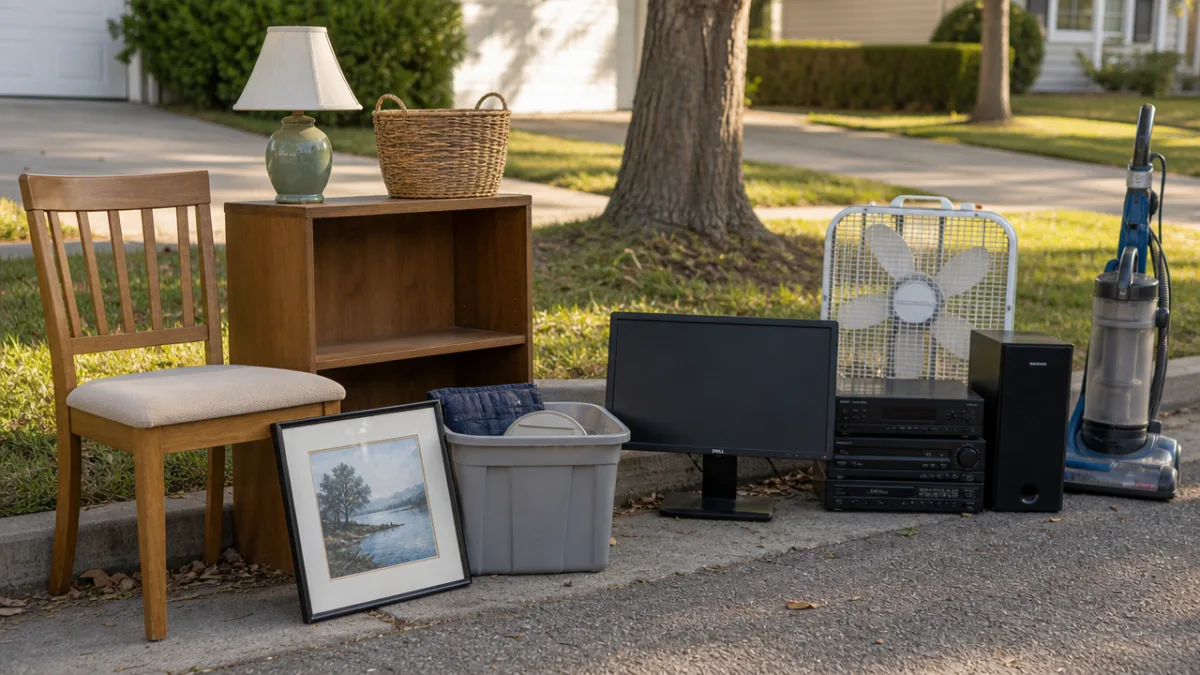
Grocery stores and supermarkets are among the most productive sources for food divers. Large chains frequently discard enormous quantities of food that has reached its sell-by date but remains perfectly safe and nutritious to eat. Bread, produce, dairy products, and packaged goods are commonly found in grocery dumpsters, often in large quantities and in good condition. College campus dumpsters around end-of-semester periods yield electronics, textbooks, clothing, furniture, and kitchen supplies in remarkable quantities. Apartment complexes at the end of the month — when leases turn over — can yield similarly diverse finds. Retail store dumpsters sometimes contain returned merchandise, discontinued items, or display pieces.
High-value finds are less common but very real. Electronics, jewelry, artwork, designer clothing, antiques, and working appliances are all documented finds from California dumpsters. The wealthy communities of Beverly Hills, Malibu, Pacific Palisades, and similar areas are legendary among experienced divers for the quality of what gets discarded. End-of-estate cleanouts and home renovations often produce a sudden influx of high-quality items into the waste stream. While you can’t count on finding a Rolex in a trash bag, you can consistently find items with genuine financial and practical value if you dive regularly, choose your locations wisely, and know what to look for.
The Future of Dumpster Diving in California: Trends and Changes
The culture and legal landscape around dumpster diving in California continue to evolve, driven by growing public concern about waste, changing attitudes toward sustainability, and ongoing debates about food security and economic inequality. Several trends suggest that the practice may become either more legitimized or more restricted in the coming years, depending on which pressures prevail. Staying informed about legislative and cultural developments is increasingly important for anyone who dives regularly or advocates for the practice.
On the sustainability front, California has been at the forefront of food waste reduction legislation. Senate Bill 1383, which took full effect in 2022, requires organic waste diversion from landfills and pushes businesses and municipalities to redirect edible food to recovery organizations rather than the trash. As this legislation matures, it may reduce the volume of food discarded in dumpsters — but it may also create more formal, legal channels through which divers and gleaning organizations can access surplus food. Some advocates see this as an opportunity to build partnerships with retailers and municipalities that were previously adversarial toward divers.
At the same time, increased scrutiny of recycling theft and concerns about identity theft from discarded documents have led some municipalities to push for stricter enforcement against unauthorized access to waste containers. The tension between waste reduction goals and property and privacy concerns will likely continue to shape the regulatory environment around dumpster diving for years to come. For now, the most practical advice remains the same: know the laws in your specific location, respect private property boundaries, prioritize safety, and engage with the practice thoughtfully and ethically. California’s trash has plenty of treasures left to offer — for those who know how to look.








What do you think?
It is nice to know your opinion. Leave a comment.