










The Art of Altered Playing Cards: A Complete Guide to Creating Stunning Sunflower Designs
What Are Altered Playing Cards?
Altered playing cards are one of the most exciting and accessible forms of mixed media art available to crafters of all skill levels. The concept is beautifully simple: you take a standard playing card and transform it into a miniature work of art by layering paints, inks, stamps, ephemera, and other decorative elements directly onto its surface. The rigid, uniform size of a playing card makes it an ideal canvas that is both portable and endlessly versatile, fitting neatly into albums, frames, or collections.
The practice of altering playing cards has deep roots in the broader altered art and scrapbooking communities, where artists have long celebrated the idea of repurposing everyday objects into something extraordinary. What makes playing cards particularly appealing is their cultural familiarity — everyone recognizes a deck of cards, and transforming that recognizable object into a piece of fine art creates a delightful sense of surprise and wonder in the viewer. The contrast between the mundane and the beautiful is a core part of the art form’s appeal.
Sunflowers have become one of the most beloved motifs in the altered playing card community, and it is easy to understand why. Their bold, graphic shapes translate beautifully to the small canvas, their warm yellow and golden tones photograph stunningly, and they carry a wealth of symbolism including joy, warmth, loyalty, and the turning toward light. Whether rendered in realistic detail or stylized abstraction, a sunflower on a playing card instantly draws the eye and lifts the spirit of anyone who encounters it.
Essential Materials and Tools for Your First Altered Card
Getting started with altered playing cards does not require an expensive or elaborate toolkit. In fact, many experienced artists recommend beginning with just a few core supplies and expanding your collection organically as your skills and interests develop. At the very minimum, you will need a playing card as your base, some form of paint or ink to cover the printed surface, and whatever embellishments speak to your creative vision. Old decks found at thrift stores or dollar stores are perfect for practice, as there is no pressure to create a masterpiece on your first attempt.
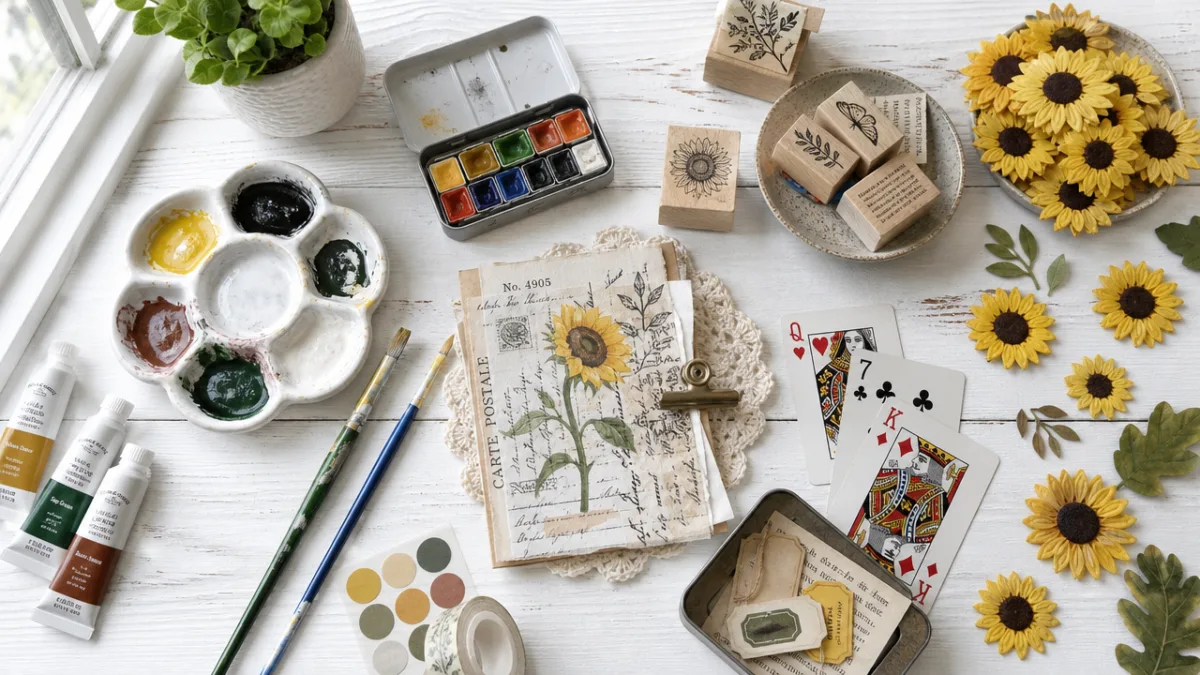
For a sunflower-themed altered card specifically, there are several materials that tend to yield the most beautiful results. Acrylic paints in shades of golden yellow, burnt orange, deep brown, and forest green will form the backbone of your color palette. Gesso is an invaluable priming agent that creates a smooth, slightly textured surface over the glossy card stock, allowing your paints and inks to adhere properly. Distress inks in earthy tones like Gathered Twigs, Walnut Stain, and Rustic Wilderness add depth and an organic, aged quality to backgrounds that makes floral subjects pop dramatically.
Beyond paints and inks, consider assembling the following categories of supplies to give yourself maximum creative flexibility as you work on your sunflower designs:
- Stamps and stencils: Floral stamps, sunflower-specific stencils, and dot or texture stamps for backgrounds add dimension and interest without requiring advanced drawing skills.
- Adhesives: Gel medium, Mod Podge, and double-sided tape each serve different purposes in adhering layers and sealing finished pieces for longevity.
- Embellishments: Twine, buttons, rhinestones, die-cut paper flowers, dried botanicals, and washi tape all contribute texture and visual richness to finished pieces.
- Tools: Foam brushes, palette knives, heat guns for drying, and fine-tipped pens for journaling or outlining details are essential additions to your workstation.
- Sealants: A final coat of matte or glossy varnish protects your finished card from humidity, handling, and fading over time.
One material that deserves special mention is alcohol ink, which creates breathtaking, organic backgrounds with stunning color movement and translucency. When dropped onto a gessoed playing card and spread with a blower or straw, alcohol inks create effects that look incredibly complex but are actually quite forgiving and easy for beginners to achieve. Pairing a dramatic alcohol ink background in deep blues and purples with a hand-painted or stamped golden sunflower creates a striking visual contrast that tends to generate enormous admiration from viewers both online and in person.
Step-by-Step Process for Creating a Sunflower Altered Playing Card
The process of creating your sunflower altered playing card is best approached as a series of layers, each building upon the last to create depth, dimension, and visual complexity. Beginning with a solid foundation is critical, so your first step should always be to apply one or two coats of white gesso to the face of your playing card. Use a foam brush or palette knife to spread it in varying directions for added texture, and allow each coat to dry completely before proceeding. Some artists prefer to apply gesso only to the printed face while leaving the back visible, while others coat both sides for a truly clean slate.
Once your gesso base is dry, it is time to create your background. For a sunflower design, earthy and warm backgrounds tend to work best, though there are no rules that cannot be broken beautifully. Consider blending shades of terracotta, deep teal, or even a moody black background to make the sunflower’s golden tones sing with contrast. Apply your background color or colors using a sponge dauber, crumpled tissue paper, or flat brush, and blend the edges where colors meet while the paint is still wet for a seamless, painterly look. Allow this layer to dry fully, then consider adding a light wash of a contrasting ink or watered-down paint to add visual interest and depth.
With your background established, you are ready to add the sunflower itself. There are several techniques for doing this depending on your comfort level with painting:
- Freehand painting: Using a round brush and yellow acrylic paint, sketch the rough shape of the petals radiating from a central oval. Build up the color in layers, adding shading with burnt orange at the base of each petal and highlighting with bright yellow or white at the tips to create a three-dimensional, realistic effect.
- Stamp and embellish: If freehand painting feels intimidating, a large sunflower stamp inked with yellow and brown pigment ink can create a beautiful base image that you then enhance with additional paint details, outlining, and shading using pens or fine brushes.
- Collage and layer: Cut sunflower shapes from patterned paper, tissue paper, or vintage botanical illustrations and adhere them to your background with gel medium, then overpaint, ink, and embellish to integrate the collage elements with the rest of the card surface.
After your sunflower focal element is placed and dry, the real magic of altered card making comes into play as you add layers of embellishment and detail. Consider adding journaling in fine pen around the edges, tucking in a strip of vintage-inspired washi tape along one side, or adhering small rhinestones or pearls to the center of your sunflower to mimic its seed-laden disc. Tiny punched paper leaves, a looped piece of jute twine attached to a corner, or a small handwritten sentiment about sunshine or growth can all elevate a simple painted card into something that feels thoughtful, intentional, and deeply personal.
Design Principles That Make Altered Cards Shine
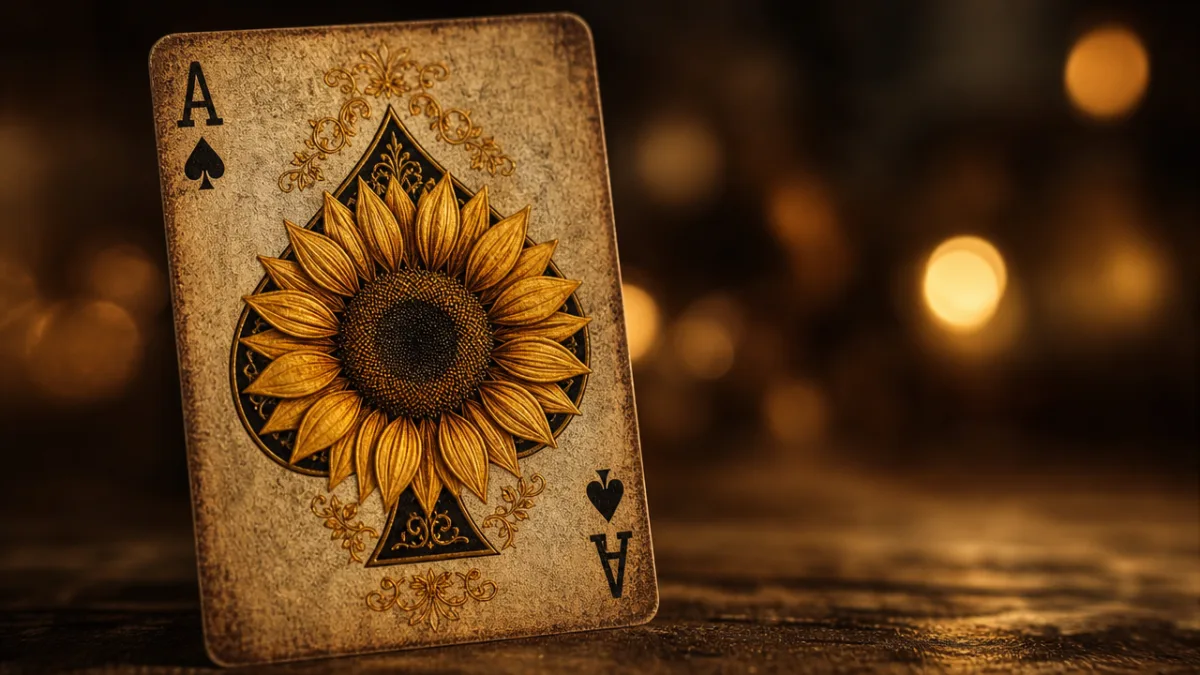
Understanding a few core design principles can dramatically elevate the quality and visual impact of your altered playing cards, even if you have no formal art training whatsoever. The principle of focal point is perhaps the most important: every successful piece of art has one area where the eye is meant to land first, and everything else in the composition should support and guide the viewer toward that focal point without competing with it. In a sunflower altered card, your bloom is almost certainly your focal point, so the background, borders, and embellishments should feel secondary, enhancing rather than overwhelming the flower itself.
Color harmony is another design principle that pays enormous dividends in altered card work. A card that uses colors from the same family or that follow a recognized color scheme — analogous, complementary, or triadic — tends to feel cohesive and polished even when packed with many different materials and elements. For sunflower cards, the natural palette of yellow, gold, orange, brown, and green is already harmonious, but you can extend this palette thoughtfully by introducing deep burgundy, rust, or warm cream tones without disrupting the overall sense of balance and unity in the composition.
Texture is the secret weapon of altered art, and it is what distinguishes a truly extraordinary altered card from one that looks flat or unfinished. Texture can be literal and physical, created by layering materials of different thicknesses, applying modeling paste through a stencil, or adhering dimensional embellishments like fabric, lace, or dried plant material. It can also be visual, created through the application of paint with varied brushwork, the contrast of matte and glossy finishes, or the juxtaposition of fine linework against broad areas of solid color. Aim to include at least two or three different textures in every card you create, and your work will immediately take on a richness and complexity that commands a second look.
Sharing Your Art: Building a Community Around Altered Cards
One of the greatest gifts of the altered playing card hobby is the vibrant, generous, and enthusiastic community that has formed around it on social media platforms like Pinterest, Instagram, and YouTube. The hashtag #alteredplayingcards is home to tens of thousands of posts from artists around the world, ranging from absolute beginners sharing their first wobbly attempts to seasoned professionals demonstrating breathtaking technical mastery. Browsing through this hashtag is simultaneously educational, inspirational, and deeply motivating — it is nearly impossible to spend ten minutes scrolling through altered card art without feeling an irresistible urge to pick up a brush and create something of your own.
Pinterest in particular has become one of the primary platforms where altered card artists share their work and discover the work of others. The visual nature of the platform makes it ideally suited to an art form that is so fundamentally about visual communication and aesthetic impact. Creating a dedicated board for your own altered card creations is a wonderful way to document your progress, attract followers who share your interests, and contribute your own voice to the broader conversation happening within the community. Many artists find that sharing their work publicly, even imperfect early work, accelerates their growth by inviting constructive feedback and connecting them with mentors and peers.
Beyond simply sharing images of finished pieces, consider documenting your process as you work. In-progress photographs, short video clips showing specific techniques, and written descriptions of the materials and methods you used are all enormously valuable to other artists in the community, particularly those who are just beginning their altered card journey. The altered card community has a strong culture of generosity and knowledge-sharing, and contributing to that culture not only supports other artists but also deepens your own understanding of your craft through the act of articulating what you know and how you work.
Advanced Techniques to Take Your Sunflower Cards to the Next Level
Once you have mastered the fundamentals of altered card making, a world of advanced techniques opens up that can push your sunflower designs into genuinely extraordinary territory. Embossing is one such technique that adds both visual drama and physical dimension to card designs. Using an embossing ink, a sunflower or botanical stamp, and gold, copper, or silver embossing powder heated with a heat gun, you can create raised, metallic design elements that catch the light beautifully and give your work a luxurious, professional quality that is difficult to achieve through paint alone. The contrast between a textured, earthy background and gleaming embossed metallic petals is particularly striking in sunflower compositions.
Watercolor and ink blending techniques offer another avenue for sophisticated sunflower designs. While standard acrylic paints are wonderfully versatile, the luminosity and translucency of watercolor or highly diluted ink creates a softness and delicacy that suits floral subjects exceptionally well. Wet-on-wet watercolor techniques, where wet paint is applied to a surface that has already been dampened with clean water, create beautiful blooming effects as the pigment spreads and mingles unpredictably. This technique is particularly effective for rendering the petals of sunflowers, where you might begin with a pale lemon yellow and allow deeper golden and orange tones to bleed in at the base of each petal while the paper remains damp.
For artists interested in exploring mixed media at its most experimental and boundary-pushing, consider incorporating non-traditional materials into your sunflower altered cards. Actual dried sunflower petals or seeds, preserved under a coat of resin or gel medium, bring an extraordinary authenticity to botanical-themed cards. Coffee, tea, and natural dyes can stain your background with rich, earthy tones that no manufactured ink can quite replicate. Fabric scraps, book pages, vintage postage stamps, sheet music, dictionary pages, and antique ephemera all add layers of narrative and history to a piece, suggesting that the card carries stories and memories beyond its small physical boundaries. The willingness to experiment boldly with unconventional materials is ultimately what separates artists who make truly memorable altered cards from those who produce competent but forgettable work.
Preserving, Displaying, and Gifting Your Altered Card Collection
Once you have invested time, creativity, and care into creating a collection of sunflower altered playing cards, giving thought to how you preserve, display, and share them is entirely worthwhile. Proper sealing is the first line of defense against the ravages of time, humidity, and handling. Applying two to three thin coats of a high-quality acrylic varnish — available in matte, satin, or glossy finishes — over your completely dry finished card protects all the layers beneath from moisture, UV fading, and physical abrasion. Allow each coat to dry completely before applying the next, and consider lightly sanding between coats with ultra-fine sandpaper if you want a particularly smooth, professional final surface.
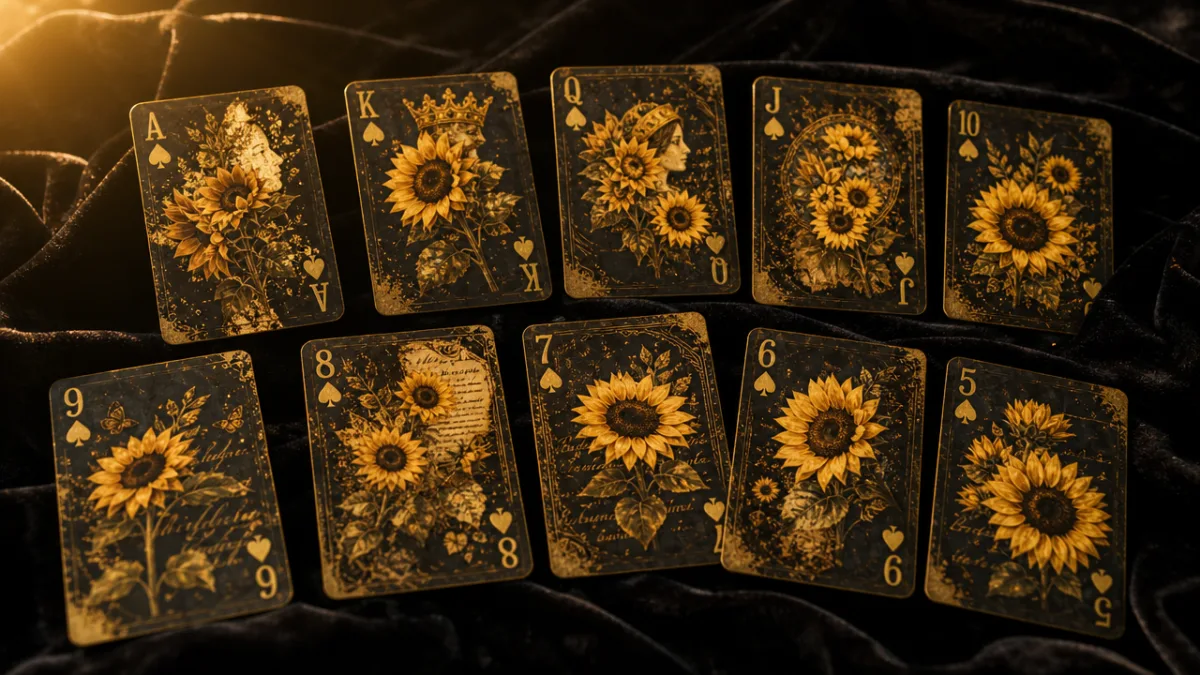
Displaying altered playing cards offers a wonderful opportunity for creativity that extends beyond the making of the cards themselves. Because of their uniform size — standard playing cards measure 2.5 by 3.5 inches, the same as official ATC or Artist Trading Card dimensions — they fit neatly into a wide range of off-the-shelf display options. Shadow boxes with multiple compartments allow you to create a gallery-style grouping of cards around a unified theme, such as an entire suit’s worth of sunflower designs in varying styles and techniques. Clear acrylic stands, mini easels, and clip-style frames are other simple, affordable options for displaying individual cards on shelves, desks, or windowsills where their colors can catch the light.
Perhaps the most meaningful thing you can do with a handmade altered playing card is give it as a gift. In an era of mass-produced goods and digital communication, a small, handmade piece of art is a genuinely rare and precious thing to receive, and the intimacy of the playing card format — small enough to hold in one hand, detailed enough to reward close examination — makes it particularly well suited to personal gifting. Consider creating a set of sunflower altered cards for someone who needs a little extra light in their life, packaging them in a small handmade envelope or box tied with jute twine. The combination of the image’s warmth and symbolism with the knowledge that another person’s hands crafted the piece specifically with the recipient in mind creates a gift that is far more meaningful than its modest physical dimensions might initially suggest.








What do you think?
It is nice to know your opinion. Leave a comment.