










Plant Milkweed for More Monarch Butterflies and a Buzzing Summer Garden
Why Milkweed Is the Cornerstone of Monarch Butterfly Conservation
If you’ve ever watched a monarch butterfly drift through a summer garden, you already know there’s something special about them. What you might not know is just how completely their survival depends on a single plant. Monarchs and milkweed share one of the most remarkable partnerships in the natural world — females will only lay their eggs on milkweed, and it’s the only thing caterpillars can eat through all five stages of their growth. No milkweed, no monarchs. That one fact makes planting it one of the most genuinely useful things a home gardener can do for one of North America’s most beloved — and increasingly at-risk — species.
The numbers are pretty sobering. Monarch populations have dropped by more than 80 percent since the 1980s, and the biggest driver of that collapse is habitat loss — specifically, the disappearance of milkweed from the American landscape. Industrial farming, herbicide-resistant crops, and suburban sprawl have wiped out millions of acres of the meadows, roadsides, and open fields where milkweed used to grow everywhere. Every garden patch you dedicate to it is a small but real piece of ecological restoration.
Monarchs aren’t just beautiful — they’re important pollinators and a good indicator of how healthy an ecosystem is overall. Their annual migration is one of the most jaw-dropping wildlife events on the continent, and it depends on a continuous ribbon of milkweed and nectar plants running from Mexico up through the U.S. and into Canada. When gardeners along that whole route commit to planting milkweed, they help stitch together the fragmented habitat monarchs need to survive, breed, and complete their multigenerational journey. Your backyard can genuinely be a link in that chain.
Choosing the Right Milkweed Species for Your Region
Not all milkweed is the same, and picking the right species for where you live makes a real difference — both for the plant’s success and for the monarchs you’re trying to help. North America has over 70 native milkweed species, each adapted to different soils, moisture levels, and climates. Sticking with species native to your specific region means the plants will do better with less fuss, and they’ll offer the right nutritional profile for local caterpillars, whose digestive systems have evolved alongside local milkweed chemistry.
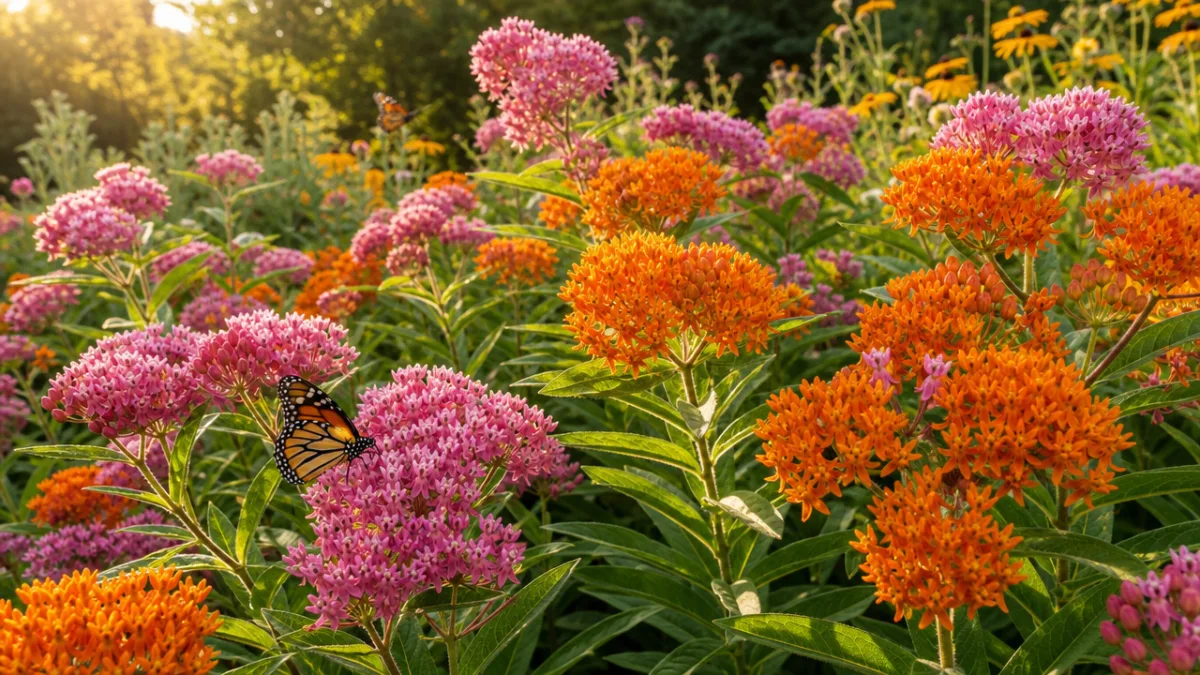
If you’re in the Midwest or Eastern U.S., Common Milkweed (Asclepias syriaca) is a solid, dependable choice. It spreads through underground rhizomes to form dense colonies that can support a lot of caterpillars, and its fragrant pink flower clusters draw bees, wasps, and butterflies of all kinds. Butterfly Weed (Asclepias tuberosa) is another great option for eastern and central gardens — it has those vivid orange blooms but stays compact and well-behaved, so it fits nicely into a more structured garden without taking over.
In the dry Southwest, Desert Milkweed (Asclepias subulata) and Antelope Horns (Asclepias asperula) handle the heat, dry air, and alkaline soils much better. Along the Gulf Coast and in Florida, Aquatic Milkweed (Asclepias perennis) or Butterflyweed are good picks. On the Pacific Coast, Narrow-Leaf Milkweed (Asclepias fascicularis) or Showy Milkweed (Asclepias speciosa) tend to do well. One important heads-up: steer clear of Tropical Milkweed (Asclepias curassavica), which is widely sold at garden centers but can actually disrupt monarch migration and harbor dangerous parasites in warm climates where it doesn’t die back in winter.
- Common Milkweed (Asclepias syriaca): Best for Midwest and Eastern regions; spreads vigorously, fragrant pink blooms, excellent for large naturalized areas.
- Butterfly Weed (Asclepias tuberosa): Compact and showy with vivid orange flowers; drought-tolerant once established; ideal for formal gardens and containers.
- Swamp Milkweed (Asclepias incarnata): Thrives in moist to wet soils; tall and elegant with rosy-pink flowers; great for rain gardens and pond edges.
- Showy Milkweed (Asclepias speciosa): Native to the West and Great Plains; large, star-shaped pink flowers; supports western monarch populations.
- Narrow-Leaf Milkweed (Asclepias fascicularis): Adapted to California and the Pacific Coast; slender, graceful foliage; excellent for dry, sunny slopes.
How to Plant and Grow Milkweed Successfully
Growing milkweed is honestly easier than most people expect — but it does help to know what each species likes. Most native milkweeds want full sun, meaning at least six hours of direct light a day, to really flower and grow well. They’re also pretty forgiving of poor soil; many actually prefer well-drained, somewhat sandy or gravelly ground over rich, heavily amended beds. Ironically, overwatering or over-fertilizing can push them toward lush foliage at the expense of flowers and make them less tough over time.
Starting from seed is rewarding but takes a little patience. Many milkweed species have hard seed coats and need a cold stratification period — basically mimicking winter — before they’ll germinate reliably. To do this at home, mix your seeds with slightly damp sand or peat moss, seal the mixture in a plastic bag, and refrigerate it for four to six weeks before planting. After that, you can start them indoors under grow lights six to eight weeks before your last frost date, or just direct-sow them in the garden in late autumn and let nature handle the cold treatment on its own schedule.
Transplanting milkweed seedlings requires a gentle touch, because most species grow a deep, fleshy taproot that really doesn’t like being disturbed. Starting seeds in deep containers or biodegradable pots that can go straight into the ground — roots and all — makes the process much smoother. Once established, which usually takes a full growing season, native milkweeds become impressively tough and drought-tolerant, needing very little extra water or feeding. A layer of mulch around the base helps hold moisture while plants get settled and keeps competing weeds at bay.
- Select a site with full sun and well-drained soil, ideally away from frequently sprayed areas.
- Cold-stratify seeds for four to six weeks in the refrigerator before planting, if starting from seed.
- Sow seeds indoors six to eight weeks before last frost or direct-sow in autumn.
- Use deep biodegradable pots to minimize taproot disturbance during transplanting.
- Water consistently during the first season, then reduce irrigation as plants establish.
- Apply a two-inch layer of mulch around plants to conserve moisture and suppress weeds.
- Avoid pesticide use in and around milkweed plantings to protect caterpillars and other beneficial insects.
The Monarch Life Cycle: What Happens in Your Garden
Once milkweed takes hold in your garden, you might find yourself watching one of nature’s most extraordinary dramas play out just a few steps from your back door. Female monarchs are surprisingly deliberate about where they lay their eggs. They visit milkweed plants repeatedly, actually tasting the leaves with chemoreceptors on their feet to confirm the plant is what they think it is, then deposit a single tiny ribbed egg on the underside of a leaf. One female can lay up to 500 eggs over her lifetime, though she carefully spreads them across many different plants so the caterpillars that hatch don’t have to compete for food.
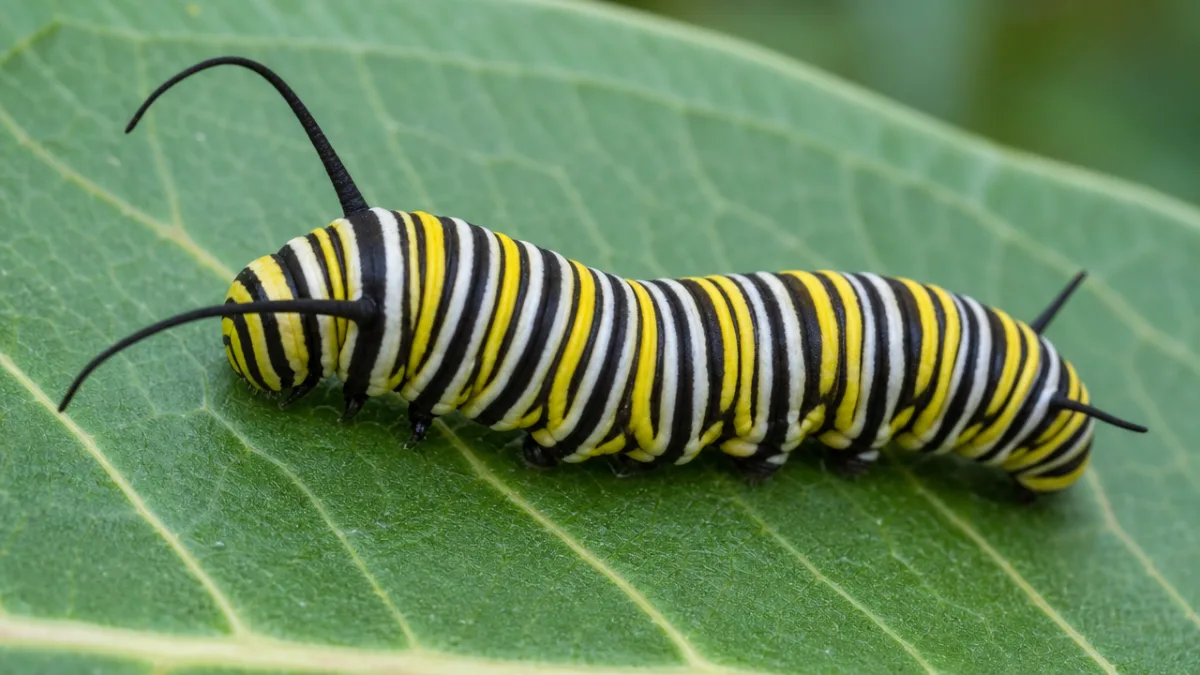
Within three to five days, a caterpillar no bigger than an eyelash emerges and immediately starts eating the milkweed leaf around its empty egg case. Over the next ten to fourteen days, it passes through five growth stages called instars, molting between each one and growing from nearly invisible to a plump, boldly striped two-inch larva. The toxins in milkweed sap — cardiac glycosides — build up in the caterpillar’s body and make it taste terrible to most predators, a chemical defense that carries over into adulthood and is advertised by the monarch’s iconic orange-and-black wings.
When the caterpillar is fully grown, it wanders off the milkweed to find a good spot to pupate — often a nearby shrub, fence post, or plant stem. There it spins a silk button, hangs upside down in a J-shape, and transforms into one of the most beautiful things in nature: a jade-green chrysalis with a delicate row of gold dots along its upper edge. Inside, the caterpillar’s body essentially dissolves and rebuilds itself into a winged adult — a process called histolysis that still manages to seem almost magical even when you know the science. After eight to twelve days, a perfect butterfly emerges, pumps fluid into its crumpled wings, and within hours takes its first flight into the summer air above your garden.
Milkweed as a Hub for a Broader Garden Ecosystem
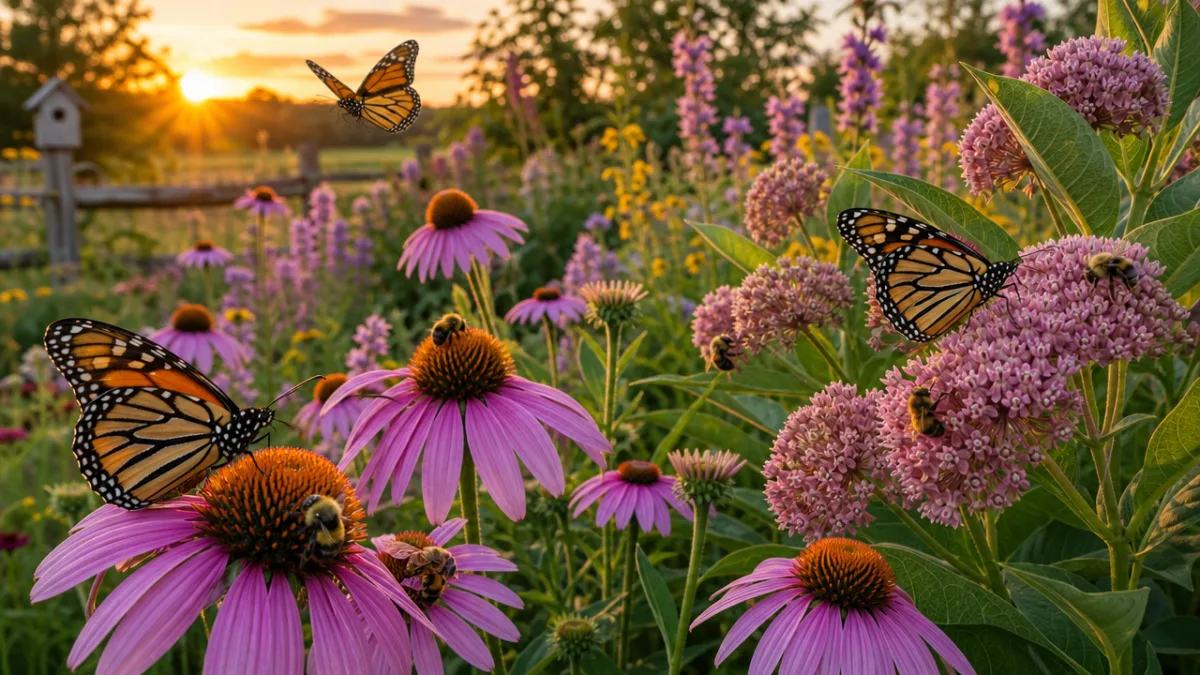
Milkweed does a lot more than support monarchs. The flowers are a nectar powerhouse that pulls in an amazing variety of pollinators all summer long. Bumblebees work through the blooms methodically from early morning, while smaller native bees, sweat bees, and mining bees clamber through the intricate flower clusters after them. Hummingbirds drop by occasionally, and on warm afternoons it’s common to find dozens of butterfly species — swallowtails, fritillaries, skippers, sulfurs — feeding right alongside the very monarchs that laid eggs on the same plants days before.
Milkweed also hosts a fascinating community of specialist insects that have evolved alongside the plant and its chemistry. The vivid red-and-black milkweed bug and the bright orange milkweed beetle are regulars — both have figured out how to sequester cardiac glycosides from the plant and use them for their own chemical defense, advertising their toxicity with bold warning colors just like monarchs do. Milkweed aphids can show up in numbers that alarm gardeners, but they’re typically kept in check by ladybugs, parasitic wasps, and other predatory insects that are drawn in by the rich insect community the plant supports.
Aesthetically, milkweed fits into a surprisingly wide range of garden styles. Common Milkweed’s tall stature and architectural seed pods make it a dramatic feature in naturalistic and prairie-style plantings. Butterfly Weed’s compact form and jewel-toned blooms look right at home in cottage gardens and perennial borders. Swamp Milkweed pairs beautifully with ornamental grasses and Joe Pye Weed in rain garden designs. Mix any of these with other native nectar plants — Coneflower, Black-Eyed Susan, Ironweed, Goldenrod, native asters — and you get a garden that’s genuinely lovely to look at and genuinely essential to the insects that depend on it.
Creating a Monarch Waystation and Joining the Larger Conservation Movement
Milkweed is the foundation, but a little thoughtful planning can multiply its impact considerably. A Monarch Waystation is an official designation from Monarch Watch — a nonprofit conservation organization out of the University of Kansas — given to gardens that meet specific standards for milkweed and nectar plant diversity. Registering your garden costs a small fee and connects your planting to a national network of thousands of similar habitats, together forming the corridor of resources that breeding and migrating monarchs need to sustain their population across the continent.
Creating a good waystation means thinking about succession — having something blooming from early spring through late autumn so that different generations of monarchs find what they need whenever they arrive. Early-blooming natives like Wild Columbine and Virginia Bluebells welcome the first returning monarchs in spring. Mid-summer bloomers like Coneflower and Bergamot feed the breeding generations in June and July. Then in late summer and fall, Goldenrod, native asters, and late-blooming milkweed species provide the fuel that southbound migrants need to fatten up for their long journey to Mexico.
And it doesn’t have to stop at your property line. Neighborhood groups, schools, churches, corporate campuses, and local governments have all gotten involved in establishing milkweed habitat in parks, along roadsides, and on institutional grounds — with real, measurable results. If watching the activity around your own milkweed plants catches the gardening bug in you, consider sharing seeds or divisions with neighbors, organizing a community planting day, or making the case for native plantings in local parks and public spaces. The scale of habitat loss monarchs have suffered is enormous, but collective action by ordinary gardeners across the continent genuinely has the power to reverse it.
Planting milkweed is, when you get right down to it, an act of hope. It’s a small, tangible way of saying that you value the wild world and are willing to give a little piece of your land back to the creatures that belong to it. Monarchs have made this migration across the continent for thousands of years, navigating by the sun with an internal compass that scientists are still working to fully understand. What they ask of us is pretty modest: a patch of their host plant, a drink of nectar, and land that isn’t soaked in pesticides. What they give back is their extraordinary presence — wings like stained glass catching the summer light — and a quiet reminder that the living world, given half a chance, still knows how to thrive.








What do you think?
It is nice to know your opinion. Leave a comment.