










10 DIY Ways To Organize With Recyclable Items
Why Recyclable Organization Is the Smartest Trend in Home Management
In a world increasingly aware of its environmental footprint, finding creative ways to repurpose everyday recyclable materials has become more than just a crafting hobby — it has become a lifestyle philosophy. When you look around your home, you will likely find a treasure trove of potential organizers hiding in plain sight: cardboard boxes waiting to be broken down, glass jars rinsed clean after a meal, plastic containers that once held takeout food. These items, so often tossed without a second thought, can be transformed into beautifully functional organizational tools that cost virtually nothing and keep waste out of landfills at the same time.
The appeal of DIY organization using recyclable materials goes far beyond the environmental angle. There is a deeply satisfying creative element to the process — the challenge of looking at a cereal box and imagining it as a sleek desktop file holder, or seeing a wine bottle crate as a modular shelf waiting to happen. This kind of resourceful thinking rewires the way you engage with your home and your possessions, encouraging you to slow down, assess what you actually need, and build solutions that are perfectly tailored to your space rather than grabbing a one-size-fits-all product off a store shelf.
Beyond creativity and sustainability, DIY recyclable organization is genuinely budget-friendly in a way that few other home improvement strategies can match. Professional organizers and sleek storage brands often charge a significant premium for their products, and while those products can certainly be beautiful, they are not always necessary. With a bit of patience, some basic craft supplies like paint, twine, hot glue, and fabric scraps, and a collection of clean recyclable materials, most households can achieve the same level of functional, aesthetically pleasing organization for a fraction of the cost. This article explores ten practical and inspiring methods for doing exactly that.
Cardboard Boxes: The Unsung Heroes of Desktop and Drawer Organization
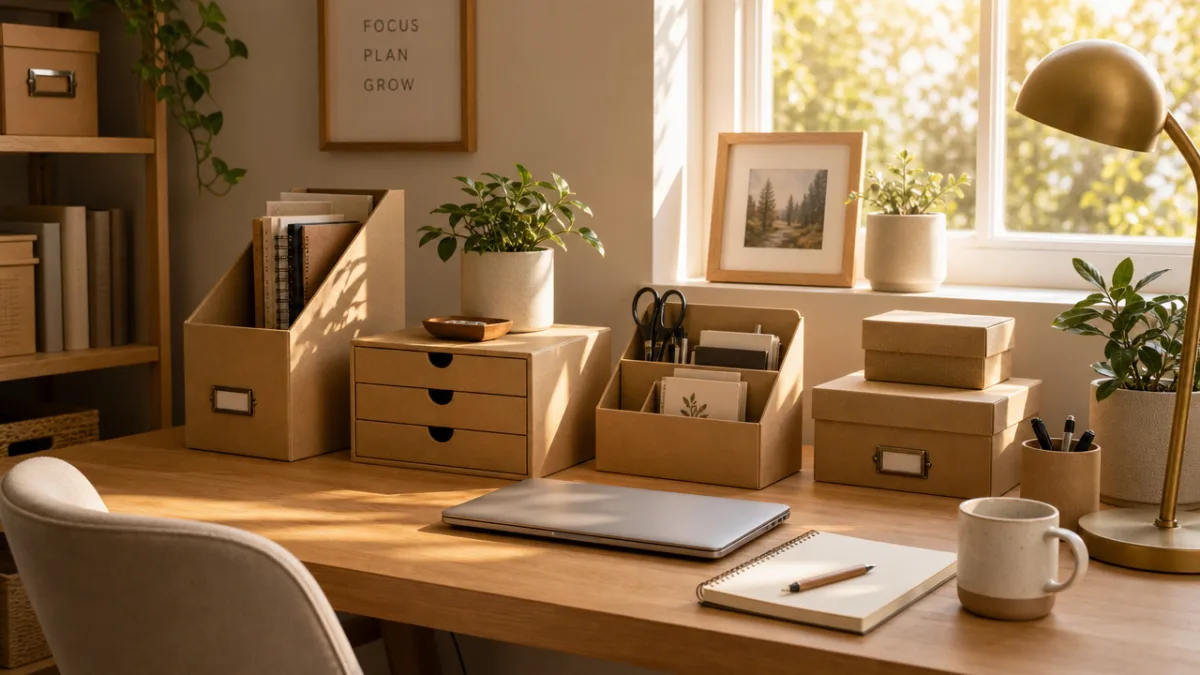
Cardboard boxes are arguably the single most versatile recyclable material available in any household. Cereal boxes, cracker boxes, pasta boxes, shipping boxes — they come in an enormous range of sizes, and each one can be cut, folded, reinforced, and decorated to serve a highly specific organizational purpose. One of the most popular applications is the creation of drawer dividers. By cutting the sides of small boxes to a consistent height and arranging them inside a drawer, you can create a customized grid system that keeps everything from pens and scissors to socks and accessories neatly separated and easy to find.
For desktop organization, cereal and cracker boxes cut down to varying heights and wrapped in kraft paper, washi tape, or leftover wrapping paper become elegant pencil cups and file holders. Group several together in a cohesive color scheme and they look deliberately designed rather than improvised. You can also glue them together to form a multi-compartment organizer that sits on a shelf or countertop and holds everything from mail and notebooks to remote controls and charging cables. The key is uniformity in the decorative treatment — when the outsides match, the construction materials underneath become completely irrelevant.
Larger cardboard boxes, such as those from online deliveries or appliance purchases, offer even greater organizational potential. Cut down and reinforced with packing tape, they can function as under-bed storage bins, closet shelf dividers, or toy storage containers in a child’s room. Line them with fabric or decorative paper for a polished finish. Some crafters even stack and glue multiple boxes together to create modular shelving units for pantries or craft rooms. The structural limitations of cardboard mean these solutions are best suited for lighter items, but for the majority of household storage needs, cardboard holds up remarkably well with basic reinforcement.
Glass Jars and Bottles: Elegant Storage Solutions for Every Room
Glass jars — from pasta sauce, jam, pickles, and countless other pantry staples — are among the most beautiful recyclable materials available for home organization. Their transparency is an organizational asset in itself: you can see exactly what is inside without opening, rummaging, or labeling extensively. In the kitchen, a collection of uniform glass jars on an open shelf transforms a pantry into something that looks curated and intentional. Fill them with dried pasta, rice, lentils, spices, nuts, or baking supplies, add a handwritten or printed label, and the result is a pantry display that is genuinely stunning as well as highly functional.
In the bathroom, glass jars find an equally natural home. Cotton balls, cotton swabs, hair clips, bobby pins, makeup brushes, and bath salts all benefit from being stored in open-top glass jars on a vanity or bathroom shelf. The transparent sides make it easy to monitor supply levels, and the glass material feels inherently clean and spa-like in a bathroom setting. Spray paint the lids in a coordinating metallic or matte color to unify a collection of jars that may have come in slightly different sizes or styles, and the effect is cohesive and sophisticated without any significant expense.
Glass bottles — from wine, olive oil, hot sauce, and other products — offer organizational and decorative potential in nearly every room of the house. Tall, narrow wine bottles make excellent holders for cooking utensils when placed near the stove. Smaller hot sauce bottles, cleaned and dried, can hold individual craft brushes, pens, or small tools on a work table. In children’s rooms, painted and decorated glass bottles become whimsical pencil holders or desk accessories. It is worth noting that safety should always be a consideration with glass in households with young children; in those environments, placing glass containers on higher, out-of-reach shelves is the practical approach while still benefiting from their organizational advantages.
Tin Cans and Metal Lids: Industrial-Chic Organization on a Zero Budget
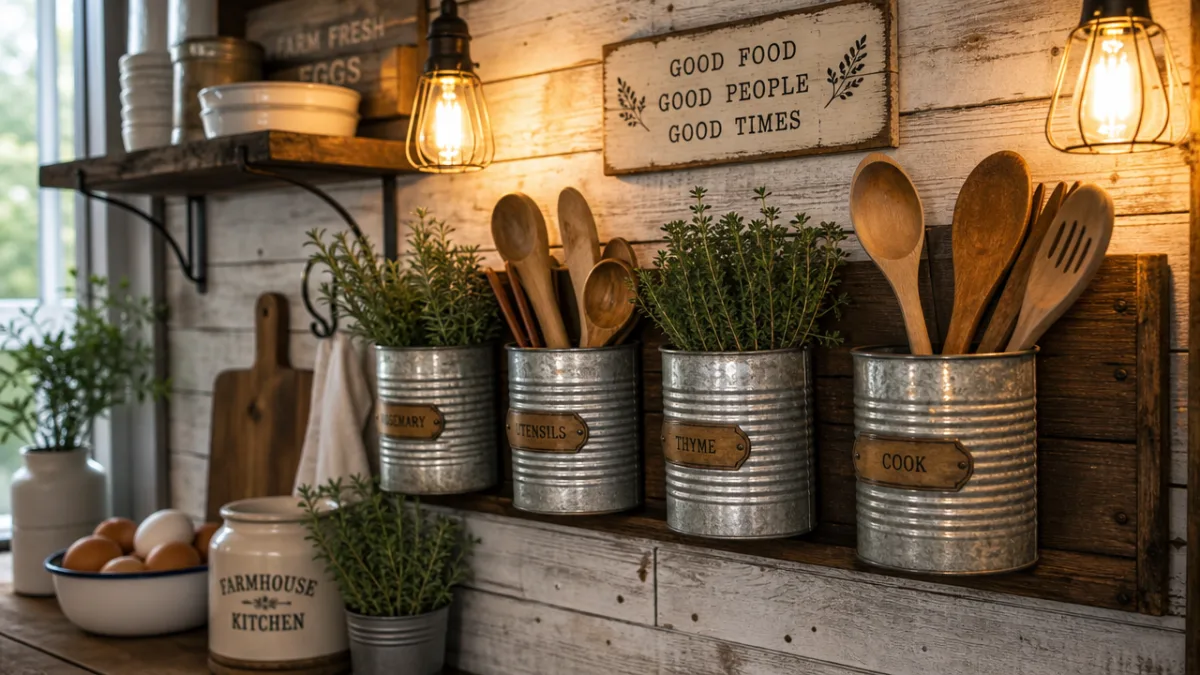
Tin cans from canned vegetables, beans, soups, and other pantry staples are endlessly repurposable as organizational containers. Their cylindrical shape, sturdy metal construction, and range of available sizes make them ideal for holding everything from kitchen utensils to art supplies, garden tools, and bathroom essentials. The industrial, slightly raw aesthetic of tin cans has become genuinely fashionable in interior design, and when left in their natural silver finish or given a coat of spray paint in a bold color, they fit seamlessly into modern farmhouse, industrial, or eclectic home décor styles.
One of the most practical ways to use tin cans for organization is to mount them on a wall-mounted board or wooden pallet. By drilling holes through the back of each can and screwing them into a painted piece of reclaimed wood or a simple wooden board, you can create a wall-mounted storage system for a kitchen, garage, mudroom, or craft room. This keeps frequently used tools within arm’s reach without cluttering countertops or drawers. The cans can be arranged in a grid pattern for a structured look, or scattered at varying heights for a more artful, organic arrangement. Either way, the result is both decorative and deeply functional.
Grouping tin cans of similar height together on a tray or piece of wood creates an instant desk caddy or craft supply organizer that rivals anything sold in a stationery store. Use them to sort pens, markers, scissors, rulers, tape, and glue sticks in a way that keeps every item immediately visible and accessible. To elevate the aesthetic, wrap the outside of each can in twine, burlap, washi tape, or fabric secured with craft glue. You can also paint them with chalkboard paint and write labels directly on the surface with chalk, making the system easy to reorganize and relabel as your storage needs evolve over time.
- Sand down any sharp edges on tin cans before using them, especially in homes with children, to prevent cuts or injuries during regular use.
- Apply a coat of clear sealant inside cans used to store items that might rust the metal, such as paint brushes stored with wet bristles.
- Use cans of varying sizes together — large tomato cans, medium bean cans, and small tomato paste cans — to create a multi-height, tiered organizer that accommodates different tool lengths.
- Attach small magnets to the bottom of lightweight cans and mount them on a magnetic board for a completely modular, rearrangeable storage wall.
Plastic Containers and Bottles: Functional Storage for Every Corner of the Home
Plastic containers from yogurt, deli products, takeout meals, and food storage represent another enormous category of recyclable organizational material. While plastic has rightly received scrutiny for its environmental impact when disposed of improperly, giving plastic containers a second life as organizers is precisely the kind of use that delays their entry into the waste stream and reduces the need to purchase new plastic storage products. Yogurt containers in particular are excellent organizers for small items like paper clips, rubber bands, stamps, small craft supplies, and hardware like screws and nails in a workshop or garage.
Plastic bottles — from water, soda, laundry detergent, and shampoo — can be cut, shaped, and decorated to serve a surprising range of organizational functions. Cut the top off a clean plastic bottle and you have a simple cup-shaped holder for desk supplies. Cut a rectangular window into the side of a larger bottle and you have a wall-mounted pocket organizer. Flatten the cut edges with a heat source to smooth any roughness, add a hole for mounting, and these plastic pockets can hold mail, papers, recipe cards, or any number of flat items on a kitchen, office, or mudroom wall, keeping surfaces clear and information accessible.
For the bathroom, small plastic containers make excellent organizers inside medicine cabinet shelves and under-sink cabinets. Sorting cotton products, hair accessories, travel-sized toiletries, and first aid supplies into labeled plastic containers of graduated sizes creates a system where everything has a designated place and the space feels calm and manageable rather than chaotic. In the garage or workshop, larger plastic containers — from protein powder tubs or large detergent bottles with the tops removed — are sturdy enough to hold heavier items like drill bits, sandpaper, cable ties, and spare parts, organized by type and immediately identifiable when the containers are clearly labeled.
Egg Cartons, Toilet Paper Rolls, and Paper Tubes: Small-Scale Organization with Big Impact
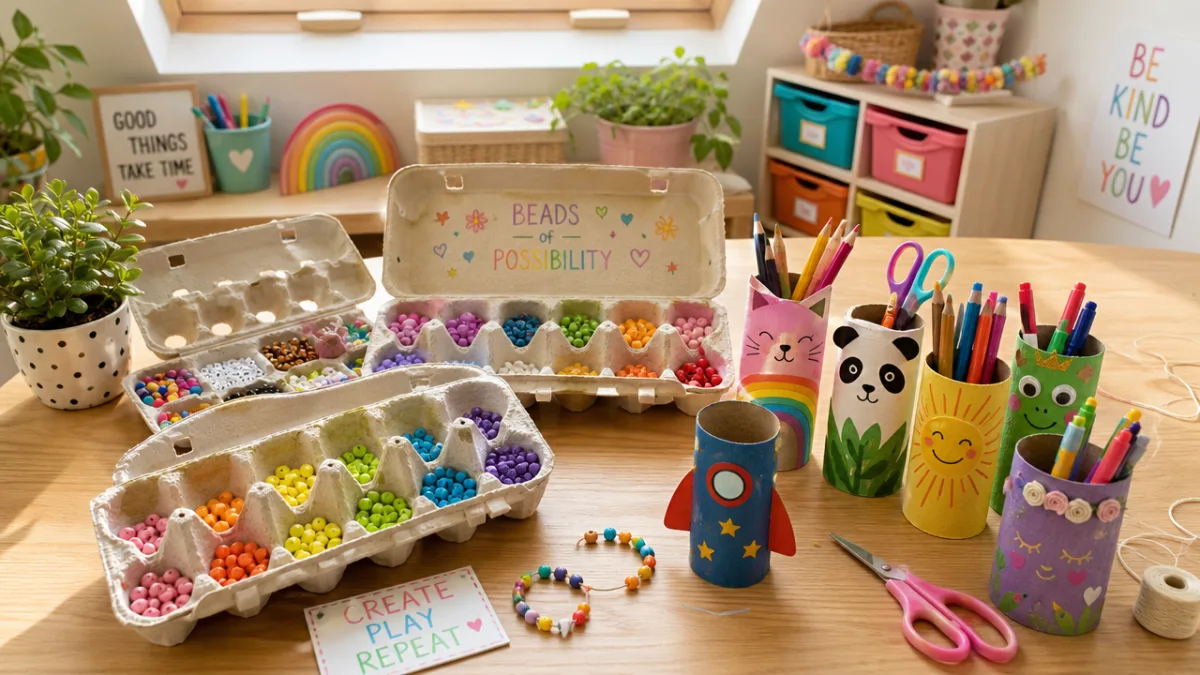
Egg cartons are among the most perfectly designed natural organizers that recycling produces. Their individual compartments, sized and shaped to cradle small, round objects, are immediately useful for sorting jewelry, beads, buttons, small batteries, earrings, pins, and countless other small items that tend to get lost in drawers or tangled together in pouches. Placing an egg carton in a dresser drawer designated for jewelry storage gives every piece its own dedicated spot, making it easy to see the full collection at a glance and retrieve specific items without rummaging. For craft rooms, egg cartons are equally valuable for sorting small beads, seeds, or paints during a project.
Toilet paper rolls and paper towel rolls are exceptionally popular recyclable organizers, and for good reason — they are available in constant supply in most households, cost nothing, and can be shaped and combined in endlessly creative ways. A classic application is the cord organizer: fold a length of electrical cable or charging cord and slide it into a toilet paper roll to keep it from tangling. Label the outside of the roll with the device it belongs to, and store a collection of these rolled cords in a box or bin for a drawer that is remarkably tidy and navigable. This simple system is one of the most effective cable management solutions available, regardless of price.
Paper tubes can also be cut, glued, and stacked to create drawer organizers for specific items. Stand several toilet paper rolls upright inside a deep drawer — for example, in a bathroom drawer designated for hair styling tools — and use each cylinder to hold one item: a hairbrush handle, a curling iron cord, a tube of product. The rolls keep items separated and upright, preventing the drawer from becoming the chaotic jumble that bathroom drawers so often devolve into. For a more finished look, wrap each roll in decorative paper before placing it, or paint them all the same color. The result is a customized, perfectly fitted organizational system that cost nothing to create.
- Collect toilet paper rolls over several weeks before beginning a project so you have enough to work with at once and can plan the layout of your organizer carefully.
- Reinforce the base of paper tubes by placing a circle of cardboard inside the bottom end before standing them upright, which prevents them from collapsing under the weight of stored items.
- Use longer paper towel tubes to organize wrapping paper, posters, or rolled fabric in a craft room by standing them in a tall box and sliding each roll into an individual tube slot.
- For a children’s art station, bundle paper tubes together with rubber bands and lay them horizontally to create a honeycomb-style organizer for colored pencils, markers, and paintbrushes.
Bringing It All Together: Designing a Cohesive Recyclable Organization System
The most effective DIY organizational systems are those where every element feels considered and intentional, even when the underlying materials are entirely reclaimed. The secret to achieving this with recyclable items is to commit to a unifying visual language across all your containers and organizers. Choose a consistent color palette — perhaps all white with gold accents, or natural kraft tones with black labels — and apply it to every container regardless of the original material. When a tin can, a cardboard box, a glass jar, and a plastic container all share the same color treatment and label style, they read as a coordinated collection rather than a random assortment of repurposed junk.
Planning before you begin crafting is equally important. Before collecting materials and starting projects, take the time to assess each space you want to organize. Measure the drawers, shelves, and surfaces where your organizers will live. Inventory the categories of items that need homes. Sketch a rough layout of how you want the finished system to look. This planning phase prevents the common pitfall of creating organizers that do not fit the space or address the actual organizational challenges present, which ultimately leads to abandonment of the system and a return to clutter. Approach your recyclable organization projects with the same intentionality you would bring to purchasing a ready-made system.
Finally, give yourself permission to refine and iterate as you go. One of the great advantages of DIY recyclable organization over purchased systems is the flexibility to adjust. If a cardboard divider is not quite the right height, trim it. If a tin can would work better in a different location, move it. If you have accumulated more of one type of material than another, adapt your plans to work with what you have. Organization is not a one-time event but an ongoing relationship between a person and their space — and when your organizational tools cost nothing to produce and can be adjusted or replaced at any time, that relationship becomes far more relaxed, responsive, and ultimately successful. The goal is always a home that supports your life rather than one that demands constant effort to maintain, and recyclable DIY organization is one of the most practical, rewarding, and sustainable ways to achieve exactly that.








What do you think?
It is nice to know your opinion. Leave a comment.