










35+ Creative Herb Garden Ideas for Indoors and Outdoors
Why Growing Your Own Herb Garden Is Worth It
There’s something genuinely satisfying about stepping into your kitchen, snipping a few fresh sprigs of basil or thyme, and tossing them straight into dinner. Whether your herb garden sprawls across a sunny backyard or quietly grows on a windowsill, it connects you to your food in a way that grabbing a plastic clamshell from the grocery store just doesn’t. And honestly, herbs are one of the easiest entry points into gardening — you don’t need a big yard, a green thumb, or a lot of time to get started.
The money argument is pretty hard to ignore. A single bunch of fresh rosemary at the store can cost as much as a whole packet of seeds — one that’ll give you dozens of harvests across an entire growing season. When you think about how quickly basil, cilantro, and parsley wilt after you bring them home (and how much they cost in the first place), the savings start adding up fast. A lot of home gardeners find their herb garden pays for itself within the first month of regular use, which makes this one of the most practical upgrades you can make to your kitchen routine.
Beyond saving money, there’s a real wellness side to all of this. Horticultural therapy research has documented for years how tending plants reduces stress, and herbs like lavender, mint, and lemon balm have well-known calming properties just from their scent alone. Many people find that their morning watering routine becomes a kind of quiet ritual — a few minutes of calm before the day picks up speed. Whatever your setup looks like, there’s an herb garden format that’ll fit your life.
Indoor Herb Garden Ideas That Transform Your Kitchen
The kitchen windowsill is where most people start, and it’s a classic for good reason. A south- or west-facing window that gets at least six hours of direct sun a day is basically perfect for the herbs you’ll actually cook with — basil, chives, parsley, mint. Keeping them right where you cook means you’ll actually reach for them. A simple row of terracotta or ceramic pots on the sill looks tidy and purposeful without requiring any real effort to style.
If your windows don’t get great light, modern LED grow lights have become a genuinely solid solution. They use very little electricity and produce the full spectrum plants need to thrive. Countertop herb garden systems — the all-in-one kind with a built-in light, water reservoir, and planting pods — have gotten really popular, and honestly the newer ones look good enough to sit out on the counter as a design feature rather than something you hide in a corner.
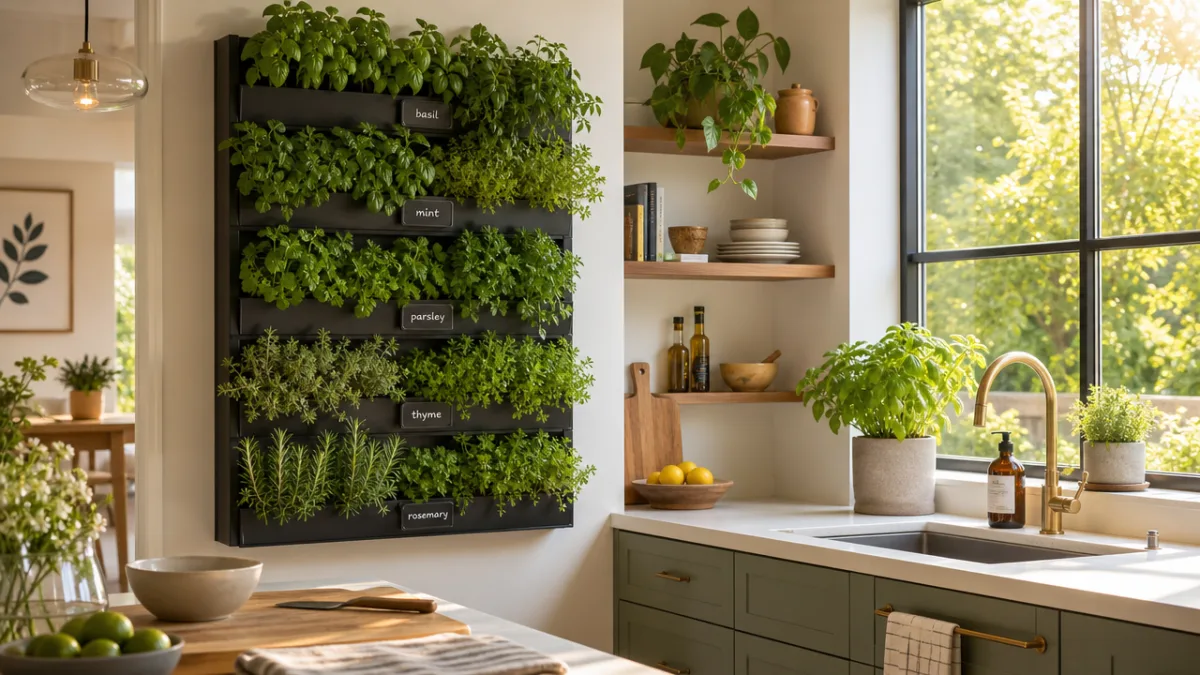
Vertical wall-mounted herb gardens are probably the most visually striking option for indoor spaces. These range from a simple pegboard with a few small hooks and pots to full living wall panels with self-watering systems. A well-done herb wall in a kitchen or dining area becomes a focal point — fragrant, lush, and genuinely beautiful. The trick is grouping herbs with similar water and light needs, and making sure everything has proper drainage so you don’t end up with root rot.
- Magnetic containers mounted on a refrigerator door for small herbs like chives and thyme
- Repurposed mason jars grouped on a floating shelf with a grow light overhead
- Tiered plant stands positioned beside a bright window for a layered, abundant look
- Hanging macramé planters holding trailing herbs like mint and oregano
- A reclaimed wooden pallet mounted vertically on a wall with pockets for individual herb pots
Outdoor Herb Garden Designs for Every Yard Size
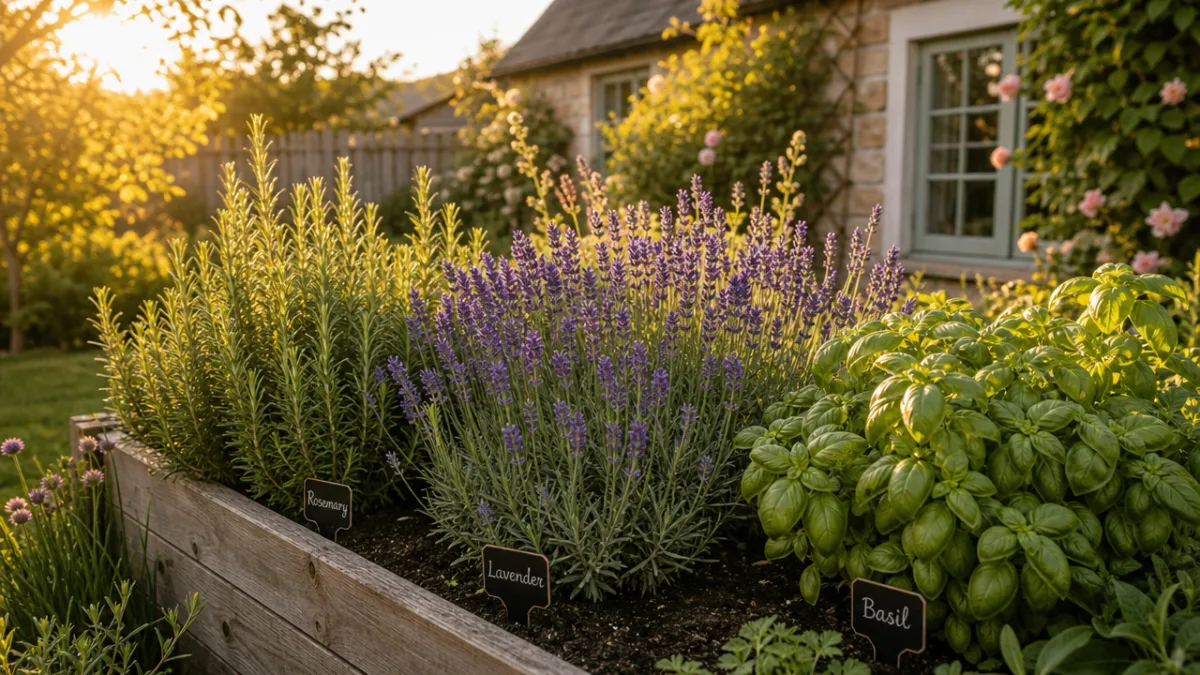
Outdoor herb gardens can take almost any shape you want, from a single raised bed near the back door to a full-blown formal knot garden that doubles as a landscape feature. If you have the yard space, putting a dedicated herb bed close to your kitchen entrance is hard to beat — it’s practical and genuinely beautiful. The classic cottage-style approach mixes everything together freely, letting fennel, sage, and borage find their own levels and create that effortlessly layered, slightly wild look that always seems to work.
Raised beds have become incredibly popular, and it’s not hard to see why. They let you control your soil exactly, which is a big deal for Mediterranean herbs like rosemary, lavender, and oregano that absolutely need good drainage and don’t want to sit in heavy, wet soil. Raised beds are also easier on your back — you’re not bending down to ground level for every little task, which matters more than people expect. You can build them from cedar, galvanized steel, composite lumber, or even reclaimed wood, so they can look at home in pretty much any style of yard.
If you’re working with a balcony, a small patio, or a compact urban backyard, containers are your best friend. Big terra cotta urns, wooden half-barrels, fabric grow bags, galvanized tubs — all of these can anchor a thriving outdoor herb collection. The best part is that you can move things around. Chase the sun, bring tender herbs inside when it gets cold, reshuffle things seasonally. A thoughtfully assembled cluster of mismatched vintage containers planted with herbs can honestly become one of the most charming things about a small outdoor space.
Spiral herb gardens are a particularly clever solution when space is tight. These three-dimensional structures — usually built from stone, brick, or timber — spiral upward to a central peak, which creates different microclimates within a surprisingly small footprint. The dry, sunny top suits drought-tolerant Mediterranean herbs perfectly, while the shadier, moister base works great for mint and parsley. A well-built herb spiral is both smart and dramatic, and it can function as a real landscape centerpiece in a space as small as six square feet.
Companion Planting and Designing Your Herb Garden Thoughtfully
One of the most interesting things you discover as you get deeper into herb gardening is how much plants interact with each other and with the broader garden ecosystem. Companion planting — growing different species close together for mutual benefit — has centuries of traditional practice behind it, and there’s a growing body of research backing it up. Many herbs are remarkable companions for vegetables, fruits, and flowers, helping deter pests, draw in beneficial insects, and in some cases even influence the flavor of nearby plants.
Basil and tomatoes are probably the most famous companion planting duo in the edible garden. Gardeners have sworn by this pairing for generations, and while the flavor-enhancement science is still a bit debated, there’s solid evidence that basil’s volatile oils help fend off thrips, aphids, and hornworm moths. Marigolds are another great companion — they’re strong pest deterrents and bring a pop of color at the same time. One thing to watch out for: dill and fennel can inhibit the growth of neighboring plants, so keep them away from most vegetables and research your layout before you start planting.
The visual design of your herb garden is worth thinking about just as much as the practical side. Playing with height, color, and texture creates a garden that looks good all season long, not just functional. Tall architectural plants like fennel, lovage, and angelica give you strong vertical structure. Mid-height herbs like sage, oregano, and lemon balm fill in the middle beautifully. Low, spreading herbs like thyme and creeping rosemary soften edges and spill nicely over raised bed sides or container rims. Weave in some flowering herbs — borage, chamomile, calendula, chives — and you’ve got seasonal color plus a reliable food source for pollinators.
- Group herbs by water needs to simplify irrigation — Mediterranean herbs together, moisture-lovers together
- Plant invasive spreaders like mint in containers sunk into the ground to contain their roots
- Use stepping stones or gravel paths through larger herb gardens for easy access without soil compaction
- Label your herbs with handwritten or etched markers, especially for less familiar varieties
- Include at least one flowering herb to support pollinators and add seasonal visual interest
- Position taller herbs on the north side of beds so they do not shade shorter plants
Growing Herbs Successfully: Tips for Soil, Water, and Light
The single most common mistake new herb gardeners make is watering too much. Most culinary herbs you’re likely to grow come from Mediterranean climates — dry summers, thin rocky soil, lots of intense sun. Rosemary, thyme, sage, lavender, and oregano have essentially evolved to handle what most of us would consider tough conditions, and they really do prefer to dry out between waterings. Heavy, waterlogged soil is their enemy. When you’re not sure whether to water, wait another day — root rot from overwatering kills herbs far faster than a little drought stress ever would.
Good soil and drainage aren’t glamorous topics, but they make or break an herb garden. If you’re planting in the ground and your soil is heavy clay, mix in plenty of grit, perlite, or coarse sand before you put Mediterranean herbs in. For raised beds and containers, a blend of quality potting compost with about thirty percent horticultural grit gives you the drainage these plants need while still holding a bit of moisture. Always check that your containers have clear, unblocked drainage holes, and never let pots sit in standing water. Feeding is less critical than getting water and drainage right, though a light balanced fertilizer once or twice during the growing season helps keep things going strong.
Light requirements vary quite a bit between herb species, so it’s worth matching your plants to your actual conditions rather than trying to grow everything in the same spot. Most culinary herbs want at least six hours of direct sun a day to really perform. That said, mint, parsley, chervil, cilantro, and lemon balm actually prefer partial shade — they’ll bolt quickly in intense heat and full sun. Shade-tolerant herbs are genuinely useful for filling those tricky spots in the garden with dappled light, and they can make north-facing balconies or spots under trees far more productive than you might expect.
Harvesting, Preserving, and Using Your Herbs Year-Round
Knowing how and when to harvest makes a real difference in how productive your herb garden stays all season. The core rule is simple: little and often beats big and infrequent. Regular harvesting pushes plants to put out bushy new growth and keeps them from bolting. For leafy herbs like basil, mint, parsley, and cilantro, pinching off the growing tip just above a leaf node causes the plant to send out two new shoots from that point — so every cut you make is essentially doubling your future harvest. Just don’t take more than a third of the plant at any one time.
The best time to harvest is in the morning, once any dew has dried but before the midday heat rolls in. That’s when the essential oils that give herbs their flavor and fragrance are most concentrated — right before the plant flowers. For basil especially, this means keeping an eye out for flower buds and pinching them off as soon as they appear. Once a plant flowers and sets seed, leaf production drops off significantly and what’s left tends to be smaller and less flavorful.
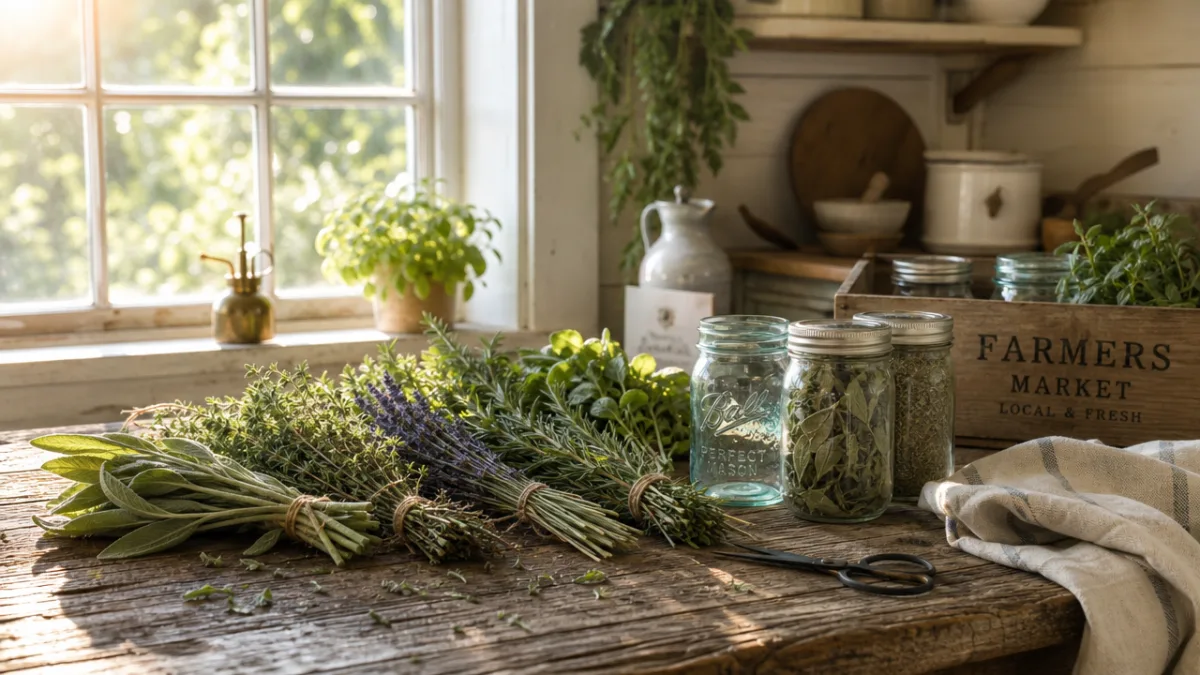
When you end up with more herbs than you can use fresh, preservation is the way to make your harvest last through the colder months. Drying works beautifully for robust, low-moisture herbs — rosemary, thyme, oregano, and sage are all great candidates. Just bundle small bunches, hang them upside down somewhere warm and well-ventilated out of direct sunlight, and leave them for two to three weeks until fully dry, then transfer to airtight glass jars. Soft-leafed herbs with higher water content — basil, parsley, cilantro, chives — do better when frozen. Blend them into olive oil and freeze the mixture in ice cube trays, and you’ll have perfectly portioned herb cubes ready to drop into sauces, soups, and stews all winter long.
- Make herb-infused vinegars by steeping tarragon, rosemary, or thyme in white wine vinegar for two weeks
- Blend fresh basil, parsley, or cilantro into pesto and freeze in small portions for quick weeknight meals
- Create compound butters by mixing fresh herbs into softened butter, rolling in parchment, and freezing
- Dry lavender and chamomile flowers for use in teas, baked goods, and homemade beauty products
- Make herb salts by blending coarsely chopped fresh rosemary or thyme with coarse sea salt and drying overnight
An herb garden, whatever form it takes, is one of the most rewarding things you can add to your home. It doesn’t ask much — some sunlight, occasional water, a light hand at harvest time — and it gives back in flavor, fragrance, and the quiet satisfaction of growing something yourself. Whether you’re setting up three pots on a city windowsill or laying out a full garden bed, you’re tapping into something people have been doing for centuries. Start small, pay attention to what thrives in your conditions, and let your herb garden grow with you season by season.








What do you think?
It is nice to know your opinion. Leave a comment.