










Craftivism: Where Craft and Activism Meet
What Is Craftivism? Defining a Movement Stitched in Purpose
Craftivism is exactly what it sounds like — a mashup of “craft” and “activism” — and it’s been quietly gaining momentum since the early 2000s. The basic idea is that traditional handmaking skills like knitting, embroidery, cross-stitch, and weaving can be a vehicle for political and social engagement. It’s not the kind of activism you’d associate with loud marches or confrontational tactics. Craftivism is gentler than that, more likely to invite someone into a conversation than to shout at them, more interested in reflection than reaction.
The word itself is generally credited to Betsy Greer, an American writer and artist who coined it in 2003 and later dug into the concept in her book Craftivism: The Art of Craft and Activism. Her argument was that making something by hand is, at its heart, an act of care — and that when you point that care outward at the world, it becomes something like activism. That idea clicked for a lot of crafters who felt politically motivated but couldn’t quite find a form of engagement that felt like them.
Since then, craftivism has grown into a genuinely global movement. Organizations, collectives, and individual artists all over the world have picked it up and run with it, producing an astonishing variety of work — delicately embroidered protest banners, massive yarn installations wrapped around public monuments, and everything in between. What ties all of it together is a shared conviction that handmade objects carry a kind of moral weight that mass-produced things simply can’t, and that this weight can be put to work in the service of justice.
A Brief History: From Suffragettes to Yarn Bombing
The roots of craftivism go back a lot further than the early 2000s. For centuries, textiles and needlework have served as a form of coded political communication, particularly for people whose voices were otherwise being ignored. During the suffragette movement in the UK and the US, women used embroidery and sewing to signal solidarity and get their message across in spaces where they couldn’t simply speak up. Quilts carried hidden meanings, banners bore hand-stitched slogans, and the act of gathering to sew together was a form of collective organizing that was hard for authorities to frame as a threat.
A more recent example — and one of the most powerful in modern history — is the NAMES Project AIDS Memorial Quilt. Launched in 1987 by activist Cleve Jones, the quilt eventually grew to include more than 50,000 panels, each one handmade by someone mourning a person lost to AIDS. At a time when the epidemic was being met with official silence and widespread stigma, the quilt was both a monument of grief and an unmistakable political statement. It showed the world that something handmade could hold grief, anger, and political demand all at once.
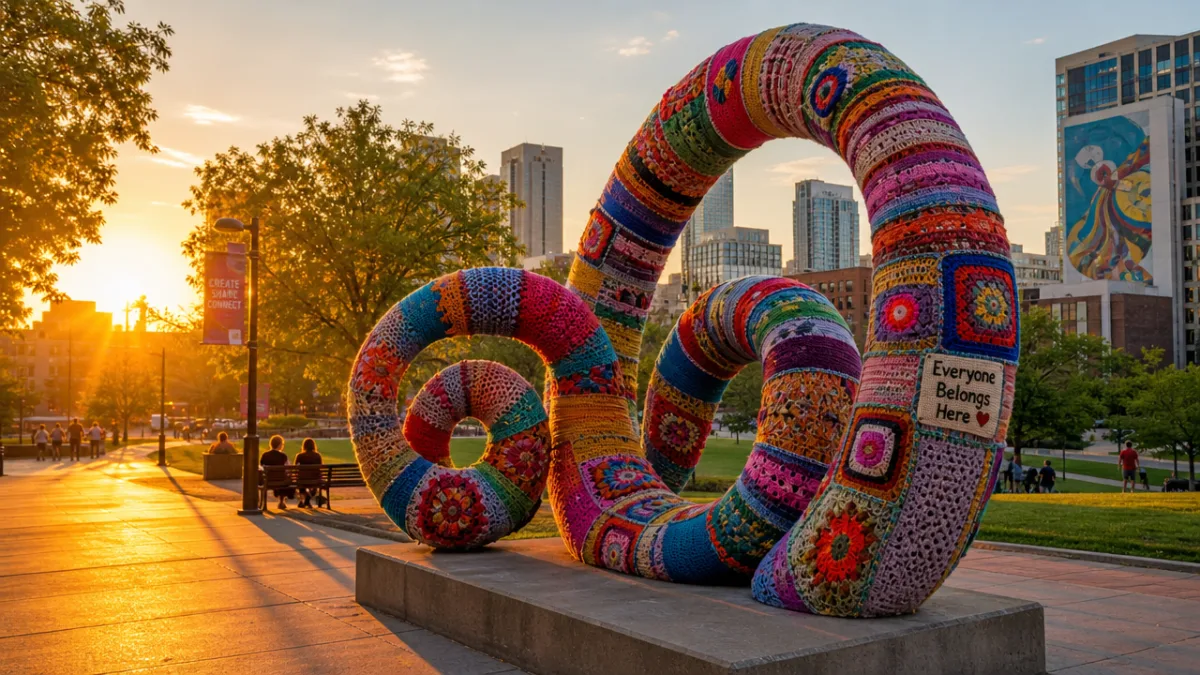
Yarn bombing — wrapping public structures, monuments, and street furniture in colorful knitted or crocheted coverings — came along in the mid-2000s as a more playful expression of that same energy. It started mostly as guerrilla beautification, but it didn’t take long to acquire political dimensions, with artists and collectives using the form to draw attention to everything from environmental destruction to corporate greed. Today, craftivism is understood as a long, rich tradition that long predates the internet — and has been dramatically amplified by it.
The Craft Industry Alliance and the Professionalization of Craftivism
The Craft Industry Alliance (CIA) has played a real role in bringing craftivism into mainstream professional conversations about the craft world. As a trade organization for craft businesses and professionals, the CIA recognized early on that craftivism wasn’t just a niche curiosity — it’s a significant and commercially relevant force. By publishing resources, hosting conversations, and spotlighting craftivist artists and projects, the CIA has helped establish craft-based political expression as a legitimate professional and creative practice, not just a hobby with a message.
That legitimacy matters in practical ways. When a knitting designer who creates politically themed patterns gets recognized by a major industry organization, it sends a signal to the broader market that this kind of work has genuine value — artistically and commercially. It also helps individual craftivist makers find each other, building a sense of community and shared purpose that can sustain creative and political work over the long haul.
The CIA’s engagement with craftivism also reflects something bigger happening across the craft industry. As younger makers have entered the field, they’ve brought with them a strong awareness of social and political issues and a desire to weave their values into their creative work. The industry has had to respond to that shift, and organizations like the CIA are helping to figure out what a socially engaged craft world actually looks like in practice. It’s a sign that the intersection of craft and activism isn’t a passing trend — it’s reshaping how the craft world understands what it’s for.
How Craftivism Works: Techniques, Tools, and Tactics
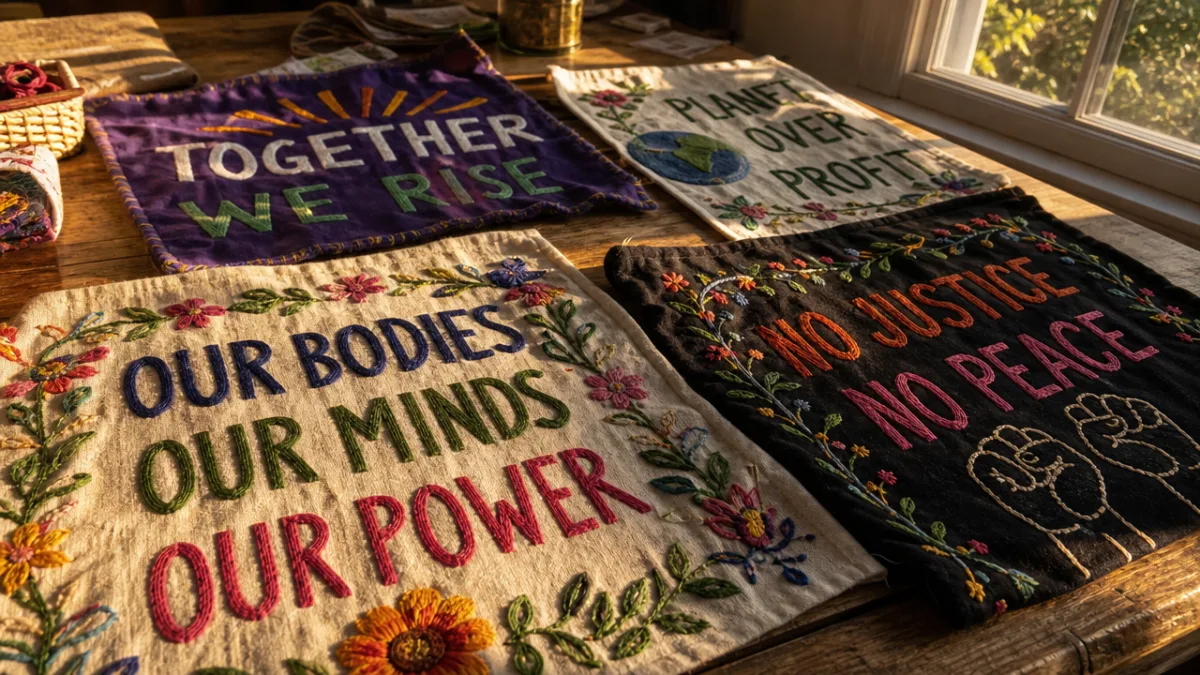
Craftivism draws on a wide range of techniques and materials, and there’s no single look or aesthetic that defines it — what unites craftivist work is intention, not style. Embroidery is probably the most common medium, partly because of its intimacy and partly because of its long association with feminine domestic labor, a tension craftivists love to exploit. There’s something deliberately subversive about picking up a hoop and needle and using it to express sharp political critique. Some practitioners even deliver small embroidered pieces directly to politicians or corporate executives, creating a kind of personal exchange that a form letter or mass email could never replicate.
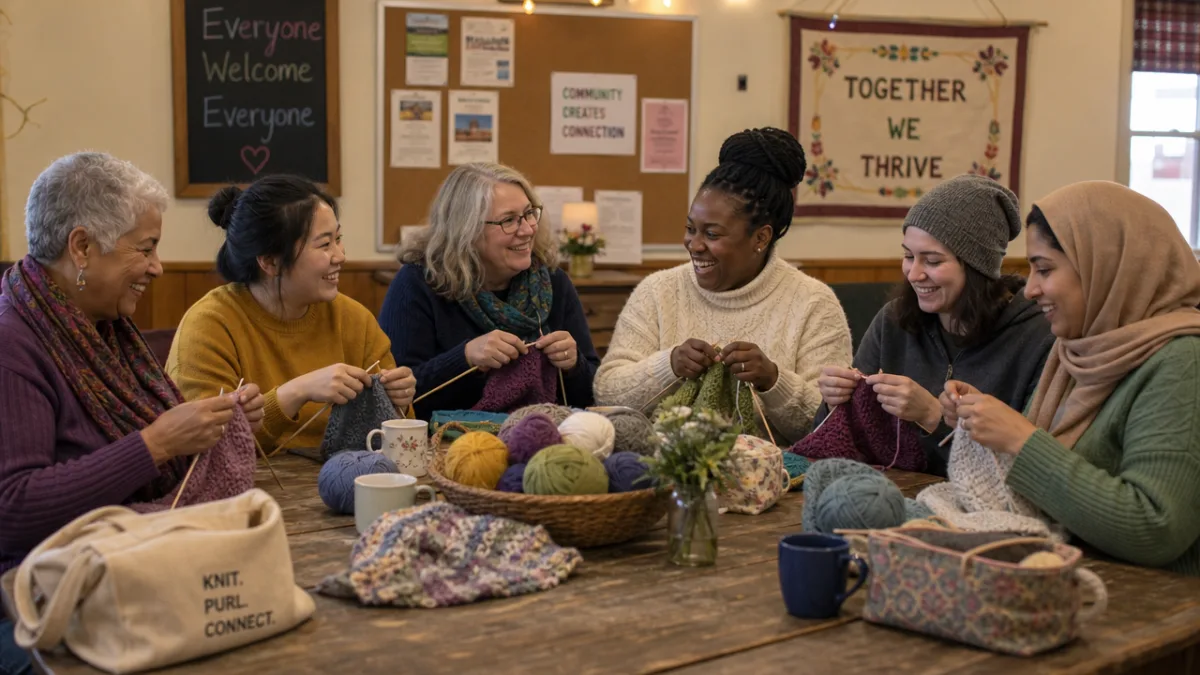
Knitting and crochet are just as central to craftivist practice, partly because they’re portable and deeply communal. Knitting circles have historically been spaces for women to gather, talk, and organize — and contemporary craftivists have revived that tradition with real intentionality. Groups like the Craft Cartel in Australia and the Craftivism Collective founded by Sarah Corbett in the UK have developed structured, guided approaches to craftivist knitting and embroidery, running workshops and offering toolkits that help participants connect their making directly to specific campaigns and causes.
The tactical thinking behind craftivism is just as deliberate as its aesthetics. A handmade object provokes a different kind of attention than a conventional protest material. A painted banner dashed off in five minutes reads as urgent but disposable; a banner painstakingly embroidered over weeks communicates dedication, care, and serious commitment. That quality of slow, deliberate attention is itself a political statement in a world of rapid-fire media. Some of the most common craftivist tactics include:
- Mini manifestos: Small embroidered or cross-stitched pieces with a single powerful phrase or message, designed to be left in unexpected public spaces or handed directly to decision-makers.
- Collective making events: Workshops where participants craft together around a shared theme or campaign, using the making process itself as a space for conversation and consciousness-raising.
- Yarn bombing and guerrilla installation: Covering public objects or spaces with knitted or crocheted work to spark curiosity and draw passersby into unexpected encounters with political messaging.
- Protest banners and placards: Handmade signage for marches and demonstrations that brings craftivist aesthetics into more traditional activist contexts, combining the visual power of the handmade with the scale of collective action.
- Online pattern activism: Designing and sharing free or low-cost knitting and embroidery patterns tied to specific causes, so that a global community of makers can produce craftivist work right in their own homes.
Craftivism and Identity: Gender, Race, and the Politics of Making
You can’t fully understand craftivism without talking about gender, race, and cultural identity — they’re woven into the movement at a fundamental level. Textile work has been systematically devalued throughout Western cultural history because it was associated with women and with the domestic sphere. Craftivism pushes back against that explicitly, making the argument that the skills and traditions dismissed as mere “women’s work” are actually sophisticated, meaningful, and politically potent. In that sense, every craftivist project is also a feminist argument about the value of care work and traditionally feminine knowledge.
The relationship between craftivism and race is more complicated, and it’s been the subject of important critical conversations within the movement. Textile traditions have deep roots in cultures all over the world — many of which have been appropriated, commodified, or actively erased by colonial forces. Indigenous weaving practices, African textile traditions, the quilting traditions of enslaved African Americans — these all represent forms of cultural knowledge produced under conditions of oppression, and they carry extraordinary political and spiritual significance. Craftivism has had to reckon honestly with that history, acknowledging where it draws on traditions it didn’t create and working to ensure that the communities who developed those traditions are centered and credited.
There’s also a growing conversation about accessibility and inclusion. The movement has sometimes been criticized for being predominantly white and middle-class, centered on experiences and aesthetics that don’t reflect the full diversity of political struggle. In response, many craftivist practitioners and organizations have worked deliberately to broaden the movement’s reach — partnering with communities of color, working-class communities, and communities in the Global South to develop craftivist practices rooted in their own specific histories and needs. It’s ongoing work, and the fact that it’s happening at all says something about how seriously many craftivists take the political dimensions of what they do.
The Global Impact of Craftivism: Case Studies and Campaigns
One of the best ways to understand what craftivism actually accomplishes is to look at specific campaigns that have had real results. The Craftivism Collective’s “Slow Activism” campaign is one of the most thoroughly documented examples of craftivism being used strategically to influence corporate behavior. In 2016, the Collective worked alongside campaigners targeting UK retailer Marks & Spencer over its living wage policies. Participants embroidered personal messages onto handkerchiefs and delivered them directly to the company’s board members — a form of engagement that was quietly impossible to dismiss as background noise.
The Pussyhat Project, launched ahead of the January 2017 Women’s March, became probably the most visible craftivist campaign in recent memory. Coordinated largely through social media, it invited knitters around the world to make and wear pink hats with cat-ear points to the march. The response was overwhelming: hundreds of thousands of hats were produced and worn at marches across the globe, creating one of the most visually striking images of mass protest in recent years. The project proved that craftivism could scale to genuinely mass dimensions when the political moment was right and the barrier to participation was low enough.
Beyond those headline campaigns, craftivism has been put to work in countless smaller, more localized settings that rarely make international news but matter deeply to the people involved. Community organizations in cities from Lagos to London to Los Angeles have used craftivist workshops for mental health support, community building, and political education. Environmental groups have used knitted and crocheted representations of endangered species and dying coral reefs to make abstract ecological crises feel viscerally real. Labor rights organizations have used embroidery and textile art to honor garment workers’ histories and draw attention to ongoing exploitation in global supply chains. The sheer breadth of these applications says a lot about how flexible craft can be as a medium for activism.
Looking across all these examples, a few common threads emerge that help explain why craftivism works when it works. Handmade objects are unexpected in political contexts, which makes them hard to ignore. The slow, meditative process of making deepens personal commitment to a cause. The resulting images and artifacts travel well on social media, turning local action into something with global reach. And handmade work carries an implicit argument about value — about what deserves our time, what kinds of labor are worth respecting, and what kind of futures are worth working toward, one careful stitch at a time.
Getting Started: How to Bring Craftivism Into Your Own Practice
If craftivism has piqued your interest and you want to bring some of its principles into your own making, the good news is that the barrier to entry is genuinely low. You don’t need to be an expert crafter, a seasoned activist, or a professional artist. At its core, craftivism is really a practice of intention — deciding that the things you make will carry meaning beyond aesthetic pleasure, and that this meaning will connect to the world you want to live in. Starting small and building from there isn’t just acceptable; for most people, it’s the most sustainable way to go.
A practical first step is to identify a cause that genuinely matters to you and look into the organizations already working on it. Craftivism tends to be most effective when it’s connected to larger campaigns with clear goals and strategies, rather than floating in isolation. Reaching out to local activist groups, nonprofits, or community associations to ask whether your craft skills could be useful is a straightforward way to start building that connection — and many organizations are genuinely surprised and delighted to find that makers want to contribute creatively to their work.
There’s also no shortage of resources for crafters who want to develop their practice more intentionally. Sarah Corbett’s book How to Be a Craftivist offers a thoughtful philosophical and practical framework for slow activism through making. The Craftivism Collective’s website has free toolkits, patterns, and guides for running craftivist workshops. Online communities on Instagram, Ravelry, and Pinterest connect makers all over the world who are working at this intersection, sharing patterns, projects, and political reflections. And the craft industry — including organizations like the Craft Industry Alliance — increasingly offers platforms and resources that support makers who want to engage politically through their work. The tools are out there. All you really need to do is pick them up.








What do you think?
It is nice to know your opinion. Leave a comment.