










7 Ways to Protect Your Plants From a Sudden Frost
Understanding Frost and Why It Threatens Your Garden
Frost happens when temperatures drop to 32°F (0°C) or below, and the water inside plant cells starts to freeze. Those ice crystals punch through cell walls from the inside out, which is why you wake up to wilted, blackened foliage that was perfectly fine the evening before. What makes frost so sneaky is that the nights leading up to it can feel almost pleasant — no wind, no storm, just a quiet cold that creeps across your garden while you’re asleep.
Not all frosts hit the same. A light frost — anywhere from 29°F to 32°F — might only knock back your most tender plants. A moderate frost dipping into the 25°F to 28°F range will take out most vegetables, annuals, and anything tropical. And a hard freeze below 25°F? That’s rough on nearly everything except cold-hardened perennials and evergreens. Knowing what kind of frost you’re dealing with helps you figure out which plants are most at risk and how much effort they’re worth that night.
Sudden frosts are the worst because there’s no gradual cool-down to tip you off. You can have a gorgeous warm afternoon in October and then watch the temperature nosedive overnight. Keeping a close eye on the forecast — especially overnight lows, dew point, and wind chill — is really your first and most important defense. Weather apps, your local cooperative extension service, and dedicated gardening weather tools can all give you that 24-hour heads-up that makes all the difference.
Covering Plants With Fabric, Sheets, and Row Covers
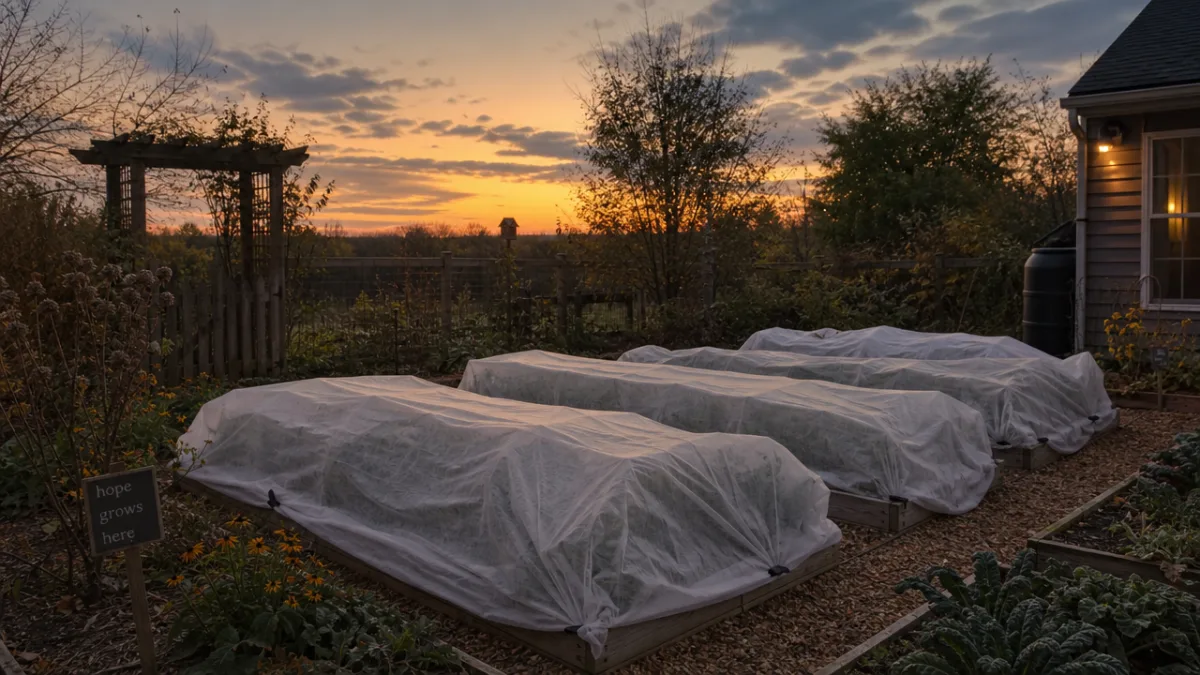
Throwing something over your plants is one of the oldest tricks in the book, and it genuinely works. Old bedsheets, burlap, cotton towels, or purpose-made horticultural fleece all do essentially the same thing: they trap the heat that radiates up from the soil overnight and create a little pocket of warmth under the cover. It doesn’t sound like much, but that microclimate can stay several degrees warmer than the open air — often just enough to pull your tender plants through a light or moderate frost.
A few things make the difference between a cover that actually works and one that doesn’t. Drape the fabric all the way to the ground and anchor the edges with rocks, bricks, or stakes so cold air can’t sneak underneath. Try not to let the fabric rest directly on the foliage either — if it freezes solid against your plants, it can still cause damage. A wire hoop, tomato cage, or a few wooden stakes to tent the fabric a few inches above the leaves will protect them a lot better while still sealing in the warmth below.
If you’re a serious gardener, commercial row covers are worth buying. They come in different weights — lighter ones let in more light and handle mild frosts well, while heavier grades can protect down to around 24°F. The big advantage over improvised fabrics is that they breathe, so you don’t have to panic about pulling them off at sunrise every single day. That said, always vent or remove covers on sunny days so your plants don’t overheat underneath.
Plastic sheeting is an option too, but it needs more babysitting. Plastic doesn’t breathe, so it traps moisture against leaves and can encourage disease. It also transfers cold directly to anything it touches. If you use it, make sure it’s propped up off the plants and get it off promptly in the morning — a clear plastic tent in unexpected sunshine can heat up surprisingly fast and do just as much damage as the frost would have.
Using Mulch to Insulate Roots and Soil
Covering the tops of your plants is only half the battle — the roots need protecting too, especially for perennials, bulbs, and shrubs you’re counting on to come back in spring. Mulch is the best tool you have for that job. A good thick layer spread around the base of your plants holds onto the heat stored in the soil and buffers against the wild temperature swings that stress root systems overnight. Think of it as tucking your garden in for winter.
Straw, shredded leaves, wood chips, pine needles, and compost all make great frost-protection mulch. Straw is a popular go-to because it’s cheap, light, and full of air pockets that insulate really well. Shredded leaves are just as effective, and if you’re making them by the bagful every autumn anyway, it’s a free resource that also breaks down and feeds your soil over time. Aim for three to four inches in most climates, or up to six inches around your most vulnerable plants if your winters get seriously cold.
Timing matters more than most people realize. If you mulch too early in the fall while the soil is still warm, you can trap heat that encourages a flush of tender late-season growth — exactly the kind of soft, new growth that’s most at risk when frost hits. The sweet spot is waiting until after the first hard freeze, when your plants have gone fully dormant. That way you’re locking in a stable, cool soil temperature rather than an artificially warm one.
There’s a bonus to mulching that shows up in spring: it slows the soil from warming back up, which actually protects some plants from breaking dormancy too early during a mid-winter warm spell. It sounds counterintuitive, but that slower warm-up can save plants from getting tricked into growth right before another cold snap hits. Mulch works both ways — it moderates temperature in both directions, giving your plants a more stable underground world to ride out the season in.
Watering Before a Frost Event
This one surprises a lot of people: watering your garden before a frost can actually help protect it. The reason comes down to how water holds heat. Moist soil soaks up warmth during the day and releases it slowly overnight, keeping the area around your plants a little warmer through the coldest hours. Dry soil just doesn’t have that thermal staying power.
Well-hydrated plants are also tougher to begin with. When a plant is drought-stressed, its cell membranes are already under strain, and a hard freeze hits them harder. Giving your plants a good drink the day before a frost means their cells are in the best possible shape to handle the cold — it’s the difference between a plant that bounces back and one that doesn’t. This matters especially for container plants, which dry out faster than in-ground plants and are more exposed to temperature swings on all sides.
One thing to watch out for: don’t water overhead late in the evening before a frost. Water sitting on leaves overnight gives ice something to form on and can actually make frost damage worse. Stick to watering at the base of your plants or using drip irrigation to soak the root zone without wetting the foliage. And try to water in the morning the day before a forecast frost rather than the night of — you want the soil to absorb the moisture and warm up, not just end up with wet leaves heading into a freezing night.

Bringing Container Plants Indoors
One of the best things about growing plants in containers is that when frost threatens, you can just pick them up and move them. Potted herbs, tropicals, succulents, tender annuals, and young seedlings can all come inside — or at least into a garage, shed, covered porch, or greenhouse — when the forecast turns ugly. Even sliding a pot a few feet closer to the house wall can help, since buildings radiate stored heat and create little sheltered pockets that stay noticeably warmer than the open garden.
For plants that aren’t true houseplants, a garage or basement is usually a better destination than your living room. Dragging a cold-acclimated plant into warm, dry indoor air can actually shock it, and low interior light stresses sun-loving plants quickly. A garage that stays just above freezing gives them the protection they need without the disruption of a heated environment. If you do bring plants into a warm room, put them near a south-facing window and mist them occasionally — indoor heating dries the air out fast, and they’ll feel it.
If you have a lot of containers, a little organization goes a long way come frost season. Grouping pots by cold hardiness during the summer means you already know which ones are urgent when a frost warning comes in. Wheeled plant caddies are a lifesaver for heavy pots — one person can move a large container quickly without throwing out their back. And having a rough mental list of which plants are true tropicals versus which can handle a light freeze helps you make quick decisions when the weather app buzzes at 10 p.m. with a last-minute alert.
If moving containers isn’t realistic, cluster them together in a sheltered corner of the yard. Plants lose heat more slowly in a group because they block wind and cold air for each other. Pack straw bales, bags of compost, or even cardboard boxes stuffed with crumpled newspaper around the cluster to create an improvised windbreak. You can even weave some low-heat string lights through the group — they won’t heat much, but on a borderline frost night, a few extra degrees can be exactly what you need.
Using Cloches and Cold Frames
A cloche is basically a little dome that goes over a single plant and turns it into its own tiny greenhouse. Traditionally they were bell-shaped glass, but these days you’ll find plastic versions, wax paper ones, or the classic DIY version: a gallon jug with the bottom cut off. They’re great for protecting individual seedlings, young transplants, or a particular plant you really don’t want to lose. The air inside warms up during the day and holds that heat through the night, often giving you five to ten degrees of extra frost protection depending on the material.
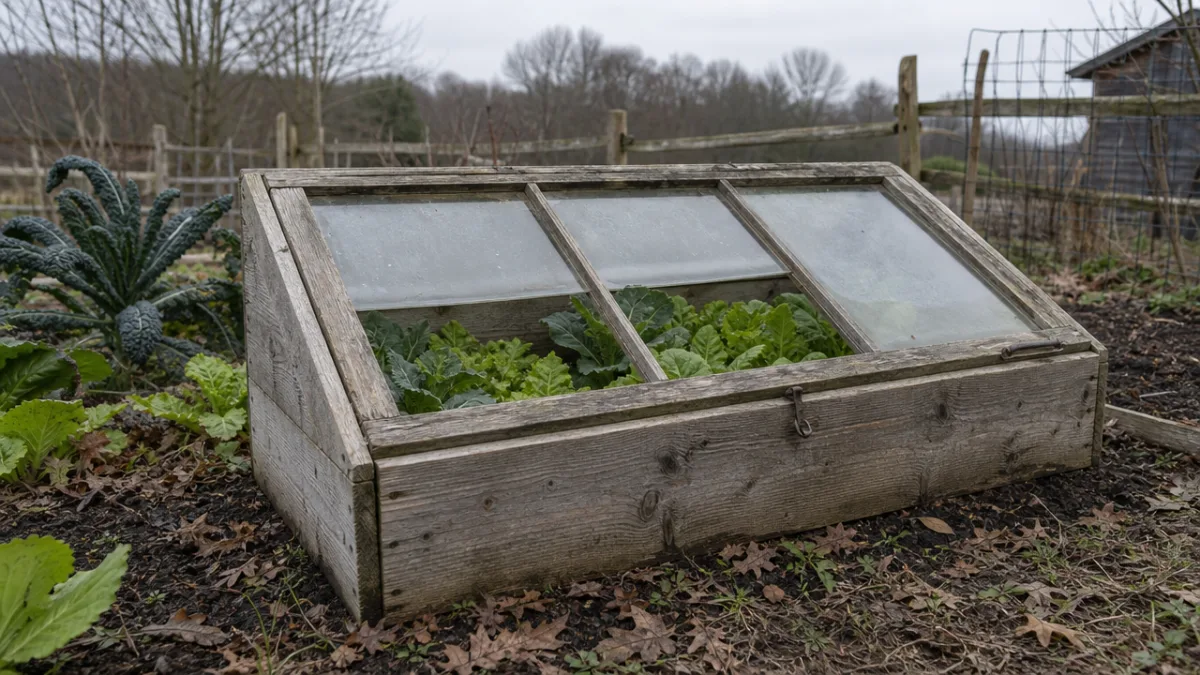
Cold frames are the bigger, more permanent version of the same idea. They’re essentially bottomless boxes with a clear lid — old window sashes, polycarbonate panels, or heavy greenhouse plastic work great — that sit right over your garden bed and trap solar heat while blocking wind and frost. A good cold frame can extend your growing season by weeks in both spring and fall, letting you keep harvesting greens, spinach, and carrots long after you’d normally be done. And they’re surprisingly cheap to build if you have some scrap lumber and a salvaged window sitting around.
The most important thing with both cloches and cold frames is watching the temperature inside on sunny days. Even in the middle of winter, a clear day can cook plants under a sealed cover faster than you’d expect. Propping the lid open or removing cloches during daylight prevents that, and closing everything back up before sunset captures the warmth for the night ahead. A thermometer placed inside a cold frame is a worthwhile addition — it takes the guesswork out of ventilation decisions. If you really want low-maintenance, some cold frames now come with automatic vent openers that respond to temperature on their own, which is handy if you’re not always around during the day.
Long-Term Strategies: Plant Selection and Garden Design
Honestly, the best frost protection starts before you ever put a plant in the ground. Choosing plants rated for your USDA hardiness zone — or even one zone colder if your garden is particularly exposed or sits in a low spot — means you’re not fighting an uphill battle every autumn. Native plants are especially reliable because they’ve already figured out how to handle your region’s weather patterns, including its worst frost events. Your local cooperative extension service is a great resource for finding out which plants are genuinely well-suited to where you live.
How you design your garden matters too. South-facing beds and slopes warm up faster and shed cold more readily, making them naturally better spots for tender plants. Low-lying areas are the opposite — cold air drains downhill and pools in depressions overnight, which is why a frost in a hollow can be several degrees colder than a spot just a few yards higher up. Positioning your most vulnerable plants near heat-absorbing features like brick walls, stone paths, or a large water feature can make a real difference without any extra work on frost nights.
Windbreaks are another long-term investment worth thinking about. Wind strips heat from soil and plants fast, making a cold night feel much colder than the thermometer says. A dense evergreen hedge, a fence, a wall, or even tall ornamental grasses on the windward side of your tender plants can substantially cut that chilling effect. Studies have found that an effective windbreak can calm wind for a distance up to ten times its own height — so even a modest hedge creates a genuinely protected zone on the other side.
Finally, the gardeners who consistently lose the fewest plants to surprise frosts aren’t the ones with the fanciest equipment — they’re just the ones who’ve built good habits. Keep your frost cloth, stakes, and cloches somewhere accessible in autumn rather than buried in the back of a shed. Sign up for a weather alert that pings you when overnight temps are going to drop. Take a quick walk through the garden on autumn evenings with an eye for anything that looks particularly exposed or tender. Pay attention early, act before it becomes urgent, and frost protection stops feeling like a scramble and starts feeling like just another part of the gardening rhythm.








What do you think?
It is nice to know your opinion. Leave a comment.