










What Is Mica Powder and 23 Ways to Use It
What Is Mica Powder?
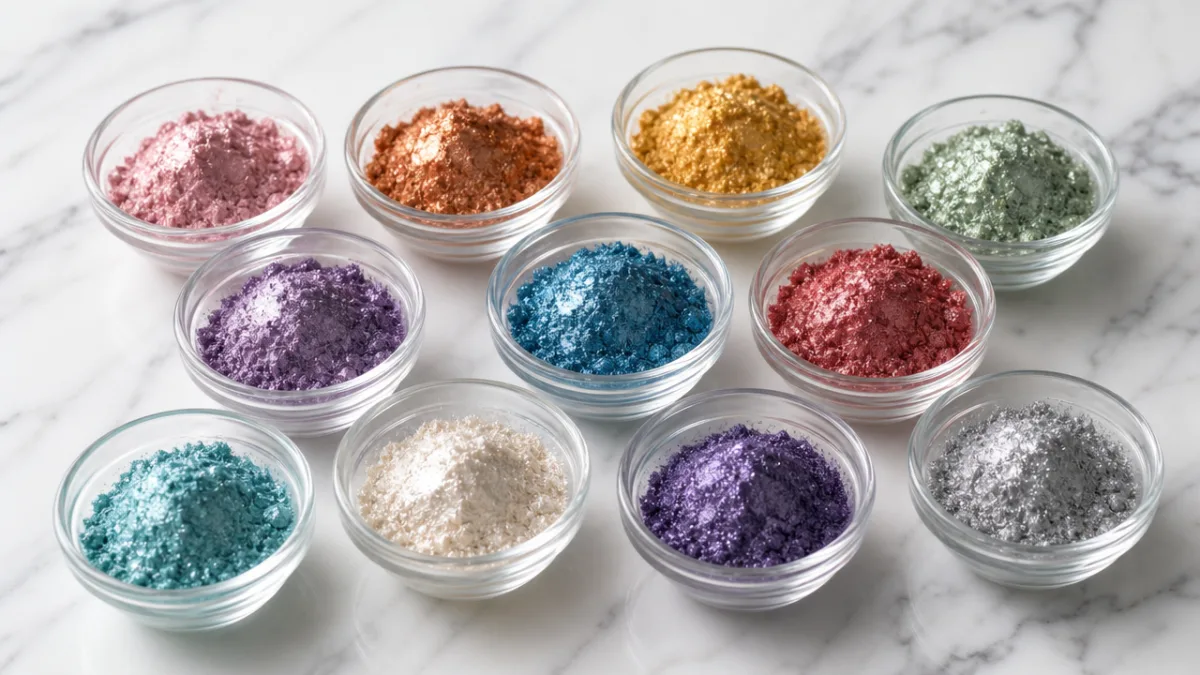
Mica powder is a finely ground mineral that comes from mica, a group of silicate minerals found in rocks all over the world. The word “mica” comes from the Latin micare, meaning “to glitter” or “to shine” — which honestly couldn’t be a more fitting description. When mica is ground down into a fine powder, it holds onto that natural shimmer and iridescence, which is exactly why it’s become such a beloved material among crafters, artists, cosmetic makers, and manufacturers.
In its natural form, mica looks like thin, flat, layered sheets — almost like you could peel them apart like pages in a book. Those sheets have a naturally reflective surface that catches and scatters light in a way that’s genuinely hard to replicate with synthetic materials. When mica gets ground into powder, those tiny reflective platelets stay intact, and that’s what gives it that signature sparkle. The particle size is what determines whether you end up with a soft satin sheen or an all-out glittery brilliance.
Most mica powders you’ll find today are either naturally sourced and then dyed to get those vivid colors, or they’re synthetic mica — sometimes called fluorphlogopite — made in a lab. Synthetic mica tends to be purer and more consistent, and it avoids some of the ethical concerns tied to natural mica mining. Both types are widely available, and for most craft and cosmetic uses, either one looks absolutely gorgeous and performs just as well.
The Properties That Make Mica Powder So Useful
One of the biggest things that sets mica powder apart is how incredibly stable it is. A lot of organic pigments will fade, bleed, or break down when they’re exposed to heat, light, or certain chemicals. Mica doesn’t do that. It’s an inorganic mineral, so it holds up really well under tough conditions — which is why it shows up not just in arts and crafts but also in things like car paint and electrical insulation, where you simply can’t afford for your materials to fail.
Mica powder is also chemically inert, meaning it doesn’t react with most things it comes into contact with. That’s a huge deal for cosmetics and skincare, where reactive ingredients can irritate skin or destabilize a formula. Because mica sits on the surface of the skin without being absorbed, it’s considered non-toxic and has been approved by regulatory bodies worldwide for use in cosmetics, including products used around the eyes. That safety profile is a big part of why the beauty industry loves it so much.
Another thing that makes mica so useful is how well it plays with different mediums. It disperses nicely in oil-based, water-based, and alcohol-based carriers, so you can mix it into almost anything — thick epoxy resin, a lip gloss base, a batch of cold-process soap. It integrates smoothly, delivers consistent color and shimmer, and doesn’t require any fancy equipment to work with. Beginners pick it up pretty quickly, which is part of why it’s become such a popular material.
Mica Powder in the World of Art and Craft
The craft community has really taken mica powder and run with it, and it’s not hard to see why. There’s something almost magical about how it can make an ordinary project look like it’s glowing from the inside out — and you don’t need to be an advanced artist to pull that off. From beginners experimenting at the kitchen table to professional mixed-media artists preparing gallery shows, mica powder has become a staple that people reach for whenever they want to add some luminosity and visual depth to their work.
In resin art, it’s probably the most popular colorant out there. When you mix mica into epoxy or UV resin, those fine particles suspend beautifully throughout, creating swirling galaxies of metallic color. Artists use it to make geode-inspired pieces, ocean wave effects, abstract pours — things that look like polished gemstones or precious metal. And because mica is heat-resistant, it holds up fine during the exothermic curing process that resin goes through, so the final piece keeps its color and sparkle after everything hardens.
Outside of resin, mica shows up in painting, scrapbooking, card making, and mixed-media collage. Mix it with a medium like Mod Podge, gesso, or acrylic gel and you can paint it directly onto canvas, wood, or paper to create metallic accents and interesting textures. Stampers and card makers use it for shimmery backgrounds and decorative elements that catch the light and give handmade cards a really luxurious feel. And with colors ranging from classic gold and silver to holographic pastels and deep jewel tones, you’re really only limited by your imagination.
Mica Powder in Cosmetics and Beauty
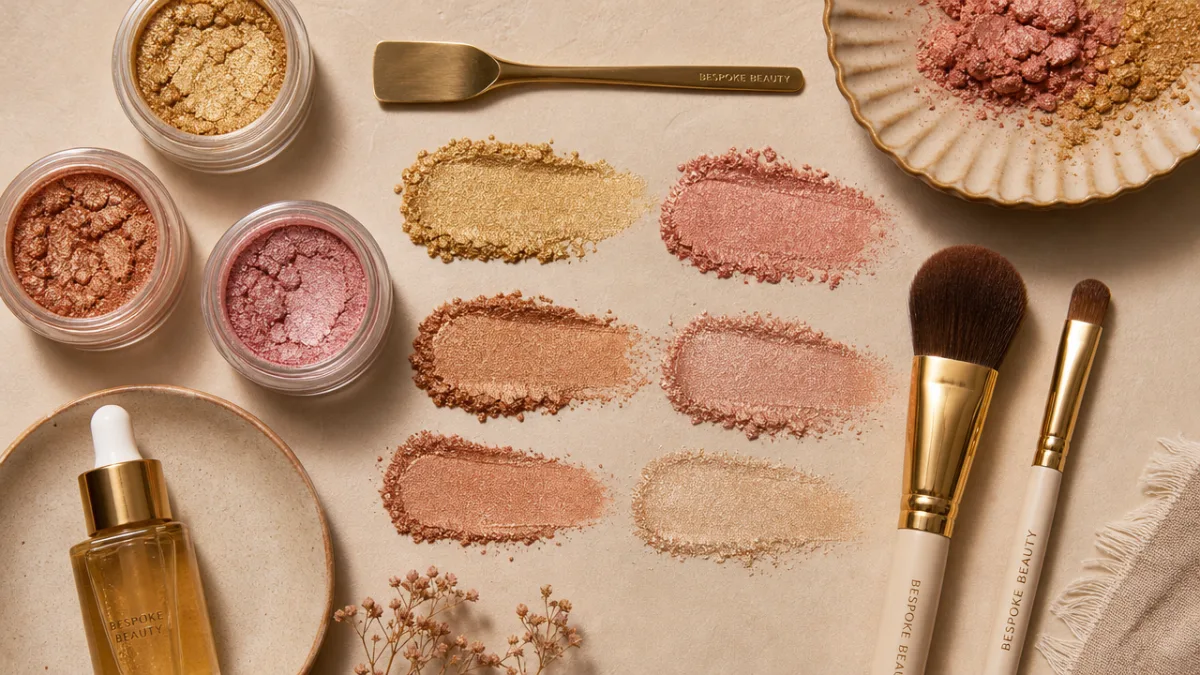
Mica has been a beauty industry staple for decades, and it’s still one of the most widely used ingredients in cosmetic formulas around the world. Its natural sheen and light-reflecting qualities make it the foundation of so many products — highlighters, eyeshadows, setting powders, bronzers, blushes. When you apply it to skin, those mica particles catch available light and scatter it in multiple directions at once, creating that lit-from-within glow that’s become one of the most sought-after looks in modern makeup.
If you’re interested in making your own cosmetics at home, mica powder is a fantastic place to start. It blends easily with carrier oils to make loose or pressed eyeshadows, and you can stir it into a clear lip gloss base to create custom shades in minutes. DIY beauty enthusiasts also love it in body butter, body oil, and bath bombs, where it adds a pretty shimmer without the grittiness or potential irritation that craft glitters can sometimes cause. Just make sure you’re working with cosmetic-grade mica — it’s milled to a size that’s been deemed safe for skin and eye contact.
Professional makeup artists love mica powder for the control it gives them. A small amount blended into foundation creates a satin finish that works for everyday wear. A more generous application to the cheekbones or brow bone gives you that blinding highlight you’ve probably seen all over social media. Nail techs have also gotten in on it — they use mica in gel and acrylic systems to create chrome effects and holographic finishes that look just as good as anything you’d find in a high-end nail polish, usually for a lot less money.
23 Creative Ways to Use Mica Powder
One of the best things about mica powder is just how many different things you can do with it. The list below covers a wide range of ways crafters, artists, beauty enthusiasts, and DIY makers have worked this shimmery mineral into their creative practice. Whether you’re a total beginner or you’ve been making things for years and just want some fresh ideas, there’s genuinely something here for every skill level.
These applications span art, beauty, home décor, and functional crafts — all making use of mica’s core strengths: its shimmer, its color range, its stability, and its flexibility across different mediums. One more thing worth keeping in mind: a little mica powder goes a really long way. Even a small collection of colors can fuel dozens of projects before you need to restock.
- Epoxy resin art — Swirl mica powder into poured resin to create ocean, geode, or galaxy effects on coasters, trays, and wall art.
- Handmade soap — Use cosmetic-grade mica to color and swirl handcrafted cold-process or melt-and-pour soaps with vibrant, stable hues.
- DIY eyeshadow — Mix mica with a binding agent and press into pans to make custom eyeshadow palettes perfectly suited to your skin tone.
- Lip gloss and lip balm — Stir into clear gloss or balm bases for a sheer, sparkly color that flatters any complexion.
- Candle decoration — Brush mica powder onto the exterior of pillar candles for an elegant metallic finish that glows when the candle is lit.
- Bath bombs — Add a small amount to bath bomb recipes to leave a gentle shimmer on skin after soaking.
- Polymer clay — Condition mica into clay or brush it onto cured clay surfaces to create metallic mokume-gane and Skinner blend effects.
- Watercolor painting — Dissolve mica in water and a few drops of gum arabic to create shimmering, handmade watercolor pans.
- Nail art — Apply mica powder to wet gel topcoat with a silicone brush for a chrome mirror-powder nail effect.
- Concrete and plaster — Mix into decorative concrete or plaster castings to add metallic depth to planters, candle holders, and bowls.
- Paper crafts and card making — Blend with a medium and apply as a shimmering background wash for handmade cards and scrapbook pages.
- Fabric painting — Mix with fabric medium and apply to textile surfaces to create metallic designs on clothing, tote bags, and pillowcases.
- Body oil and lotion — Stir cosmetic-grade mica into body oil for a head-to-toe shimmer effect perfect for special occasions.
- Furniture upcycling — Mix into chalk paint or wax to give thrifted furniture a sophisticated metallic finish without expensive paints.
- Slime making — Add to slime recipes for a glittery, shimmery texture that children and adults alike find irresistible.
- Greeting card embellishments — Dust over wet ink or adhesive using a stencil to create precise metallic designs on handmade stationery.
- Homemade highlighter — Press mica into a small compact with a binding medium to create a custom skin highlighter in your preferred shade.
- Journaling and art journaling — Apply mixed with water or alcohol to journal pages as a shimmering background for mixed-media work.
- DIY nail polish — Suspend mica in a clear nail base to create custom-colored, shimmering polish tailored to any look.
- Resin jewelry — Fill jewelry molds with mica-tinted resin to make earrings, pendants, and rings with a professional gemstone appearance.
- Botanical candles — Dust dried botanicals pressed onto the surface of candles with mica for an ethereal, preserved-flower effect.
- Kids’ craft projects — Use non-toxic mica mixed with white glue as a safe, shimmery alternative to conventional glitter for school projects.
- Holiday and seasonal décor — Brush mica onto pinecones, ornaments, faux pumpkins, and wreaths to create festive, light-catching seasonal decorations.
Tips for Buying, Storing, and Working Safely with Mica Powder
The most important thing to understand when you’re shopping for mica powder is the difference between cosmetic-grade and craft-grade. Cosmetic-grade mica is milled more finely, tested for heavy metal content, and certified safe for use on skin, lips, and around the eyes. Craft-grade mica is typically coarser and may contain colorants that aren’t approved for skin contact. Always double-check the grade before using mica in any beauty or cosmetic application — using the wrong kind can cause irritation, and it’s just not worth the risk.
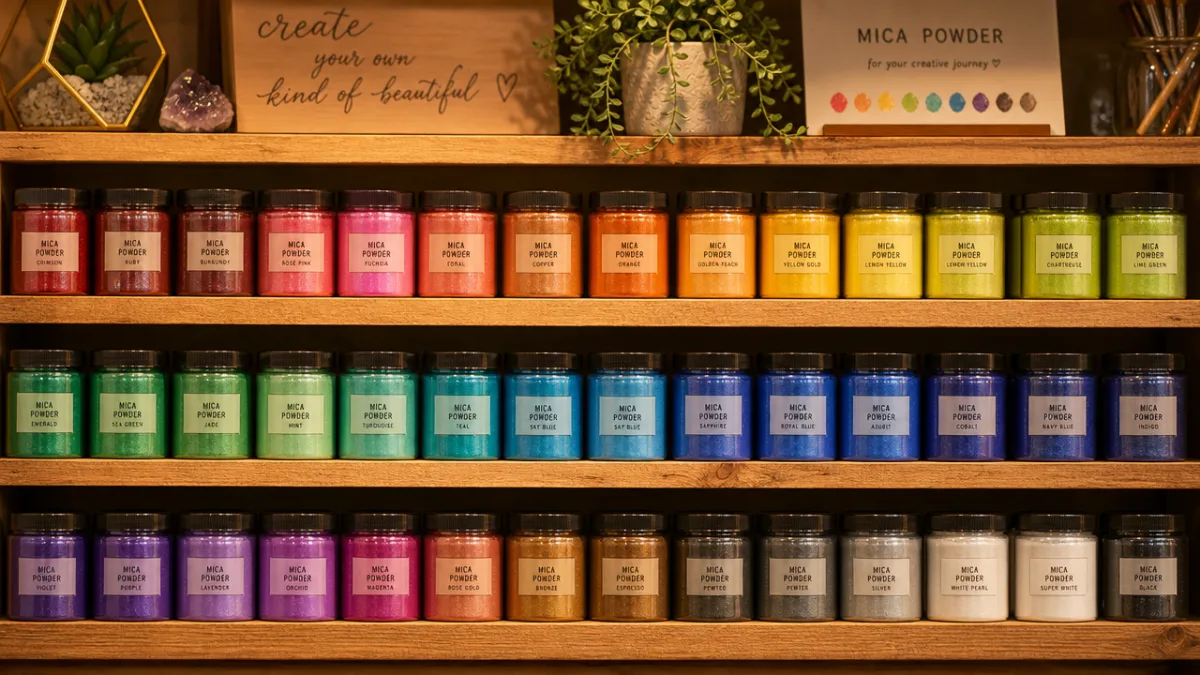
Storing mica powder is pretty simple, but there are a few things to keep in mind. The particles are extremely fine and light, so even a small draft can send them flying and create a mess that’s surprisingly hard to clean up. Keep your mica powders in airtight containers — the small jars or zip-lock bags they often come in work great. Store them away from direct sunlight and moisture, since both can cause clumping or color shifts in some formulations. A craft drawer or small storage box with labeled lids will keep everything organized and prevent your colors from mixing together accidentally.
As for safety, there’s not a lot to worry about, but it’s worth taking a few simple precautions. Because the particles are so fine, they can become airborne when you’re measuring and mixing, and it’s generally a good idea to avoid inhaling any fine powder repeatedly over time. Working in a well-ventilated space, using a small spoon or scooper instead of pouring straight from the jar, and wearing a dust mask during larger mixing projects are all reasonable habits to build. With those basics in place, mica powder is genuinely one of the safest and most enjoyable materials you can work with, no matter your experience level.
Sustainability and Ethical Considerations
As mica powder has gotten more popular, people have also become more aware of the ethical issues tied to its supply chain. A significant amount of the world’s natural mica comes from regions where labor practices have historically been poorly regulated, and concerns about child labor and unsafe working conditions are real and well-documented. In response, more and more consumers and brands have started actively seeking out suppliers who can show proof of ethical sourcing, fair wages, and safe conditions throughout their operations.
One of the easiest ways to sidestep these concerns altogether is to choose synthetic mica, also known as fluorphlogopite. Since it’s made entirely in a lab, it avoids mining-related ethical issues completely — and it performs just as well as natural mica, sometimes even better. It comes in the same wide range of colors, works across all the same applications, and has become the go-to choice for a growing number of ethical beauty brands and responsible craft suppliers who want to offer a cleaner option without giving anything up in terms of quality or visual impact.
Whether you go with natural or synthetic mica, taking a little time to research your supplier and ask questions about sourcing is a genuinely meaningful step. Many reputable suppliers are upfront about where their mica comes from and will share documentation or certifications if you ask. Choosing to support brands that invest in ethical sourcing and transparent supply chains helps protect vulnerable communities and pushes the broader industry to hold itself to a higher standard — which is good for makers and consumers everywhere.








What do you think?
It is nice to know your opinion. Leave a comment.