










Osteospermum Success: Simple Tips For Gorgeous Blooms
What Is Osteospermum and Why Every Gardener Should Grow It
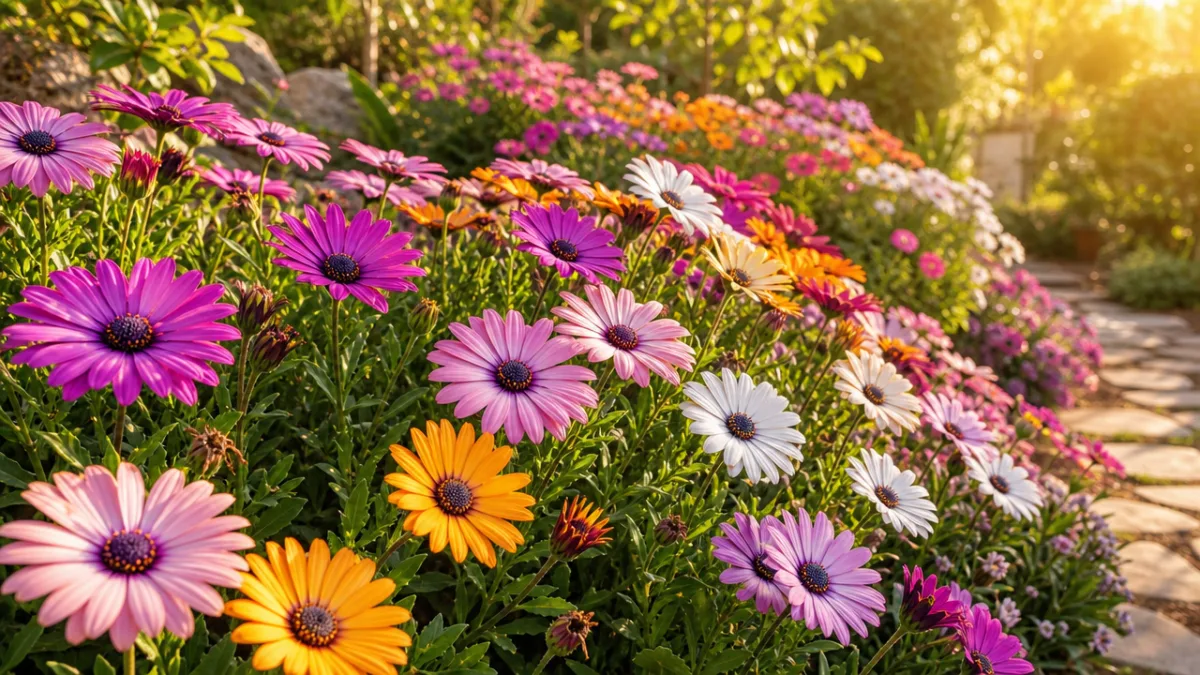
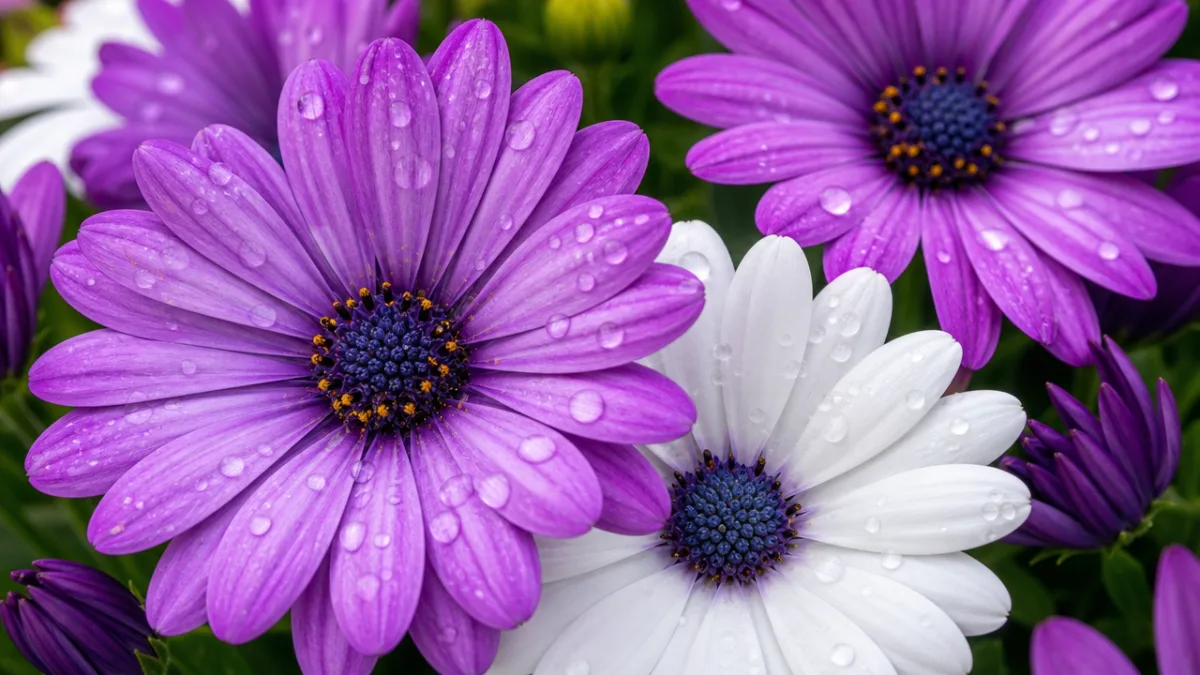
Osteospermum — you might know it better as African daisy or Cape daisy — is a flowering plant that originally hails from the coastal regions of South Africa. Its cheerful, daisy-like blooms come in just about every color you could want: white, yellow, orange, pink, purple, and some gorgeous bi-color combinations too. It’s become a real favorite in gardens all over the world, and honestly, it’s easy to see why. Whether you’ve been gardening for decades or you’re just getting started, osteospermum is one of those plants that tends to make everyone look like they know what they’re doing.
What really sets osteospermum apart is how versatile it is. You can tuck it into containers on a patio or balcony, spread it out as a ground cover in a sunny border, or let trailing varieties cascade out of hanging baskets. It stays naturally compact, blooms like crazy, and gives you a ton of visual impact without asking a whole lot in return — especially compared to some of the more demanding flowering plants out there.
And despite its exotic roots, osteospermum has settled into a wide range of garden climates remarkably well. In warmer areas with mild winters, it acts like a true perennial, coming back year after year and slowly building into a tidy little woody shrublet. In cooler spots, most gardeners treat it as an annual or take cuttings indoors over winter to get fresh plants going the next spring. Either way, you’re in for months of beautiful color with surprisingly little fuss.
Choosing the Right Growing Conditions for Osteospermum
If there’s one thing osteospermum absolutely needs to thrive, it’s sunshine — and plenty of it. This plant grew up in the bright, open landscapes of coastal South Africa, so it’s deeply wired to love full sun. Try to give it at least six to eight hours of direct sunlight each day. Plants that end up in too much shade get leggy and stingy with their flowers, and they’re much more likely to pick up fungal diseases thanks to the poor air circulation and extra moisture that shade tends to bring.
Soil drainage matters just as much as sunlight. Osteospermum really does not like sitting in wet soil — it’s one of the fastest ways to lose an otherwise healthy plant to root rot. Whether you’re planting in the ground or in a pot, make sure your growing medium drains freely. If you’re dealing with heavy clay, work in some coarse sand, grit, or perlite to open it up. For containers, a good quality potting mix with a handful of extra perlite blended through works really well.
Temperature is the other big factor to keep in mind. Osteospermum is happiest when things are moderate — somewhere between 50°F and 75°F (10°C to 24°C). Established plants can handle a light frost, but a prolonged hard freeze will kill them. Here’s something interesting though: osteospermum actually blooms most enthusiastically during the cooler parts of spring and fall. When summer heat peaks, flowering can slow right down or stop altogether — this is what gardeners call “summer dormancy,” and it’s completely normal. Once temperatures ease off in autumn, the plant usually bounces back and blooms beautifully again.
Planting and Propagating Your Osteospermum
Starting osteospermum from seed indoors is a great way to get a jump on the season, and it opens up a much wider range of varieties than you’ll typically find as ready-to-go transplants at a nursery. Sow seeds about eight to ten weeks before your last expected frost, pressing them lightly onto the surface of a moist, well-draining seed-starting mix — don’t bury them. Keep the tray somewhere warm, around 60°F to 65°F (15°C to 18°C), and keep the mix consistently moist without going overboard on the water. Germination usually kicks in within two to three weeks, after which moving the seedlings somewhere brighter and slightly cooler will help them grow into sturdy little plants rather than stretching and going leggy.
Taking stem cuttings is probably the most satisfying way to propagate osteospermum, especially when you’ve found a variety you absolutely love and want more of. Choose healthy shoots that aren’t flowering, about three to four inches long, and cut just below a leaf node with a clean, sharp blade. Strip off the lower leaves, dip the cut end in rooting hormone powder, and pop it into a small pot of moist perlite and peat mix. Loosely cover with a clear plastic bag to hold in humidity and set it somewhere bright but out of direct sun. You should see roots forming within three to four weeks.
When it comes to moving plants outdoors, wait until frost is truly off the table and the soil has warmed up a bit. Before you make that permanent move, harden the plants off gradually — set them outside in a sheltered, partly shaded spot for a little longer each day over one to two weeks. This helps them adjust to wind, changing temperatures, and stronger sunlight without the shock that can set young plants back significantly. When you’re ready to plant, space them about twelve to eighteen inches apart so there’s good airflow between them, which goes a long way toward keeping fungal problems at bay.
Watering, Feeding, and Ongoing Care
Getting the watering right is one of the things new growers tend to struggle with most. Osteospermum really prefers a “soak and dry” routine over frequent shallow watering. Let the soil dry out a bit between waterings, then water deeply so moisture reaches all the way down to the roots. Container plants can dry out fast in hot weather and might need water every day or two, while plants in the ground generally need much less attention once they’ve settled in. Always water at the base — keeping the foliage dry makes a real difference in keeping disease at bay.
Feeding makes a noticeable difference in how well osteospermum blooms. A balanced slow-release granular fertilizer worked in at planting time gives plants a good nutritional base to start from. Then, every two to three weeks during the active growing and blooming period, supplement with a liquid fertilizer made for flowering plants — look for one where the middle number (phosphorus) is higher than the others. Just don’t go heavy on nitrogen-rich feeds, because that tends to push the plant into producing lots of lush green growth at the expense of flowers, which is the last thing you want.
Deadheading is one of those simple habits that pays off more than you’d expect. As flowers fade, pinch or snip them off right at the base of the flower stem. This stops the plant from putting energy into seed production and keeps new blooms coming. And here’s a tip that experienced growers swear by: when flowering slows down in midsummer, cut the whole plant back by about a third. It sounds drastic, but it encourages a flush of fresh new growth and usually results in a really impressive second round of blooms when the cooler autumn weather arrives.
- Water deeply but infrequently — allow the top inch of soil to dry before the next watering session to prevent root rot.
- Feed every two to three weeks with a phosphorus-rich liquid fertilizer during the active blooming period for best results.
- Deadhead regularly by removing spent blooms at the stem base to redirect the plant’s energy into producing new flowers.
- Trim mid-season by cutting plants back by one-third after the first flush slows to encourage a vigorous second bloom.
- Avoid wetting foliage when watering to reduce the risk of fungal diseases, particularly in humid climates or densely planted areas.
Troubleshooting Common Osteospermum Problems
Even if you’re doing everything right, osteospermum will throw you the occasional curveball. Knowing what to expect ahead of time makes it much easier to handle. The most common complaint is that the plant just stops flowering during the hottest stretch of summer — and this tends to send new growers into a mild panic. But it’s actually completely normal. Osteospermum evolved in South Africa’s mild coastal climate, so intense summer heat genuinely stresses it out. Just keep up with your watering and feeding, and once temperatures drop back down in fall, the plant will almost certainly start blooming again like nothing happened.
Fungal diseases are the other main thing to watch for, particularly powdery mildew and botrytis (gray mold). Powdery mildew shows up as a white, powdery coating on the leaves and tends to hit when plants are crowded together without enough airflow. Botrytis looks like fuzzy gray mold on flowers and foliage and typically follows a stretch of cool, damp weather. Your best defense is prevention: give plants enough space, water at the base, clean up any affected material as soon as you spot it, and reach for a copper or sulfur-based fungicide early if things start heading in that direction.
Pests are usually less of an issue with osteospermum than with many other garden plants, but aphids can be a nuisance, particularly on tender new growth and flower buds. A firm blast of water from the hose usually takes care of them without needing any chemicals at all. Whiteflies and spider mites can pop up too, especially on container plants during hot, dry spells. Insecticidal soap or neem oil sprayed on the undersides of leaves handles these reliably without harming the beneficial insects you want to keep around.
- No flowers in summer: This is normal heat-induced dormancy. Maintain care and blooming will resume in cooler weather.
- Powdery mildew: Improve air circulation, water at soil level, and treat with a suitable fungicide if the problem persists.
- Leggy, sparse growth: Likely caused by insufficient sunlight — move to a location receiving at least six hours of direct sun daily.
- Yellowing leaves: Often signals overwatering or poor drainage — check soil moisture and adjust your watering frequency accordingly.
- Aphid infestations: Knock off with water and monitor closely; introduce beneficial insects like ladybugs for natural long-term control.
Overwintering and Year-Round Enjoyment of Osteospermum
If you live somewhere with cold winters, you don’t have to give up on osteospermum at the end of every season. Bringing plants indoors before the first hard frost is a perfectly doable way to keep them going year after year. For plants growing in the ground, dig them up carefully and try to preserve as much of the root system as you can. Container plants are even easier — just bring the whole pot inside. Find the brightest window you have (south-facing is ideal in the northern hemisphere) and water very sparingly over winter, since growth slows right down in low light and cooler temperatures.
If space is tight, taking cuttings in late summer or early fall is a smarter approach. Root them up as described in the propagation section, then grow the young plants on a sunny windowsill or under grow lights through the colder months. They don’t need much — just enough water and light to keep ticking over until spring arrives and you can harden them off and get them back outside. As a bonus, you’ll usually end up with more plants than you need, which makes them wonderful things to share with other gardeners.
In frost-free or mild-winter climates, managing osteospermum as a long-term perennial just takes a few simple adjustments. Cut plants back fairly hard in late autumn after the last flush of bloom — removing up to half their size keeps them compact and bushy rather than open and woody over time. A layer of organic mulch around the base helps insulate roots from the odd cold snap and holds onto soil moisture during dry stretches. With that kind of straightforward care, osteospermum just gets better with age, gradually building into the kind of flowering specimen that genuinely stops people in their tracks.
Creative Ways to Use Osteospermum in Your Garden Design
One of the things that makes osteospermum such a joy to work with in garden design is how well it plays with others. In a cottage garden, it pairs beautifully with sun-lovers like lavender, catmint, salvia, and ornamental grasses, weaving together a mix of textures and colors that shifts and evolves throughout the season. Its soft, open daisy-like flowers also provide a lovely contrast against spikier plants like veronicastrum or the bold round forms of allium seed heads — it’s the kind of combination that looks like it took a lot of thought but actually comes together quite naturally.
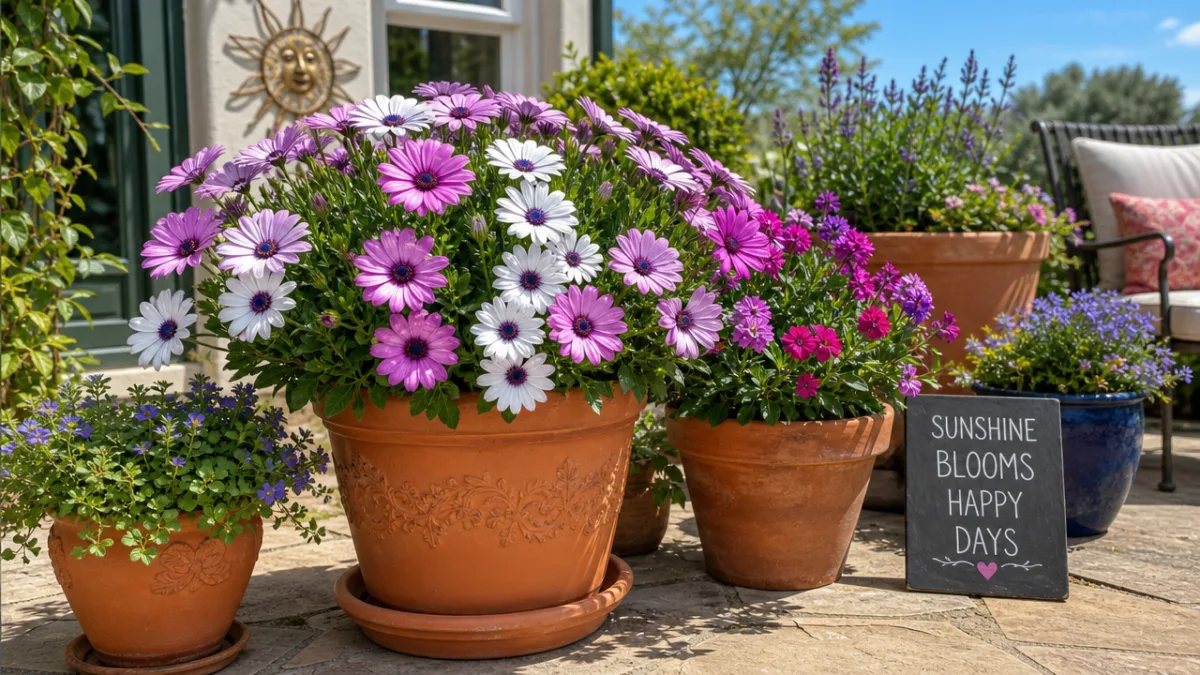
If you’re working with containers, osteospermum gives you a lot to play with. For a mixed pot that really works, try combining it with trailing plants like bacopa, lobelia, or ivy-leaved pelargonium to spill over the edges, and anchor the center with something taller — an ornamental grass or a compact canna lily both do the job nicely. Don’t overlook the container itself either: deep terracotta really brings out the warmth of orange and yellow varieties, while white or pale blue pots make purple and magenta blooms look absolutely electric.
Osteospermum also makes a surprisingly good cut flower, though it tends to get overlooked for that purpose. Cut stems in the morning when the flowers are just starting to open and they’ll last much longer in a vase. Let them condition in cool water in a cool room for a few hours before arranging. Paired with sweet peas, cornflowers, and scabiosa, osteospermum creates the kind of loose, informal bouquet that looks like it was gathered straight from the garden — which, of course, it was. With so many ways to enjoy it, from borders to pots to vases, it’s really no surprise this plant has collected so many devoted fans along the way.








What do you think?
It is nice to know your opinion. Leave a comment.