










15 Easy Paper Crafts for Kids: A Complete Guide to Creative Fun
Why Paper Crafts Are Perfect for Kids of All Ages
Paper crafts have been a staple of childhood creativity for generations, and for very good reason. They require minimal materials, cost almost nothing to get started, and offer an incredible range of projects that can grow in complexity alongside a child’s developing skills. Whether you have a three-year-old who loves tearing and scrunching or a twelve-year-old ready to tackle intricate origami, there is a paper craft perfectly suited to every age and ability level. The accessibility of paper as a medium makes it one of the most democratic art forms available to families everywhere.
Beyond simple entertainment, paper crafting actively supports childhood development in ways that screen time simply cannot replicate. When children fold, cut, glue, and shape paper, they are developing fine motor skills that will serve them throughout their lives. The pinching motion required to fold a crease, the careful coordination needed to cut along a line, and the spatial reasoning demanded by three-dimensional projects all contribute to neurological development that researchers consistently link to stronger academic performance. Parents and educators alike have long recognized these benefits, which is why paper crafts remain a fixture in classrooms and homes worldwide.
There is also something deeply satisfying about creating something tangible with your own hands. In a world increasingly dominated by digital experiences, the physical act of making something from a flat sheet of paper and watching it transform into a butterfly, a castle, or a greeting card delivers a unique sense of accomplishment. Children who complete paper craft projects develop patience, follow-through, and genuine pride in their work. These emotional and psychological benefits are just as important as the developmental ones, and they make paper crafting one of the most holistic creative activities you can offer a child.
Essential Supplies You Need to Get Started
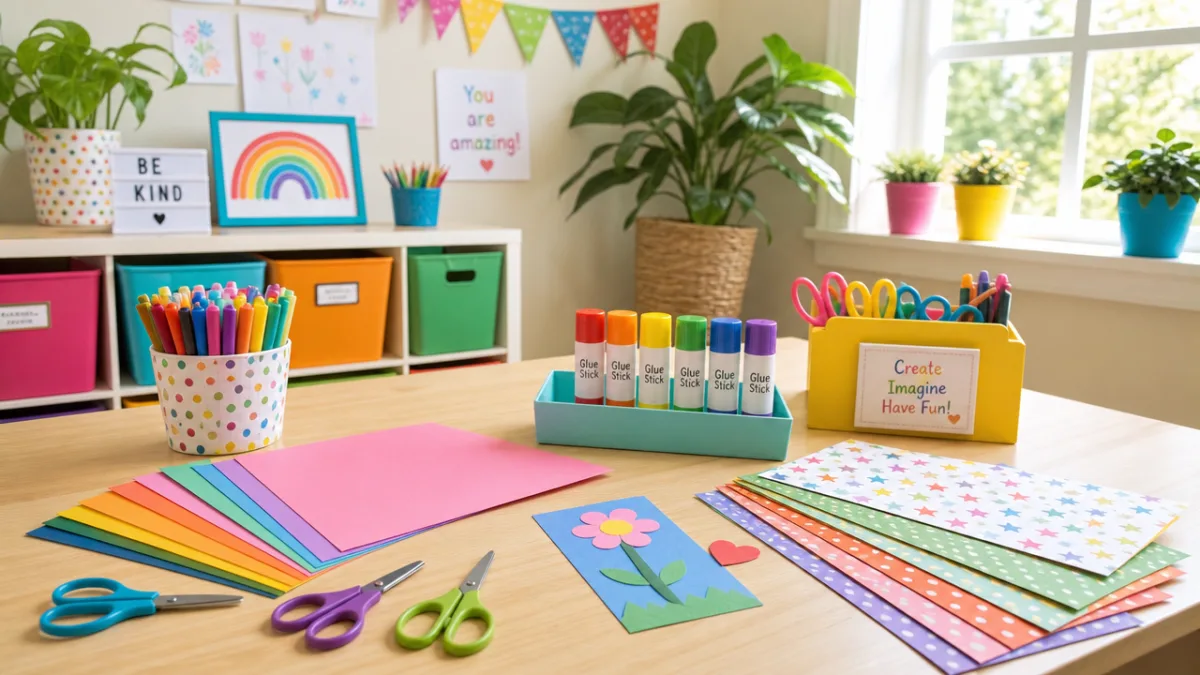
One of the greatest advantages of paper crafting is that you almost certainly already have most of what you need sitting around your home. A basic paper craft toolkit is inexpensive to assemble and once you have it in place, you will be ready to tackle dozens of different projects at a moment’s notice. Starting with a well-stocked supply station also reduces the frustration that can arise mid-project when you discover you are missing a crucial element, which helps keep creative momentum going and ensures the experience remains enjoyable for children of all temperaments.
The foundation of any paper craft collection begins with the paper itself. Construction paper in a wide variety of colors is absolutely essential and should be purchased in bulk so you never run short mid-project. Beyond construction paper, it is worth keeping a supply of cardstock for sturdier projects, tissue paper for layered effects, newspaper for papier-mâché projects, and even aluminum foil for metallic accents. Printer paper works well for folding and origami, while watercolor paper can be painted and then cut into shapes. Having this variety on hand opens up an enormous range of creative possibilities without requiring any significant financial investment.
In addition to paper, a well-equipped craft station should include the following essentials:
- Child-safe scissors in multiple sizes, including both pointed and rounded tip varieties for different age groups
- A glue stick, white craft glue, and a glue gun (for adult use only on projects requiring stronger bonds)
- Washable markers, colored pencils, and watercolor paints for decorating finished pieces
- Tape in several forms including regular clear tape, double-sided tape, and washi tape for decorative purposes
- A ruler, pencil, and eraser for measuring and marking before cutting
- Hole punches, both standard and decorative shapes, for adding detail and hanging loops
- Googly eyes, stickers, glitter glue, and other embellishments to personalize projects
Organizing these supplies in a dedicated space makes all the difference in how often children actually engage in crafting. When materials are easy to find and access, children are far more likely to initiate creative projects on their own without constant adult prompting. Clear bins, labeled drawers, or a rolling cart dedicated entirely to craft supplies can transform an ordinary corner of a room into an inspiring creative studio. The investment in organization pays dividends in hours of self-directed creative play and reduces the preparation time needed before each project can begin.
Five Beginner Paper Crafts Perfect for Young Children
For younger children between the ages of two and five, paper crafts need to be simple, forgiving, and highly visual in their payoff. The goal at this stage is not precision but participation, ensuring that even the smallest hands can create something they feel genuinely proud of. Torn paper collages are an excellent starting point because they require no scissors at all. Children simply tear construction paper into pieces of any shape and size, then arrange and glue them onto a background sheet to create abstract art, animals, flowers, or anything else their imagination conjures. The results are always vibrant and unique, and the tearing process itself is enormously satisfying for little hands.
Paper plate crafts represent another category of beginner projects that consistently delight young children. A plain white paper plate becomes a lion with a construction paper mane, a clock face with movable hands, a pizza with felt toppings, or the full moon in a nighttime scene. Because the base shape is already provided, children can focus entirely on the decorating process, which builds color recognition, pattern awareness, and creative decision-making. Paper plate masks are particularly popular, as children can wear their creations and immediately transform into whatever character they have imagined. Cutting two eyeholes and attaching a popsicle stick handle is all it takes to create a wearable work of art.
Accordion fold paper fans and simple paper bag puppets round out the beginner category beautifully. For the fan, a child folds a sheet of paper back and forth in equal segments to create a pleated fan shape, which can then be decorated with markers before being pinched at the base and secured with tape or a rubber band. The repetitive folding motion builds patience and motor control, while the finished product actually functions as a real fan that children love to use on warm days. Paper bag puppets, made from small lunch bags with a folded flap that acts as a mouth when the hand is inserted, invite imaginative play that extends far beyond the crafting table and into hours of storytelling and performance.
Five Intermediate Paper Crafts for Growing Crafters
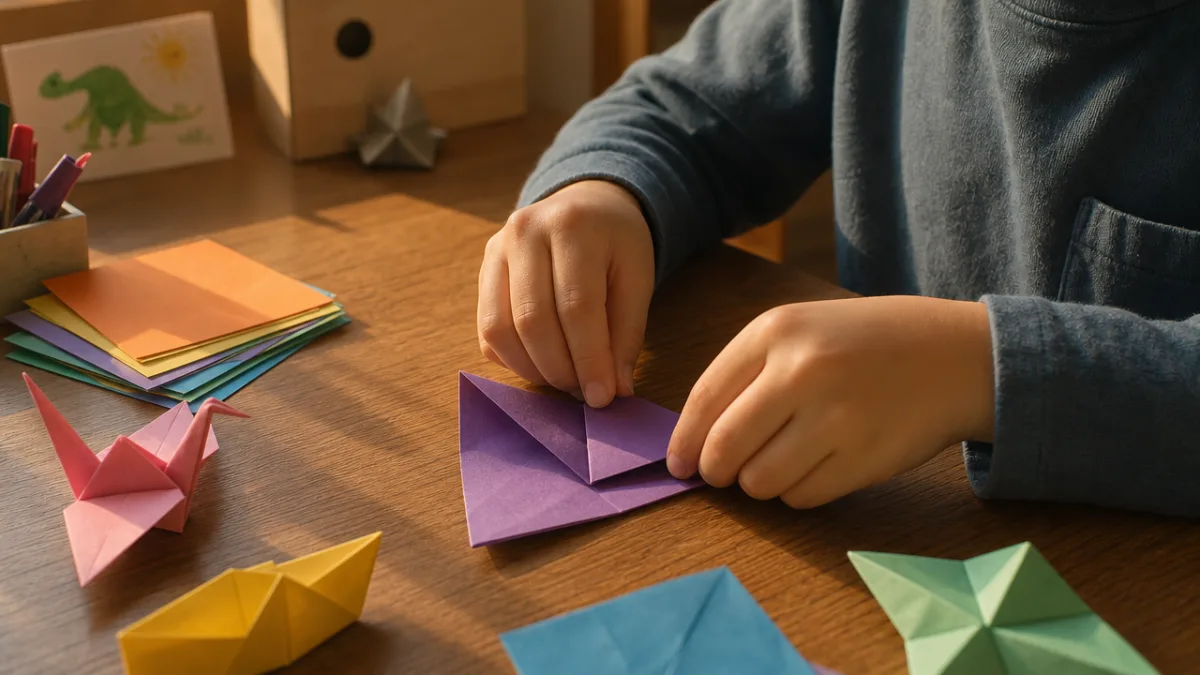
As children move into the six-to-ten age range, their fine motor skills, patience, and ability to follow multi-step instructions open up a much wider range of paper craft possibilities. Origami is the natural next step for many young crafters at this stage, and while complex origami can take years to master, there are plenty of beginner and intermediate origami projects that are entirely achievable for school-age children. The classic origami crane, fortune teller (or cootie catcher), and jumping frog are perennial favorites that have delighted children for decades. The mathematical precision of origami also subtly reinforces geometry concepts in a way that feels like play rather than education.
Paper chain decorations offer a wonderful combination of simplicity and spectacular visual impact that makes them ideal for intermediate crafters. By cutting strips of paper and linking them into interlocking loops, children can create garlands of any length for parties, holidays, or everyday room decoration. This project can be made more challenging by incorporating patterns, alternating colors, or cutting strips with decorative edges. Connecting chains made by different family members or classmates teaches children about collaboration and how individual contributions combine to create something larger and more impressive than any single person could make alone. The finished garland becomes both a decoration and a record of shared creative effort.
Quilling, the art of rolling and shaping narrow strips of paper into decorative designs, is another wonderful intermediate craft that produces strikingly beautiful results. Using a toothpick or a dedicated quilling tool, children roll strips of paper into tight coils, then pinch and shape them into teardrops, squares, triangles, and other forms that are glued onto a background to create flowers, animals, and abstract patterns. The level of concentration required makes quilling especially suitable for children who enjoy detail-oriented work. The finished pieces genuinely look impressive enough to frame and display, giving children a powerful sense of artistic accomplishment. Additional intermediate projects worth exploring include:
- Pop-up greeting cards with layered interior scenes that spring to life when the card is opened
- Paper weaving using strips cut from contrasting colors of construction paper to create woven mats or bookmarks
- Simple papier-mâché bowls made by layering glued newspaper strips over an inflated balloon
Five Advanced Paper Crafts for Older Kids and Teens
Older children and teenagers are ready for paper crafts that demand real skill, patience, and creative investment. These advanced projects produce results sophisticated enough to impress adults and complex enough to genuinely challenge young crafters who have already mastered basic techniques. Kirigami, the Japanese art of cutting folded paper to create intricate pop-up designs, sits at the intersection of sculpture, engineering, and art. When properly executed, a kirigami design unfolds from a flat sheet to reveal three-dimensional architectural structures, animals, or geometric patterns that seem to defy the limitations of the medium. Free templates are widely available online for those just beginning to explore this demanding but deeply rewarding art form.
Bookbinding is another advanced paper craft that produces a genuinely useful finished product. By folding and sewing together signatures of paper, then attaching them to a cardstock or decorated paper cover, older children can create their own blank journals, sketchbooks, or notebooks. Learning even the most basic Coptic or pamphlet stitch binding technique introduces teenagers to a craft with centuries of history and practical applications. The finished journal becomes far more meaningful than any store-bought notebook could ever be, and many young crafters who discover bookbinding find themselves drawn into a lifelong hobby that combines artistry with functional making. Having a handmade journal also encourages more consistent writing and drawing habits.
Paper architecture and model-making represent perhaps the most technically demanding category of paper crafts accessible to older children. Creating scale models of famous buildings, geometric solids, or even custom-designed structures requires careful measurement, precise cutting, thoughtful assembly, and genuine problem-solving. Many architects and designers still use paper models as a thinking tool in professional practice, which means teenagers who excel at paper architecture are developing real skills with genuine applications. Templates for famous structures like the Eiffel Tower, the Colosseum, or the Sagrada Família can be found in specialty craft books and online resources. More adventurous young crafters can progress to designing their own structures from scratch, applying mathematical principles to create buildings that actually stand up and hold their intended form.
Tips for Making Paper Crafts a Regular Family Activity
Establishing paper crafting as a regular family ritual rather than an occasional rainy-day activity requires a small amount of intentional planning but delivers enormous rewards in terms of family connection and children’s ongoing creative development. One of the most effective strategies is to designate a specific time each week as craft time, whether that is Saturday morning after breakfast or a quiet Thursday evening. When children know that craft time is a predictable and protected part of the weekly routine, they begin looking forward to it and arrive with ideas they have been mentally developing throughout the week. This anticipation itself is a form of creative exercise that extends the benefits of crafting well beyond the actual hours spent at the table.
Connecting paper crafts to real-world events, holidays, and interests significantly increases children’s engagement and motivation. Making paper lanterns in February for Chinese New Year, folding paper flowers in spring, crafting paper pumpkins in autumn, or creating elaborate pop-up cards for birthdays and Mother’s Day all give crafting sessions a sense of purpose and occasion. When the finished product has a clear destination or use, children invest more care and creativity in its creation. Seasonal and holiday crafts also build cultural awareness and appreciation, connecting children to traditions from their own heritage and from cultures around the world through the universal language of creative making.
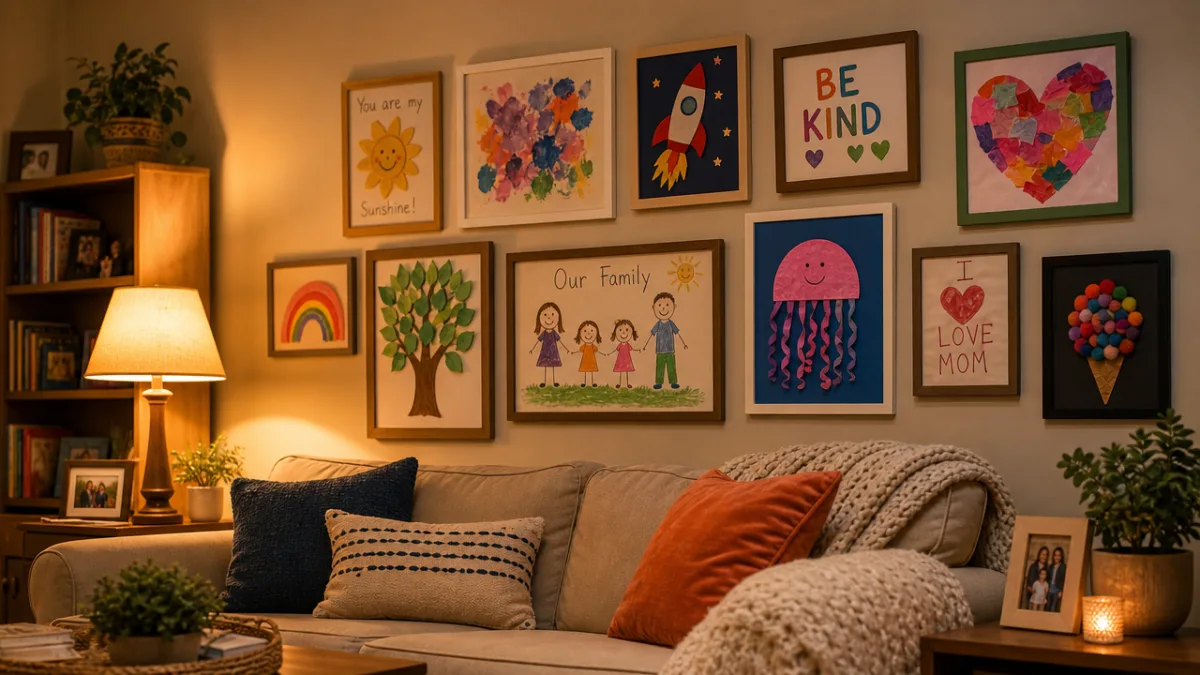
Documenting and celebrating finished paper craft projects is an often-overlooked but tremendously important element of building a lasting crafting habit. When children see their work displayed on the refrigerator, framed on a wall, or photographed for a digital album, they receive powerful reinforcement that their creative efforts are valued and worth preserving. Consider creating a dedicated gallery wall where rotating selections of paper craft projects are displayed with the artist’s name and the date they were made. Over months and years, this gallery becomes a visual record of each child’s growing skills and changing interests. Revisiting earlier projects with older eyes allows children to appreciate their own progress in a concrete and deeply motivating way, encouraging them to keep creating and keep improving long after the initial excitement of any single project has faded.
Turning Paper Crafts Into Learning Opportunities
One of the most powerful aspects of paper crafting is how effortlessly it integrates with academic learning without ever feeling like schoolwork. Mathematics appears naturally throughout paper crafting in ways that make abstract concepts suddenly tangible and memorable. When a child measures and cuts paper into precise rectangles for bookbinding, they are practicing measurement and geometry. When they calculate how many chain links they need to reach a desired length of garland, they are doing multiplication. When they divide a circle into equal sections for a paper plate clock, they are exploring fractions. These mathematical encounters happen in a context of genuine purpose and creativity, which research consistently shows dramatically improves both comprehension and retention of mathematical concepts.
Science and engineering principles emerge organically from paper crafting as well, particularly in projects that require structures to support weight or maintain a specific form. When children experiment with different folding techniques to determine which creates the strongest beam, they are conducting genuine structural engineering experiments. Paper airplane design is a perennial favorite that introduces concepts of aerodynamics, lift, drag, and thrust in a completely hands-on context. Encouraging children to test multiple designs, record their observations, and form hypotheses about what variables affect flight distance or accuracy transforms a simple paper airplane session into an authentic scientific inquiry process that mirrors real engineering methodology.
Language arts and storytelling connect beautifully to paper crafting through projects like handmade books, illustrated story scrolls, and character puppets used to dramatize original tales. When children create a paper bag puppet theater and write scripts for their characters to perform, they are simultaneously practicing narrative structure, dialogue, character development, and public speaking. Making a handmade book about a topic they are studying or a story they have composed transforms abstract writing assignments into a real publishing project with a physical artifact as its outcome. The additional motivation that comes from knowing a piece of writing will be bound into a real book that others can read and hold consistently produces more thoughtful, detailed, and imaginatively rich writing from children at every skill level, making paper crafting one of the most effective literacy support tools available to parents and educators.








What do you think?
It is nice to know your opinion. Leave a comment.