










39 Unique Crochet Pillow Designs to Add Style and Comfort to Your Home
The Timeless Appeal of Crochet Pillows
Crochet pillows have captivated home decorators and craft enthusiasts for generations, and it is easy to understand why. There is something deeply satisfying about a handmade textile that combines artistry with function. Whether you are an experienced crocheter or someone just discovering the hobby, pillow covers and cushions represent one of the most rewarding projects you can undertake. They are manageable in size, endlessly customizable, and when complete, they transform a sofa, bed, or reading nook into something that feels genuinely personal and alive.
Unlike mass-produced decorative pillows found in big-box stores, crochet pillows carry with them the warmth of human effort and intention. Every stitch is a small decision — a choice of tension, color, and pattern — that accumulates into something beautiful. When a guest picks up one of your handmade pillows and runs their fingers across the texture, they are touching not just yarn but hours of creative work. That tactile quality is something no factory-made item can replicate, and it gives a room a sense of depth and authenticity that is increasingly rare in modern interiors.
The range of styles available in the world of crochet pillows is genuinely staggering. From bold geometric patterns inspired by Scandinavian design to delicate floral motifs drawn from Victorian needlework traditions, there is a crochet pillow concept for every aesthetic. Bohemian fringe, cable-knit-style textures, mandala medallions, striped color blocks, and intricate lace designs all translate beautifully into pillow form. This versatility is what makes crochet pillows such a compelling subject for inspiration, and why collections showcasing 39 or more unique designs generate so much excitement among crafters and interior design lovers alike.
Understanding the Essential Stitches and Techniques
Before diving into specific pillow designs, it is worth grounding yourself in the stitches and techniques that make these projects possible. The foundation of almost every crochet pillow begins with a handful of core stitches: the chain stitch, single crochet, half double crochet, double crochet, and slip stitch. Mastering these basics opens the door to an enormous variety of textures and structures. Many stunning pillow designs rely entirely on these fundamental stitches arranged in clever patterns, proving that complexity of appearance does not always require complexity of technique.
Beyond the basics, a number of specialized stitches elevate crochet pillow designs from attractive to truly extraordinary. The bobble stitch creates satisfying raised clusters of yarn that add dramatic three-dimensional texture. The shell stitch produces elegant fan-like formations that are particularly well-suited to decorative pillow fronts. Granny squares, one of the most iconic crochet motifs in existence, can be arranged in dozens of configurations to create pillow covers that feel both nostalgic and contemporary. C2C, or corner-to-corner crochet, allows makers to create detailed pixel-like patterns and images within a rectangular panel, opening the door to pictorial pillow designs.
Color work techniques deserve special mention when discussing crochet pillow designs. Tapestry crochet allows crafters to carry multiple yarn colors across a row, creating intricate geometric patterns and motifs without weaving in endless ends. The Fair Isle-inspired look that results can be breathtaking. Similarly, the mosaic crochet technique uses a combination of two colors worked in alternating rows to produce complex-looking patterns that are actually surprisingly approachable for intermediate crafters. Understanding which technique suits which design is part of the creative joy of planning a crochet pillow project.
- Single crochet: dense, sturdy fabric ideal for structured pillow fronts
- Double crochet: lighter, more open fabric that works beautifully for layered or backed designs
- Bobble and popcorn stitches: for dramatic raised texture and tactile interest
- Granny squares: endlessly versatile motifs that can be sized and arranged to fit any pillow dimension
- Tapestry and mosaic crochet: for bold geometric or pictorial designs with color contrast
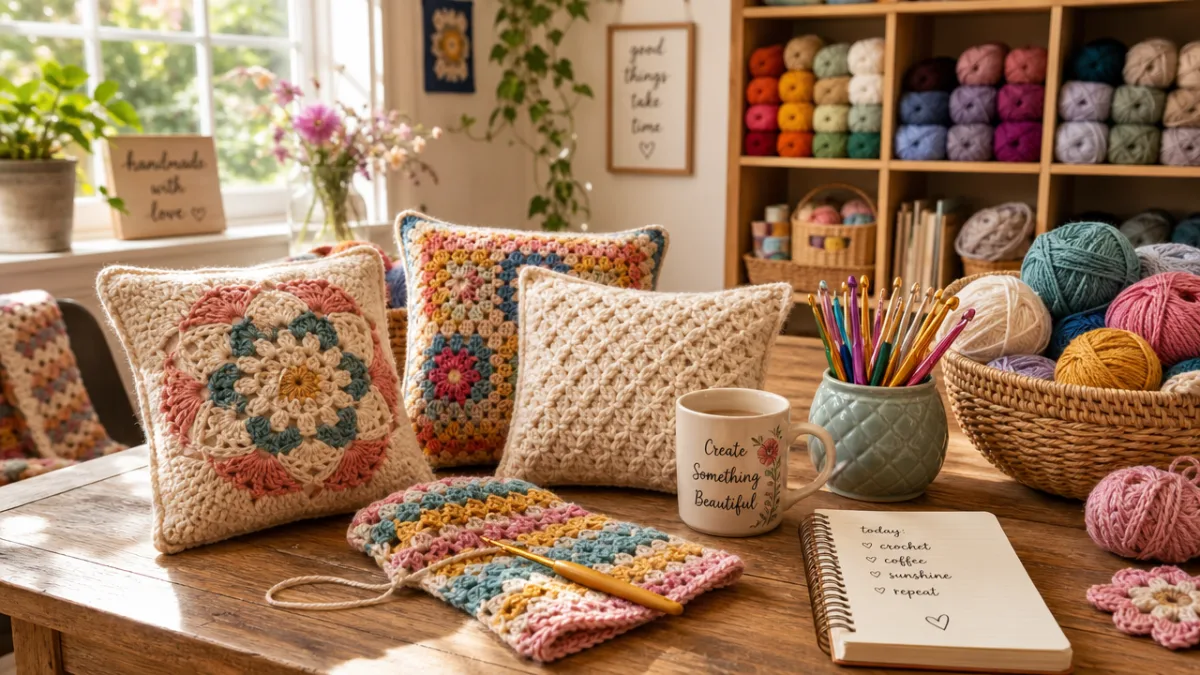
Geometric and Modern Crochet Pillow Designs
Geometric crochet pillow designs are among the most popular choices for contemporary interiors, and for good reason. Clean lines, repeating patterns, and strong color contrasts align naturally with the minimalist and Scandinavian-influenced aesthetic that dominates modern home décor. Hexagons, triangles, diamonds, and chevrons translate into crochet with impressive ease, and the resulting pillows look as if they belong in an upscale design boutique. When rendered in a restrained palette — think charcoal, ivory, rust, and sage — geometric crochet pillows feel unmistakably of the moment.
The chevron or ripple stitch pillow is a perennial favorite in the geometric category. Its undulating wave pattern creates a sense of movement and energy that static designs cannot match, and it pairs beautifully with both neutral tones and bold color combinations. A wide-stripe chevron in contrasting colors — deep navy against warm mustard, for instance — creates a pillow that functions as a statement piece without overwhelming a room. Narrow chevrons in tonal gradients, on the other hand, feel more subtle and sophisticated, lending themselves to layered arrangements on a sofa or bed.
For those who prefer a truly modern edge, the planned pooling technique offers something genuinely eye-catching. By carefully selecting variegated yarn with specific color repeat lengths and maintaining precise tension and stitch count, crafters can cause the colors to pool into planned argyle or plaid-like patterns. The result looks almost impossible — as though the yarn itself has been painted with a geometric design — and makes for a pillow that inevitably sparks conversation. This technique requires patience and some experimentation, but the payoff is a one-of-a-kind piece with a design quality that seems to belong in a high-end textile studio.
Bohemian and Textured Crochet Pillow Styles
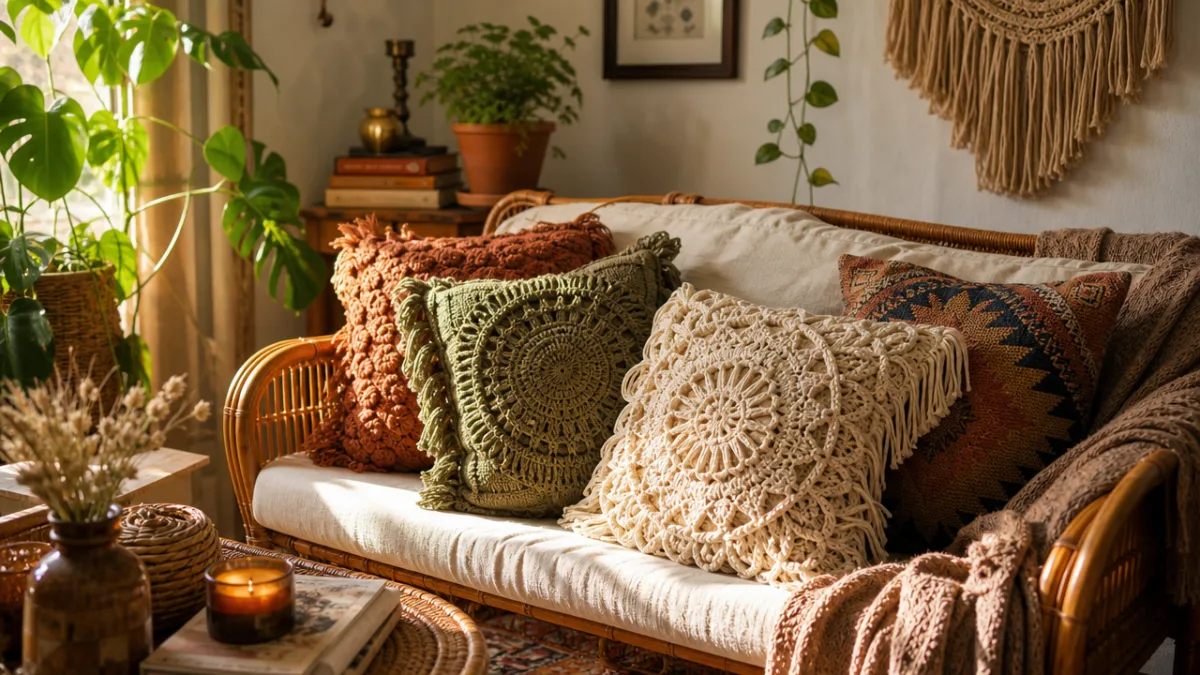
If the geometric and modern approach feels too restrained for your taste, the bohemian aesthetic offers a wonderfully exuberant alternative. Boho crochet pillows embrace texture, layering, and eclecticism with open arms. Chunky yarn in natural fibers like cotton, jute, or undyed wool creates pillows with an organic, earthy character that complements rattan furniture, macramé wall hangings, and indoor plants perfectly. The tactile richness of a heavily textured boho pillow is part of its appeal — these are pieces meant to be touched and experienced as much as admired from a distance.
Fringe and tassels are defining features of the bohemian crochet pillow aesthetic. Adding a border of knotted fringe to a simple crochet panel instantly transforms it from basic to striking, and the movement of the fringe catches light and air in a way that gives the pillow a living quality. Tassels at corners — crafted from contrasting yarn or embroidery thread — add punctuation points of color and texture. Pom-pom trims, either crocheted directly or attached as separate embellishments, contribute playful energy that suits casual, comfortable living spaces beautifully.
Mandala-style crochet pillow covers represent one of the most beloved expressions of the boho aesthetic. Worked in the round from a central point outward, these circular or hexagonal designs build intricate patterns through the careful interplay of stitches and color changes. A mandala pillow front in jewel tones — amethyst, emerald, sapphire, and gold — becomes an almost meditative object, its radial symmetry drawing the eye inward in concentric rings of detail. These projects require patience and attention, but they are deeply satisfying to complete and produce pillows that are genuinely heirloom-quality objects.
- Choose a base yarn in a neutral or anchor color before selecting accent shades for texture and contrast
- Work a swatch in your chosen stitch pattern to confirm gauge before beginning the full pillow panel
- Plan fringe or tassel embellishments before finishing the main panel so the proportions feel intentional
- Block your finished crochet panel before assembling the pillow cover to ensure even, professional results
- Use a pillow insert that is slightly larger than your cover for a full, plump appearance
Seasonal and Thematic Crochet Pillow Concepts
One of the most delightful aspects of crochet pillow making is the ability to shift your décor with the seasons through simple, affordable textile changes. Swapping pillow covers is one of the quickest and most cost-effective ways to refresh the mood of a living room or bedroom, and having a collection of seasonal crochet designs allows you to do this throughout the year. Autumn-themed pillows in burnt orange, burgundy, and forest green featuring leaf motifs or harvest patterns bring warmth and coziness as temperatures drop. Winter holiday covers incorporating snowflake patterns, reindeer silhouettes in tapestry crochet, or simple red-and-white candy stripe designs create festive charm without requiring significant investment.
Spring and summer pillow designs offer equally compelling possibilities. Light cotton yarns in cheerful pastels or tropical brights produce pillow covers with an airy, fresh quality that suits the warmer months beautifully. Floral motifs — individual crocheted flowers sewn onto a solid background, or surface-crochet flower designs worked directly onto the finished panel — capture the spirit of the season with considerable charm. Nautical themes featuring shells, anchors, and wave patterns in navy and white translate wonderfully into crochet using a combination of colorwork and surface embellishment techniques, making them perfect for coastal or lake house settings during summer months.
Thematic pillows need not be tied to seasons at all. Many crafters create pillow designs inspired by hobbies, passions, or personal aesthetics that they wish to celebrate year-round. A bibliophile might create a series of pillows featuring crocheted open-book motifs. A music enthusiast might work up a series of note and instrument silhouettes in tapestry crochet. Even abstract emotional themes can translate into textile art — a pillow designed in the maker’s favorite color family, featuring their preferred stitch pattern, becomes a deeply personal object that expresses something true about who they are. This is the quiet power of handmade home décor.
Selecting Yarn and Materials for Your Crochet Pillows
The success of any crochet pillow project depends significantly on thoughtful material selection. Yarn fiber, weight, and texture all influence the final appearance, durability, and feel of the finished piece. For pillow covers that will see regular use and the inevitable washing that follows, cotton and cotton-blend yarns are typically the most practical choice. Cotton holds its shape well, resists pilling, and becomes softer with washing over time. It also takes dye beautifully, which means cotton yarns are available in an exceptionally wide range of colors — a significant advantage when you are trying to match a specific interior palette.
Wool and wool-blend yarns bring a different set of qualities to crochet pillow projects. Their natural elasticity makes them somewhat forgiving during the crocheting process, and their loft creates a softness and warmth that cotton cannot quite replicate. For decorative pillows in living rooms or bedrooms where they will not be laundered frequently, wool or wool-acrylic blends can be an excellent choice, particularly for textured designs where the slight halo of the fiber adds to the visual richness. Superwash-treated wool yarns offer the best of both worlds — the beauty and warmth of wool with the practicality of machine washability.
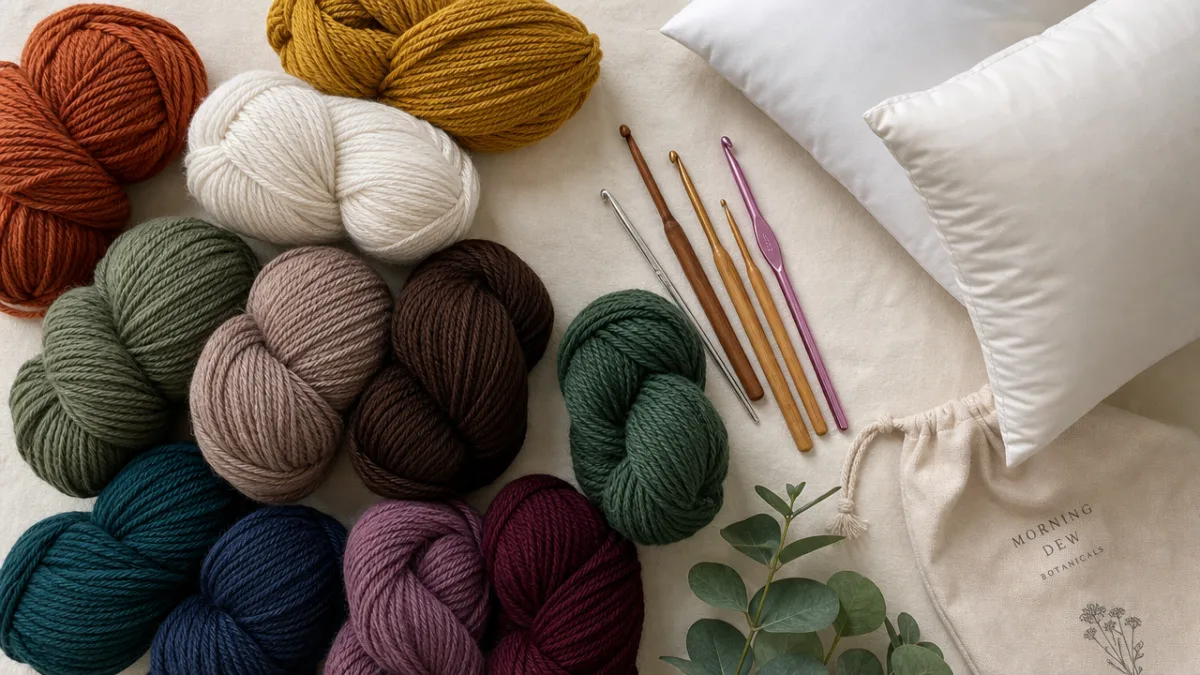
Beyond the yarn itself, a few key tools and accessories make the pillow-making process smoother and the results more professional. A set of interchangeable crochet hooks in multiple sizes allows you to adjust gauge or experiment with different yarn weights without investing in numerous individual hooks. Stitch markers are invaluable for keeping track of pattern repeats and round beginnings in circular designs. And when it comes time to assemble and finish your pillow, a blunt-tipped tapestry needle, quality sewing thread in a matching color, and a zipper or button closure of appropriate length will make the difference between a pillow that looks handmade in the best sense and one that looks unfinished. The right materials honor the work invested in creating something beautiful by hand.
- Cotton yarns: best for washable, everyday pillow covers with crisp stitch definition
- Wool and wool blends: ideal for textured, decorative pillows with a warm, lofted feel
- Acrylic yarns: budget-friendly, highly colorfast, and machine washable — a practical all-rounder
- Chunky and super-bulky weights: perfect for quick projects and bold, modern textured designs
- Fingering and DK weight: suited to intricate colorwork, lace patterns, and refined geometric designs
Finishing, Assembly, and Styling Your Crochet Pillows
Completing the crochet panel or panels for your pillow design is only part of the journey — finishing and assembly are equally important steps that determine whether the final piece looks polished and professional. Blocking your crochet panel before assembly is a step that many beginners skip and experienced makers never do without. Wetting or steaming the finished crochet and pinning it to the correct dimensions allows the stitches to relax into their proper positions, evens out any inconsistencies in tension, and gives the fabric a smooth, even surface that assembles beautifully. The difference between a blocked and an unblocked pillow cover is immediately visible, especially in lace and colorwork designs.
For assembly, the envelope closure method is among the most popular for crochet pillow covers because it requires no zipper or buttons and is simple to execute neatly. Two overlapping flaps at the back of the pillow allow the insert to be inserted and removed easily for washing. Alternatively, a row of sewn-on buttons along the back opening creates a closure that is both functional and decorative, turning the back of the pillow into a design element in its own right. Zipper closures, while requiring a bit more sewing skill, produce the cleanest and most secure finish and are worth the extra effort for pillows that will be handled frequently.
Styling your finished crochet pillows is where the creative satisfaction of the entire process culminates. A single statement pillow — a large mandala design in rich jewel tones, for instance — can anchor a neutral sofa with immediate confidence. Groupings of smaller pillows in complementary colorways and coordinating stitch patterns create a layered, curated look that feels intentional without appearing overdone. Mixing crochet textures — a smooth tapestry-work geometric alongside a chunky bobble-stitch cushion and a delicate lace-edged accent pillow — adds visual and tactile dimension that brings a seating area to life. However you choose to display them, crochet pillows carry with them the unmistakable warmth of something made by human hands, and that quality enriches any space fortunate enough to contain them.








What do you think?
It is nice to know your opinion. Leave a comment.