










Cornstarch & Dish Soap Bubble Dough – Soft, Stretchy & Fun DIY Sensory Play!
What Is Bubble Dough and Why Kids Absolutely Love It
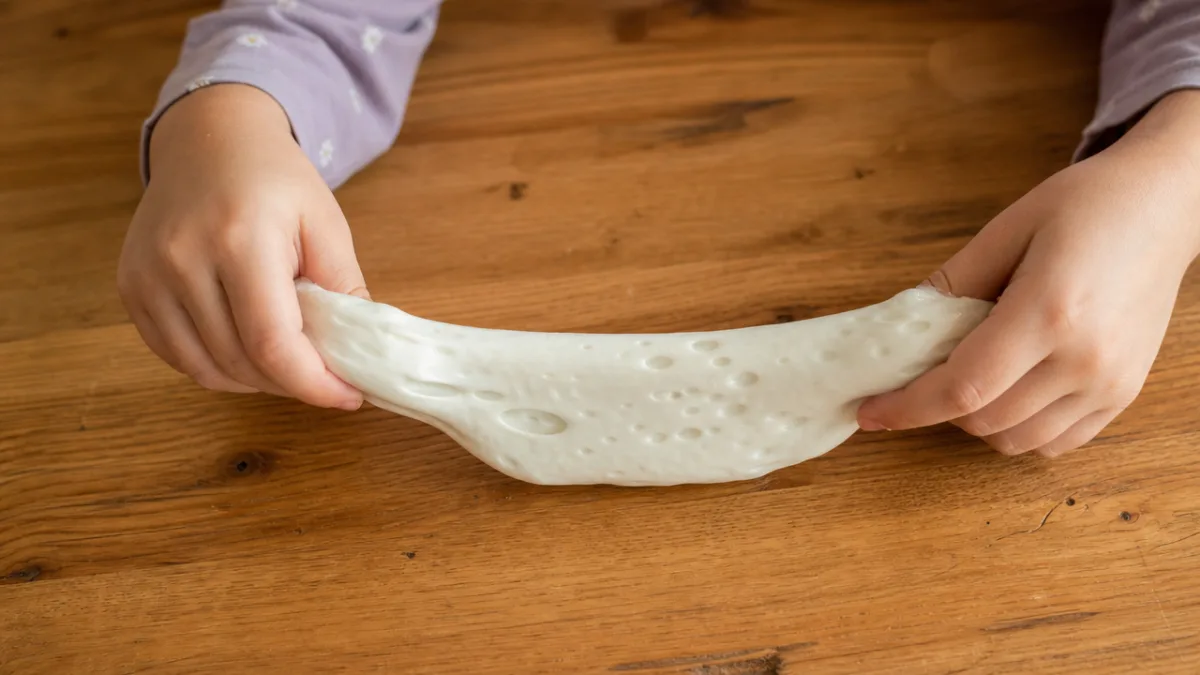
Bubble dough is one of those magical DIY sensory materials that seems almost too good to be true. Made from just two humble kitchen and bathroom staples — cornstarch and dish soap — this incredible substance transforms into a soft, stretchy, cloud-like dough that children find completely irresistible. The moment little hands press into it, something wonderful happens: the texture shifts between solid and liquid, feeling both firm under pressure and delightfully gooey when allowed to rest. It is sensory play at its most satisfying and science at its most accessible.
What makes bubble dough so uniquely appealing is the way it combines the best qualities of several beloved sensory materials. It has the satisfying squish of slime, the moldable quality of playdough, and a foamy lightness that neither of those materials can replicate. When you pull it apart slowly, it stretches in silky ribbons. When you squeeze it into a ball, it holds its shape just long enough to feel rewarding before slowly melting back into itself. Children experience a full spectrum of tactile sensations without any single overwhelming texture, which makes it suitable even for kids who are more cautious about sensory activities.
Beyond the joy of playing with it, bubble dough offers something deeper: a genuine invitation to explore. Children naturally begin asking questions when they interact with it. Why does it feel hard when I poke it fast? Why does it melt when I hold it still? These are the seeds of scientific thinking, and bubble dough plants them effortlessly. For parents and educators looking for an activity that entertains, engages curiosity, and develops fine motor skills all at once, this simple two-ingredient recipe is a genuine treasure hiding in plain sight.
The Science Behind the Magic – Understanding Non-Newtonian Fluids
To understand why bubble dough behaves so strangely and so wonderfully, it helps to know a little about non-Newtonian fluids. Most liquids we encounter every day — water, juice, milk — follow Newton’s Law of Viscosity, which simply means their thickness stays consistent regardless of how much force you apply to them. Non-Newtonian fluids, however, change their viscosity in response to stress or pressure. Cornstarch mixed with any liquid creates a classic non-Newtonian fluid, and when that liquid happens to be foamy dish soap, the results are even more spectacular than the standard cornstarch-and-water experiment most of us remember from school science fairs.
The cornstarch particles in this mixture are suspended rather than dissolved, meaning they float among the soap molecules without chemically bonding to them. When you apply sudden force — a sharp poke, a quick squeeze — those particles jam together and temporarily behave like a solid. The pressure creates resistance, and the dough pushes back. But when force is applied slowly and gently, the particles have time to slide past one another, and the mixture flows like a thick, luxurious liquid. This push-and-pull between solid and liquid states is what scientists call dilatant behavior, and it is endlessly fascinating to observe firsthand.
The dish soap adds an entirely new dimension to the science. Soap molecules are amphiphilic, meaning one end is attracted to water and the other repels it. When you whip dish soap into foam before mixing it with cornstarch, you are trapping millions of tiny air pockets within the mixture. These air pockets give bubble dough its characteristic lightness and that almost whipped-cream quality that makes it so irresistible to touch. The foam also changes the way the cornstarch particles interact with one another, creating a softer, stretchier final product than plain oobleck. The result is a sensory material with a genuinely unique personality.
What You Need – Ingredients and Tools for Perfect Bubble Dough
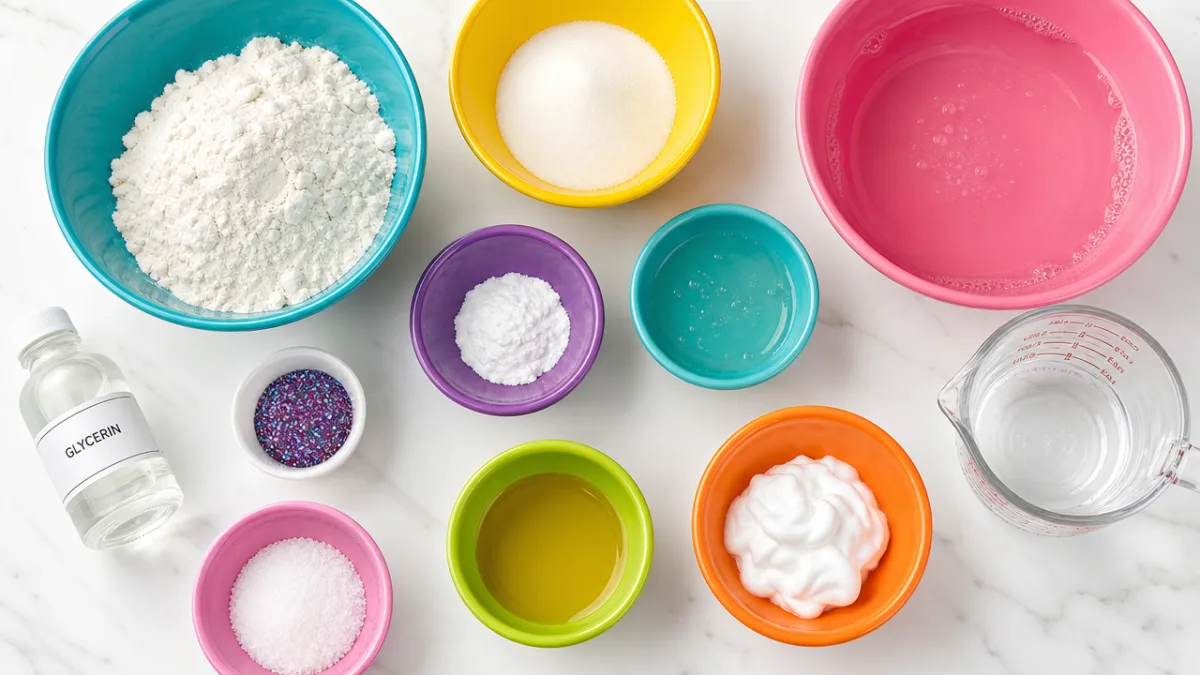
One of the greatest things about bubble dough is how little you need to make it. The ingredient list is deliberately short, which means there are no specialty craft store runs required, no mysterious chemicals to order online, and no lengthy preparation process. Everything you need is likely already sitting in your kitchen or bathroom cabinet right now. This accessibility is part of what makes the recipe so beloved among parents, teachers, and caregivers who want meaningful play experiences without complicated logistics or significant expense.
To make a generous batch of bubble dough suitable for one to two children, you will need approximately one cup of cornstarch and about a quarter cup of dish soap. The ratio is flexible and forgiving — one of the joys of this recipe is that it invites experimentation rather than demanding precision. Dish soap with a thicker consistency tends to produce a slightly firmer dough, while thinner soaps create something more fluid and flowing. Any color of dish soap works beautifully, and using colored soap is a simple way to create vibrant, jewel-toned dough without adding any extra ingredients.
In terms of tools, you will want a medium-sized mixing bowl, a hand mixer or whisk for foaming the soap, and a flat surface or tray for playing. Optional but highly recommended additions include:
- Food coloring or liquid watercolors for customized colors
- Glitter for a sparkling, magical effect
- Small cookie cutters or silicone molds for shaping play
- A rimmed baking sheet to contain the dough and any crumbles during play
- Airtight containers or zip-lock bags for storage between play sessions
Having these extras on hand transforms bubble dough from a simple sensory material into a full creative experience. Children can mix their own colors, press shapes, and even use the dough as a sculpting medium for small figures and landscapes. The tools do not need to be fancy or expensive — many parents find that repurposing kitchen items they already own works perfectly and gives children a sense of using “real” tools rather than toys.
Step-by-Step Instructions – How to Make Bubble Dough
Making bubble dough is genuinely simple, but following the steps in the right order makes a significant difference to the final texture. The most common mistake beginners make is adding the dish soap directly to the cornstarch without foaming it first. While this technically produces a workable mixture, the result is denser and less light than properly made bubble dough. Taking the extra two minutes to foam your soap before combining it with the cornstarch is absolutely worth the effort, and the process of making foam is itself an engaging activity for children who want to help.
Begin by pouring your dish soap into a medium bowl and beating it vigorously with a hand mixer on high speed for approximately two to three minutes. If you do not have a hand mixer, a whisk works well with a bit more effort, or you can shake the soap in a lidded jar to create foam. You are looking for soft, voluminous peaks similar to whipped cream — the foam should hold its shape briefly when you lift the beater. This is the moment to add food coloring or glitter if desired, mixing it gently into the foam to preserve the airy structure you have just created.
Next, add the cornstarch to the foam gradually, folding it in with a spatula or your hands rather than beating it in. This gentle folding motion helps preserve the air bubbles and keeps the dough light. Add the cornstarch in three or four additions, checking the consistency as you go. The dough is ready when it pulls away from the sides of the bowl, feels soft and slightly stretchy when handled, and holds a loose shape without being sticky. If the mixture feels too wet and refuses to come together, add cornstarch one tablespoon at a time. If it feels dry and crumbly, add a small splash of water or a bit more soap foam.
- Beat dish soap into stiff foam using a hand mixer or whisk (2–3 minutes)
- Add food coloring or glitter to the foam if desired and fold gently
- Gradually add cornstarch in three or four portions, folding between each addition
- Continue folding until the dough is soft, stretchy, and pulls away from the bowl
- Adjust consistency with small amounts of cornstarch or water as needed
- Turn out onto a tray or flat surface and begin playing immediately
Sensory and Developmental Benefits of Bubble Dough Play
Sensory play is not just entertaining — it is genuinely important for child development, and bubble dough delivers benefits across multiple developmental domains simultaneously. When children squeeze, stretch, poke, and mold bubble dough, they are building hand strength and dexterity that directly supports later skills like writing, cutting, and buttoning. Occupational therapists frequently recommend sensory dough activities for children who need to develop better hand and finger coordination, and bubble dough is particularly effective because its variable resistance — sometimes firm, sometimes yielding — engages a wider range of hand muscles than a material with uniform texture.
Beyond the physical, bubble dough offers significant cognitive benefits. Open-ended sensory materials encourage children to experiment, hypothesize, and observe cause and effect in a low-stakes, playful environment. A child who discovers that pressing hard makes the dough feel like rock while pressing gently makes it flow is engaging in early scientific reasoning. Children who play alongside others with bubble dough practice negotiation, sharing, and collaborative storytelling as they build worlds, create imaginary foods, or invent characters from the dough. These social dimensions of play are easy to overlook but genuinely valuable.
For children who experience anxiety or sensory processing challenges, bubble dough can be particularly therapeutic. The rhythmic, repetitive motions of kneading and squeezing have a naturally calming effect on the nervous system, similar to the way stress balls or fidget tools help some people regulate their emotions. The predictable sensory input — soft, cool, slightly foamy — can help children who are easily overwhelmed by unpredictable environments feel grounded and safe. Many parents and therapists report that children who are initially reluctant to engage with messier sensory materials find bubble dough’s clean, non-sticky quality more approachable, making it an excellent entry point for sensory exploration.
Tips, Troubleshooting, and Creative Variations
Even a forgiving recipe like bubble dough occasionally needs a little troubleshooting, and knowing what to expect helps prevent frustration. The most common issue new makers encounter is dough that feels too sticky or too crumbly. Sticky dough almost always means the soap-to-cornstarch ratio is slightly off — more cornstarch folded in gradually will bring it to the right consistency. Crumbly dough, on the other hand, usually means the foam was too dry or the cornstarch was added too quickly before the foam could fully incorporate. Adding a teaspoon of water at a time and kneading gently usually rescues a crumbly batch without any trouble.
Storage is another area where a little knowledge goes a long way. Bubble dough does not last forever — the foam structure begins to break down over time as the air bubbles slowly escape, and within a day or two the dough will start to feel wetter and more liquid than when freshly made. Storing it in an airtight container in the refrigerator extends its life significantly, sometimes up to three or four days. Letting refrigerated dough sit at room temperature for ten minutes before playing gives the cornstarch particles time to warm up and return to their best consistency. When the dough finally loses its appeal, it is completely safe to wash down the drain in small amounts.
The creative possibilities for bubble dough extend well beyond the basic white version. With a little imagination, this simple recipe becomes a platform for themed play experiences that children will remember long after the dough itself is gone. Consider these popular variations and extensions:
- Galaxy Dough: Swirl deep blue, purple, and black food coloring with silver glitter for a cosmic, space-themed sensory experience
- Minty Fresh Dough: Add a drop of peppermint essential oil and green food coloring for a refreshing, aromatherapy-enhanced version
- Ocean Dough: Blue and teal coloring with fine iridescent glitter creates a beautiful water-like appearance
- Rainbow Batch: Make several small portions in different colors and let children swirl or layer them for color-mixing exploration
- Scented Seasonal Versions: Cinnamon oil in fall, lavender in spring, or citrus in summer creates a multisensory experience tied to the season
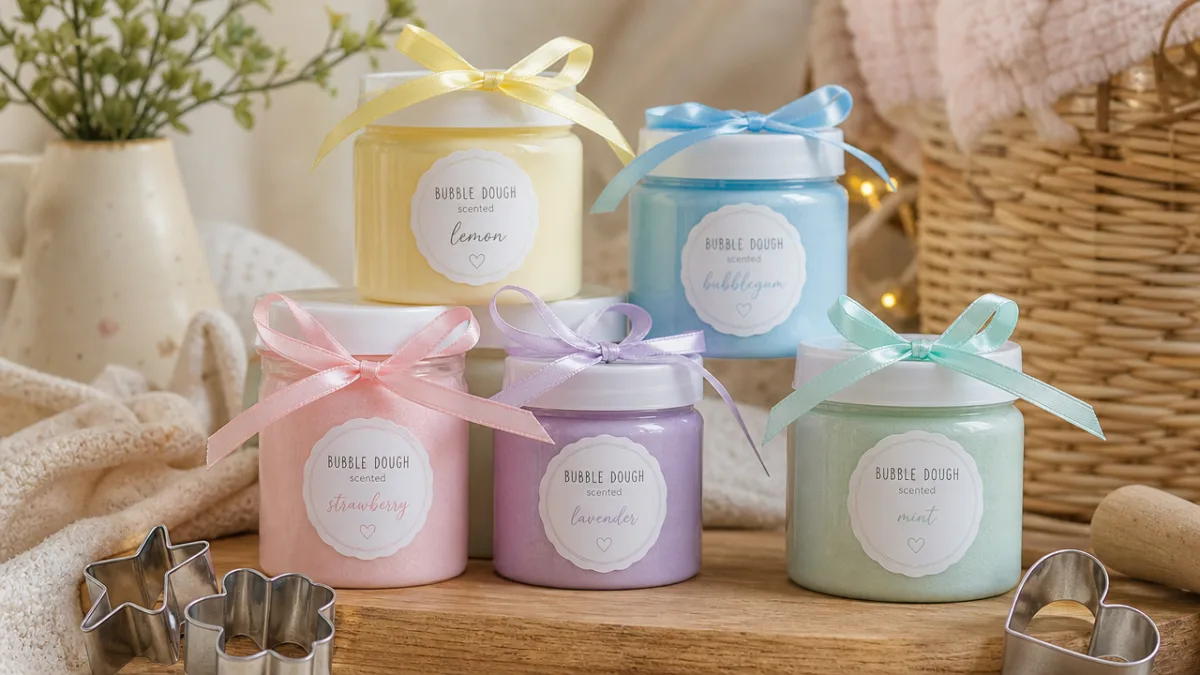
Finally, bubble dough makes a genuinely impressive and thoughtful gift for families with young children. Portioning freshly made dough into small jars, adding a ribbon and a handwritten card with the recipe, creates a charming homemade gift that costs almost nothing but delivers hours of entertainment. Including a few cookie cutters or a small bottle of glitter elevates the gift further without adding significant cost. In a world of expensive plastic toys that hold children’s attention for minutes, a jar of bubble dough represents something rarer: a simple, beautiful, open-ended invitation to play.
Making Bubble Dough a Learning Experience for Every Age
One of the most remarkable things about bubble dough is how effectively it scales across age groups. Toddlers as young as eighteen months can enjoy supervised bubble dough play, experiencing pure tactile delight in poking, squishing, and watching the dough respond to their movements. For this age group, the experience is almost entirely sensory — they are absorbing information about texture, temperature, and cause and effect through their hands and eyes in a way that genuinely cannot be replicated by screen-based learning. Simple, embodied, physical play like this forms the neurological foundation for later, more abstract thinking.
Preschool and kindergarten-aged children can begin to engage with bubble dough in more intentional ways, using it to support emerging literacy and numeracy skills. Rolling dough into ropes to form letters, pressing it into numbered molds, or using it as a medium for counting games integrates sensory play with academic content in a way that feels entirely natural to children. At this age, the social dimensions of play also become more significant — children playing alongside one another with bubble dough will naturally begin to collaborate, negotiate, and engage in elaborate imaginative scenarios that develop language skills and emotional intelligence simultaneously.
Older children and even adults can approach bubble dough from a more explicitly scientific angle, using the activity as a springboard for deeper exploration of non-Newtonian fluids, polymer chemistry, and the physics of colloids. Encouraging older children to document their observations, experiment with different ratios, or compare bubble dough to other non-Newtonian substances like oobleck or cornstarch putty builds genuine scientific inquiry skills. The act of writing or drawing observations, forming hypotheses, and testing them through play is authentic science in miniature — and the fact that it is also just tremendously fun makes the learning stick in ways that worksheets and textbooks rarely achieve.








What do you think?
It is nice to know your opinion. Leave a comment.