










Oversized Sculptural Pillar Candle: The Art of Modern Home Decor
The Rise of Sculptural Candles in Contemporary Interiors
In recent years, the home decor landscape has undergone a quiet but profound transformation. Where once candles served purely utilitarian or ceremonial roles, they have evolved into genuine works of art that command attention even when unlit. The oversized sculptural pillar candle represents perhaps the most compelling expression of this evolution, merging the ancient craft of candlemaking with the sensibilities of modern design. These statement pieces have found their way into curated interiors, design magazines, and the wish lists of anyone who takes their living space seriously.
The appeal is not difficult to understand. We live in an era that prizes authenticity, tactility, and visual interest above all else in interior design. Mass-produced, identical objects have lost much of their appeal to a generation of homeowners and renters who crave individuality. A large ribbed soy wax pillar candle brings something genuinely different to a room — an organic quality, a handcrafted character, and a sculptural presence that synthetic materials and flat surfaces simply cannot replicate. The ribbed texture in particular plays beautifully with light, casting subtle shadows that animate a surface and give a room depth.
What separates a sculptural pillar candle from its more conventional counterparts is the deliberate attention paid to form as much as function. The silhouette matters. The proportions matter. The way the wax catches ambient light matters. Designers and makers who work in this space approach each candle the way a sculptor approaches clay — with an understanding that the object must work from every angle, must reward close inspection, and must hold its own among other carefully chosen pieces. This shift in thinking has elevated candlemaking to a respected design discipline in its own right.
Understanding Soy Wax: Why It Matters for Sculptural Candles
The choice of wax is not merely a technical consideration — it fundamentally shapes everything about a candle, from its appearance to its environmental impact. Soy wax, derived from hydrogenated soybean oil, has emerged as the preferred medium for serious candlemakers, particularly those working in the sculptural space. It is a renewable, biodegradable resource that burns cleaner and longer than paraffin, producing significantly less soot and releasing fewer toxins into the air. For a candle intended to be displayed prominently in a living space, this cleanliness matters enormously both for aesthetics and for the health of the people who inhabit that space.
From a purely visual standpoint, soy wax offers qualities that make it ideal for sculptural work. It has a naturally matte, slightly creamy finish that photographs beautifully and reads as luxurious in person. Unlike paraffin, which can appear shiny or artificial, soy wax has an inherent warmth to its surface that makes it feel organic and considered. It also accepts color exceptionally well, allowing makers to achieve everything from the purest white to deep, saturated tones with a consistency that other waxes struggle to match. For a ribbed pillar design, where the texture must be sharp and defined, the way soy wax holds its form during and after the molding process is critical.
Beyond aesthetics, soy wax burns at a lower temperature than paraffin, which means it liquefies more slowly and evenly. This produces a cleaner melt pool, preserves the structural integrity of the candle for longer, and allows the fragrance — if any is used — to disperse more gently and consistently throughout a room. For an oversized pillar candle that may serve as a long-term decorative anchor in a space, this longevity is a genuine practical advantage. A well-made large soy wax pillar candle can provide dozens of hours of burn time, making it not just beautiful but genuinely good value over its lifespan.

The Design Language of Ribbed and Textured Pillar Candles
The ribbed form has deep roots in both decorative arts and architecture. From classical column fluting to the ridged surfaces of mid-century ceramics, the repeating vertical groove is one of design’s most enduring motifs. It creates visual rhythm, suggests craftsmanship and precision, and adds dimensional interest to what would otherwise be a plain cylinder. When applied to a large pillar candle, these qualities are amplified. The scale means more ribs, more shadow play, and a more commanding presence overall. A well-executed ribbed candle doesn’t just sit on a surface — it structures the visual space around it.
Contemporary candlemakers working in this idiom draw from a wide range of references. Some look to brutalist architecture, embracing bold, chunky ribs with an almost industrial confidence. Others take inspiration from organic forms — the pleated texture of a shell, the ridged surface of a gourd, the rippled edge of a coral formation — producing candles that feel simultaneously ancient and utterly modern. Still others work within a more restrained, Scandinavian-influenced aesthetic, using fine, precisely spaced ribs to create a sense of quiet elegance and order. The range of expressions available within the ribbed pillar format is remarkably broad, ensuring that collectors and decorators can find something that resonates with their specific aesthetic.
Proportion is equally important to the success of a sculptural pillar candle. The oversized dimension — typically ranging from eight to fourteen inches in height, or even taller in statement versions — is what grants these objects their authority. A small ribbed candle is charming; a large one is commanding. The diameter must balance the height to create a silhouette that reads as intentional rather than awkward. Experienced makers understand that these ratios are everything, and they iterate extensively to find the proportions that allow a candle to project confidence and stability while still maintaining an elegant, refined line. This is design thinking applied with the same rigor found in furniture or architectural practice.
Styling Oversized Pillar Candles in Your Home
One of the most compelling aspects of the oversized sculptural pillar candle is its extraordinary versatility as a styling tool. Unlike many decorative objects that work only within a specific aesthetic context, a well-designed large ribbed candle tends to read well across a surprisingly broad range of interiors. In a minimalist space — bare white walls, clean-lined furniture, restrained palette — a single oversized pillar candle on a stone or concrete surface creates a focal point with exactly the right weight and warmth. It introduces texture without clutter, and organic form without chaos. The candle does the heavy lifting so nothing else has to.
In richer, more maximalist environments, the oversized pillar candle earns its place through contrast. Set against dark velvet, layered textiles, or a gallery wall of artwork, a pale ribbed soy wax pillar stands out as a point of calm and clarity. It anchors a vignette without competing with surrounding elements, acting as a kind of visual full stop in a composition that might otherwise feel relentless. Many interior stylists use them in groups of varying heights — three or five candles clustered at different levels — to create an installation-like effect that feels considered and gallery-worthy. The key is to let them breathe, giving each candle enough surrounding space to be appreciated as an individual object.
The surface on which a sculptural candle rests matters almost as much as the candle itself. Consider the following placement strategies that professional stylists return to repeatedly:
- A thick slab of raw marble or travertine elevates the candle and creates a luxurious material pairing, particularly effective in bathrooms and bedrooms where spa-like calm is the goal.
- A simple wooden tray or cutting board grounds the candle and adds warmth, making it an ideal choice for kitchen islands, dining tables, and living room coffee tables where livability matters.
- A stack of linen or art books beneath the candle adds height and intellectual context, suggesting a thoughtfully curated personal library rather than a purely decorative arrangement.
- Pairing the candle with ceramics, dried botanicals, or sculptural objects in complementary tones creates a cohesive vignette that rewards sustained attention and changes subtly with the light throughout the day.
- A fireplace mantel is arguably the most natural home for a large pillar candle — the architectural framing of the mantelpiece provides exactly the kind of stage these objects deserve, especially in pairs flanking a central mirror or artwork.
Color selection deserves careful thought when incorporating an oversized pillar candle into an existing interior. The current market offers candles in everything from stark architectural white to deep terracotta, sage green, dusty rose, charcoal, and rich ochre. Rather than defaulting to a neutral, consider choosing a color that acts as an accent — pulling a tone from a throw pillow, a painting, or a piece of pottery already present in the room. This kind of considered color dialogue is what separates a well-styled space from one that merely looks assembled. The candle becomes part of a conversation between objects rather than an isolated statement.
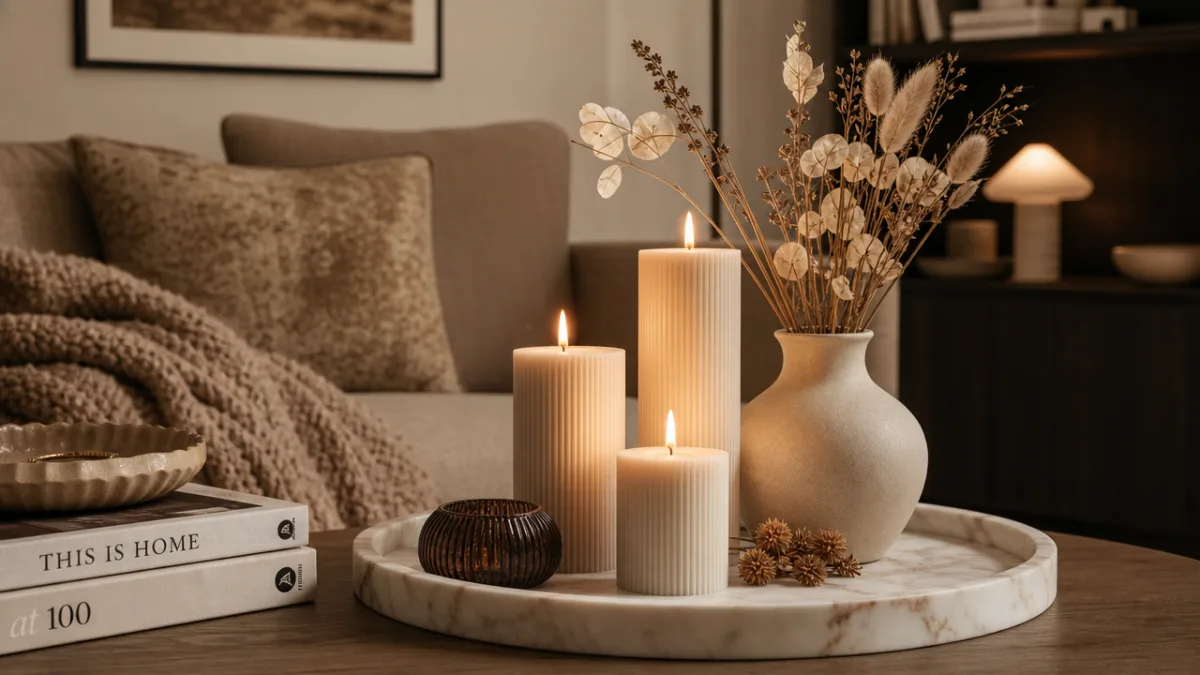
The Craft Behind the Object: How Sculptural Pillar Candles Are Made
Understanding the making process deepens appreciation for what these objects represent and justifies the investment they require. Oversized sculptural pillar candles are not produced quickly or easily. The process begins with mold selection or creation — for ribbed designs, this typically involves custom silicone or metal molds that must be precisely engineered to produce clean, consistent ridges. A mold that is even slightly imprecise will yield ribs that are uneven, soft-edged, or irregular in spacing. For a candle that will be scrutinized up close and displayed prominently, this precision is non-negotiable.
The soy wax preparation involves melting the wax to the correct temperature — too hot and it will crack or sink as it cools, too cool and it won’t flow properly into the mold’s recesses. Fragrance oils and colorants, if used, must be incorporated at specific temperatures to bind properly with the wax and avoid separation or surface irregularities. The pour must be steady and controlled. After the initial pour, soy wax typically sinks slightly as it cools, requiring a second or even third top-up pour to ensure a flat, even top surface. The cooling process itself must be managed — too fast and the wax will crack, too slow in an inconsistent environment and you risk surface imperfections that cannot be corrected after the fact.
The finishing stage is where a skilled maker’s expertise becomes most visible. The candle must be removed from the mold cleanly, which for a large ribbed piece requires both technique and patience. Any surface imperfections are assessed and addressed. The wick — often a wooden wick for these larger format candles, as it provides a wider flame and a pleasing crackling sound — must be centered precisely and trimmed to the correct height. The base is checked for levelness. Finally, the finished candle is inspected from every angle under different lighting conditions, because a sculptural object must earn that designation from all perspectives. This level of care and craft is reflected in the final product, and it is what distinguishes a genuinely well-made sculptural candle from one that merely resembles one.
Investing in Quality: What to Look For When Buying a Sculptural Pillar Candle
The market for artisan sculptural candles has expanded rapidly, which means both wonderful options and considerable variation in quality now exist side by side. Knowing what to look for protects your investment and ensures you bring home something that will genuinely serve your space well over time. The first indicator of quality is material transparency — a maker who is proud of their soy wax and willing to specify its origin and grade, who can tell you whether fragrances are phthalate-free, and who is clear about wick composition is demonstrating the kind of integrity that tends to manifest throughout their entire process.
Visual quality assessment matters enormously for an object that is first and foremost a decorative piece. When examining a ribbed pillar candle, look for:
- Consistency of rib depth and spacing — the ridges should be uniform from top to bottom, with no areas where the texture softens or loses definition.
- Surface smoothness between ribs — the flat portions between ridges should be clean and even, free from pitting, air bubbles, or discoloration that would suggest temperature issues during the pour.
- True verticality — the candle should stand without any tilt, and the base should be completely flat. A candle that rocks or leans will look careless regardless of its other qualities.
- Color evenness — whether white or pigmented, the color should be consistent throughout, without streaking, mottling, or surface cloudiness that would distract from the form.
- Wick placement — the wick should run exactly through the center of the candle. Off-center wicks burn unevenly and will tunnel through the wax, destroying the structural integrity of the piece over time.
Price is not a perfect guide to quality, but it is worth understanding why well-made sculptural candles command the prices they do. Beyond material costs — soy wax, quality fragrance, and proper wicks are meaningfully more expensive than their lower-grade alternatives — the time investment in making a large pillar candle correctly is substantial. Multiple pours, careful monitoring during cooling, individual inspection and finishing — these are not processes that lend themselves to rapid production. When you purchase a thoughtfully made oversized sculptural pillar candle from a skilled maker, you are investing in hours of genuine craft attention. That perspective makes the pricing not just understandable but appropriate.

Sustainability, Longevity, and the Enduring Appeal of the Sculptural Candle
In an era of increasing concern about consumption and waste, the sculptural soy wax pillar candle occupies an interesting and broadly positive position. Soy wax is a renewable resource derived from a crop that can be grown domestically in many countries, reducing the carbon footprint associated with transportation that affects petroleum-derived paraffin. It is biodegradable, and because it burns cleanly, it does not contribute meaningfully to indoor air quality degradation. For consumers who are trying to make more considered choices about what they bring into their homes, a quality soy wax candle is a genuinely better option than its conventional counterparts in nearly every respect.
The sculptural format itself aligns well with slower, more intentional consumption habits. An oversized pillar candle is not a fast fashion purchase — it is a considered acquisition intended to live in a space for months or years. Many collectors and enthusiasts never burn their sculptural candles at all, treating them purely as decorative objects in the same way they might display a piece of studio pottery or a small sculpture. This is a legitimate and increasingly common approach, particularly for candles that are exceptionally beautiful or made in limited quantities. The candle’s value as a decorative object is entirely independent of its function as a light source, which says something meaningful about how far the form has evolved.
The enduring appeal of the sculptural pillar candle ultimately rests on something quite fundamental: the human relationship with fire and with handmade objects. We are drawn to the warm, flickering light of a candle in a way that electric light cannot replicate, for reasons that are at once practical, emotional, and even neurological. And we are drawn to objects made by human hands, objects that carry within them the evidence of care, skill, and intention. The oversized sculptural pillar candle offers both of these things in abundance. It is a practical object elevated by craft into something that deserves to be called art — and in a world of mass production and disposability, that elevation feels not just welcome but necessary.








What do you think?
It is nice to know your opinion. Leave a comment.