










Mason Jar Air Freshener: The Complete Guide to Natural, Beautiful Home Fragrance
What Is a Mason Jar Air Freshener?
A mason jar air freshener is a simple, elegant, and surprisingly effective DIY home fragrance solution that uses the classic canning jar as both a vessel and a decorative display piece. Unlike commercial plug-in air fresheners or aerosol sprays loaded with synthetic chemicals, mason jar fresheners rely on natural ingredients like baking soda, essential oils, dried herbs, and botanical elements to gently scent a room over days or weeks. The result is a soft, continuous fragrance that feels organic and welcoming rather than overwhelming.
The concept has surged in popularity because it sits at the intersection of several modern lifestyle values: sustainability, natural living, home aesthetics, and budget-conscious crafting. A mason jar air freshener costs almost nothing to make using ingredients most people already have on hand, yet it looks polished enough to sit on a bathroom shelf or kitchen windowsill as a decorative accent. The wide-mouth jar invites customization in terms of lids, fabric toppers, twine, labels, and botanicals that match any interior design style.
What truly sets this project apart from other DIY air fresheners is its longevity and ease of refresh. The baking soda base naturally absorbs odors rather than simply masking them, while the essential oils slowly diffuse fragrance into the surrounding air. When the scent begins to fade, all you need to do is stir the mixture or add a few more drops of oil. There are no cartridges to replace, no batteries to change, and no wax to melt — just a jar doing quiet, effective work on your shelf.
Why Make Your Own Instead of Buying Commercial Products?
Commercial air fresheners are a multi-billion-dollar industry, but many of the most popular products rely heavily on synthetic fragrance compounds, phthalates, and volatile organic compounds (VOCs) that can accumulate indoors and potentially affect air quality over time. For households with young children, pets, or anyone with respiratory sensitivities like asthma or allergies, switching to a natural alternative can make a meaningful difference in daily comfort. A homemade mason jar air freshener puts you in complete control of every single ingredient that enters your home’s air.
Cost is another compelling reason to go the DIY route. A single commercial gel air freshener or plug-in refill can cost anywhere from three to eight dollars and typically lasts two to four weeks. A mason jar freshener made with baking soda and essential oils costs a fraction of that amount per batch and can last four to six weeks with occasional stirring. Over the course of a year, a household that keeps three or four fresheners running at once can save a surprising amount of money while also generating significantly less plastic waste.
Beyond the practical arguments, there is genuine creative satisfaction in making something that functions beautifully and looks intentional in your space. You get to choose the fragrance profile entirely — whether that means a clean citrus blend for the kitchen, a calming lavender for the bedroom, or a woodsy cedar and vanilla combination for a home office. The mason jar itself can be decorated seasonally, making this one of those rare household items that doubles as craft project, functional tool, and rotating décor element all at once.

Essential Ingredients and Materials You Will Need
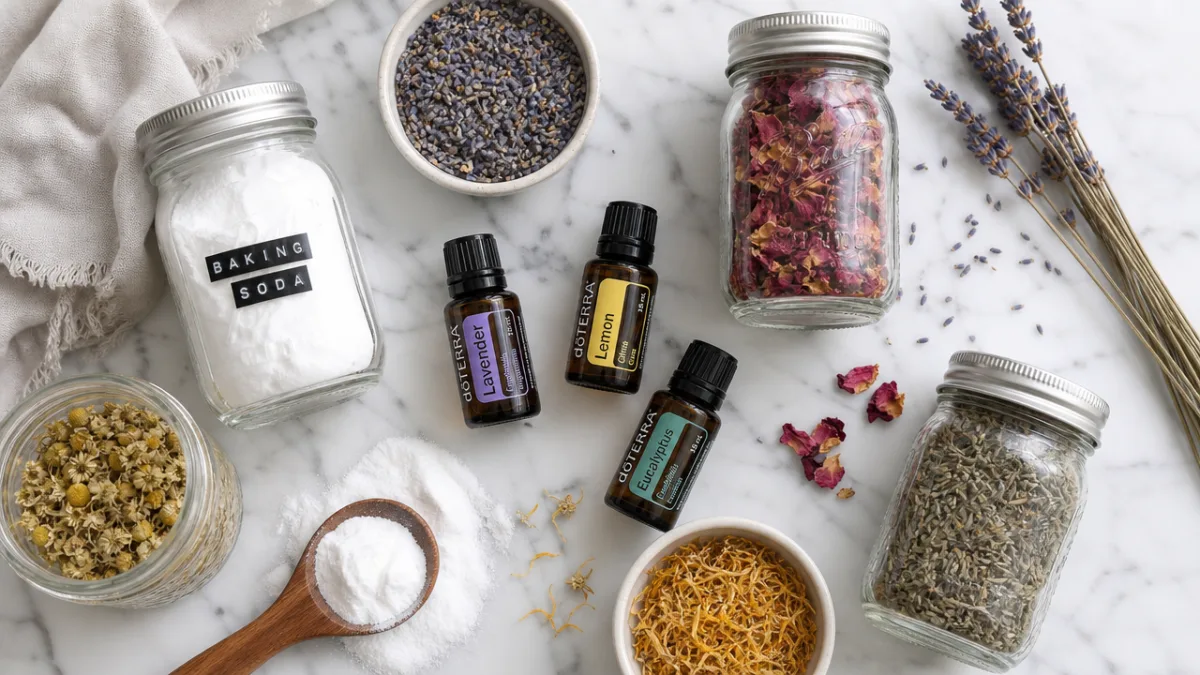
The foundational ingredient in virtually every mason jar air freshener recipe is baking soda, also known as sodium bicarbonate. Baking soda is a natural deodorizer that works by neutralizing acidic and basic odor molecules rather than covering them up. One cup of baking soda is typically enough to fill a half-pint or pint mason jar to a functional level while leaving room for stirring. Standard grocery store baking soda works perfectly — there is no need to purchase any specialty variety for this application.
Essential oils are the fragrance engine of the project, and choosing the right oils can make a tremendous difference in the final experience. High-quality essential oils from reputable brands diffuse more cleanly and last longer than inexpensive fragrance oils, though fragrance oils can certainly work if that is what is available. Most recipes call for 20 to 30 drops per cup of baking soda, but you can adjust this to preference. It helps to build a scent blend in advance by testing combinations on a paper towel before committing to the jar.
Beyond the two core ingredients, a range of optional additions can enhance both the fragrance and the visual appeal of the finished product. Dried herbs like rosemary, lavender buds, or chamomile flowers add botanical beauty and a secondary layer of natural scent. A few drops of rubbing alcohol mixed into the baking soda before adding the oils can help the fragrance adhere more evenly. For the jar itself, you will need a lid with holes punched into it, a piece of breathable fabric secured with the jar band, or a decorative mesh cover — all of which allow fragrance to escape while keeping the mixture tidy and dust-free.
Here is a quick list of everything you might gather before starting your first batch:
- One half-pint or pint wide-mouth mason jar with band
- One cup of baking soda per jar
- 20 to 30 drops of essential oil or a custom blend
- A nail and hammer or a push pin tool for punching lid holes
- Optional: dried botanicals, rubbing alcohol, decorative fabric, ribbon or twine, labels
- A stirring utensil — a fork or chopstick works well
Step-by-Step Instructions for Making a Mason Jar Air Freshener
Begin by preparing your lid if you plan to use the standard flat metal lid that comes with the mason jar. Place the lid on a sturdy surface like a piece of scrap wood, then use a nail and hammer to punch 10 to 20 small holes across the surface in a pattern you find visually pleasing. Evenly spaced holes allow fragrance to disperse consistently, while a decorative cluster or scattered pattern can make the lid itself look more artisanal. Set the punched lid aside. If you prefer the fabric topper approach, cut a circle of burlap, linen, or cotton approximately two inches wider than the jar mouth and set that aside instead.
Next, measure your baking soda into the mason jar. One level cup fills a half-pint jar quite nicely, giving you a good depth of material without overflowing. If you are using a standard pint jar, one and a half cups provides a good proportion. At this stage, if you are using rubbing alcohol as a binding agent, add approximately one teaspoon and stir it thoroughly through the baking soda with a fork. This step is optional but does help the essential oil integrate more evenly and can extend the overall throw of the fragrance once the jar is on your shelf.
Now add your essential oils, dropping them slowly around the surface of the baking soda rather than concentrating them all in one spot. After adding all your drops, stir thoroughly with a fork, breaking up any clumps and making sure the fragrance is distributed throughout the entire mixture. If you are adding dried botanicals, scatter them across the top of the baking soda now — they will rest on the surface and show beautifully through the glass sides of the jar. Secure your prepared lid or fabric topper with the metal band, and your mason jar air freshener is complete and ready to place.
Follow these general guidelines for placement and maintenance to get the best results from your finished jar:
- Place the jar in a central location within the room, away from direct sunlight which can degrade the essential oils more quickly.
- Give the jar a gentle shake or use a fork to stir the mixture every five to seven days to re-expose fresh baking soda to the surface and revive the fragrance throw.
- Add five to ten additional drops of essential oil when the scent begins to fade, stirring them in thoroughly before replacing the lid.
- Replace the entire baking soda mixture every four to six weeks for optimal odor absorption and fragrance performance.
- Store extra baking soda and your essential oil blends in a cool, dark place between batches to preserve their effectiveness.
Best Essential Oil Combinations for Every Room
Choosing the right scent for each space in your home is one of the most enjoyable parts of the mason jar air freshener hobby, and it is worth thinking about what each room needs functionally and emotionally. Kitchens tend to accumulate cooking odors, so fresheners placed there benefit from bright, clean, or slightly sweet profiles that can stand up to food smells without clashing. Living rooms and entryways can handle bolder, more complex blends that make a welcoming first impression. Bedrooms call for calming, sleep-supporting scents, while bathrooms need something crisp and clean that addresses common odor concerns directly.
For the kitchen, a combination of lemon, orange, and a touch of peppermint creates an invigorating, clean-smelling blend that feels appropriate near food preparation and naturally counteracts many common cooking odors. Alternatively, a blend of grapefruit and rosemary reads as both fresh and sophisticated without being overpowering in a space where you also want to be able to smell what you are cooking. For a warmer, more comforting kitchen atmosphere particularly in autumn and winter, consider cinnamon, clove, and sweet orange, which evokes the smell of baking and creates an instantly cozy feeling throughout the entire space.
In bedrooms, lavender remains the perennial favorite for its well-documented calming properties, but it pairs beautifully with cedarwood for an added depth that prevents it from reading as purely floral. Vetiver and bergamot is another sophisticated bedroom combination that is grounding and slightly citrusy without being stimulating. For a fresh, clean bedroom scent that is more neutral and gender-inclusive, eucalyptus and spearmint together create a spa-like atmosphere that feels both calming and gently refreshing without leaning too masculine or feminine in character.
Bathrooms respond particularly well to clean, slightly antiseptic-feeling scents that psychologically reinforce cleanliness. Tea tree and lemon together accomplish this beautifully while also offering the natural antimicrobial properties of both oils as a secondary benefit. Eucalyptus and peppermint is another strong bathroom combination that feels crisp and invigorating, particularly welcome in a space used for morning routines. For a more luxurious bathroom atmosphere, a blend of jasmine, sandalwood, and a trace of ylang-ylang creates a genuinely spa-quality fragrance that elevates even a modest bathroom into something that feels intentionally scented and special.
Creative Decoration Ideas to Make Your Jars Look Beautiful
One of the most appealing aspects of the mason jar air freshener project is that the finished product is inherently display-worthy, and with a little creative effort it can become a genuinely lovely piece of home décor. The simplest approach to elevating the visual presentation is to choose a fabric topper that coordinates with your existing color scheme. Burlap and linen in natural tones suit farmhouse and rustic interiors, while a crisp white cotton works in minimalist or Scandinavian-style spaces. For a more playful or seasonal look, printed fabric — think small florals in spring, plaid in fall, or stripes in summer — transforms the jar into something festive and intentional.
Labeling the jar adds a finishing touch that makes the freshener look like something you might find in an artisan shop. Hand-lettered kraft paper tags tied with twine are a popular choice and require no special equipment beyond a marker and a hole punch. Printed labels with clean typography and a listing of the scent blend look especially polished on smooth-surfaced jar lids. Chalkboard labels are particularly practical because they allow you to update the listed scent each time you change the mixture, keeping the jar looking current through every seasonal refresh.
Botanicals visible through the clear glass sides of the jar add tremendous visual interest and communicate the natural, handcrafted quality of the product at a glance. Dried lavender sprigs, rosebuds, star anise, cinnamon sticks broken into small pieces, dried citrus peel, or sprigs of rosemary all look beautiful nestled into or resting on top of the baking soda base. Choosing botanicals that align with the essential oil blend you used creates a visual coherence that makes the jar feel thoughtfully composed rather than randomly assembled. A jar scented with cinnamon and orange oil topped with a curled strip of dried orange peel and a small cinnamon stick is both aromatically and visually cohesive in a way that feels genuinely artful.

Gifting, Seasonal Variations, and Long-Term Enjoyment
Mason jar air fresheners make exceptionally thoughtful and personal gifts because they demonstrate both effort and care in a way that a purchased item rarely can. For housewarming gifts, a set of three jars in complementary scents — one for the kitchen, one for a bathroom, and one for a living area — packaged together in a small wooden crate or wrapped in kraft paper with ribbon creates a genuinely useful and beautiful present. Adding a small card that explains what each jar contains and how to refresh it turns the gift into an educational experience as well, often inspiring the recipient to start making their own.
The seasonal possibilities for mason jar air fresheners are practically limitless, and rotating your scent blends and decorations through the year gives you an ongoing creative project that keeps your home feeling seasonally fresh and intentional. In winter, deep warm blends of frankincense, myrrh, cedarwood, and cinnamon feel festive and grounding. Spring calls for lighter florals — a blend of geranium, bergamot, and a touch of rose creates something genuinely garden-fresh. Summer suits citrus-forward blends with notes of lemon, lime, and cool herbs like basil or mint, while autumn is arguably the most beloved season for this craft, with pumpkin spice adjacent blends of clove, nutmeg, cinnamon, and sweet orange absolutely filling the genre with warmth.
The long-term enjoyment of this hobby comes from the accumulated knowledge of what works in your particular space, with your particular preferences, and for the specific functional challenges your home presents. You will develop favorite blends that become signatures of your household — scents that visitors associate specifically with your home. You will learn which rooms benefit from stronger concentrations and which do better with subtler, background fragrance. Over time, your collection of essential oils will grow, your decoration skills will sharpen, and the mason jar air freshener will shift from being a simple craft project into a genuine and satisfying domestic practice that makes your home a more pleasant, more personal, and more intentionally beautiful place to live every single day.








What do you think?
It is nice to know your opinion. Leave a comment.